
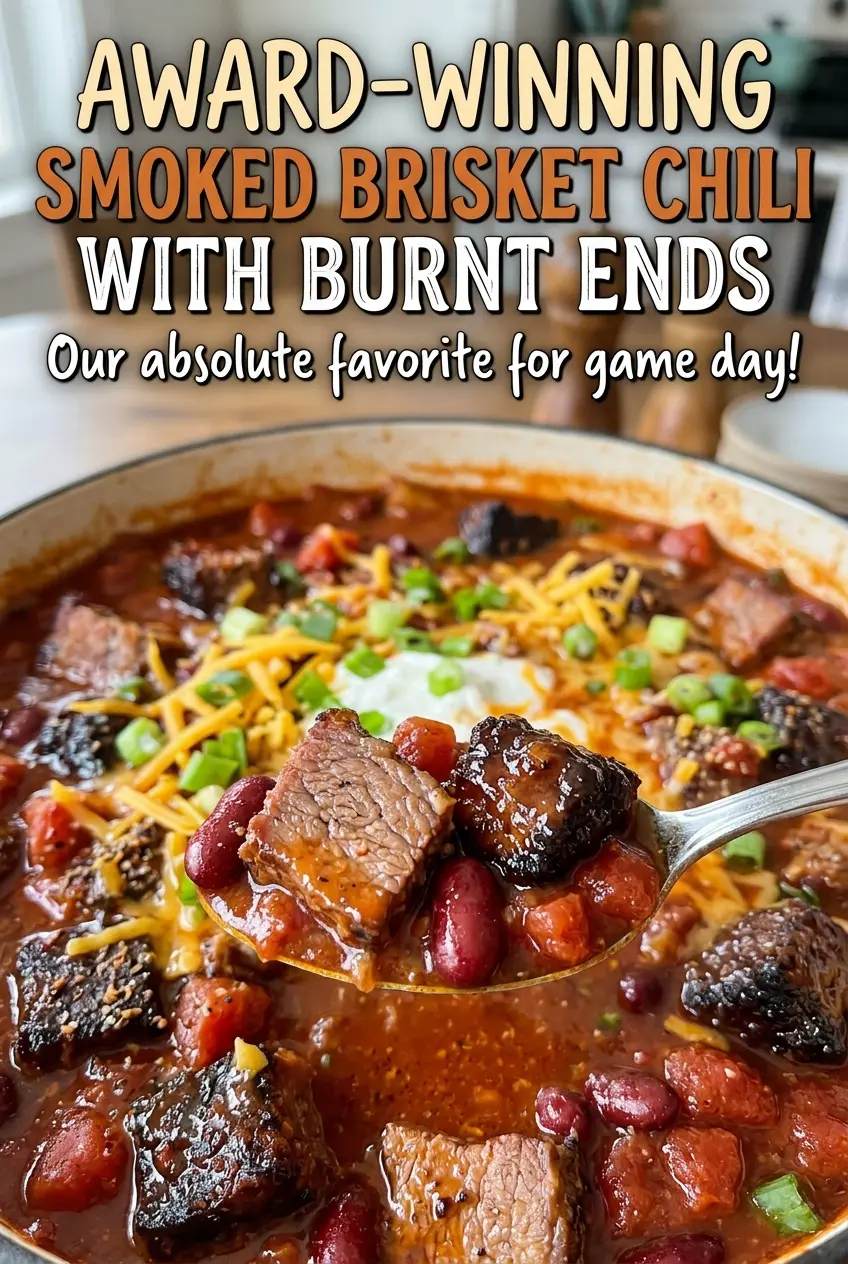
At the smoker, brisket can have a dark, peppery bark and still need hours before it turns tender. That long cook gives this award-winning smoked brisket chili its hearty base, while the sauced burnt ends bring a different bite: browned edges and a sweet, sticky glaze. One brisket point does double duty, making a pot that serves eight with plenty of meat in every bowl.
I like how the chili gets its depth from the brisket itself rather than a long list of add-ins. Chopped meat settles into crushed tomatoes and beef broth, while the vegetables and spices build a savory, gently smoky base. The finished bowls have tender beef throughout and glossy brisket cubes on top, with a little apple cider vinegar to brighten the last bite.
Kitchen Note
Keep the brisket wrapped for its full one-hour rest before cutting into it. That pause helps the meat stay together when you cube half for the glaze and chop the rest for the chili.
Save this smoked brisket chili with its glossy burnt ends for a day when you want a hearty pot with real smoker flavor.
Why This Chili Uses Two Cuts of the Same Brisket
Putting all the brisket into the pot would make a satisfying chili, but you’d lose the contrast that makes this version memorable. I divide the rested brisket evenly: one half gets finely chopped and simmers in the tomato-and-broth base, and the other half stays in 1-inch cubes for the burnt ends. The chopped meat spreads through the chili, giving each spoonful a deep beefy taste rather than leaving you to find large chunks.
The cubes have a separate job. Tossed with barbecue sauce, brown sugar, and butter, they smoke until the glaze clings and their edges brown. Keeping them out of the pot until serving lets that coating remain distinct instead of dissolving into the chili. It’s a useful way to get two textures from one cut of meat, without adding another protein or making a second main dish.
Cutting the two portions differently matters more than making every piece perfectly uniform. Finely chop the chili portion so it blends into the base; keep the topping cubes substantial enough to hold their shape through the covered and uncovered smoking stages.
What Builds the Smoky, Sweet, and Savory Layers
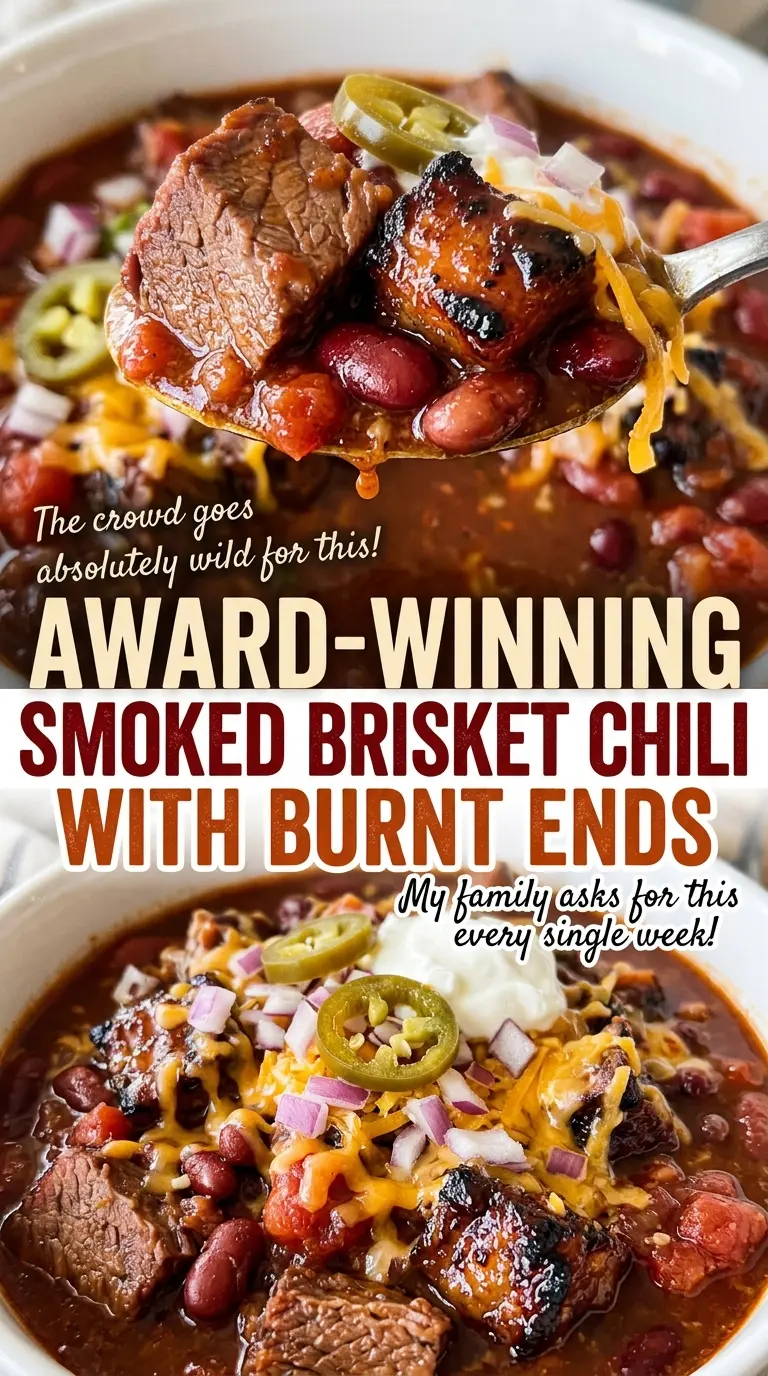
- Brisket point — The point has enough marbling to stay rich through a long smoke and then simmering. Ask for the point rather than a leaner flat if you want the same tender, beefy result. Trimming the fat cap to a quarter inch leaves some protection without an overly thick layer.
- Yellow mustard and the spice rub — The mustard helps the salt, coarse black pepper, paprika, garlic powder, and onion powder cling to the meat. Plain yellow mustard is fine; there’s no need for a specialty jar, and its flavor won’t dominate after smoking.
- Barbecue sauce, brown sugar, and butter — Together, these coat the brisket cubes and make the shiny, sweet-savory glaze. Choose a barbecue sauce whose flavor you enjoy on its own, since its sweetness and tang carry through to the topping.
- Chili powder, cumin, and oregano — These give the tomato base its familiar chili warmth without competing with the smoke. Freshness matters most for aroma; spices that have been open for years tend to taste muted.
- Crushed tomatoes, beef broth, and tomato paste — Tomato paste adds concentrated savoriness, crushed tomatoes form the body, and low-sodium broth loosens the pot while leaving room to season with the divided kosher salt. A low-sodium broth is useful here because the brisket rub and barbecue sauce already bring salt.
- Apple cider vinegar — Stirring it in at the finish gives the rich meat and tomato base a clean, tart edge. Keep it until the end rather than cooking it through the whole simmer.
From Smoked Bark to a Pot of Brisket Chili
Set the Rub and Build the Bark
Heat the smoker to 250°F. Spread the yellow mustard over the brisket, then combine 1 tablespoon of the kosher salt with the coarse black pepper, paprika, garlic powder, and onion powder and rub it evenly over the meat. Set the brisket fat side toward the heat source and smoke it for 4 to 6 hours, until the bark is dark and set and the internal temperature is about 165°F. If the bark still looks loose or patchy, give it more time rather than wrapping before it has set.
Wrap Until the Probe Slides In Easily
Wrap the brisket tightly in butcher paper or heavy-duty foil and return it to the smoker. Continue cooking for 2 to 4 hours, until the internal temperature reaches 200°F to 205°F and a probe slides into the thickest part with little resistance. The temperature gives you a useful range, but the probe is the texture check that tells you the meat is tender. Rest the brisket, still wrapped, for 1 hour.
Divide the Meat and Glaze the Cubes
After resting, divide the brisket evenly. Cut one half into 1-inch cubes and finely chop the other half for the chili. Raise the smoker to 275°F, then toss the cubes with the barbecue sauce, packed light brown sugar, and melted unsalted butter in a 9×13-inch foil pan. Cover the pan tightly with foil and smoke for 1 1/4 to 1 1/2 hours; start the chili after the first 30 minutes so both parts finish together.
Build the Chili While the Burnt Ends Smoke
Heat the vegetable oil in a 6-quart Dutch oven over medium heat. Cook the diced onion, green bell pepper, and seeded, minced jalapeno for 6 to 8 minutes, until softened; if the vegetables are still crisp, give them the full time to soften before adding the spices. Stir in the minced garlic, chili powder, cumin, oregano, tomato paste, and remaining 1 teaspoon kosher salt, and cook for 1 minute. Add the crushed tomatoes, beef broth, Worcestershire sauce, and chopped brisket, bring the pot to a simmer, then simmer uncovered for 30 to 40 minutes, stirring occasionally.
Brown the Glaze and Finish the Pot
Once the covered smoking time is up, uncover the burnt ends and smoke them for another 20 to 30 minutes, until the glaze is set and the edges are browned. Keep the chili simmering during this final stretch. Stir the apple cider vinegar into the pot, then serve the chili with the glazed brisket cubes on top. The cubes should look shiny and browned at the edges, not pale or swimming in loosened sauce.
Three Ways to Adapt the Chili Without Losing Its Character
Make the Pot Milder
Leave out the seeded jalapeno for a gentler chili. You’ll lose its fresh green bite along with its heat, while the chili powder, cumin, and smoked brisket still give the pot plenty of savory character.
Make a Gluten-Free Version
Use gluten-free barbecue sauce, Worcestershire sauce, and chili powder in place of their standard versions. Those are the ingredients most likely to need a gluten-free swap; the sauce may vary a little in sweetness or tang, but the brisket-and-tomato base stays the same.
Serve It as a One-Texture Chili
For a less layered bowl, stir the finished burnt ends into the chili just before serving instead of keeping them as a topping. The glaze will blend into the broth and the cubes will soften, giving you a more uniform, saucy pot rather than distinct glazed pieces.
Storage and Reheating
- Refrigerator: Store the chili and burnt ends in separate airtight containers for 3 to 4 days. The cubes soften as they sit in the glaze, so keeping them separate preserves more of their texture.
- Freezer: Freeze the chili and burnt ends separately in airtight containers for up to 2 to 3 months for best quality. Thaw in the refrigerator before reheating; the cubes will be softer after freezing.
- Reheating: Warm the chili gently in a Dutch oven, stirring occasionally, until steaming hot throughout. Reheat the burnt ends separately and add them on top; stirring them into a hard-boiling pot can break up the cubes and loosen the glaze.
Questions That Come Up While Smoking Brisket for Chili
Award-Winning Smoked Brisket Chili with Burnt Ends
Ingredients
Equipment
Method
- Preheat a smoker to 250°F.
- Spread the mustard over the brisket.
- Mix 1 tablespoon of the salt with the black pepper, paprika, garlic powder, and onion powder.
- Rub the mixture evenly over the meat.
- Smoke the brisket, fat side toward the heat source, until the bark is dark and set and the internal temperature reaches about 165°F, 4 to 6 hours.
- Wrap the brisket tightly in butcher paper or heavy-duty foil.
- Return it to the smoker until a probe slides into the thickest part with little resistance and the internal temperature is 200°F to 205°F, 2 to 4 hours.
- Rest the brisket, still wrapped, for 1 hour.
- Divide the brisket evenly.
- Cut one half into 1-inch cubes.
- Finely chop the other half.
- Raise the smoker temperature to 275°F.
- Toss the cubed brisket with the barbecue sauce, brown sugar, and melted butter in a 9x13-inch foil pan.
- Cover the pan tightly with foil.
- Smoke for 1 1/4 to 1 1/2 hours.
- Start the chili after the first 30 minutes of covered smoking.
- Heat the oil in a 6-quart Dutch oven over medium heat.
- Cook the onion, bell pepper, and jalapeno until softened, 6 to 8 minutes.
- Stir in the garlic, chili powder, cumin, oregano, tomato paste, and remaining 1 teaspoon salt.
- Cook for 1 minute.
- Add the crushed tomatoes, beef broth, Worcestershire sauce, and chopped brisket.
- Bring to a simmer.
- Simmer uncovered, stirring occasionally, for 30 to 40 minutes.
- Once the burnt ends have smoked covered for 1 1/4 to 1 1/2 hours, uncover the pan.
- Smoke for 20 to 30 minutes, until glazed and browned at the edges.
- Let the chili continue simmering during this time.
- Stir the vinegar into the chili.
- Serve the chili topped with the burnt ends.