
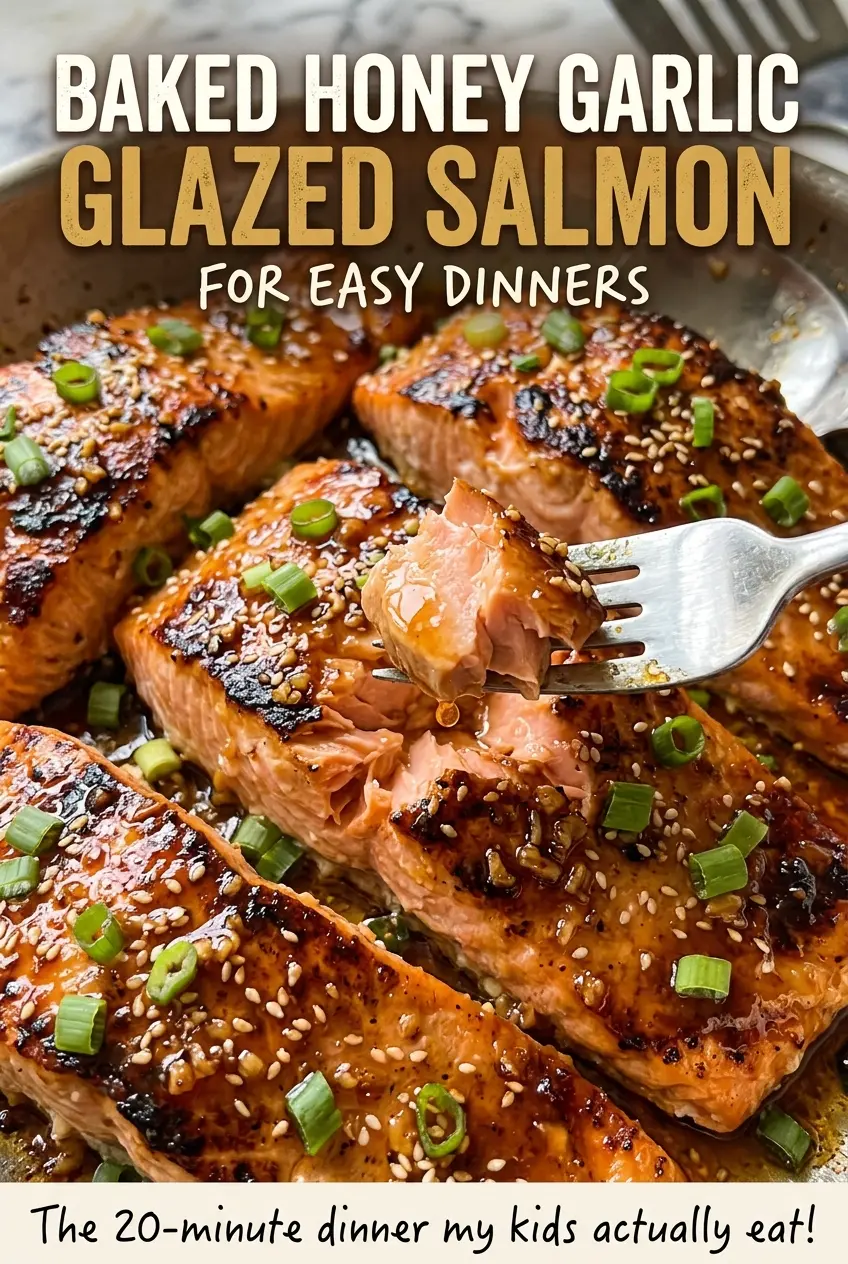
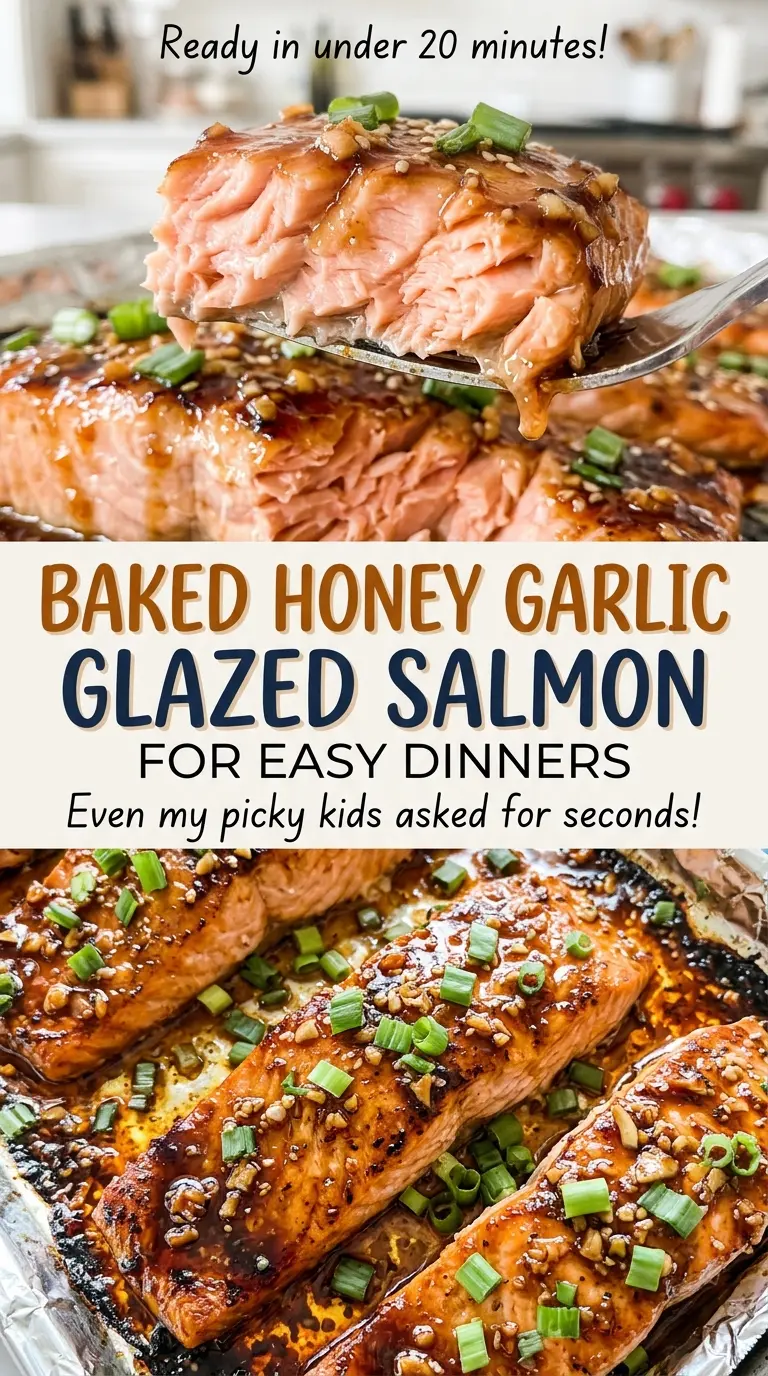
At the halfway point, the salmon is just beginning to turn opaque around the edges, and a fresh brush of honey-garlic glaze makes the top shine again. That’s the moment I look forward to when I make these baked honey garlic glazed salmon fillets: the sweet-savory coating clings to the fish without turning the whole dish into a heavy sauce.
The glaze gets a quick simmer on the stove before it ever reaches the salmon, so it’s already a little syrupy when you brush it on. Lemon keeps the honey from tasting flat, and low-sodium soy sauce brings a salty, savory edge. The finished fillets come out tender under a glossy coating, with just enough sauce left on the pan to make each bite feel finished.
Kitchen Note
Give the salmon its full 3-minute rest after it comes out of the oven. The short pause lets the fish settle, so the first forkful stays tender instead of spilling its juices onto the plate.
Save these baked honey garlic glazed salmon fillets for a dinner with a glossy sweet-savory glaze and tender centers.
Why the Glaze Goes on Twice, Not All at Once
Honey gives the glaze its shine, but it also means the coating is sweet and can darken as it bakes. Brushing on only half at the beginning gives the salmon a first layer of flavor without asking that entire amount to sit in the oven for the full baking time. The second coat goes on partway through, so the top gets another layer of glaze close to the finish.
That two-pass approach also makes the glaze easier to manage. It’s cooked briefly on the stove first, where you can see it turn slightly syrupy, then divided between the first brush and the later one. You’re not trying to create a thick crust or bury the fish under sauce; the glaze should coat the top while the salmon remains the main event. If the sauce still looks loose after its gentle simmer, give it the full 2 to 3 minutes of cooking time before taking it off the heat.
What Honey, Lemon, and Low-Sodium Soy Each Bring to the Glaze
- Salmon — The fillets are rich enough to stand up to a sweet glaze, and portions of similar thickness cook more evenly together. Fresh or previously frozen salmon both work; if using frozen, thaw it fully and dry the surface well before seasoning. Skin-on fillets hold together nicely on the pan, but skinless fillets can sit flat on the parchment.
- Honey — It gives the glaze its sweetness and helps it cling to the fish. Ordinary runny honey is a good choice; a costly specialty honey isn’t needed here. If yours has crystallized, warm it just until it loosens before measuring and whisking it into the glaze.
- Low-sodium soy sauce — It supplies savory depth without making the glaze as salty as regular soy sauce can. Regular soy sauce works in the same amount, but the finished salmon will taste saltier alongside the kosher salt. For a gluten-free version, use an equal amount of gluten-free tamari.
- Garlic — Freshly minced garlic gives the glaze its unmistakable savory aroma. Jarred minced garlic works if that’s what you have, though its flavor is often milder and less bright. Keep the pieces small so they warm quickly in the butter rather than tasting raw.
- Butter and lemon juice — Butter rounds out the sharp edges of the glaze, while lemon juice cuts through the honey’s sweetness. Unsalted butter keeps the seasoning easier to control; salted butter will work, but the glaze will have a saltier finish. Bottled lemon juice is a practical substitute for fresh juice, though freshly squeezed juice tastes brighter.
Building the Glaze and Baking Salmon Without Guesswork
Simmer the Garlic-Honey Glaze
Heat the oven to 400°F and line a rimmed baking sheet with parchment paper. Melt the butter in a small saucepan over medium heat, add the minced garlic, and cook it for 30 seconds. Whisk in the honey, low-sodium soy sauce, and lemon juice, then bring the mixture to a gentle simmer. Stir for 2 to 3 minutes, until it looks slightly syrupy, and take the pan off the heat.
Dry and Season the Fillets
Pat each salmon fillet dry before arranging it skin-side down on the prepared baking sheet. Drying gives the glaze a better surface to cling to instead of letting it slide over moisture. Season the fish with kosher salt and black pepper, distributing them across the fillets. Keep a little space between portions so the fish sits flat on the pan.
Brush, Bake, and Add the Second Coat
Brush half of the glaze over the salmon, covering the tops without letting the sauce pool heavily around the fillets. Bake for 6 minutes, then brush on the remaining glaze. Return the pan to the oven for another 6 to 9 minutes. The fish should look opaque, and the thickest part should reach 145°F; check each fillet at its thickest point rather than judging by the glossy glaze.
Let the Salmon Settle
Take the pan out once the salmon is cooked through and let the fillets rest for 3 minutes before serving. The fish will still be hot, so handle it gently when lifting it from the parchment. If one portion is thicker than the others, use its thickest part as the final doneness check rather than relying on how quickly the thinner pieces cooked.
Simple Changes That Still Let the Salmon Shine
Make the Glaze Gluten-Free
Replace the low-sodium soy sauce with the same amount of gluten-free tamari. The glaze keeps its savory depth, though tamari can taste a little richer, so taste the finished sauce before adding anything further.
Scale It Down for Two
Use two salmon fillets and halve each of the glaze and seasoning ingredients. Keep the oven temperature and the two-part bake the same; individual fillets still need to reach 145°F at the thickest point, so use doneness rather than reducing the time just because there are fewer portions.
Storage and Reheating
- Refrigerator: Store leftover salmon in an airtight container and use it within 3 days. The glaze may thicken and the fish will be less tender once chilled.
- Freezer: Freeze cooled portions in an airtight freezer-safe container for up to 2 months for best quality. Thaw overnight in the refrigerator before reheating.
- Reheating: Cover and warm in the microwave in short bursts, checking until the center reaches 165°F. Long, high-heat reheating dries salmon quickly, so stop as soon as it’s hot throughout.
Questions That Come Up While Baking Honey Garlic Salmon
Baked Honey Garlic Glazed Salmon for Easy Dinners
Ingredients
Equipment
Method
- Heat the oven to 400°F.
- Line a rimmed baking sheet with parchment paper.
- Melt the butter in a small saucepan over medium heat, add the garlic, and cook for 30 seconds.
- Whisk in the honey, soy sauce, and lemon juice.
- Bring to a gentle simmer and cook, stirring, for 2 to 3 minutes, until slightly syrupy, then remove from the heat.
- Pat the salmon dry and arrange it skin-side down on the prepared baking sheet.
- Season with the salt and pepper, then brush with half of the glaze.
- Bake for 6 minutes, brush the salmon with the remaining glaze, and bake for 6 to 9 minutes more, until opaque and the thickest part reaches 145°F.
- Rest the salmon for 3 minutes before serving.