
Baked pumpkin bread pudding turns day-old brioche into something that lands halfway between breakfast comfort and dessert. The top bakes up deeply golden and a little crisp, while the middle stays soft, custardy, and scented with pumpkin spice. Pour warm caramel sauce over the top and every spoonful gets that mix of buttery bread, warm spice, and sweet sauce that keeps people coming back for a second serving.
The trick here is using bread that has dried out a bit before it hits the custard. Fresh bread turns gummy fast, but toasted brioche or challah drinks in the pumpkin mixture without collapsing. The custard itself is rich enough to set beautifully, thanks to the eggs, cream, and pumpkin puree, but not so heavy that the final texture feels dense. A short soak before baking gives the center time to absorb everything evenly.
Below, you’ll find the method that keeps the pudding from baking up wet in the middle, plus a caramel sauce that comes together in one pan and stays glossy enough to pour at the table. I also added a few practical swaps and storage notes, because this is the kind of dish that works just as well for a holiday brunch as it does when you want to use up leftover bread without wasting a single slice.
The custard soaked into the brioche perfectly, and the caramel sauce stayed silky instead of turning grainy. I baked it for brunch and everyone kept asking how it stayed so soft in the middle without falling apart.
Save this pumpkin bread pudding for the kind of dessert that bakes soft in the center and gets finished with warm caramel at the table.
The Reason the Center Stays Custardy Instead of Wet
The most common mistake with bread pudding is underbaking it because the top looks done before the middle sets. That leaves you with a pale, loose center that reads wet instead of creamy. This version avoids that by starting with dried-out bread, a rich custard, and a bake long enough for the eggs to set all the way through.
Toasted brioche helps a lot here. It has enough structure to hold the custard without dissolving, but it still bakes into a soft, plush texture. The other key is the rest after assembly. Those 20 minutes aren’t idle time; they give the custard a head start so the bread bakes evenly instead of staying dry in the middle and soggy on the edges.
- Brioche or challah — Either one works because both are rich, eggy breads that soak up the pumpkin custard without turning heavy. A standard sandwich bread will work in a pinch, but the finished pudding will be softer and less plush.
- Pumpkin puree — Use pure pumpkin puree, not pumpkin pie filling. Pie filling already has sugar and spices mixed in, which throws off the balance and can make the custard too sweet.
- Heavy cream and whole milk — This combination gives the custard body without making it greasy. If you swap in all milk, the pudding still works, but the filling won’t taste as rich or settle into that silky texture.
- Brown sugar — Light brown sugar adds molasses depth that fits the pumpkin and caramel. Dark brown sugar is fine if that’s what you have, but it will push the flavor a little deeper and less delicate.
- Pumpkin pie spice and cinnamon — These do the flavor work that makes the custard taste like more than plain pumpkin. If you’re using homemade pumpkin pie spice, keep the cinnamon modest so it doesn’t take over.
How to Build the Custard and Bake It Without a Soggy Middle
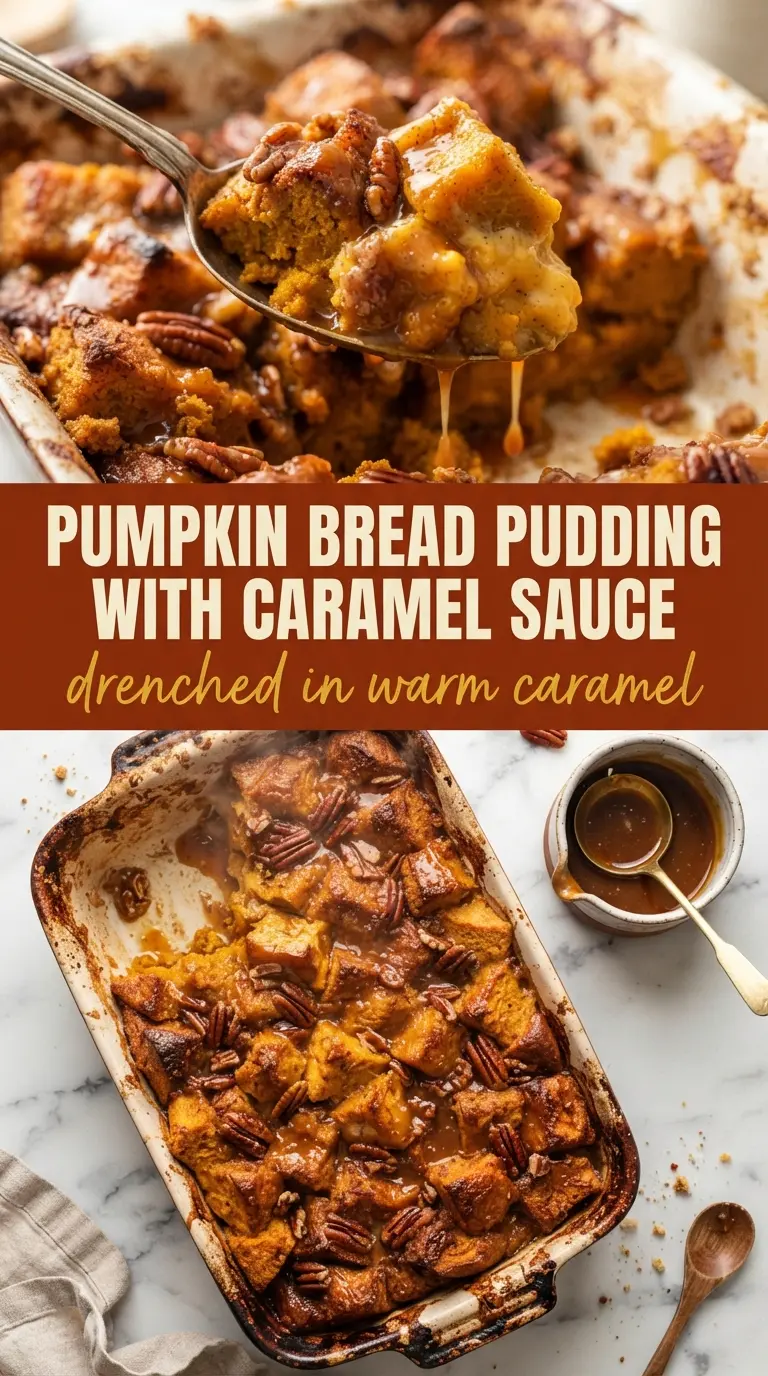
Preheat the oven first, then toast the bread cubes until the outsides feel dry and slightly crisp. That step is what keeps the bread from collapsing into a dense pudding. Brush the baking dish with a little melted butter so the edges brown instead of sticking, then whisk the custard until it looks completely smooth and no streaks of pumpkin remain.
Add the bread and toss gently until every cube is coated. Pressing the bread down a couple of times during the soak helps the custard reach the center pieces. If the top looks dry after soaking, don’t add more bread; just spoon a little custard from the edges over the top before it goes into the oven. Bake until the top is puffed, golden, and the center no longer sloshes when you move the pan.
Toasting the Bread
Spread the cubes on a baking sheet and toast them until the outsides feel lightly dry. You are not looking for color here so much as structure. This is what lets the bread hold onto the custard without turning mushy the moment it bakes.
Mixing the Pumpkin Custard
Whisk the pumpkin, eggs, milk, cream, sugars, spice, vanilla, and salt until the mixture looks smooth and glossy. Any streaks of pumpkin or pockets of sugar will show up later as uneven bites. If the custard looks lumpy, keep whisking before you add the bread.
Soaking and Baking
Once the bread is coated, let it sit for 20 minutes before baking. That soak time matters because the center cubes need time to absorb liquid before the heat hits them. Bake until the top is golden and the center is set with just a slight wobble, not a liquid ripple.
Making the Caramel Sauce
Cook the butter, brown sugar, and cream together over medium heat until the sauce thickens and turns glossy. Stir constantly so the sugar dissolves instead of crystallizing on the sides of the pan. Take it off the heat before it looks fully thick; it tightens as it cools, and cooking it too long can make it turn grainy.
How to Adapt It for Different Pans, Diets, and Leftovers
Dairy-Free With Full Flavor
Use full-fat coconut milk in place of the cream and whole milk, then swap the butter for a neutral dairy-free butter substitute. The custard will still set, but the coconut note will come through a little, especially in the sauce. If you want the cleanest flavor, choose an unsweetened dairy-free milk with more fat and skip anything thin or watery.
Using Sandwich Bread Instead of Brioche
Plain sandwich bread works, but the finished pudding will be softer and less rich. Cut it into cubes and toast it a little longer so it can stand up to the custard. If the loaf is very soft, reduce the soaking time by a few minutes so it doesn’t turn paste-like.
Making It Ahead for Brunch
You can assemble the pudding, cover it, and refrigerate it overnight before baking. The bread will absorb even more custard, which gives you a slightly denser center and a deeper pumpkin flavor. Let the dish sit at room temperature while the oven preheats so the middle doesn’t go into the oven ice-cold.
Storage and Reheating
- Refrigerator: Store leftovers covered for up to 4 days. The texture firms up as it chills, but it stays pleasant.
- Freezer: The baked pudding freezes well in portions for up to 2 months. Wrap slices tightly and thaw in the refrigerator before reheating.
- Reheating: Warm in a 325°F oven until heated through. The microwave works for a single serving, but use short bursts so the custard doesn’t turn rubbery and the sauce doesn’t separate.
Answers to the Questions Worth Asking
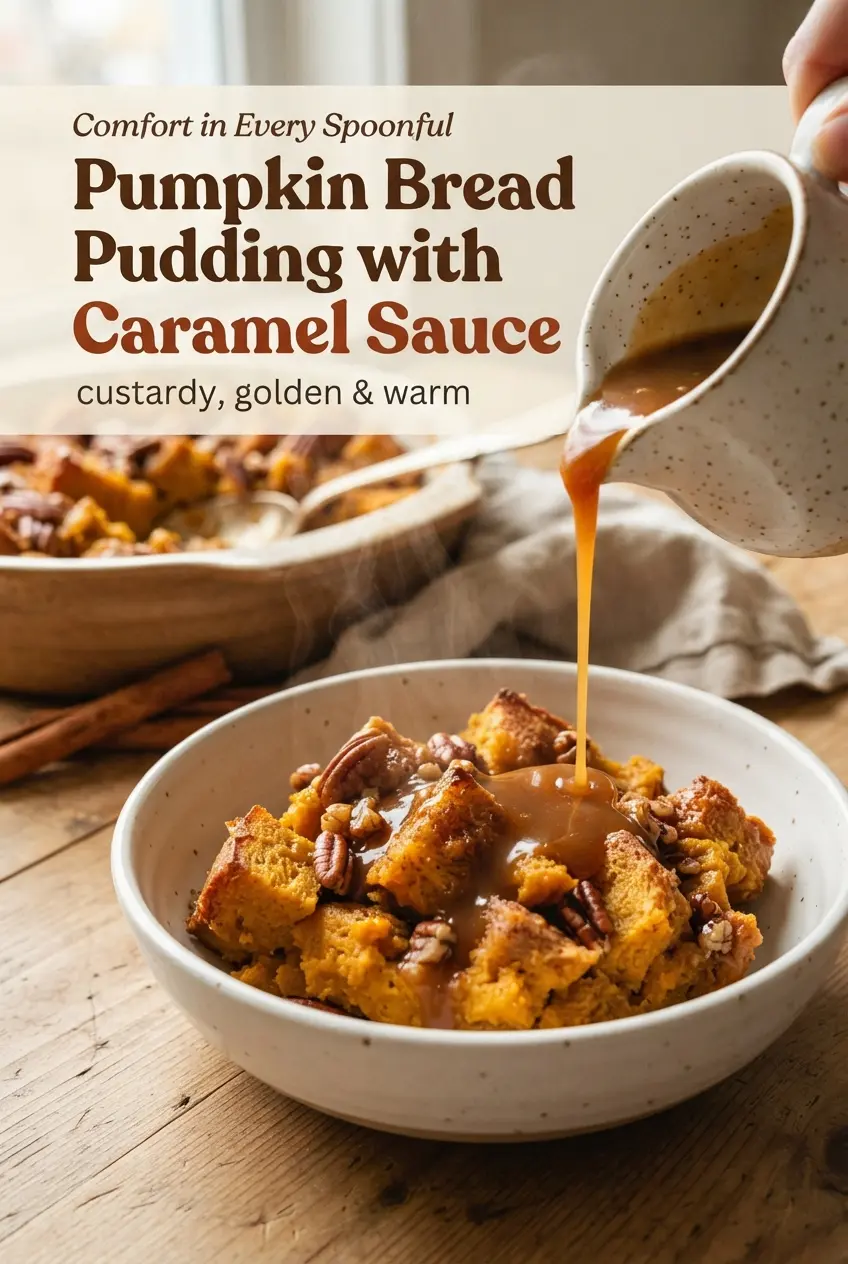
Baked Pumpkin Bread Pudding with Caramel Sauce
Ingredients
Equipment
Method
- Preheat the oven to 350°F (175°C). Spread the bread cubes on a large baking sheet and toast for 10 minutes, until lightly dry on the outside.
- Brush a 9x13-inch baking dish with 1 tbsp of the melted butter.
- In a large bowl, whisk the pumpkin purée, eggs, whole milk, heavy cream, packed light brown sugar, granulated sugar, pumpkin pie spice, ground cinnamon, pure vanilla extract, and salt until completely smooth.
- Add the toasted bread cubes and toss gently until every piece is coated.
- Pour everything into the prepared dish and let it soak for 20 minutes, pressing the bread down into the custard once or twice.
- Drizzle the remaining 3 tbsp melted butter over the top.
- Bake for 45–50 minutes, until puffed and golden brown on top and a knife inserted in the center comes out clean.
- While it bakes, melt the ½ cup butter in a medium saucepan over medium heat. Stir in the packed light brown sugar and heavy cream.
- Bring to a gentle simmer and cook, stirring constantly, for 4–5 minutes until thickened and glossy.
- Remove from heat and stir in the pure vanilla extract and salt.
- Let the bread pudding rest for 10 minutes.
- Scoop into bowls and pour the warm caramel sauce over each serving.