
Silky sweet potatoes, warm spice, and a pecan streusel that bakes up crisp and glossy on top. That contrast is what makes this casserole worth putting on the table every year. The filling stays creamy instead of turning dense, and the topping brings the kind of crackly crunch that keeps people going back for a second spoonful.
The part that matters most is the texture of the sweet potatoes before they hit the oven. They need to be cooked until they mash without any grainy resistance, then mixed just enough to turn smooth and airy. Too much beating, or starting with watery potatoes, leads to a gluey casserole that never sets up the way it should. The topping uses melted butter and brown sugar to bind the pecans into a rough crumble, which helps it bake into a crisp layer instead of sinking into the filling.
Below, I’ll walk through the small details that keep the casserole balanced — from draining the potatoes well to getting the topping evenly scattered so every serving gets both creamy filling and crunchy pecans.
The filling was smooth and fluffy, not watery at all, and the pecan topping stayed crisp even after sitting on the table for a bit. My sister asked for the recipe before dessert was even over.
Love the creamy sweet potato filling and crisp pecan topping? Save this casserole for the holiday menu.
The Reason This Casserole Stays Creamy Instead of Heavy
The filling in a sweet potato casserole can go wrong in two ways: it turns watery, or it bakes up dense and pasty. The watery version starts with undercooked potatoes or potatoes that weren’t drained long enough. The dense version usually comes from overmixing after the eggs go in, which knocks out the light texture you want. This recipe stays on the creamy side because the potatoes are cooked until completely tender, then mashed while they’re still hot so the butter and cream blend in smoothly.
The other piece that matters is the bake time. You aren’t trying to dry out the filling; you’re just setting the eggs and crisping the topping. Pull it when the edges of the pecan layer are bubbling and the center gives a little under the spoon. It will firm up as it rests.
What Each Ingredient Is Doing in This Dish
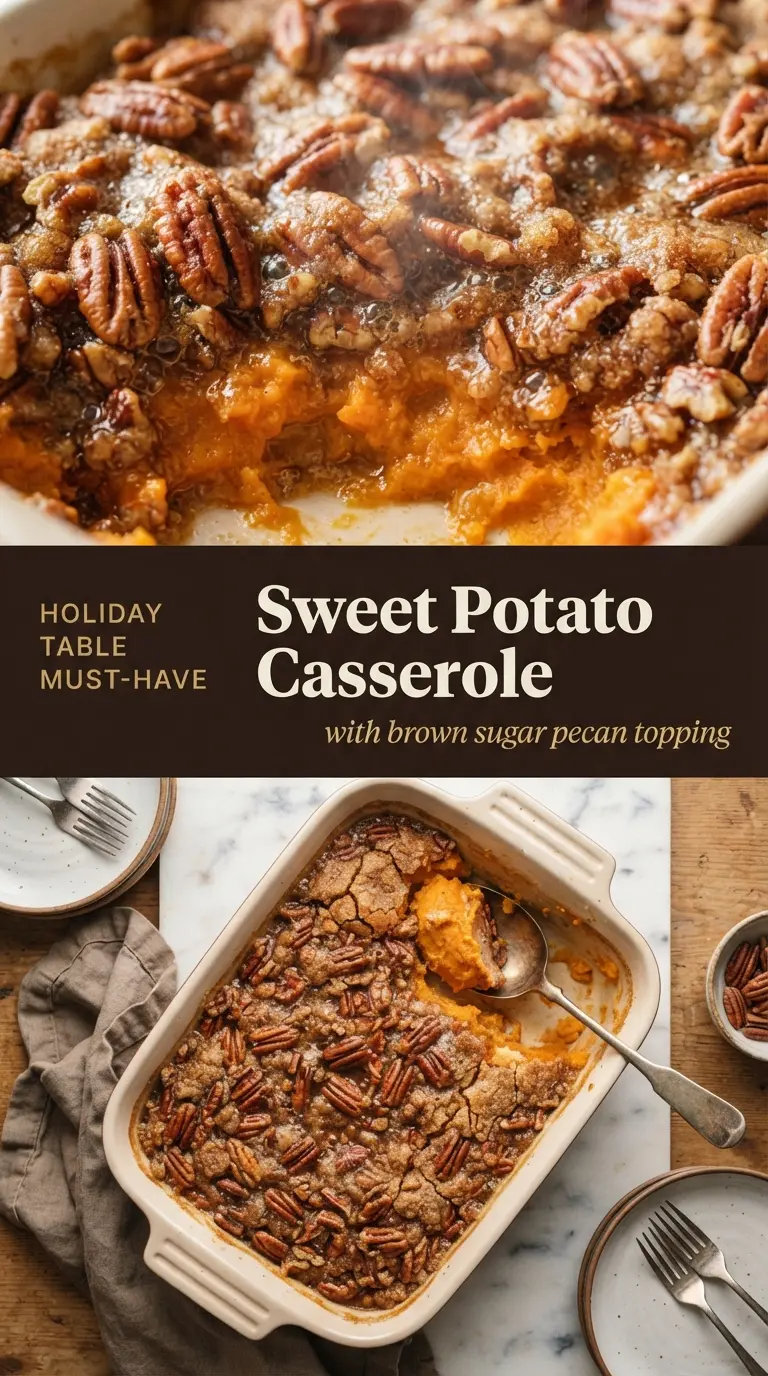
- Sweet potatoes — These are the base of the casserole, so choose ones that feel firm and heavy for their size. The cubes cook faster and more evenly than whole potatoes, which helps you avoid the hard centers that leave little lumps in the finished dish.
- Heavy cream — This adds richness without thinning the filling. Whole milk will work in a pinch, but the casserole won’t taste as lush or hold the same creamy finish.
- Butter — Melted butter carries flavor through both the filling and the topping. In the streusel, it helps the pecans clump and brown instead of baking into loose crumbs.
- Eggs — These give the casserole enough structure to slice and serve cleanly. If you skip them, the filling will taste good but it won’t set with the same custardy softness.
- Brown sugar — You need it in both layers for moisture and caramel depth. Light brown sugar keeps the sweetness round without overpowering the sweet potatoes.
- Pecans — This is the topping that gives the dish its signature crunch. Chop them by hand so you get a mix of small and medium pieces; the smaller bits fill in the gaps and the larger ones give the topping texture.
Building the Casserole So the Topping Stays Crisp
Cooking the Sweet Potatoes Until They Collapse Under a Fork
Start the sweet potato cubes in cold water and bring them up together. That gives the centers time to soften before the outsides start to break down. Drain them well, then let the steam escape for a minute or two before mashing. If they go into the bowl wet, the casserole can turn loose and soupy instead of creamy.
Mashing and Mixing Without Turning the Filling Gluey
Return the potatoes to the hot pot and mash them while they’re still warm. Add the butter, cream, sugar, and spices first so they blend in easily, then stir in the eggs until the mixture looks smooth and cohesive. Stop as soon as everything is combined. Overworking sweet potatoes after the eggs are in is what gives you that dense, sticky texture nobody wants.
Scattering the Streusel So Every Bite Gets Crunch
Mix the topping until the butter coats the flour and sugar and the pecans look clumpy, not sandy. That rough paste is what turns into the crisp top in the oven. Sprinkle it all the way to the edges of the dish instead of piling it in the center. Thin spots bake faster, and you want an even layer that browns at the same pace.
How to Adapt This for Different Tables and Timelines
Make-Ahead Assembly for Holiday Mornings
You can assemble the casserole a day ahead and refrigerate it before baking. Keep the topping separate until just before it goes in the oven if you want the pecans to stay at their crunchiest. If you do add the topping early, it still works, but the sugar will soften a little more overnight.
Dairy-Free Version That Still Tastes Rich
Use full-fat coconut milk or an unsweetened dairy-free creamer in place of the heavy cream, and swap in a plant-based butter that bakes well. The filling will still be smooth and flavorful, though it picks up a faint coconut note if you use coconut milk. That works nicely with the sweet potatoes, but it shifts the casserole away from the classic buttery flavor.
No-Pecan Topping
If you’re cooking for someone who can’t have nuts, replace the pecans with rolled oats or crushed cornflakes for crunch. The topping won’t taste as buttery and deep, but it still gives you contrast against the soft filling. Keep an eye on it near the end of baking, since both swaps can brown faster than pecans.
Lighter Sweetness for a Side Dish Feel
Cut the brown sugar in the filling by a few tablespoons if you want the sweet potatoes to land closer to a savory side than a dessert-style dish. The casserole will still be smooth and fragrant, just less candy-like. Leave the topping as written if you still want that classic crackly finish.
Storage and Reheating
- Refrigerator: Store covered for up to 4 days. The topping softens a bit, but the filling stays creamy.
- Freezer: Freeze the baked casserole without the topping for the best texture. Wrap tightly and freeze for up to 2 months, then add fresh topping before reheating if you can.
- Reheating: Reheat covered at 325°F until hot through, then uncover for the last few minutes so the topping crisps again. If you blast it at high heat, the edges dry out before the center warms.
Answers to the Questions Worth Asking
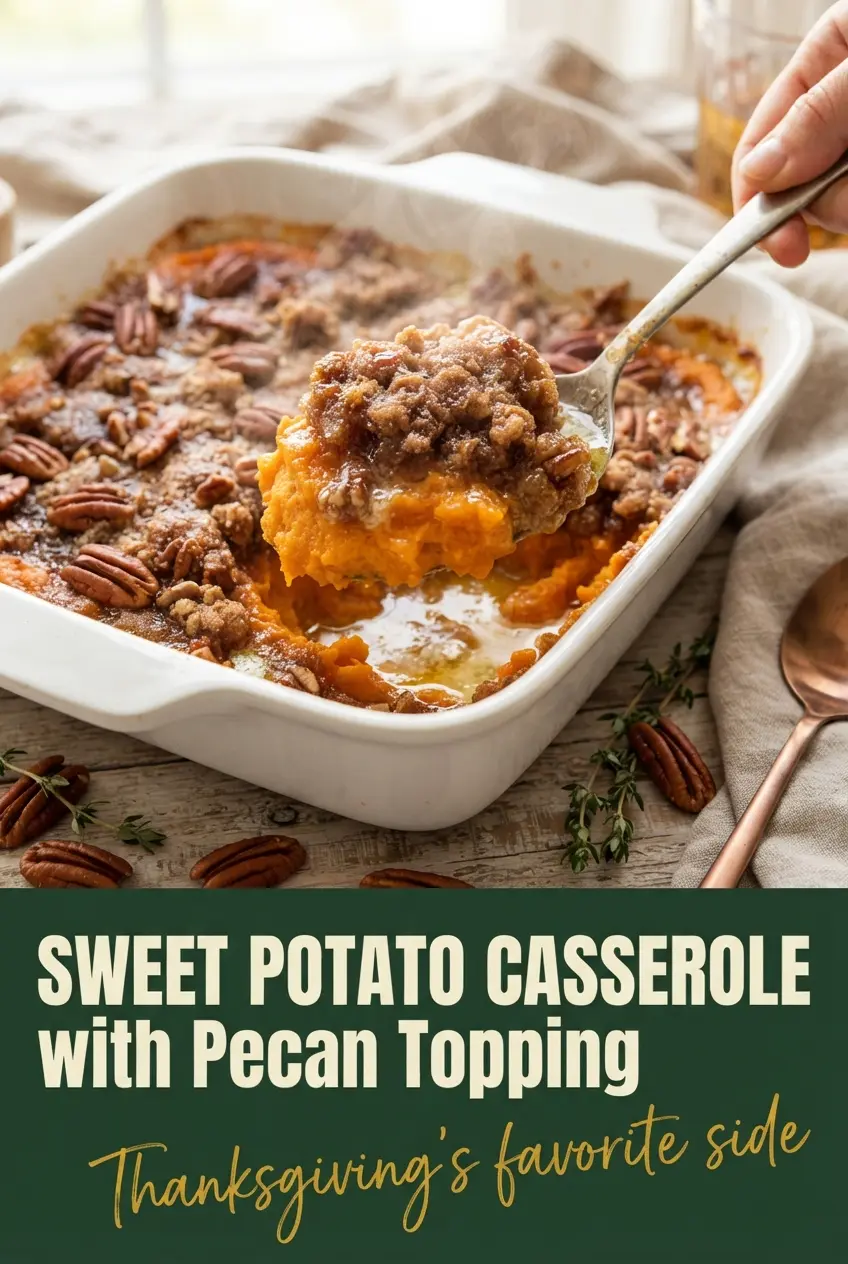
Baked Sweet Potato Casserole with Pecan Topping
Ingredients
Equipment
Method
- Place the sweet potato cubes in a large pot, cover with cold salted water, and bring to a boil over high heat, watching for a steady bubbling boil.
- Reduce to a simmer and cook for 15–20 minutes, until very tender when pierced with a fork, then drain well.
- Preheat the oven to 350°F (175°C) and grease a 9x13-inch baking dish.
- Return the sweet potatoes to the pot and mash until smooth, scraping out any lumps.
- Stir in the brown sugar, heavy cream, melted butter, eggs, vanilla, cinnamon, nutmeg, and salt until creamy and fully combined.
- Spread the sweet potato mixture evenly in the prepared dish.
- In a medium bowl, stir the brown sugar, all-purpose flour, melted butter, and salt until it forms a thick paste.
- Fold in the chopped pecans, distributing them throughout the thick paste.
- Crumble the pecan topping evenly over the sweet potatoes, covering the surface completely.
- Bake for 30–35 minutes at 350°F (175°C), until the topping is golden and bubbly at the edges.
- Let the casserole rest for 10 minutes before serving, so the filling sets and slices cleanly.