
The bread cubes should feel dry and crisp at the edges when they come out of the oven, not soft in the middle like fresh bread. That little change in texture matters in Best Sausage Stuffing: dry bread takes up the broth and egg mixture without collapsing into a dense, soggy layer.
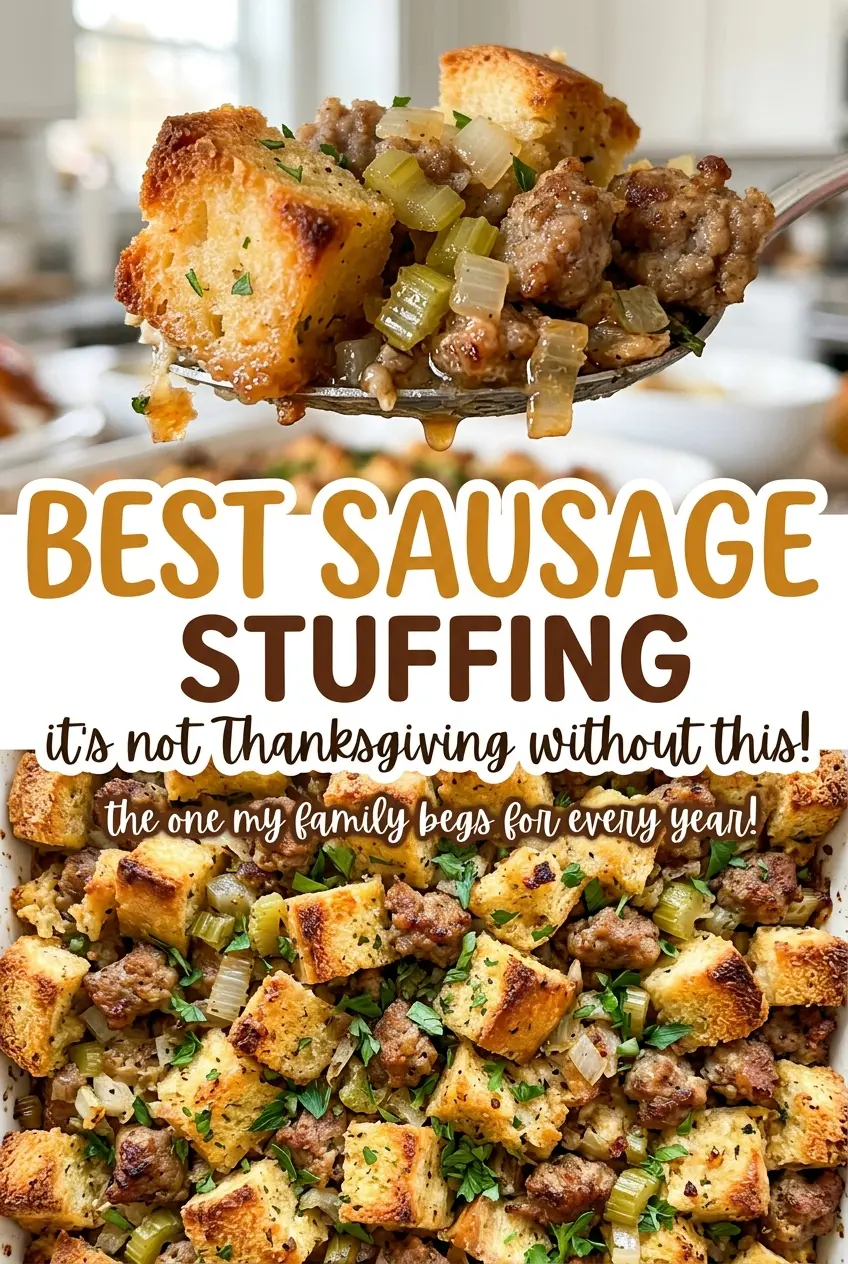
I like how the mild pork sausage gives the stuffing a savory backbone while the onion, celery, sage, and thyme keep each bite familiar and balanced. The covered bake lets the center set gently; uncovering the dish at the end gives the top time to turn golden. After a short rest, the spoonfuls hold together while staying tender inside.
Kitchen Note
Keep the skillet after browning the sausage. The butter melts right over those browned bits, and they bring a deeper savory taste to the onion and celery.
Save Best Sausage Stuffing for a cozy dinner or holiday table: crisp golden edges, a tender center, and plenty of savory sausage in every scoop.
Why Drying the Bread First Keeps Stuffing from Turning Heavy
Stuffing has to hold enough broth to feel tender without losing the shape of its bread cubes. Day-old bread helps, but it can still carry plenty of moisture; drying it in the oven gives the cubes a more even starting point. They can then take in the broth and egg mixture without turning mushy before the casserole has time to bake.
Cutting the bread into even cubes helps, too. Smaller pieces soften faster, while oversized pieces can stay dry in the center when the surrounding bread is already moist. Once the cubes are dry and crisp, toss the whole mixture until the liquid is distributed across the bread rather than pooling at the bottom of the bowl. The eggs help the mixture set as it bakes, so each serving has structure instead of falling apart into loose, wet crumbs.
What the Bread, Sausage, and Broth Each Bring to the Pan
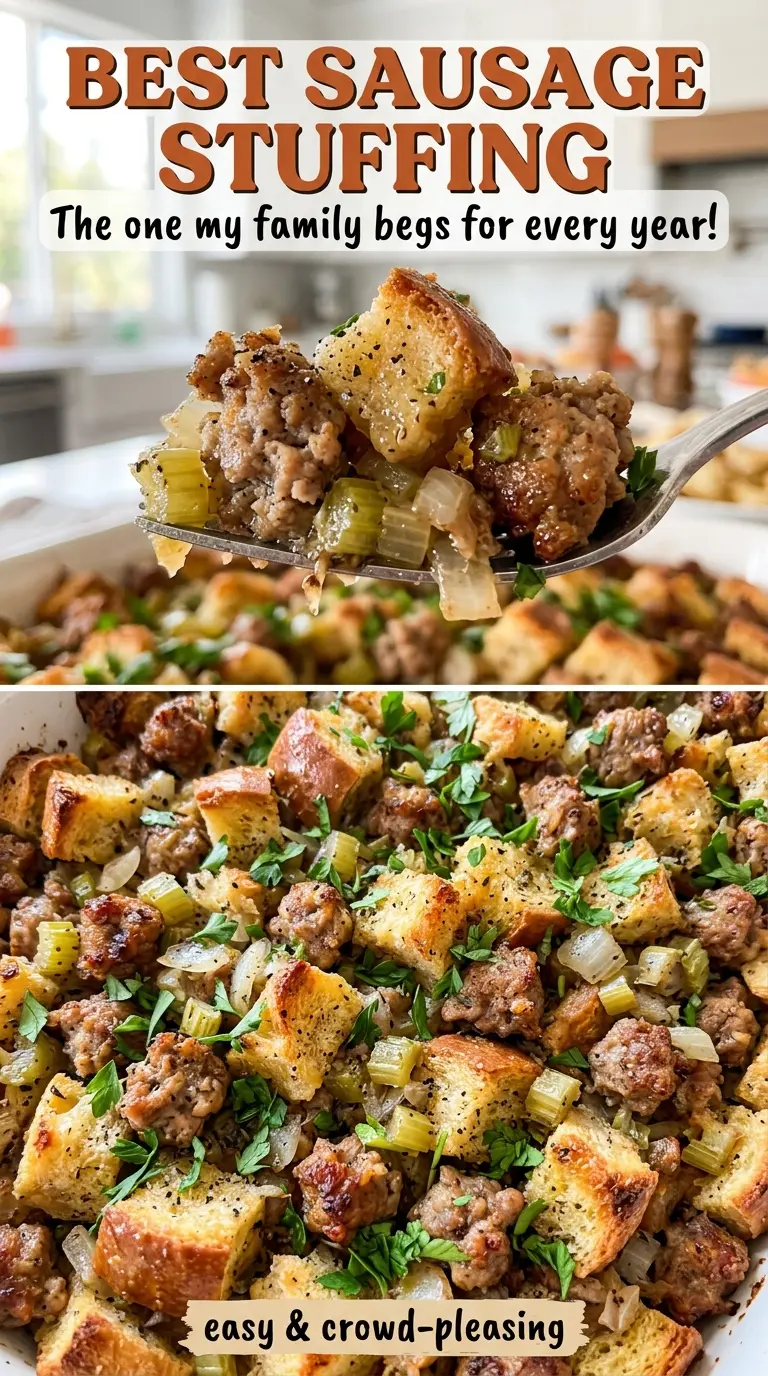
- Country-style bread — A sturdy loaf gives the stuffing cubes that hold their shape after soaking. Day-old bread is convenient, but fresh bread works once it has been dried in the oven. A sturdy sourdough loaf is a useful swap; expect a gentle tang that comes through alongside the sage.
- Mild bulk pork sausage — Bulk sausage breaks into the small pieces that spread through the casserole, and its savory seasoning supports the herbs without taking over. Choose a fresh sausage you enjoy eating on its own; the mild version keeps the finished stuffing balanced rather than fiery.
- Unsalted butter, onion, and celery — Butter carries the flavor of the vegetables and dried herbs, while finely chopped onion and celery soften into the stuffing instead of leaving large crunchy pieces. Unsalted butter also gives you more control over the seasoning alongside the sausage and broth.
- Low-sodium chicken broth and eggs — Broth moistens the bread, and the eggs help the casserole set into cohesive servings. Low-sodium broth keeps the sausage from making the finished dish taste overly salty. Whisk the eggs thoroughly into the broth so they distribute evenly.
- Dried sage and thyme — These dried herbs bring a concentrated, savory flavor that holds up through baking. Crumble them between your fingers as you add them to the warm vegetables to release their aroma.
- Fresh parsley — Chopped parsley gives the mixture a clean, fresh note against the browned sausage and dried herbs. Chop it shortly before using so it stays bright instead of bruising in the bowl.
How to Build the Stuffing in Four Stages
Dry the Cubes Before They Meet the Broth
Heat the oven to 300°F and spread the bread cubes in a single layer on a rimmed baking sheet. Bake for 30 to 40 minutes, stirring once, until the cubes feel dry and crisp. If they still feel soft, give them the full time they need within that range rather than relying on color; they don’t need to be deeply browned. Transfer the bread to a large bowl, then raise the oven temperature to 350°F.
Brown the Sausage into Small Pieces
Cook the bulk sausage in a large skillet over medium heat for 8 to 10 minutes. Break it into small pieces as it cooks so the meat distributes through the bread instead of landing in a few large clumps. Look for browned edges and sausage cooked through before transferring it to the bowl. Keep the skillet for the vegetables.
Soften the Vegetables and Wake Up the Herbs
Melt the butter in the same skillet, then add the finely chopped onion and celery. Cook over medium heat for 6 to 8 minutes, until the vegetables have softened; if they begin browning quickly, lower the heat so they soften without scorching. Stir in the sage, thyme, salt, and pepper, then add the vegetables and chopped parsley to the bread and sausage. Toss to combine.
Moisten, Cover, and Brown the Top
Whisk the broth and eggs together in a medium bowl, pour them over the bread mixture, and toss until evenly moistened. Transfer everything to a greased 9×13-inch baking dish and cover it tightly with foil. Bake for 30 minutes, remove the foil, and bake for another 20 to 25 minutes, until the top is golden and the center reaches 160°F. Rest the dish for 10 minutes before serving so the stuffing can settle into easy-to-scoop portions.
Three Practical Ways to Adapt This Sausage Stuffing
Give It a Little More Heat
Swap the mild bulk pork sausage for hot bulk pork sausage. The cooking method stays the same, but the meat brings more peppery heat to each bite, so the sage and thyme will taste a little less prominent.
Make a Gluten-Free Version
Use sturdy gluten-free country-style bread in place of the regular bread, keeping the cubes the same size. Dry the cubes until crisp as usual; gluten-free loaves differ in texture, so judge the cubes by feel rather than assuming they’ll need exactly the same drying time.
Make It Dairy-Free
Replace the butter with an equal amount of olive oil when softening the onion and celery. The stuffing will still be savory and tender, though it loses the rounded, buttery taste of the original.
Storage and Reheating
- Refrigerator: Keep leftovers covered for 3 to 4 days. The crisp top will soften as the stuffing chills.
- Freezer: Freeze cooled portions in an airtight container for up to 2 to 3 months, then thaw them in the refrigerator. The bread may be a little softer after thawing.
- Reheating: Cover the stuffing and warm it in a 350°F oven until the center reaches 165°F. Uncover near the end if you want to bring back some color; reheating uncovered the whole time can dry the top before the middle warms.
Questions I Get Asked About This Sausage Stuffing
Best Sausage Stuffing
Ingredients
Equipment
Method
- Heat the oven to 300°F and spread the bread cubes on a rimmed baking sheet. Bake for 30 to 40 minutes, stirring once, until dry and crisp.
- Transfer the bread cubes to a large bowl and raise the oven temperature to 350°F.
- Cook the sausage in a large skillet over medium heat for 8 to 10 minutes, breaking it into small pieces, until browned and cooked through.
- Transfer the sausage to the bowl with the bread.
- Melt the butter in the same skillet, add the onion and celery, and cook over medium heat for 6 to 8 minutes until softened.
- Stir in the sage, thyme, salt, and pepper.
- Add the vegetables and parsley to the bread mixture, then toss to combine.
- Whisk the broth and eggs in a medium bowl, pour the mixture over the bread mixture, and toss until evenly moistened.
- Transfer the stuffing to a greased 9x13-inch baking dish and cover tightly with foil.
- Bake for 30 minutes, then remove the foil and bake for 20 to 25 minutes more, until the top is golden and the center reaches 160°F.
- Rest for 10 minutes before serving.