
Blackened salmon gets its edge from heat, dry seasoning, and a pan that’s hot enough to sear before the fish has time to stick. The crust turns deep and smoky, with just enough char to stand up to the cool peach salsa on top. That contrast is the whole point: crisp spice on the outside, tender salmon in the middle, then a bright burst of fruit and lime with every bite.
The trick here is keeping the salmon dry before it hits the skillet and letting the spice blend cling in a thin, even coat. A cast iron pan helps, but what matters most is not crowding the fish or moving it too early. You want the crust to set so it releases cleanly, and once it does, the whole dish comes together fast.
Below, I’ve included the exact timing cues I use for a good blackened crust, plus a few smart swaps if your peaches aren’t perfect or you want to adjust the heat. The salsa needs a short rest while the fish cooks, and that little pause makes the flavors taste joined up instead of separate.
The salmon got that dark crust without drying out, and the peach salsa tasted even better after it sat while I cooked. My husband kept spooning the extra juices over rice.
Save this blackened salmon with peach salsa for the night you want a fast dinner with a smoky crust and a bright, juicy topping.
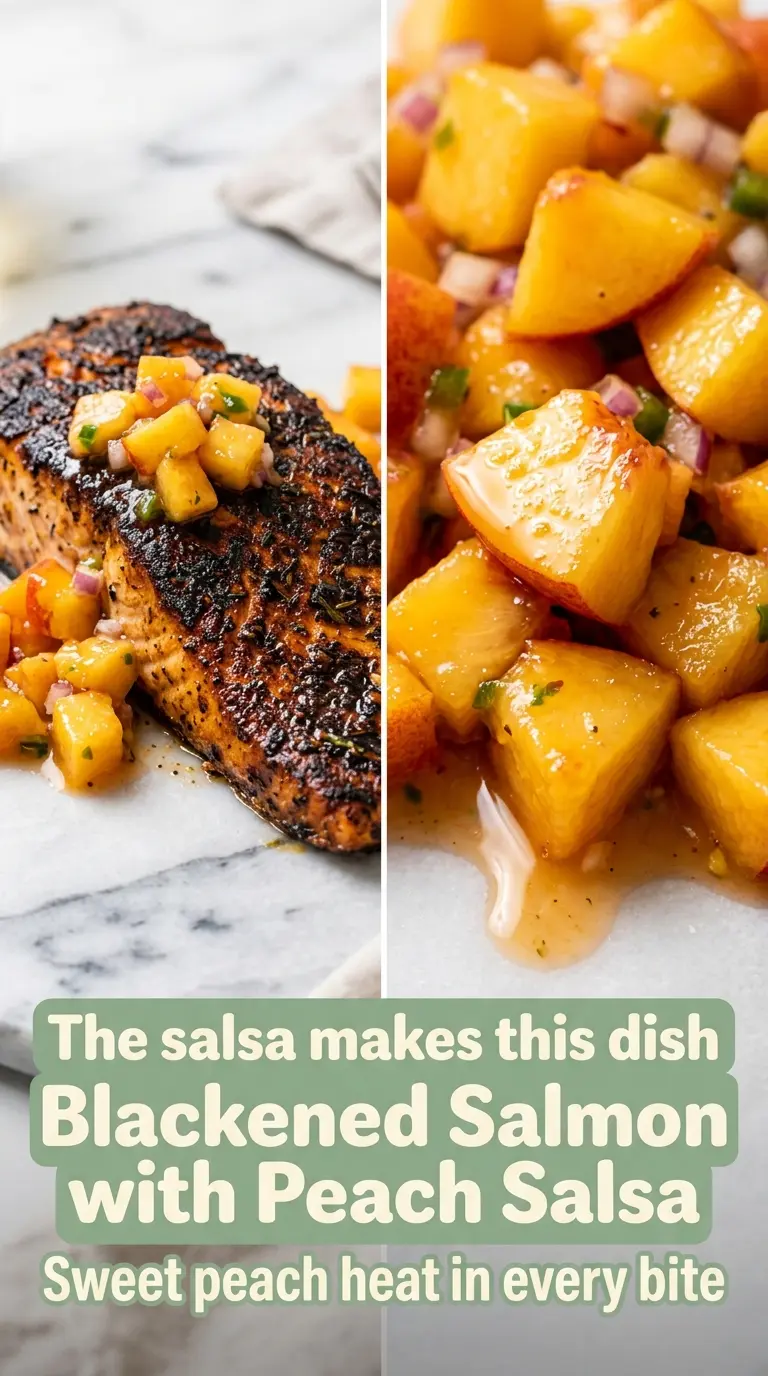
The Secret to a True Blackened Crust Without Burning the Spices
Blackened doesn’t mean burnt spices stuck to pale fish. It means the seasoning blooms fast in hot oil and forms a dark, savory crust before the salmon overcooks underneath. If the pan is only medium-hot, the spices can taste raw and muddy; if it’s screaming hot and the oil is smoking hard, the exterior can scorch before the center turns silky.
The balance comes from dry salmon, a thin coat of oil, and a skillet that’s fully heated before the fish goes in. Cast iron gives the most even crust, but any heavy skillet that holds heat well can work. The salmon should sizzle the second it lands, then stay put until the crust releases on its own.
- Salmon fillets — Skin-on gives you a little more insurance against overcooking, but skinless works fine if your pan is well heated and lightly oiled. Choose fillets that are similar in thickness so they finish at the same time.
- Smoked paprika — This carries most of the color and that warm, smoky note. Regular paprika works in a pinch, but you’ll lose some depth.
- Cayenne pepper — This is where the gentle heat lives. Cut it back if you want the peach salsa to lead, or leave it as written for a little back-of-the-throat warmth.
- Peaches — Use ripe peaches with some give when pressed. Hard peaches stay bland and crunchy; overripe ones collapse into mush. If peaches aren’t in season, nectarines hold their shape a bit better and work nicely.
- Lime juice and honey — The lime wakes up the fruit, and the honey rounds off sharp onion and jalapeño edges. If your peaches are very sweet, use a smaller drizzle of honey and taste again after 10 minutes.
Building the Salsa While the Salmon Cooks
Start the salsa first so the peach pieces have time to release a little juice and pick up the salt, lime, and onion. That rest is what makes the topping taste cohesive instead of chopped. Stir gently so you don’t crush the fruit, then leave it alone while you work on the fish.
Mix the spice blend
Stir the paprika, garlic powder, onion powder, oregano, thyme, cayenne, black pepper, and salt in a small bowl until the color looks uniform. A quick mix now keeps you from ending up with one fillet that tastes heavy on garlic and another that misses the heat. This blend should look like a dry, brick-red rub.
Season and dry the salmon
Pat the fillets completely dry before the seasoning goes on. Any surface moisture turns into steam, and steam is the enemy of that crust. Press the spice blend onto all sides in an even layer, then let the fish sit for a minute so the seasoning hydrates just enough to stick.
Sear without moving the fish
Heat the oil until it shimmers, then add the salmon and leave it alone. If you try to flip too early, the crust tears and leaves the good stuff in the pan. After 3 to 4 minutes, the edges should look deeply browned and the fish should release with a thin metal spatula; if it fights you, give it another 30 seconds.
Finish with a short rest
Pull the salmon when it flakes easily and still looks slightly glossy in the center. A 2-minute rest off the heat lets the juices settle so they don’t run out the second you plate it. Spoon the peach salsa over the top right before serving so the fish stays crisp underneath.
How to Adapt This for Different Peaches, Heat Levels, and Diets
Make It Milder for Kids or Heat-Sensitive Eaters
Cut the cayenne in half and remove the jalapeño seeds and ribs, or skip the jalapeño entirely. The salmon will still taste smoky and bold, but the salsa will lean sweeter and fresher instead of spicy.
Use Nectarines or Mango When Peaches Aren’t Great
Nectarines swap in one-for-one and bring a firmer bite, while mango makes the salsa softer and sweeter. Both work with the blackened spice, but mango makes the dish taste rounder and less tart, so keep the lime in place.
Make It Dairy-Free and Naturally Gluten-Free
The recipe already fits both of those needs as written, which is part of why it works so well for a mixed crowd. Serve it with rice, corn tortillas, or a simple salad and you’ve got a full meal without changing a thing.
How to Store Leftovers Without Losing the Crust
Refrigerate the salmon and salsa separately in airtight containers for up to 2 days. The crust softens after chilling, so reheat the fish gently in a skillet over low heat or in a 300°F oven until just warmed through; high heat dries out the salmon fast. The salsa is best cold or at room temperature, stirred once before serving.
Answers to the Questions Worth Asking
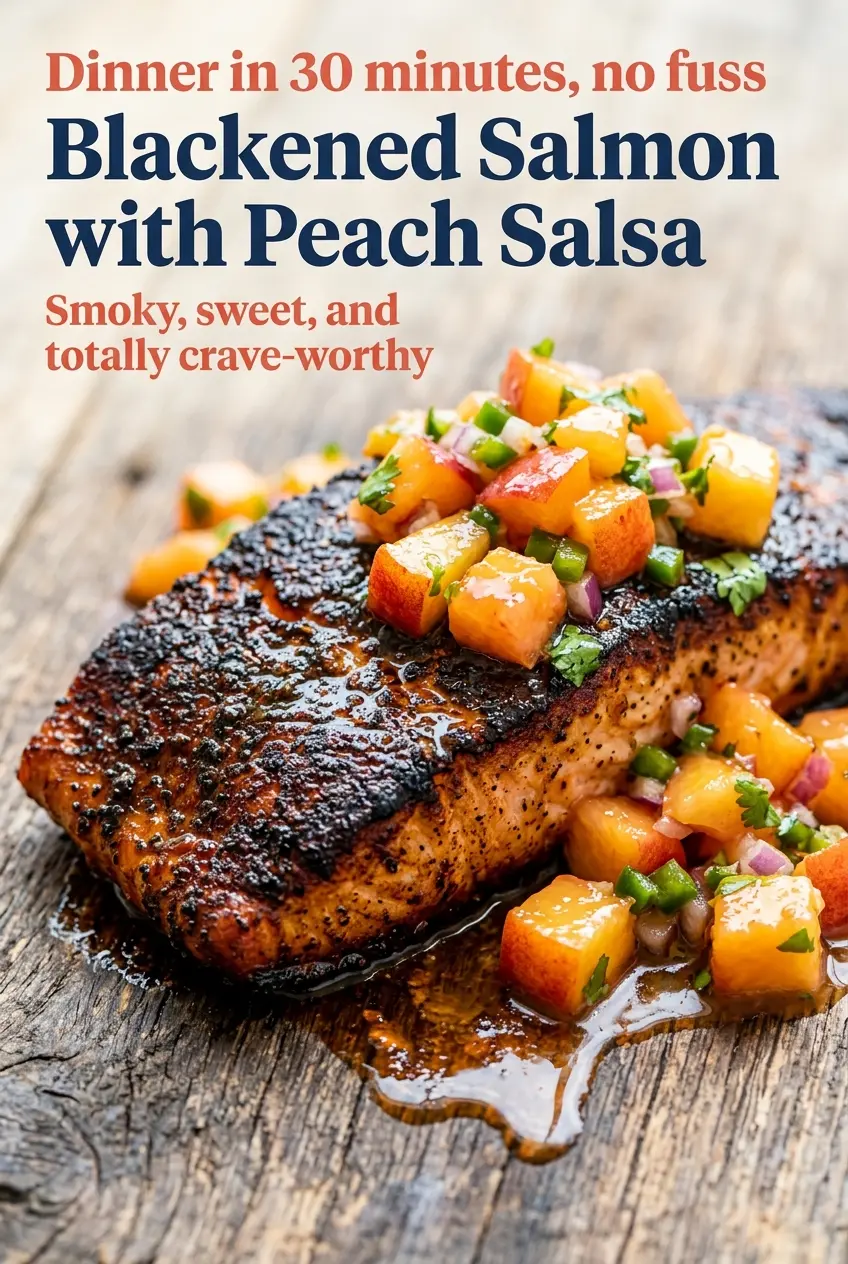
Blackened Salmon with Peach Salsa
Ingredients
Equipment
Method
- In a medium bowl, combine the diced peaches, red onion, red bell pepper, jalapeño, cilantro, lime juice, honey, and salt. Toss gently and set aside to let flavors meld while you cook the salmon.
- In a small bowl, stir together the smoked paprika, garlic powder, onion powder, dried oregano, dried thyme, cayenne pepper, black pepper, and kosher salt until evenly mixed. The spice blend should look uniformly speckled.
- Pat the salmon fillets dry with paper towels, then coat all sides evenly with the spice blend, pressing gently to adhere. Make sure the crust looks thick and dark on top and on the sides.
- Heat the olive oil in a cast iron skillet over medium-high heat until shimmering. The surface should shimmer actively, not smoke heavily.
- Add the salmon to the skillet and cook 3–4 minutes per side, until a dark blackened crust forms and the fish flakes easily with a fork. For best accuracy, aim for an internal temperature of 130–135°F (medium) in the thickest part.
- Remove the salmon from the skillet and let it rest 2 minutes off heat so juices redistribute. The crust should stay intact and the fillet edges should look slightly set.
- Plate the salmon and spoon the peach salsa generously over the top, letting juices pool around the fillet. Serve right away while the salsa is cool and the fish is hot.