
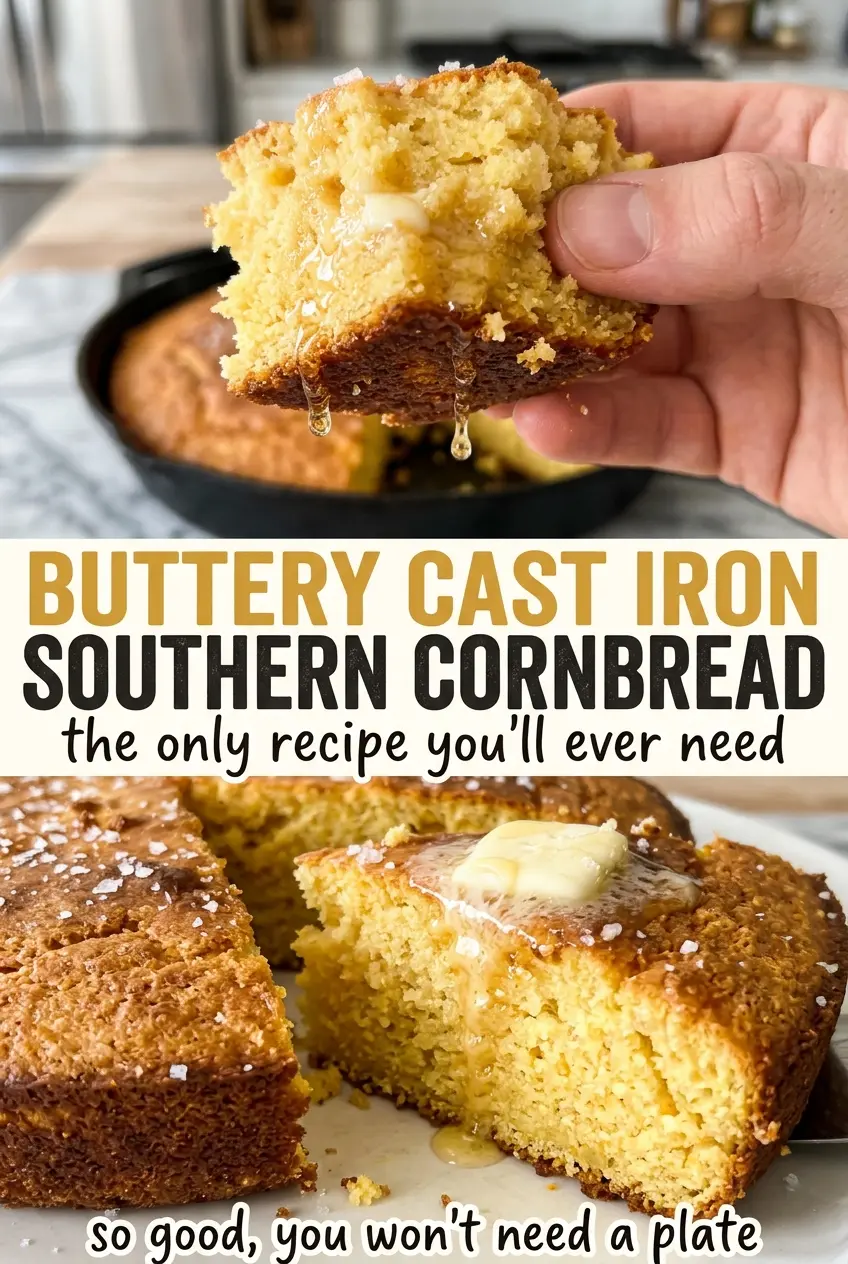
When the batter meets the hot, oiled skillet, it starts cooking at the edges before the pan even goes back into the oven. That quick sizzle is what gives this buttery cast iron Southern cornbread its browned edge, while the center stays tender. I like that the batter comes together in one bowl for the dry ingredients and another for the wet ones, with no mixer or fussy technique to get in the way.
The skillet needs its full 10 minutes in the oven before the batter goes in. That head start heats the oil and the cast iron evenly, so the bottom begins to brown as soon as the batter lands. Stir the wet and dry mixtures together only until combined; a few seconds too much mixing can make cornbread dense instead of tender. The finished round is golden, set in the center, and brushed with melted butter while it’s still warm.
Kitchen Note
Stop stirring as soon as the floury patches disappear. The batter doesn’t need to look perfectly smooth; extra mixing is more likely to make the crumb firm than to improve it.
Save this buttery cast iron Southern cornbread for its golden edges, tender middle, and simple skillet method.
Why the Skillet Has to Be Hot Before the Batter Goes In
A cast iron pan doesn’t heat instantly, and a cold skillet gives the batter a slow start. Preheating the 10-inch skillet with the oil for 10 minutes brings the pan up to temperature before the batter arrives. When you pour, the batter begins setting against that hot surface instead of sitting in a cool layer of oil. That early contact helps create the browned bottom and edges that distinguish skillet cornbread from a softer bake in a pan that hasn’t been preheated.
There’s a practical reason to heat the oil in the skillet, too: it coats the cooking surface before the batter goes in. The pan will be extremely hot when you take it out, so use a dry oven mitt and keep the skillet level as you pour. Don’t wait around with the batter in the hot pan; pour it in carefully and get the skillet back into the oven. The goal isn’t to brown the batter on the stovetop, but to give the whole round a hot start before it bakes through.
Use the visual cues together rather than relying on color alone. The top should be golden, and the center should look set rather than wet or wobbly. A pale top with a loose center needs more oven time within the stated baking window; a deeply browned edge by itself doesn’t tell you whether the middle is ready.
How Cornmeal, Buttermilk, and Butter Shape This Skillet Bread
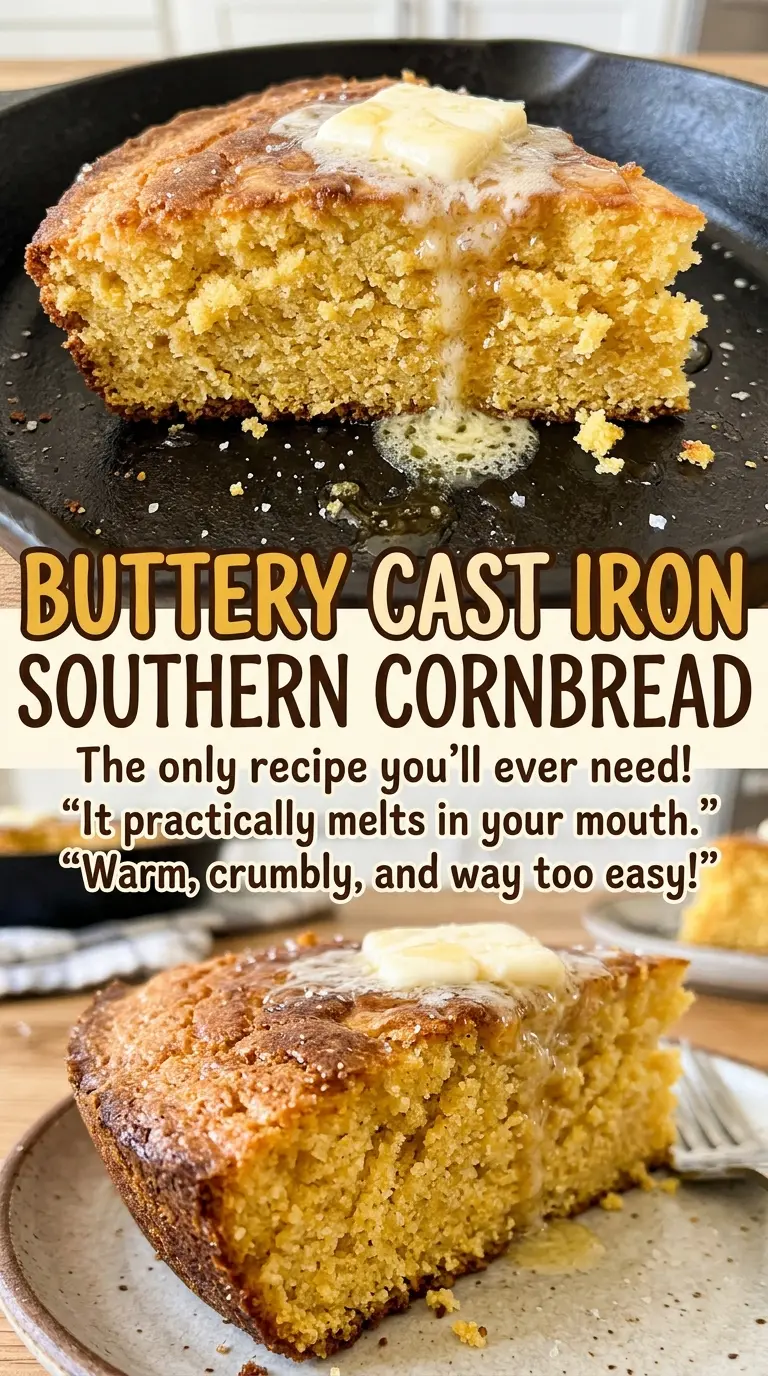
- Yellow cornmeal — This is the main ingredient, giving the cornbread its corn flavor and characteristic crumb. Choose a fresh bag that smells clean and mildly sweet; cornmeal that has been stored too long can taste stale. Use yellow cornmeal for the color and result this version is built around.
- All-purpose flour — Flour balances the cornmeal and helps the slices hold together. It’s a supporting ingredient, so a standard all-purpose flour works well here; there’s no need to reach for a specialty brand.
- Buttermilk — Its tang brings brightness, and its acidity works with the baking soda in the batter. Keep it rather than substituting regular milk, which would change the acidity balance and the result. Whisk it with the egg before combining it with the dry ingredients.
- Egg and leaveners — The egg helps bind the batter, while baking powder and baking soda provide lift. Measure the leaveners carefully and whisk them through the dry mixture so they’re distributed instead of concentrated in one spot.
- Unsalted butter — Melted butter goes into the batter, and the remaining melted butter is brushed over the top after baking. Dividing it at the start makes that finishing step easy to remember. Unsalted butter keeps the salt level controlled.
- Vegetable oil — The oil goes directly into the skillet before it heats. It helps coat the cast iron and supports a browned edge; have it in the pan before the skillet goes into the oven.
From a Hot Oiled Skillet to a Set, Golden Center
Heat the skillet with its oil
Set the oven to 425°F and place the 10-inch cast iron skillet with the vegetable oil inside for 10 minutes. This preheat gives the pan time to heat through rather than just warming its surface. While it heats, prepare the batter so it’s ready to pour. Use care when handling the skillet once it comes out of the oven; the handle will be hot too.
Whisk the dry ingredients evenly
In a large bowl, whisk together the yellow cornmeal, flour, baking powder, baking soda, and salt. Take a moment to break up any visible clumps of leavener, since an uneven mix can leave pockets of lift or salt. There’s no need to sift the mixture. Set the bowl near your work area while you prepare the wet ingredients.
Combine the wet mixture without overworking it
In a medium bowl, whisk the egg and buttermilk, then whisk in 4 tablespoons of the melted butter. Pour that mixture into the dry ingredients and stir just until combined. Stop when you no longer see dry flour or cornmeal sitting separately in the bowl; the batter doesn’t need to be beaten smooth. Overmixing is the most likely way to lose a tender crumb at this stage.
Bake, butter, and let the crumb settle
Carefully remove the hot skillet and pour in the batter. Bake for 18 to 22 minutes, until the top is golden and the center is set. If the middle still looks wet, give it more time in the oven rather than pulling it early because the edges have colored. Brush the top with the remaining tablespoon of melted butter, then leave the cornbread in the skillet for 10 minutes before serving.
Two Ways to Cut and Serve the Same Skillet Cornbread
Cut eight generous wedges
For the classic skillet presentation, cut the round into eight wedges after its 10-minute rest. Each piece keeps a share of the browned outside and the softer center, and the portion count matches the eight servings.
Make smaller pieces for a shared table
Cut the rested cornbread into smaller squares when you want more modest portions. This changes only the serving size, not the batter or baking method; the edge pieces will still have more browned crust than pieces from the center.
Storage and Reheating
- Refrigerator: Store cooled leftovers in an airtight container for 3 to 4 days. The crumb will firm up as it chills.
- Freezer: Wrap individual cooled pieces tightly and freeze for up to 3 months. Thaw in the refrigerator before reheating for more even warming.
- Reheating: Cover pieces loosely with foil and warm in a 300°F oven until heated through, usually about 10 minutes for an individual piece. Leaving it uncovered for a long reheat can dry the edges before the center warms.
Questions That Come Up With Cast Iron Cornbread
Buttery Cast Iron Southern Cornbread
Ingredients
Equipment
Method
- Heat the oven to 425°F and place a 10-inch cast iron skillet with the vegetable oil in the oven for 10 minutes.
- In a large bowl, whisk together the cornmeal, flour, baking powder, baking soda, and salt.
- In a medium bowl, whisk the egg and buttermilk, then whisk in 4 tablespoons of the melted butter.
- Pour the wet ingredients into the dry ingredients and stir just until combined.
- Carefully remove the hot skillet from the oven, pour in the batter, and bake for 18 to 22 minutes, until golden brown and set in the center.
- Brush the top with the remaining 1 tablespoon melted butter and let the cornbread rest in the skillet for 10 minutes before serving.