
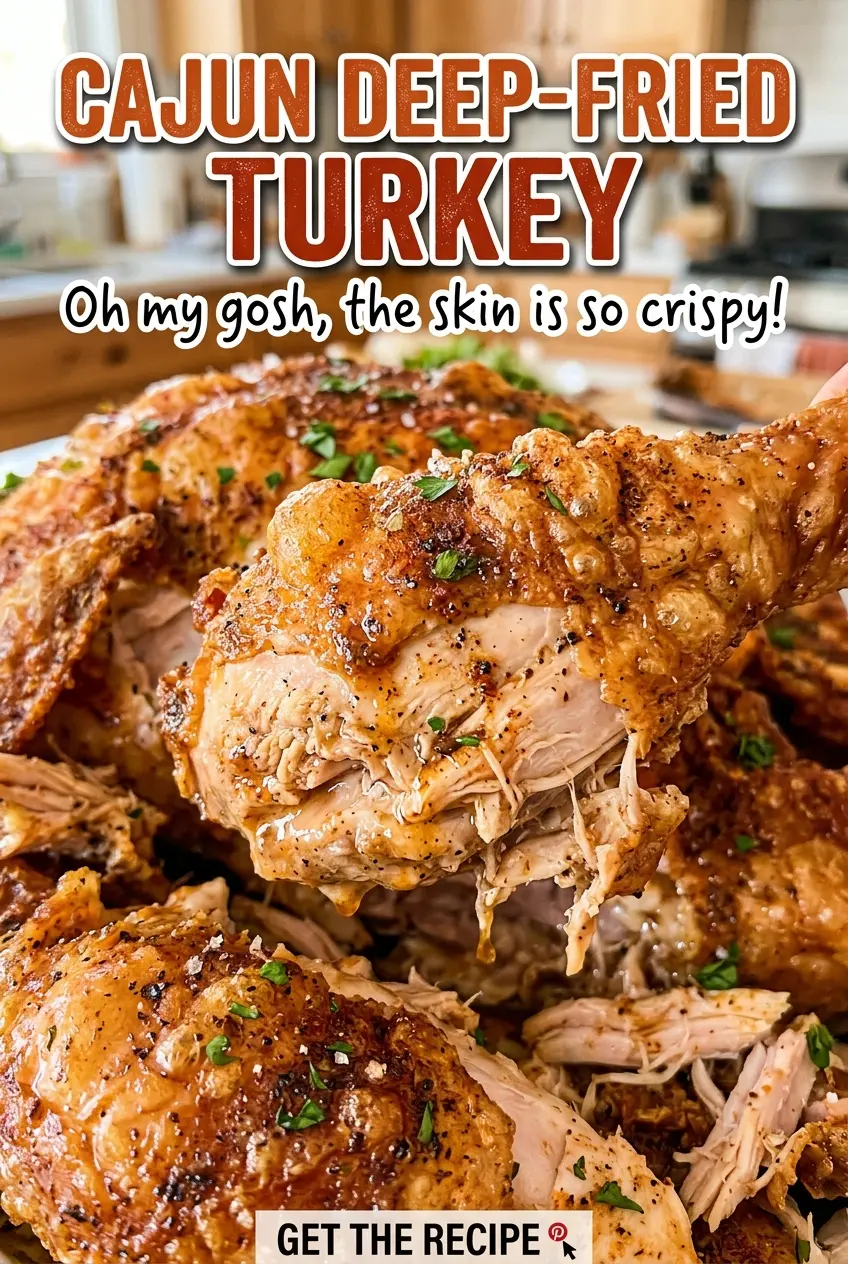
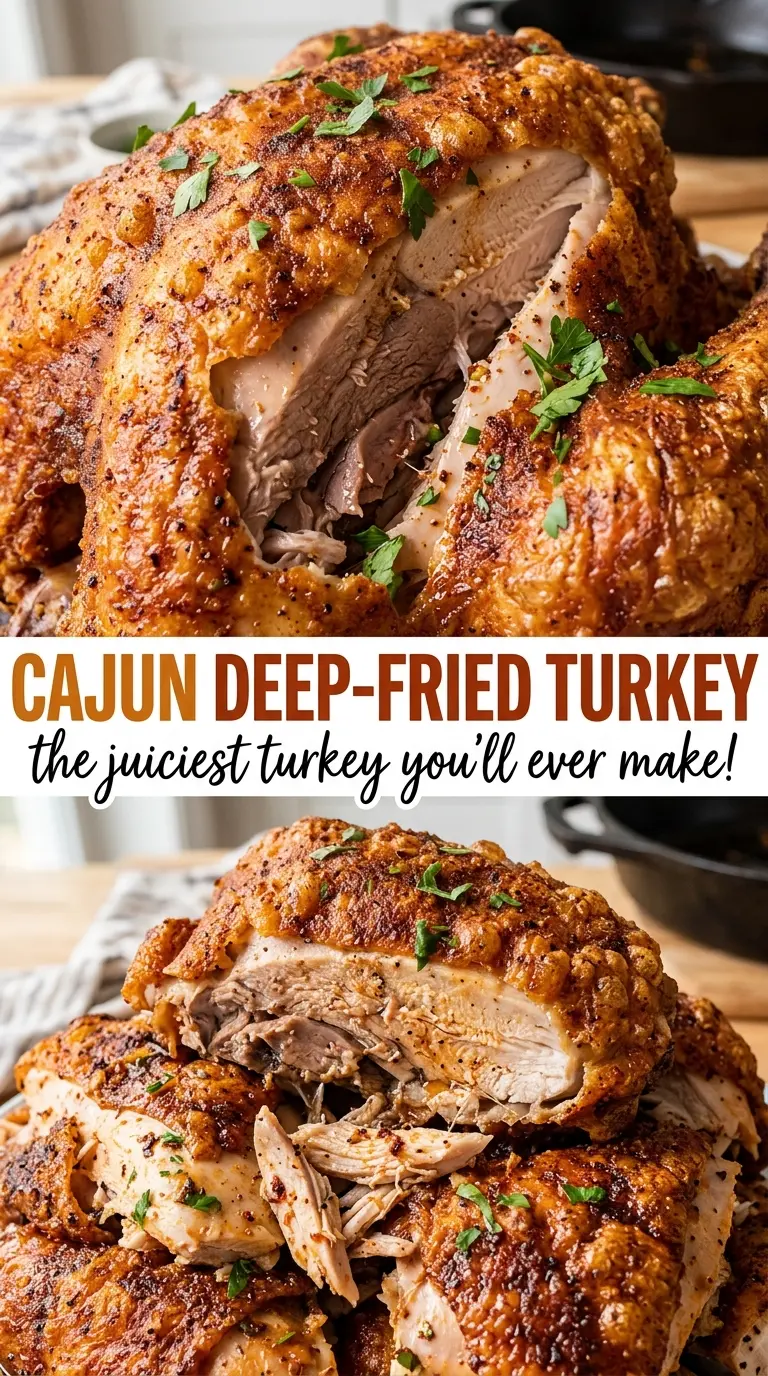
The moment the turkey goes into hot oil is when a little planning pays off: the oil rises, the sizzle gets loud, and there’s no safe way to guess whether the pot was filled to the right level. Cajun Deep Fried Turkey takes a bit of prep, but the result is worth it: deeply seasoned meat with browned skin, cooked in a fraction of the time a whole turkey needs in the oven.
I use a butter-and-broth injection to carry Cajun flavor into the breasts and legs, then finish the outside with a simple Cajun rub. The water-line test takes the guesswork out of the oil, and drying the turkey thoroughly matters before it goes anywhere near the fryer. Plan ahead for the refrigerator time, then keep the frying itself steady and unhurried. The carved turkey is juicy, peppery, and edged with crisp skin.
Kitchen Note
I inject in small amounts and change the needle angle as I move through the breasts, thighs, and drumsticks. That helps distribute the mixture through the meat instead of leaving it concentrated around one entry point.
Save this Cajun Deep Fried Turkey for a holiday or gathering when you want juicy, Cajun-seasoned meat and crisp, browned skin.
Why the Oil Amount Changes With Every Turkey
Four gallons is an upper limit, not a pour-it-all-in instruction. The turkey and basket take up space in the pot, so the amount of oil needed depends on how much room the bird displaces. Guessing with a full pot can leave too little space when the turkey goes in, and hot oil that spills over the rim is a serious fire hazard.
The water-line test gives you a mark for this particular bird and fryer together. You’re measuring the oil level the turkey needs to be surrounded by, not relying on a general number that may not fit your pot. The 30-quart pot’s maximum fill line still matters: the water should reach about an inch above the turkey without crossing that line. If the bird won’t fit below the maximum mark, don’t try to force the setup by adding more liquid or oil. Use a fryer pot sized for the turkey. Once the level is marked, empty the pot and get every bit of water off the pot and basket before adding oil; water and hot oil don’t mix.
The Ingredients That Carry Cajun Flavor Into Every Bite
- Whole turkey — A 12-pound bird is the right size for this fryer setup and cook-time range. A premium bird isn’t necessary, but it must be fully thawed, with the neck and giblets removed. A smaller cut or a much larger bird changes the amount of oil displaced and won’t follow the same timing.
- Peanut oil — It’s a dependable choice for deep frying, and a basic refined peanut oil works well; there’s no need to seek out a specialty bottle. Refined canola oil is a practical neutral-flavored alternative if peanut oil isn’t an option. Whichever oil you use, fill only to the level you marked for the turkey.
- Unsalted butter and low-sodium chicken broth — Butter gives the injection its richness, while broth keeps it fluid and savory. Ordinary grocery-store butter and broth are fine; low-sodium broth leaves room for the salt already present in Cajun seasoning. Low-sodium turkey broth can stand in for the chicken broth with a similar savory result.
- Worcestershire sauce — This adds a tangy, savory note to the injection that broth alone won’t provide. For a gluten-free version, use gluten-free Worcestershire sauce rather than leaving it out.
- Cajun seasoning — Dividing it between the injection and rub lets the same blend season both the meat and the outside. Store-bought blends vary in salt and heat, so choose one you already like; a familiar, reasonably fresh blend is more useful than an expensive specialty jar.
- Garlic powder, cayenne, paprika, and black pepper — These dry seasonings mix smoothly into the injection or rub. Fresh garlic isn’t a good swap in the injector because pieces can obstruct the needle. Use fresh, fragrant ground spices; old paprika and pepper lose much of the aroma that gives the exterior its character.
From a Dry Bird to a Safely Fried Turkey
Thaw, dry, and mark the oil level
Thaw the turkey in its packaging on a rimmed tray in the refrigerator for about 3 days, or until it’s completely thawed; never fry a frozen or partly frozen bird. Remove the neck and giblets, trim excess fat, and pat the turkey thoroughly dry inside and out. Set the turkey in its basket in a 30-quart fryer pot, then add cold water until it’s about 1 inch above the bird without passing the maximum fill line. Remove the turkey and basket, mark the water level, discard the water, and wash and dry the pot and basket completely.
Mix and inject the Cajun butter
Melt the butter in a small saucepan over low heat, then stir in the chicken broth, Worcestershire sauce, part of the Cajun seasoning, garlic powder, and cayenne. Let the mixture cool until it’s warm but still fluid; if it firms up, it won’t move through the injector as readily. Inject it throughout the breasts, thighs, and drumsticks. Set the turkey on a rimmed tray and refrigerate it uncovered for 8 to 24 hours.
Rub the skin and cavity
Stir together the paprika, black pepper, and the remaining Cajun seasoning. Rub the mixture over the skin and inside the cavity, covering the bird evenly without packing seasoning into one spot. Keep the turkey refrigerated while you finish setting up the fryer. The seasoned surface should look evenly coated, not wet with loose clumps of rub.
Lower slowly, fry, and rest
Set the fryer outdoors on level bare ground or concrete, at least 10 feet from buildings and anything combustible; never use it indoors or on a deck. Pour peanut oil into the completely dry pot to the marked level and heat it to 350°F. Keep the turkey refrigerated until the oil is ready, then lower it slowly with the burner off; after the turkey is in and the splattering settles, relight the burner and keep the oil between 325°F and 350°F. Fry about 3 to 4 minutes per pound, or 36 to 48 minutes, then check the thickest part of each breast and the innermost thigh with an instant-read thermometer, avoiding bone; every spot must reach 165°F. If one needs more time, return the bird to the oil for a few minutes and check again, then drain it briefly and rest it on a tray for 20 minutes before carving.
Three Small Changes for a Different Cajun Turkey
Dial Back the Heat
Use half the cayenne in the injection, or leave it out for a gentler bird. The Cajun seasoning and pepper still bring warmth, but you’ll lose the sharper heat that builds at the back of the throat.
Give the Rub a Smokier Edge
Swap smoked paprika for the regular paprika in the rub. It brings a wood-smoke aroma without changing the frying method; the skin may look darker, so judge doneness with the thermometer rather than color.
Make the Seasoning Gluten-Free
Use gluten-free Worcestershire sauce, gluten-free chicken broth, and a gluten-free Cajun seasoning in place of the standard versions. The injection and rub keep their savory, spicy character, though a different seasoning blend may shift the salt or heat slightly.
Storage and Reheating
- Refrigerator: Store carved turkey in a covered container for 3 to 4 days. The skin softens as it sits, though the meat stays good for leftovers.
- Freezer: Freeze carved portions in airtight packaging for up to 2 to 3 months for best quality. Thaw them in the refrigerator before reheating.
- Reheating: Reheat covered portions in a 325°F oven until steaming hot throughout, or microwave a covered portion. Avoid reheating the whole bird; smaller portions warm more evenly.
Questions That Come Up Before Frying a Whole Turkey
Cajun Deep Fried Turkey
Ingredients
Equipment
Method
- Thaw the turkey in its packaging on a rimmed tray in the refrigerator for about 3 days, or until completely thawed; never fry a frozen or partially frozen turkey.
- Remove the neck and giblets.
- Trim excess fat and pat the turkey thoroughly dry inside and out.
- In a 30-quart turkey fryer pot, set the turkey in its basket and add cold water until it reaches about 1 inch above the turkey without exceeding the pot’s maximum fill line.
- Remove the turkey and basket, mark the water level, and discard the water.
- Wash and dry the pot and basket completely.
- Melt the butter in a small saucepan over low heat, then stir in the broth, Worcestershire sauce, 1 tablespoon Cajun seasoning, garlic powder, and cayenne.
- Cool the injection until warm but still fluid.
- Using a meat injector, distribute all the injection in small amounts throughout the breasts, thighs, and drumsticks, changing the needle angle as you go.
- Set the turkey on a rimmed tray and refrigerate uncovered for 8 to 24 hours.
- Mix the paprika, black pepper, and remaining 1 tablespoon Cajun seasoning.
- Rub the mixture over the turkey’s skin and inside the cavity.
- Set the fryer outdoors on level bare ground or concrete at least 10 feet from buildings and anything combustible; never fry on a deck or indoors.
- Pour peanut oil into the completely dry pot up to the marked level, then heat to 350°F.
- Keep the turkey refrigerated until the oil is ready.
- With the burner turned off, lower the turkey slowly into the oil.
- Once the turkey is in and the splattering settles, relight the burner and maintain the oil between 325°F and 350°F.
- Fry for about 3 to 4 minutes per pound, or 36 to 48 minutes.
- Lift the basket and check the thickest part of each breast and the innermost thigh with an instant-read thermometer, avoiding bone; all must reach 165°F.
- If needed, return the turkey to the oil and fry a few minutes longer before checking again.
- Lift the turkey from the oil and let it drain briefly.
- Rest the turkey on a tray for 20 minutes before carving.