
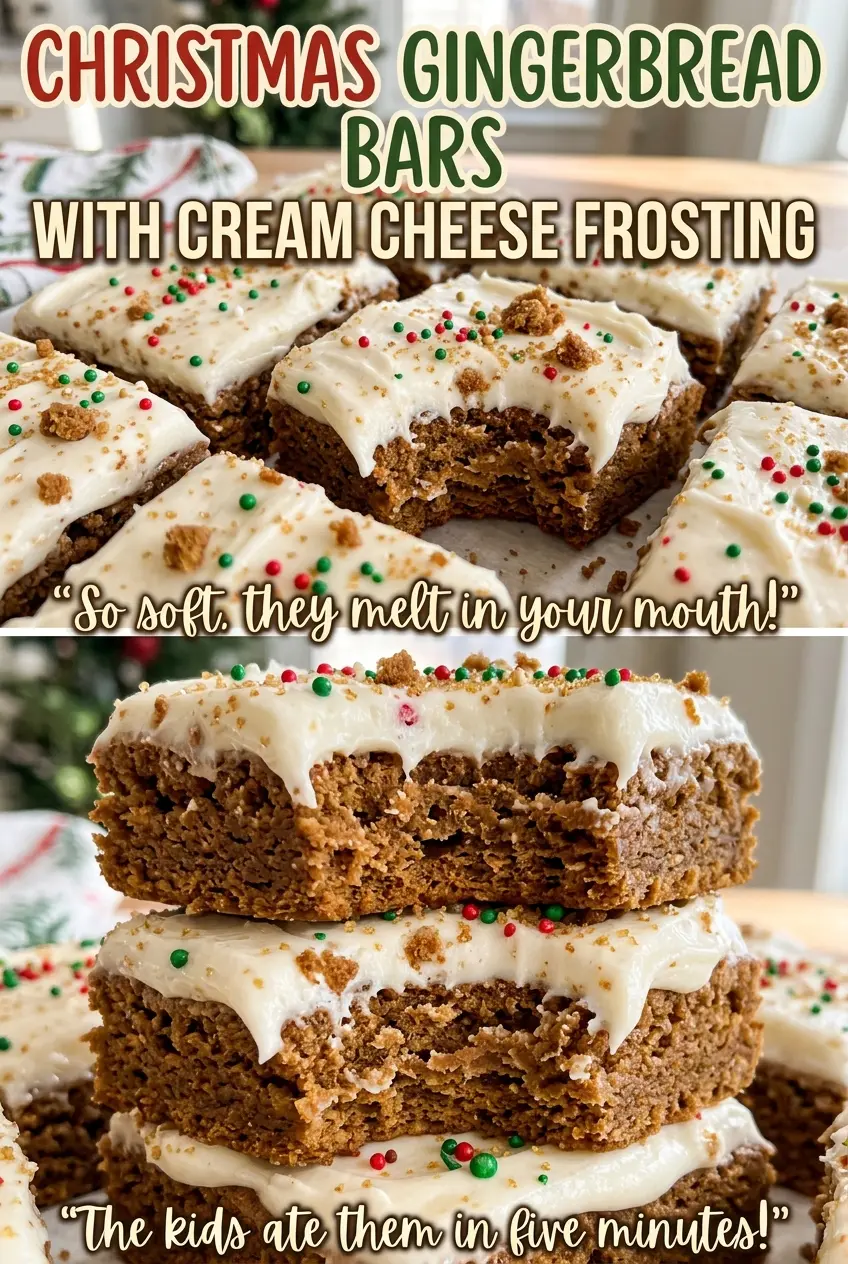
A toothpick that comes out perfectly clean sounds reassuring, but it can mean gingerbread bars have already spent too long in the oven. I look for a few moist crumbs in the center instead. These Christmas gingerbread bars bake up with set edges and a tender middle, then get a smooth cream cheese frosting once they’ve cooled.
The dough is thicker than a pourable cake batter, so spread it all the way into the corners of the pan for even bars. Unsulfured molasses brings the deep gingerbread flavor, while brown sugar and softened butter keep the crumb soft. The warm spices come through without burying the frosting, and each square has that familiar gingerbread taste under a creamy finish.
Kitchen Note
Let the bars cool completely in the pan before you spread on the frosting. Even a little warmth softens the cream cheese topping and makes the finished squares harder to cut neatly.
Save these Christmas gingerbread bars for a holiday bake: warm molasses spice under a smooth cream cheese frosting, cut into shareable squares.
A Clean Toothpick Is the Wrong Finish Line for Molasses Bars
Molasses gives these bars their deep, rounded gingerbread flavor, but it also means the center can look a little soft when the edges are already set. Don’t wait for a toothpick to come out spotless. A few moist crumbs clinging to it are the cue to take the pan out; the bars finish setting as they cool in the pan.
That small difference matters because an overbaked gingerbread bar loses the tender, slightly chewy middle that makes it feel like a bar instead of a dry square of cake. Start checking near the early end of the baking window, especially if your oven tends to run hot. The edges should look set, while the center still has a little softness. A toothpick coated in wet batter needs more time; one with a few crumbs is right where you want it.
Why Unsulfured Molasses and Block Cream Cheese Matter More Than Fancy Brands
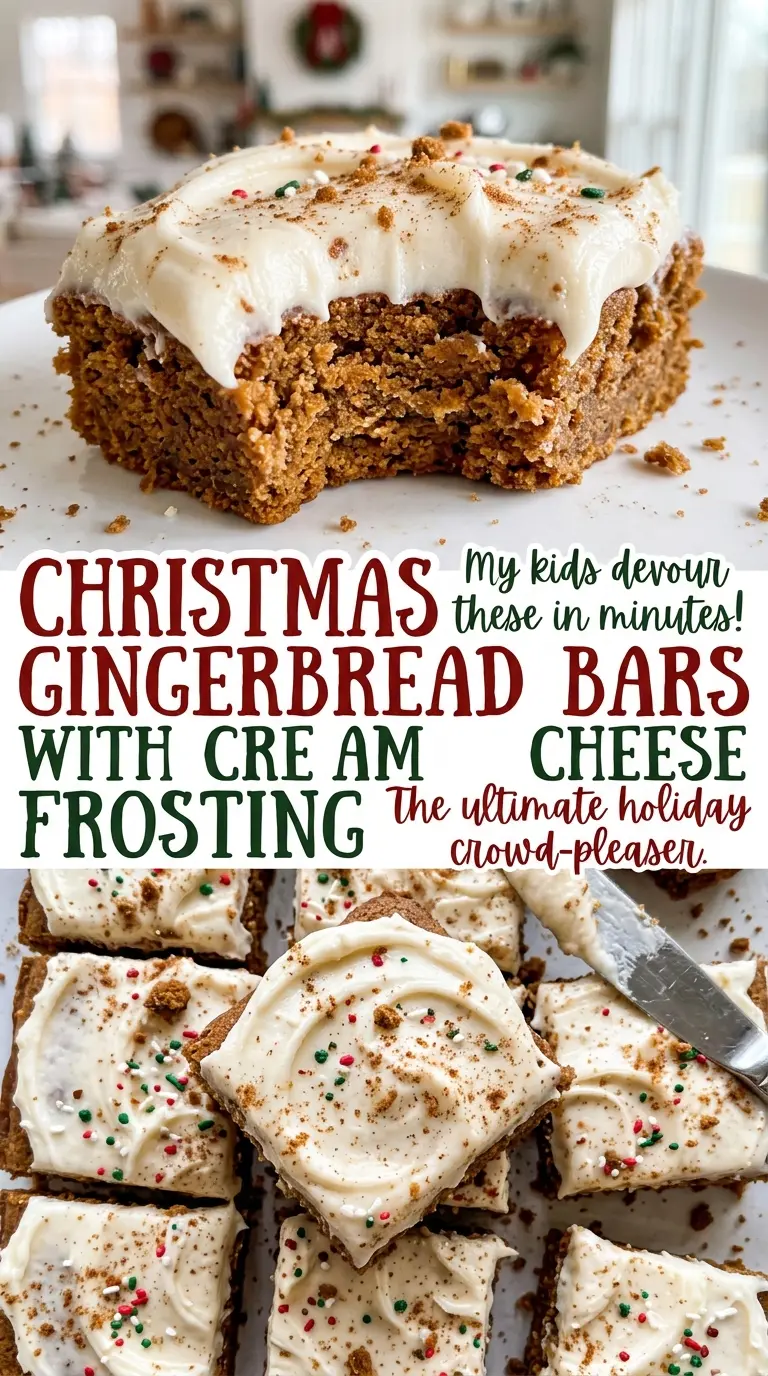
- Unsulfured molasses — This is the defining gingerbread ingredient, bringing both dark sweetness and moisture. A regular grocery-store brand is fine; choose unsulfured rather than blackstrap, which tastes much more intense and can overwhelm the spices. Honey isn’t a close swap because it lacks molasses’ characteristic flavor.
- Ground ginger, cinnamon, and cloves — Ginger leads, cinnamon rounds it out, and cloves add a sharper background note. Fresh, fragrant spices make the bars taste more vivid, but ordinary pantry spices work if they still smell lively when you open the jars.
- Light brown sugar — Its moisture helps keep the crumb soft, and it adds a gentler caramel note alongside the molasses. Packed dark brown sugar works in the same amount if that’s what you have; expect a deeper, more assertive flavor.
- Unsalted butter and the egg — Softened butter creams smoothly with the sugar, while the egg helps bind the thick dough. Use butter softened enough to beat easily but not melted. Unsalted butter keeps the seasoning balanced; salted butter will make the bars taste saltier with the kosher salt still in the mixture.
- Block cream cheese — The block style gives the frosting a thicker, creamier body. Tub-style cream cheese has a softer consistency and can leave the topping loose, so stick with a block for frosting that spreads in an even layer.
- Powdered sugar and vanilla — Powdered sugar makes the frosting smooth and spreadable, while vanilla softens the tang of the cream cheese. Standard grocery-store vanilla works well here; the spices and molasses are the main flavor.
From Thick Gingerbread Dough to Bars That Slice Cleanly
Whisk the spices into the dry ingredients
Heat the oven to 350°F and grease a 9×13-inch baking pan. Whisk the flour, baking soda, ground ginger, cinnamon, cloves, and kosher salt together in a medium bowl so the spices are distributed throughout. This quick mix helps prevent a concentrated pocket of ginger or cloves in one part of the pan.
Cream the butter and brown sugar
In a large bowl, beat the softened butter and packed light brown sugar until creamy, about 2 minutes. Beat in the egg, molasses, and vanilla until combined; the mixture will look dark and smell strongly of gingerbread molasses. Scrape the flour mixture in and mix just until no dry streaks remain, since mixing beyond that point can make the bars tougher.
Spread the thick dough evenly
Transfer the dough to the greased pan and spread it evenly, paying attention to the corners. It’s thick, so work it across the pan rather than expecting it to flow into place. An even layer helps the edges and center bake at a similar pace.
Bake until the edges set and the center leaves crumbs
Bake for 18 to 22 minutes. Look for set edges, then test the center with a toothpick; a few moist crumbs are what you want, not wet batter and not a completely clean pick. Pull the pan from the oven when it reaches that cue so the center stays tender.
Cool before frosting and cutting
Leave the bars in the pan until completely cool. In a large bowl, beat the softened cream cheese and butter until smooth and creamy, then beat in the powdered sugar, vanilla, and kosher salt until smooth. Spread the frosting over the cooled bars and cut into 24 pieces.
Three Ways to Change the Batch Without Losing Its Gingerbread Character
Make a dairy-free batch
Replace both butter measures with the same amount of stick-style dairy-free butter, and use dairy-free cream cheese in place of the block cream cheese. The egg stays in the recipe, so this is dairy-free, not vegan. Choose firm block-style products for a frosting that holds its shape; the flavor may be a little tangier than the original.
Serve them as bite-size squares
For smaller portions on a cookie tray, cut the frosted slab into 48 pieces instead of 24. The smaller squares are easier to pick up between other treats, though you’ll get less frosting on each bite.
Leave the frosting off
Skip the cream cheese topping for a less-sweet gingerbread bar with the spices and molasses out front. The unfrosted surface is less creamy, but the bars are easy to portion and pack without worrying about the frosting smudging.
Storage and Reheating
- Refrigerator: Store the frosted bars covered in an airtight container for up to 5 days. The frosting firms up and the bars feel a little denser when chilled.
- Freezer: Freeze the bars in a single layer until firm, then transfer them to an airtight container with parchment between layers for up to 2 months. Thaw in the refrigerator; the frosting may be a little softer after thawing.
- Reheating: These don’t need reheating. Let a chilled bar sit out briefly before serving if you prefer softer frosting; warming it can make the cream cheese topping loose.
Questions That Come Up Before the First Cut
Christmas Gingerbread Bars with Cream Cheese Frosting
Ingredients
Equipment
Method
- Heat the oven to 350°F.
- Grease a 9x13-inch baking pan.
- In a medium bowl, whisk together the flour, baking soda, ginger, cinnamon, cloves, and salt.
- In a large bowl, beat the 3/4 cup butter and brown sugar until creamy, about 2 minutes.
- Beat in the egg, molasses, and 1 teaspoon vanilla until combined.
- Add the flour mixture and mix just until no dry streaks remain.
- Spread the dough evenly in the prepared pan.
- Bake for 18 to 22 minutes, until the edges are set and a toothpick inserted in the center comes out with a few moist crumbs.
- Cool completely in the pan.
- In a large bowl, beat the cream cheese and 1/2 cup butter until smooth and creamy.
- Beat in the powdered sugar, 1 teaspoon vanilla, and 1/8 teaspoon salt until smooth.
- Spread the frosting over the cooled bars.
- Cut into 24 pieces.