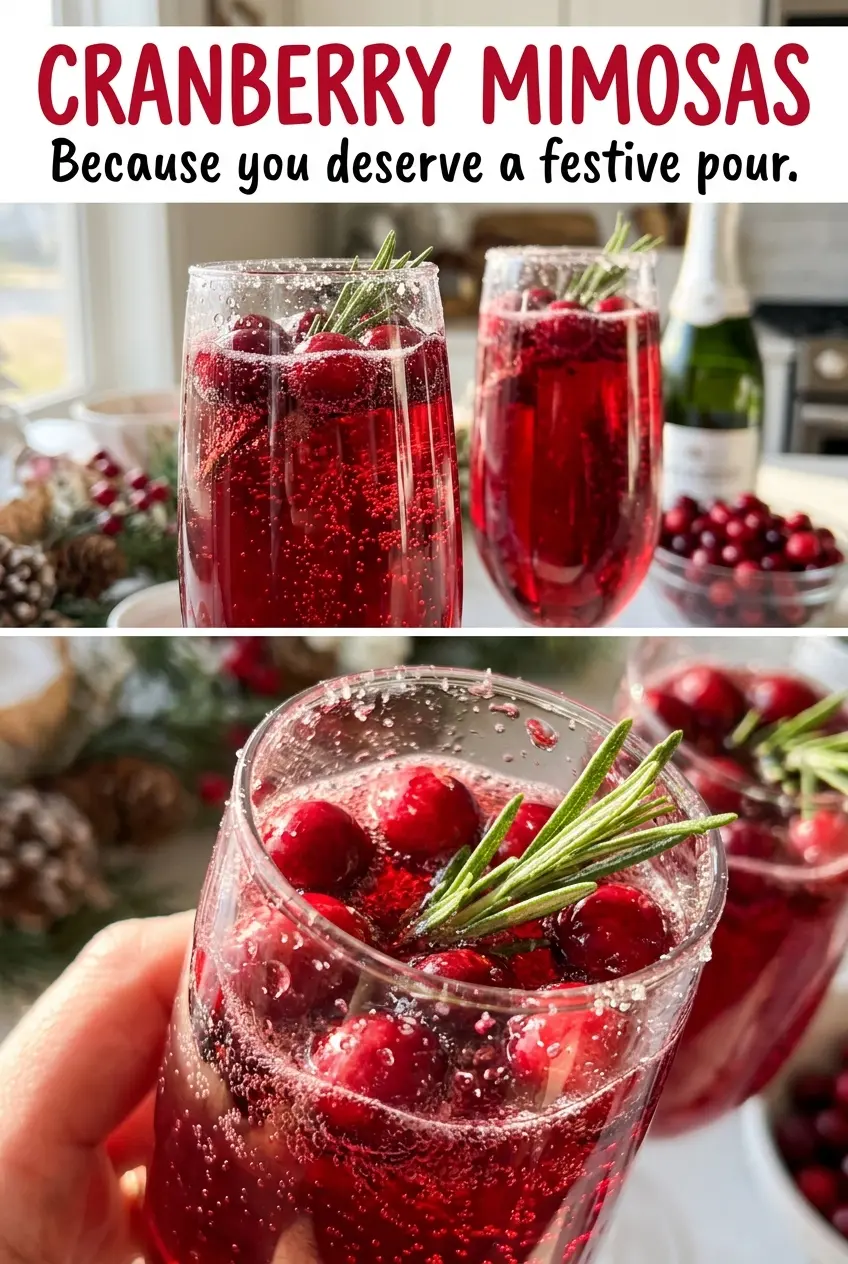
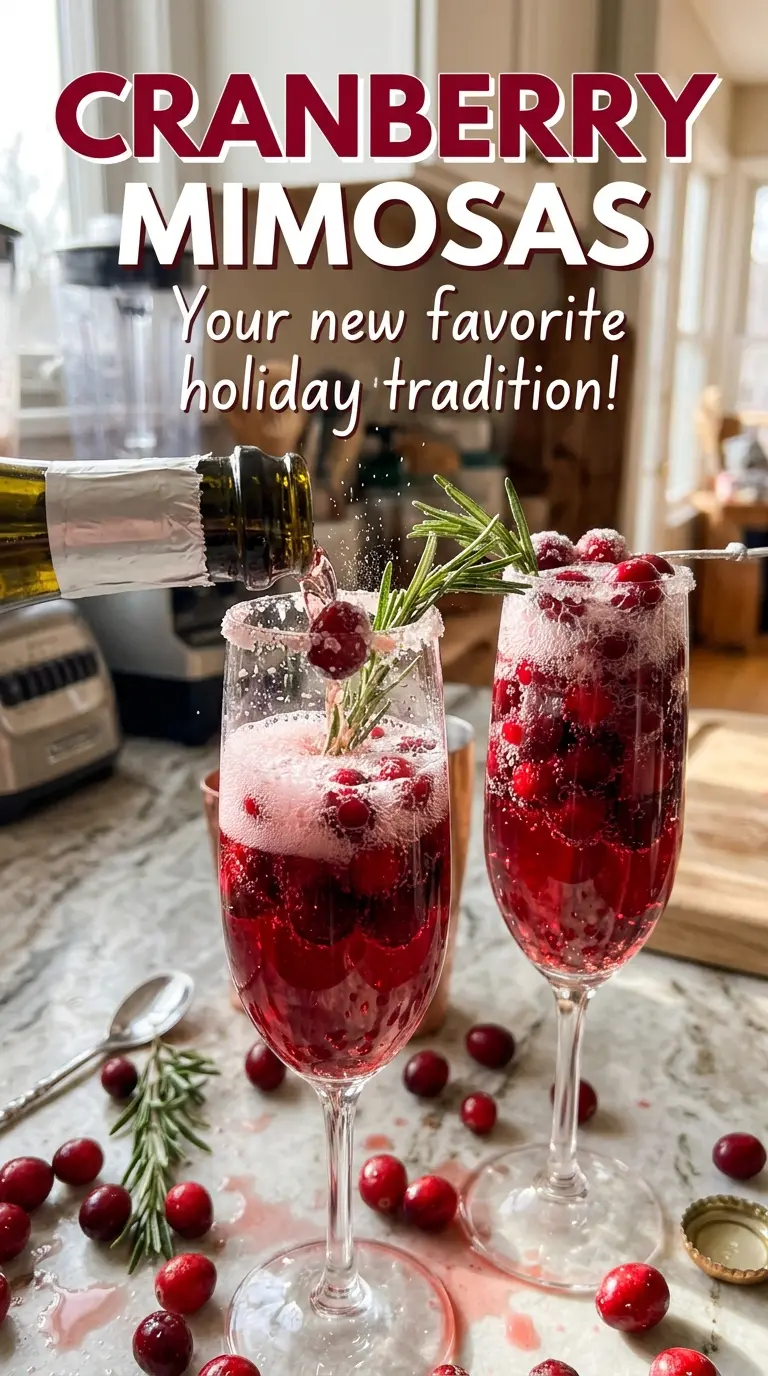
The cranberry juice lands first, a clear red measure at the bottom of each flute; the sparkling wine does the rest, lifting it into a bright, bubbly drink. I like this cranberry mimosa for a toast because the proportions are easy to keep even across all eight glasses, and there’s no pitcher to fuss with.
Dry sparkling wine brings a crisp edge to the sweetness of cranberry juice cocktail, so the drink tastes balanced instead of syrupy. I measure the juice into the flutes before opening the bottle, then pour and serve right away. Each glass looks festive without a garnish, and the cranberry color makes the rising bubbles easy to see.
Kitchen Note
Measure the cranberry juice into all eight flutes before you open the sparkling wine. That way, the bottle can go straight from opening to pouring, and the first glass won’t lose its sparkle while you prepare the rest.
Save these cranberry mimosas for a brunch toast: two simple ingredients, an even pour, and a ruby-red glass full of bubbles.
Why the Cranberry Pour Should Be Measured, Not Eyeballed
The balance comes from giving every flute the same share of both ingredients. Two cups of cranberry juice cocktail divided among eight glasses works out to a quarter cup per flute. A 25.4-ounce bottle of sparkling wine divided eight ways adds just over three ounces to each serving. That consistent ratio matters more here than it might in a drink with several mixers: there’s nowhere for an overly generous juice pour to hide.
Cranberry juice cocktail has sweetness, while dry sparkling wine tastes crisp by comparison. The two meet in the glass without needing another mixer or a last-minute adjustment. If you pour the juice by eye, one flute can turn out sweeter and more juice-forward than the next. Measuring each portion keeps the first and eighth glasses in the same bright, balanced range. The drink is simple, but that little bit of accuracy is what makes it dependable for a group.
What Cranberry Juice Cocktail Does That Straight Cranberry Juice Doesn’t
- Cranberry juice cocktail — Its sweet-tart character makes a rounded drink when paired with dry sparkling wine. Straight, unsweetened cranberry juice is much sharper and would make the same proportions taste more tart; stick with cranberry juice cocktail for the intended balance. Keep it chilled before pouring, and choose a brand whose sweetness you already enjoy on its own.
- Dry sparkling wine — The wine provides the bubbles and a crisp counterpoint to the juice. You don’t need an expensive bottle, but choose a dry sparkling wine you’d be happy to drink by itself; a wine that tastes too sweet on its own can make the finished drink seem sweeter as well. Chill the bottle before opening so each flute starts cold and lively.
Pouring Eight Flutes Without Losing the Bubbles
Start With Chilled Ingredients
Use cranberry juice cocktail and sparkling wine that are both chilled. Cold ingredients give the finished drink its refreshing, crisp feel without needing ice in the glass. Set out all eight champagne flutes before you begin so the juice portions can be measured in one pass. Keep the sparkling wine closed until you’re ready to pour it.
Measure the Cranberry Into Each Flute
Pour a quarter cup of cranberry juice cocktail into each of the eight flutes. A measuring cup makes this quick and keeps the color and sweetness consistent from glass to glass. Aim for the same level in every flute rather than topping up one that looks different by eye. The juice should be in place before the sparkling wine goes in.
Divide the Sparkling Wine and Serve
Open the chilled bottle and divide the sparkling wine evenly among the flutes. Pour with a controlled hand, since bubbles rise quickly when they meet the juice. If a flute foams near the rim, pause briefly and continue once the foam settles instead of forcing in the rest at once. Serve the drinks immediately while the sparkling wine is still lively.
Three Ways to Adapt These Cranberry Mimosas
Make an Alcohol-Free Toast
Replace the dry sparkling wine with chilled dry nonalcoholic sparkling wine, using the same volume. It keeps the cranberry-and-bubbles format while removing the alcohol; check the sweetness before pouring, since nonalcoholic bottles vary and a sweeter one will make the drink taste less crisp.
Use Dry Sparkling Rosé
A dry sparkling rosé keeps the wine in the same dry, bubbly role but brings a softer berry note and a deeper pink color. Keep the cranberry juice cocktail unchanged; the wine swap shifts the character without changing the familiar balance.
Serve Smaller Tasting Pours
For a toast where guests want a few sips rather than a full flute, divide the same mixture among more small glasses. The drink stays in the same proportion, but each pour is lighter and the batch stretches to more people.
Make-Ahead and Serving
- Before serving: Chill the juice cocktail and sparkling wine separately. You can set out the flutes ahead, but wait to combine the drinks.
- Once mixed: Serve immediately. The bubbles fade as the mimosas stand, so the finished drinks aren’t a good make-ahead choice.
- Leftover sparkling wine: Reseal the bottle with a sparkling-wine stopper and refrigerate it. It may lose some fizz after opening, so use it for another pour while it still tastes lively.
Questions That Come Up When Pouring Cranberry Mimosas
Cranberry Mimosas
Ingredients
Equipment
Method
- Pour 1/4 cup cranberry juice cocktail into each of 8 champagne flutes.
- Divide the sparkling wine evenly among the flutes and serve immediately.