
The shrimp turn opaque quickly in a hot skillet, while the orzo still needs time to soften in broth. Cook them together from the start and the shrimp would be waiting in the pan long after they’re tender. For this creamy garlic butter shrimp orzo, I sear the shrimp first and set them aside, then let the pasta take its time in the same skillet.
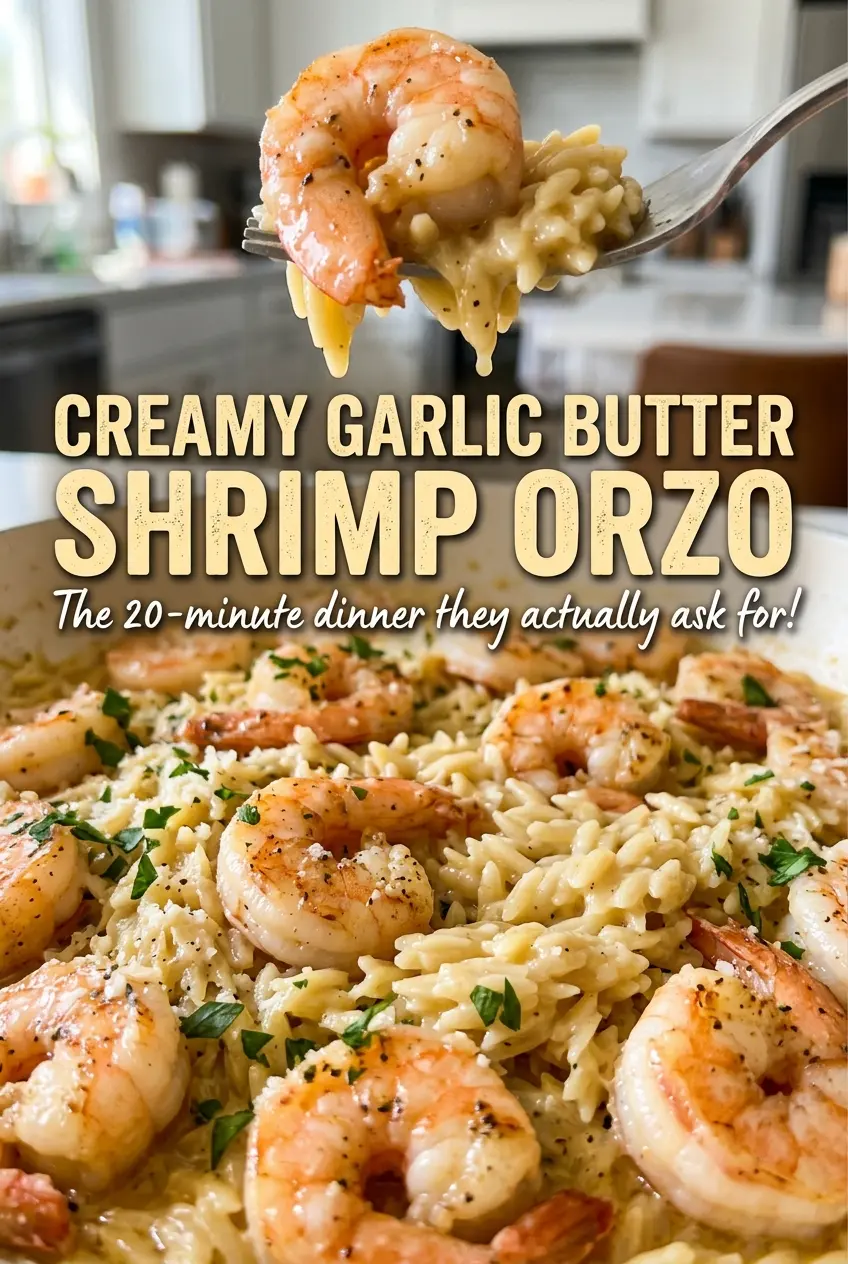
That order also builds a better sauce. The orzo simmers uncovered in chicken broth until it’s tender and most of the liquid has been absorbed; only then do the cream, Parmesan, and lemon go in. Garlic and shallot give the base a gentle savory edge, while lemon keeps the buttery sauce from feeling heavy. The shrimp go back in just long enough to warm through, and parsley gives the finished skillet a fresh, green finish.
Kitchen Note
Give the finished orzo its full two-minute rest off the heat. It thickens as it sits, so resist the urge to keep cooking it down when it first looks a little loose.
Save this Creamy Garlic Butter Shrimp Orzo for a skillet dinner with tender shrimp, Parmesan-rich orzo, and a bright finish of lemon and parsley.
Why the Cream Waits Until the Orzo Is Tender
Orzo cooks directly in the broth here, so the pasta has time to take in that savory liquid and release enough starch to give the skillet a naturally creamy body. The broth should be mostly absorbed by the time the orzo is tender, but the pan shouldn’t be dry. That starchy liquid is what helps the cream and finely grated Parmesan come together into a sauce rather than sitting on the pasta in separate, heavy layers.
Adding the cream at the end also keeps it from being cooked down for the entire simmer. It has just enough time to warm with the cheese and lemon while the shrimp heat through. The result is a sauce that coats the orzo instead of turning soupy, with enough richness to feel comforting and enough lemon to keep each bite lively. Keeping the shrimp out of that long simmer gives them their own quick cook, too.
What Gives This Shrimp Orzo Its Creamy, Savory Finish

- Large shrimp — Their size gives you a little more room between perfectly cooked and overdone. Choose peeled and deveined shrimp with the tails removed so they’re ready to eat straight from the skillet. If buying frozen, thaw them fully before cooking and pat them dry.
- Orzo — Though it looks like rice, orzo is pasta, and its starch helps thicken the broth as it cooks. It’s worth using orzo rather than a different pasta shape if you want the same creamy, spoonable texture.
- Low-sodium chicken broth — This is both the cooking liquid and the savory base of the sauce. Low-sodium broth gives you more control over the seasoning, especially once Parmesan is stirred in.
- Heavy cream and Parmesan — Together they make the finish rich and cohesive. Finely grating the Parmesan helps it melt into the sauce; a block grated just before cooking usually melts more smoothly than coarsely shredded cheese.
- Shallot and garlic — Shallot softens into the butter and adds a mild, savory sweetness, while garlic brings the unmistakable aromatic base. Mince the garlic evenly so small pieces don’t brown before the shallot has softened.
- Lemon juice and parsley — Lemon cuts through the cream and butter, and parsley adds a fresh note at the end. Keep both for the finish rather than cooking them along with the orzo.
Building the Orzo in the Same Skillet as the Shrimp
Sear the Shrimp Just Until Opaque
Pat the shrimp dry, then season them with half of the kosher salt and the black pepper. Heat the olive oil in a 12-inch deep skillet over medium-high heat and arrange the shrimp in a single layer. Cook for 1 to 2 minutes per side, until opaque and 145°F, then transfer them to a clean plate. If the skillet is crowded, the shrimp will steam rather than sear, so give them room to cook evenly.
Soften the Shallot Without Browning the Garlic
Reduce the heat to medium and melt the butter in the same skillet. Add the shallot and cook for 2 minutes, stirring as it softens. Stir in the minced garlic and cook for 30 seconds; it should smell fragrant, not toasted or brown. Keep the garlic moving so it doesn’t catch on the bottom of the pan.
Let the Orzo Absorb the Broth
Stir in the orzo and the remaining kosher salt, then add the chicken broth and bring it to a boil. Reduce the heat to medium-low and simmer uncovered for 10 to 12 minutes, stirring often. Look for tender orzo with most of the broth absorbed, not a completely dry skillet. Frequent stirring keeps the pasta from settling and sticking as it thickens the liquid.
Finish the Sauce and Warm the Shrimp
Stir in the heavy cream, Parmesan, and lemon juice, then add the shrimp and any juices on the plate. Cook for 1 to 2 minutes, just until the shrimp are warmed through. Remove the skillet from the heat and stir in the parsley. Let it stand for 2 minutes before serving so the sauce can thicken around the orzo.
Two Easy Ways to Adapt This Shrimp Orzo
Make It Gluten-Free
Use gluten-free orzo in place of regular orzo. Gluten-free pasta can release less starch and cook at a different rate, so follow its package cue for tenderness and watch the skillet as it simmers; the finished sauce may be a little less thick or cohesive.
Try a Dairy-Free Finish
Replace the butter with a dairy-free butter alternative, and use unsweetened dairy-free cooking cream plus a dairy-free Parmesan-style cheese. The orzo will still be creamy, though the sauce may be less rich and the cheese may not melt as smoothly as dairy Parmesan.
Keep the Parsley Bright and Distinct
For a fresher parsley bite, stir half of the chopped parsley into the skillet off the heat and scatter the rest over the finished orzo. Using it in two stages makes the herb taste more pronounced without changing the dish’s buttery, lemony base.
Storage and Reheating
- Refrigerator: Store leftovers in an airtight container for up to 3 days. The orzo will absorb more sauce and become firmer as it chills.
- Freezer: I don’t recommend freezing this skillet. The sauce can separate as it thaws, and both the orzo and shrimp lose their best texture.
- Reheating: Warm leftovers gently in a skillet over low heat with a small splash of chicken broth, stirring until hot throughout. High heat can make the shrimp tough and the sauce greasy.
Questions That Come Up When Cooking Shrimp Orzo
Creamy Garlic Butter Shrimp Orzo
Ingredients
Equipment
Method
- Pat the shrimp dry and season with 1/2 teaspoon of the kosher salt and the black pepper.
- Heat the olive oil in a 12-inch deep skillet over medium-high heat.
- Cook the shrimp in a single layer for 1 to 2 minutes per side, until opaque and 145°F.
- Transfer the shrimp to a clean plate.
- Reduce the heat to medium and melt the butter in the skillet.
- Add the shallot and cook for 2 minutes.
- Stir in the garlic and cook for 30 seconds.
- Stir in the orzo and remaining 1/4 teaspoon kosher salt.
- Add the chicken broth and bring to a boil.
- Reduce the heat to medium-low and simmer uncovered, stirring often, for 10 to 12 minutes, until the orzo is tender and most of the broth is absorbed.
- Stir in the heavy cream, Parmesan, and lemon juice.
- Add the shrimp and any juices from the plate, then cook for 1 to 2 minutes, until the shrimp are warmed through.
- Remove the skillet from the heat and stir in the parsley.
- Let the orzo stand for 2 minutes to thicken.