
Golden chicken tucked into a glossy, tomato-studded cream sauce has a way of turning an ordinary pan dinner into something people notice. The chicken stays juicy because it gets seared first and only finishes in the sauce, while the sun-dried tomatoes bring a tangy depth that keeps the cream from tasting heavy. Parmesan pulls everything together into a sauce that clings to the chicken instead of pooling sadly at the bottom of the skillet.
The details matter here. Drying the chicken before it hits the pan gives you that deep brown crust instead of pale steam, and building the sauce in the same skillet means every browned bit from the chicken ends up seasoning the cream. Letting the garlic and tomatoes bloom for just a minute or two before the liquid goes in gives the whole dish a richer, more layered flavor.
Below, you’ll find the timing that keeps the sauce smooth, the small ingredient choices that make a big difference, and a few smart variations for when you want to adjust the dish without losing what makes it work.
The sauce thickened up beautifully and stayed silky even after I added the Parmesan. I served it with pasta, and my husband kept going back for “just one more spoonful” of the sauce.
Creamy Sun Dried Tomato Chicken deserves a spot in your dinner rotation for the sauce alone.
The Secret to Keeping the Cream Sauce Smooth, Not Grainy
The biggest mistake with a dish like this is rushing the sauce after the chicken comes out of the pan. Heavy cream can take a short simmer, but Parmesan needs gentle heat or it turns sandy and stubborn. If the skillet is too hot when the cheese goes in, the sauce can tighten up in clumps instead of melting into that soft, spoon-coating finish.
The other place people trip is in the first sear. If the chicken is damp, it steams. If the pan is crowded, it steams again. Give each breast enough room to brown properly, and don’t move it until it releases easily from the skillet. That crust is what keeps the final dish from tasting flat.
- Dry the chicken well — paper towels pull off surface moisture so the seasoning sticks and the oil can actually sear the meat.
- Keep the heat steady — medium-high for the chicken, then medium or lower for the sauce. That shift keeps the cream from splitting.
- Use the same skillet — those browned bits at the bottom dissolve into the broth and cream, which gives the sauce its deeper savory base.
- Add the Parmesan at the end — it melts best once the sauce has already thickened a little.
What Each Ingredient Is Actually Doing in This Dish
No image block was provided, so this section goes straight into the ingredient logic. The chicken breasts are the blank canvas, but they need seasoning before they hit the pan; otherwise, all the flavor ends up sitting in the sauce. Olive oil gives you enough fat to brown the chicken without burning, and the garlic powder, Italian seasoning, and paprika build a seasoned crust that carries through the whole dish.
The sun-dried tomatoes are not just garnish here. Their concentrated sweetness and acidity cut through the cream and keep the sauce from feeling heavy. Use the ones packed in oil if you can, then drain them well so you get flavor without a greasy finish. Heavy cream is the ingredient that gives the sauce body, and chicken broth loosens it just enough to simmer without turning thick and gluey. Parmesan should be freshly grated if possible, because the pre-shredded kind often contains anti-caking agents that can make the sauce gritty. Fresh basil at the end gives the whole skillet a clean finish after all that richness.
- Chicken breasts — if yours are very thick, pound them to an even thickness so they cook at the same pace and stay juicy.
- Sun-dried tomatoes in oil — the oil-packed kind bring better texture and a fuller tomato flavor than the dry kind. If you only have dry, soak them in hot water for 10 minutes first, then drain and chop.
- Heavy cream — this is what gives the sauce its velvety body. Half-and-half can work in a pinch, but the sauce will be thinner and a little more likely to break if boiled.
- Parmesan cheese — grate it yourself for the smoothest melt. Finely grated cheese disappears fastest into the sauce.
- Red pepper flakes — optional, but they give the sauce a little lift. The heat stays gentle, not sharp.
Building the Sauce in the Same Pan That Seared the Chicken
Season and Sear
Pat the chicken dry, then coat it with the seasoning mix on both sides. Heat the oil until it shimmers, then lay the chicken in without crowding the pan. You want a loud sizzle right away. Let it cook undisturbed until the underside turns deep golden brown and releases cleanly, then flip and finish the second side. If it sticks hard, it isn’t ready yet.
Wake Up the Garlic and Tomatoes
Once the chicken comes out, lower the heat and add the garlic and chopped sun-dried tomatoes straight into the same skillet. Stir for a minute or two until the garlic smells fragrant and turns just lightly golden. If the garlic browns too fast, the sauce will taste bitter, so keep it moving and don’t walk away. The tomatoes should soften at the edges and start to perfume the pan.
Turn the Drippings into Sauce
Pour in the broth first and scrape the bottom of the skillet with a wooden spoon to lift every browned bit. That step matters because those stuck-on spots are concentrated flavor, not mess. Add the cream and let the mixture simmer gently until it starts to coat the spoon. A hard boil can make the sauce separate, so keep the bubbles small and lazy.
Finish with Parmesan and Return the Chicken
Stir in the Parmesan, Italian seasoning, and red pepper flakes, then let the sauce simmer just until glossy. Taste it before the chicken goes back in, because the cheese adds salt and the tomatoes bring their own tang. Nestle the chicken into the sauce and spoon it over the top so every piece gets coated. Give it a final minute or two over low heat, just long enough to warm the chicken through without drying it out.
How to Adapt This for a Lighter, Dairy-Free, or Bigger-Batch Dinner
Dairy-Free Version
Use full-fat canned coconut milk in place of the heavy cream and skip the Parmesan, then finish with a little extra salt and a squeeze of lemon if you want more brightness. The sauce will be a touch less sharp and a little more rounded, but it still clings well and keeps the tomatoes front and center.
Thighs Instead of Breasts
Boneless chicken thighs work well here and give you a little more forgiveness if you tend to overcook chicken breasts. They need a few extra minutes in the skillet, but the result is richer and juicier, especially once they soak up the sauce.
Gluten-Free Serving Ideas
The recipe itself is naturally gluten-free if your broth and Parmesan are certified gluten-free. Serve it over rice, mashed potatoes, or roasted vegetables instead of pasta, and the sauce still feels complete and satisfying.
Storage and Reheating
- Refrigerator: Store leftovers in an airtight container for up to 3 days. The sauce may thicken as it chills.
- Freezer: I don’t recommend freezing this one. Cream sauces can separate after thawing, and the texture won’t be as smooth.
- Reheating: Warm gently in a skillet over low heat with a splash of broth or cream. High heat is the fastest way to break the sauce and dry out the chicken.
Answers to the Questions Worth Asking
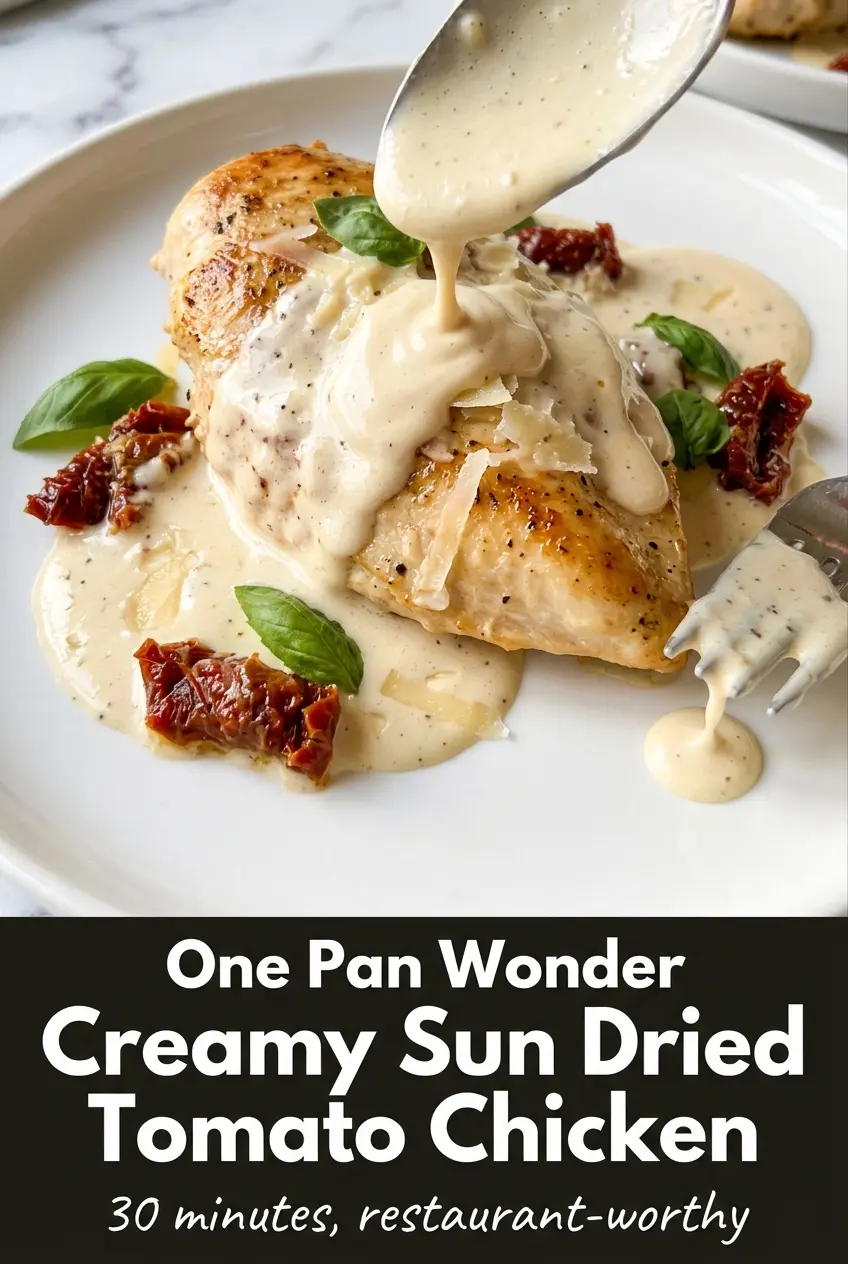
Creamy Sun Dried Tomato Chicken
Ingredients
Equipment
Method
- Pat the chicken breasts dry with paper towels to help them sear well.
- In a small bowl, mix garlic powder, Italian seasoning, paprika, salt, and black pepper, then season both sides of the chicken generously.
- Heat the olive oil in a large skillet over medium-high heat until hot.
- Add the chicken breasts and sear for 5–6 minutes per side until deep golden brown and cooked through, aiming for an internal temperature of 165°F.
- Remove the chicken to a plate while you make the sauce.
- Reduce heat to medium, then add the minced garlic and sun-dried tomatoes to the same skillet.
- Sauté for 1–2 minutes until fragrant and the garlic is just golden, stirring so nothing burns.
- Pour in the chicken broth and heavy cream, stirring to deglaze any golden bits from the bottom of the pan.
- Let it simmer for 3–4 minutes, stirring occasionally, until the sauce begins to thicken slightly.
- Stir in the grated Parmesan, Italian seasoning, and red pepper flakes if using.
- Continue to simmer for 2–3 minutes until the sauce is glossy and coats the back of a spoon, then taste and adjust salt and pepper.
- Return the seared chicken breasts to the skillet and nestle them into the sauce.
- Simmer together for 2–3 minutes until the chicken is warmed through and coated, spooning sauce over each piece.
- Garnish with fresh basil leaves and serve immediately over pasta, rice, or crusty bread.