
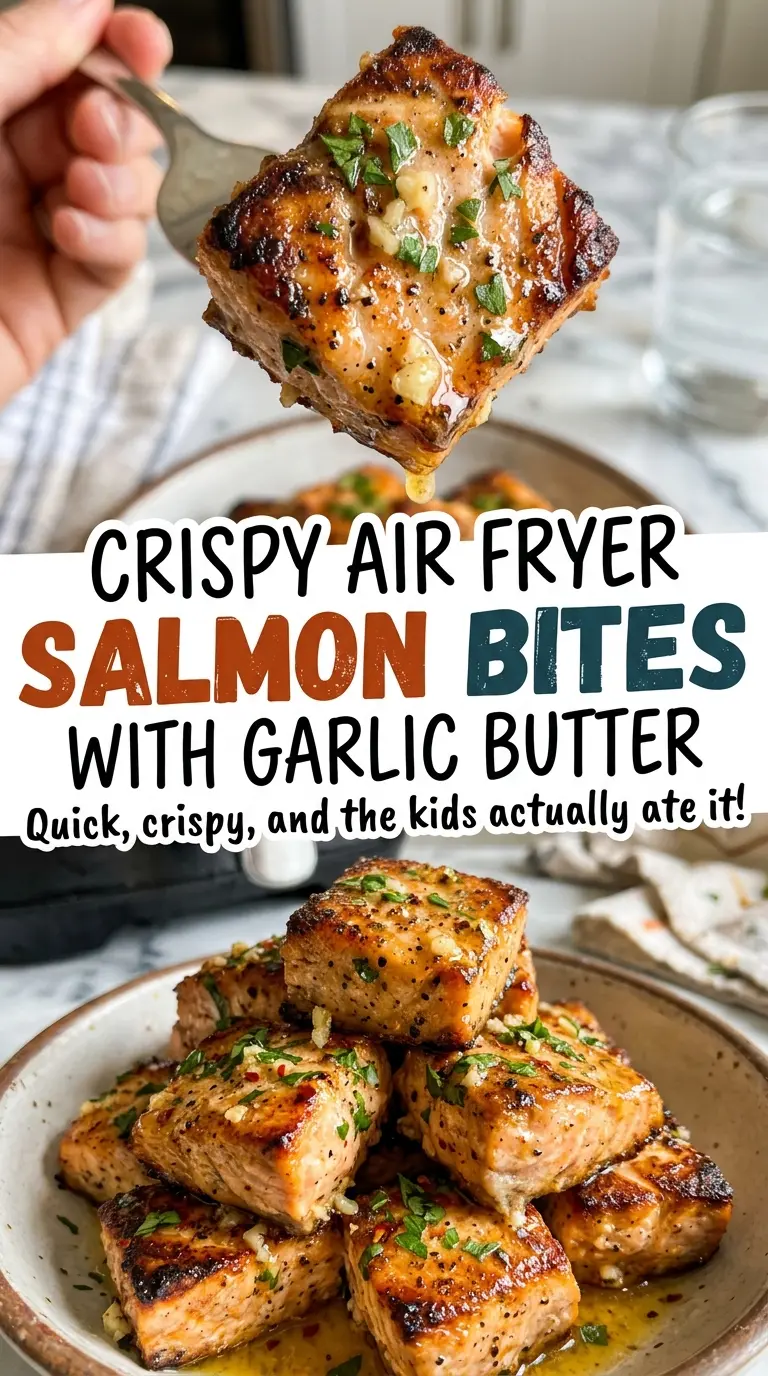
The first time I made salmon bites in the air fryer, I expected the edges to crisp up like breaded fish. They didn’t—and adding more oil only made the coating heavier. These crispy air fryer salmon bites get their light, crisp edges from a thin dusting of cornstarch, not a thick breading.
I cut the salmon into even 1-inch cubes so the pieces cook at about the same pace, then toss them in olive oil before the seasoned cornstarch goes on. That order helps the coating cling instead of gathering in dry patches. You’ll want enough room for hot air to move around each bite, so cook in batches if the basket gets crowded.
The garlic butter takes only a few minutes in a small saucepan, and the lemon and parsley keep it from tasting heavy. Spoon it over the salmon right before serving, while the edges are still crisp and the centers are tender.

Kitchen Note
Pat the salmon dry before adding the oil. Any water left on the surface can make the coating patchy, so take an extra moment with the paper towels before you season the cubes.
Save these crispy air fryer salmon bites with garlic butter for a quick dinner when you want crisp edges, tender fish, and a bright lemon finish.
Why Cornstarch Gives Salmon a Crisp Edge Without a Heavy Coating
Salmon doesn’t need a thick crust to develop a little crunch. Cornstarch forms a thin, dry layer around the oiled cubes, and the hot air fryer helps that outer layer turn crisp while the fish stays tender inside. It’s a different result from breadcrumbs: less crunch overall, but a lighter coating that doesn’t cover up the salmon.
The amount matters here. Too little coating leaves bare, damp spots; too much can turn dusty and mask the fish. Tossing the cubes with oil first gives the cornstarch something to cling to, and mixing the seasonings into the starch spreads the smoked paprika, salt, and pepper more evenly. Keep the cubes in one layer so the air can reach their surfaces. When the basket is packed, the bites tend to steam against one another instead of crisping at the edges.
This coating is also why the butter goes on after cooking. The bites get their crisp finish in the basket; pouring sauce over them earlier would wet that surface before it has a chance to set. A final spoonful of garlic butter gives you both textures in each bite.
What the Salmon, Cornstarch, and Garlic Butter Each Bring
- Skinless salmon fillet — A firm, center-cut piece is easiest to portion into even cubes, which helps the bites cook at a similar rate. Skinless fillet also means every surface can pick up the oil and seasoning. Fresh or previously frozen salmon both work; thaw frozen fish fully before cutting.
- Cornstarch — This is what gives the salmon its delicate crisp edge without a breaded shell. It’s worth keeping rather than swapping in flour, which coats differently and won’t produce the same light, crisp finish.
- Olive oil — A small amount helps the seasoning mixture adhere and encourages browning. A basic olive oil is fine; there’s no need for a specialty finishing oil here.
- Smoked paprika — It adds a gentle smoky note that stands up to the garlic butter. Regular paprika won’t give the same smoky quality, so keep smoked paprika if that flavor is part of what you want.
- Unsalted butter, garlic, parsley, and lemon — The butter carries the garlic, while parsley and lemon brighten the finish. Freshly minced garlic releases its aroma quickly, so have the parsley and lemon ready before the butter hits the heat. Unsalted butter lets the measured salt on the salmon stay in balance.
How to Air-Fry the Salmon Without Losing the Crisp Edges
Cut and Coat the Salmon Evenly
Preheat a 6-quart air fryer to 400°F. Cut the skinless salmon into 1-inch cubes, pat them dry with paper towels, and toss them with the olive oil in a bowl. In a small bowl, mix the cornstarch, kosher salt, black pepper, and smoked paprika, then sprinkle the mixture over the salmon and toss to coat. Look for a light, even coating rather than thick clumps on the sides of the bowl.
Give the Bites Room in the Basket
Arrange the coated cubes in a single layer in the air fryer basket. If they touch or crowd the basket, work in batches instead of piling them up; crowded fish won’t brown as evenly. Cook for 8–10 minutes, gently shaking the basket halfway through. The bites are ready when the edges look crisp and the thickest bite reaches 145°F.
Let the Garlic Turn Fragrant, Not Brown
While the salmon cooks, melt the unsalted butter in a 1-quart saucepan over medium-low heat. Add the minced garlic and stir for about 30 seconds, just until you can smell it. Garlic can turn bitter if it browns, so keep the heat low and stay close to the pan. Remove the saucepan from the heat before stirring in the finely chopped parsley and lemon juice.
Spoon on the Butter at the End
Transfer the cooked salmon to a serving dish and spoon the garlic butter over the bites. The butter should coat the warm surfaces without pooling so heavily that it hides the crisp edges. Serve while the salmon is hot, and bring the saucepan to the table if you want to add a little more sauce as you eat.
Two Easy Ways to Adapt These Salmon Bites
Make the Garlic Butter Dairy-Free
Use a dairy-free butter-style stick in place of the unsalted butter, keeping the same amount. The sauce will still carry the garlic and lemon, though the finish may taste a little less rich than it does with dairy butter.
Serve the Butter as a Dip
Instead of spooning all the garlic butter over the salmon, serve it in a small bowl alongside the bites. You’ll keep more of the crisp surface dry, and each person can dip just before eating.
Storage and Reheating
- Refrigerator: Store leftover salmon in an airtight container for up to 3 days. The coating softens as it sits, especially where it has been covered with butter.
- Freezer: Freeze the cooked bites in a sealed freezer-safe container for up to 2 months. They’ll remain safe longer if kept frozen, but the texture can become softer after thawing.
- Reheating: Warm the bites in the air fryer at 300°F until heated through. Avoid reheating them at 400°F; the small cubes can dry out before the centers warm.
Questions That Come Up When Making Salmon Bites
Crispy Air Fryer Salmon Bites with Garlic Butter
Ingredients
Equipment
Method
- Preheat a 6-quart air fryer to 400°F.
- Pat the salmon dry with paper towels.
- Toss the salmon with the olive oil in a bowl.
- Mix the cornstarch, salt, pepper, and smoked paprika in a small bowl.
- Sprinkle the mixture over the salmon.
- Toss the salmon to coat.
- Arrange the salmon in a single layer in the air fryer basket, working in batches if needed.
- Cook for 8–10 minutes, gently shaking the basket halfway through, until crisp at the edges and 145°F in the thickest bite.
- Melt the butter in a 1-quart saucepan over medium-low heat.
- Add the garlic and cook for about 30 seconds, stirring, until fragrant.
- Remove the saucepan from the heat.
- Stir in the parsley and lemon juice.
- Spoon the garlic butter over the salmon bites.
- Serve.