
Tender shrimp in a garlic Parmesan cream sauce land on the plate fast, but they still eat like something you’d order at a good restaurant. The sauce clings to each shrimp instead of pooling watery in the pan, and the garlic stays mellow and fragrant instead of turning sharp and bitter. That balance is what makes this version worth keeping in rotation.
The trick is getting the shrimp in and out of the skillet quickly, then building the sauce in the same pan so every browned bit gets pulled back in. Heavy cream gives the sauce enough body to simmer without splitting, and freshly grated Parmesan melts into it much more cleanly than the bagged stuff. A little lemon juice at the end wakes everything up and keeps the sauce from tasting flat.
Below, you’ll find the exact timing that keeps the shrimp juicy, the one pan step that gives the sauce its depth, and a few smart swaps if you want to serve it over pasta, rice, or with bread on the side.
The sauce thickened up perfectly, and the shrimp stayed tender instead of rubbery. I served it over linguine and my husband asked for it again two nights later.
Creamy garlic shrimp worth scraping the skillet clean — save it for pasta nights and last-minute dinners.
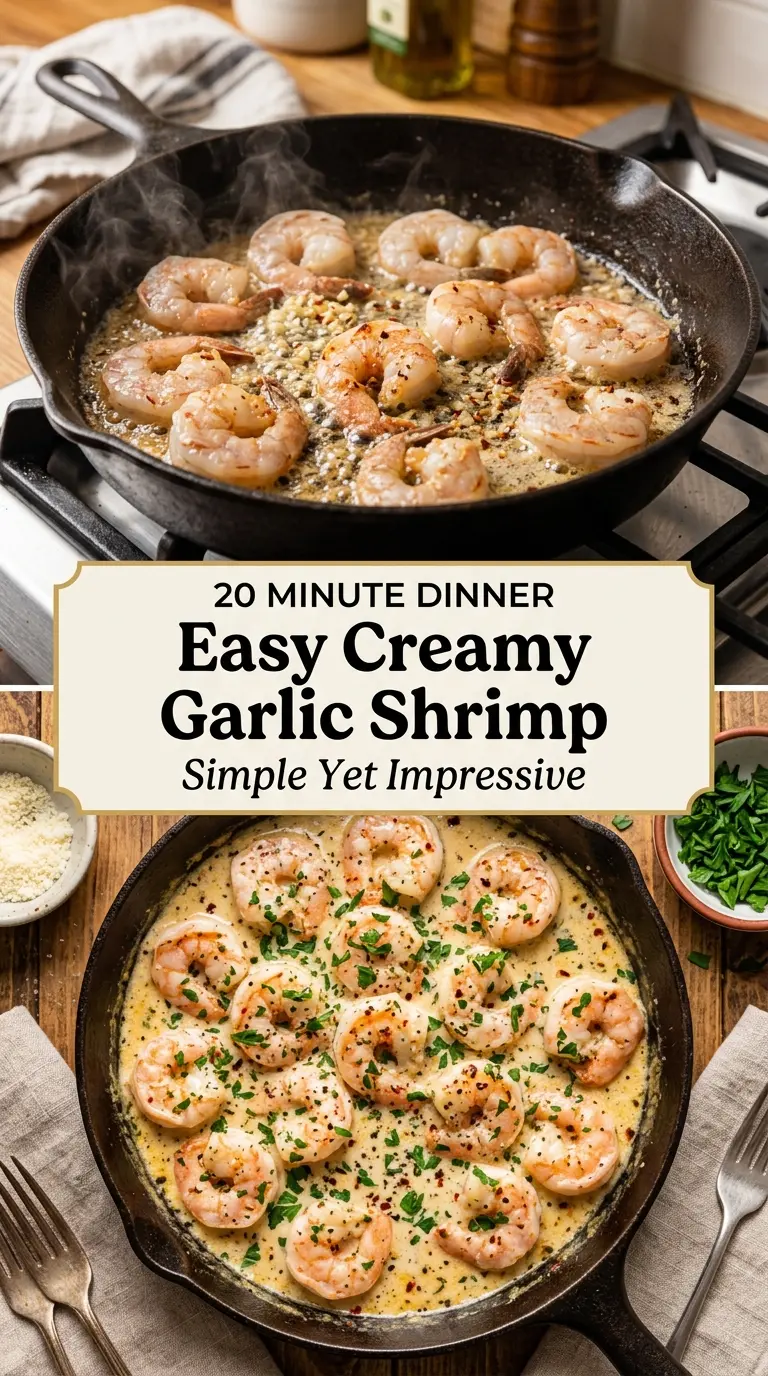
The Reason Creamy Shrimp Turns Grainy — and How to Keep It Smooth
Most grainy cream sauces happen because the pan runs too hot when the dairy goes in, or because the cheese gets dumped into a boiling sauce all at once. Shrimp cooks fast, so it’s tempting to keep the heat high from start to finish, but that’s exactly when cream can separate and Parmesan can seize. Lower heat at the sauce stage keeps everything silky.
The other thing that matters is the order. Cook the shrimp first, pull them out, then build the sauce in the same skillet. If you leave the shrimp in while the cream reduces, they overcook before the sauce finishes, and you end up with tight, bouncy shrimp in a sauce that never quite comes together.
What Each Ingredient Is Doing in This Dish
- Large shrimp — Bigger shrimp are easier to cook cleanly because they stay juicy long enough to get a little color without overcooking. Look for peeled and deveined shrimp so the pan work stays fast. If yours are frozen, thaw them fully and pat them dry; extra surface moisture makes them steam instead of sear.
- Heavy cream — This is what gives the sauce its body. Half-and-half will work in a pinch, but it won’t reduce as smoothly and it has a better chance of breaking if the heat runs too high. Keep the cream at a gentle simmer, not a hard boil.
- Freshly grated Parmesan — Freshly grated cheese melts into the sauce instead of clumping. Pre-shredded Parmesan often contains anti-caking agents that can make the sauce a little grainy. If you need a substitute, a finely grated hard cheese like Pecorino Romano works, but it will taste saltier and sharper.
- Garlic — Six cloves sounds like a lot, but cream softens it and shrimp can handle the punch. Sauté it just until fragrant, about 30 seconds; any longer and it turns bitter before the sauce even starts.
- Lemon juice — This isn’t decoration. It cuts through the richness and makes the Parmesan taste more like itself. Add it at the end so the dairy doesn’t curdle.
Building the Sauce Without Overcooking the Shrimp
Dry the Shrimp and Season Early
Pat the shrimp dry before anything hits the skillet. Surface moisture is the difference between a light sear and gray, steamed shrimp. Season them with paprika, salt, and pepper so the seasoning hits the hot pan with the shrimp instead of floating around in the sauce later. The paprika adds color as much as flavor, which helps the finished dish look as good as it tastes.
Sear Fast, Then Get Them Out
Heat the butter and olive oil over medium-high, then add the shrimp in a single layer. They need only 1 to 2 minutes per side, just until they turn pink and start to curl into a loose C. If they curl into tight little circles, they’ve gone too far. Pull them onto a plate as soon as they’re done; the carryover heat will finish the job while you build the sauce.
Let the Sauce Reduce at a Gentle Pace
Add the garlic to the same skillet and stir for about 30 seconds, just until it smells sweet and sharpness fades. Pour in the cream, then whisk in the Parmesan and Italian seasoning over lower heat. The sauce should thicken enough to coat a spoon in 3 to 4 minutes, but it shouldn’t bubble aggressively. If it looks thin at first, let it breathe; rushing this stage is how sauces turn greasy or grainy.
Finish With Lemon and Return the Shrimp
Stir in the lemon juice, then add the shrimp back to the pan and coat them in the sauce for about a minute. That final minute is enough to warm them through without tightening the texture. Finish with parsley for freshness and color, then serve immediately while the sauce is glossy and spoonable.
How to Adapt This for Pasta Night, Lower Dairy, or a Smaller Fridge Cleanout
Serve It Over Pasta for a Fuller Meal
Toss the finished shrimp and sauce with linguine, fettuccine, or spaghetti. Save a little pasta water before draining and add a splash only if the sauce needs loosening. The starch helps the sauce cling, but too much water will thin it out fast.
Make It Gluten-Free Without Changing the Sauce
The shrimp sauce itself is naturally gluten-free as written, so the only thing to check is what you serve it with. Use rice, gluten-free pasta, or roasted potatoes, and keep an eye on the Parmesan label if cross-contamination matters to you.
Use Half-and-Half in a Pinch
Half-and-half can stand in for the heavy cream, but the sauce will be a little lighter and less stable. Keep the heat low and don’t let it boil hard, or it can separate before the cheese finishes melting. It still tastes good, just a little less lush.
Storage and Reheating
- Refrigerator: Store leftovers in an airtight container for up to 2 days. The sauce will thicken and the shrimp can firm up a bit.
- Freezer: I don’t recommend freezing this one. Cream sauces can separate after thawing, and shrimp turn tough fast.
- Reheating: Warm it gently in a skillet over low heat with a splash of cream or milk, just until heated through. High heat is the mistake here; it makes the shrimp rubbery and can break the sauce.
Answers to the Questions Worth Asking
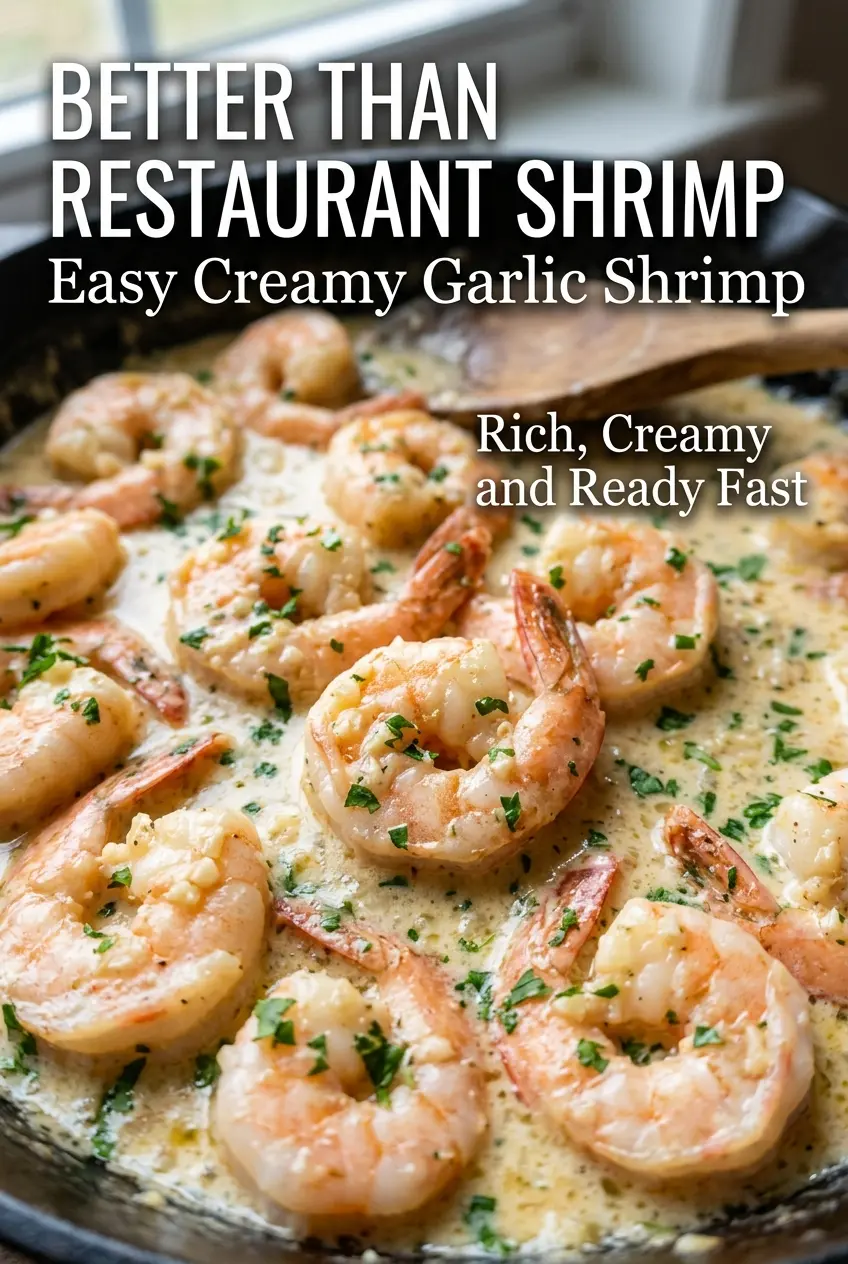
Easy Creamy Garlic Shrimp
Ingredients
Equipment
Method
- Pat the shrimp dry with paper towels until surface moisture is gone for better browning.
- Season shrimp with paprika, salt, and black pepper so the flavor coats evenly.
- Heat butter and olive oil in a large skillet over medium-high heat until the butter melts and the oil looks shimmering.
- Add shrimp and cook for 1–2 minutes per side until just opaque and lightly browned, then remove shrimp and set aside.
- Add garlic to the skillet and sauté for 30 seconds until fragrant, using quick stirring so it doesn’t brown.
- Pour in heavy cream and stir well, scraping up any browned bits from the pan.
- Add Parmesan cheese and Italian seasoning, then simmer for 3–4 minutes until slightly thickened and glossy.
- Stir in lemon juice to brighten the sauce.
- Return shrimp to the skillet and coat with the sauce, then cook for 1 minute longer until heated through.
- Garnish with chopped fresh parsley and serve immediately while the sauce clings to the shrimp.