
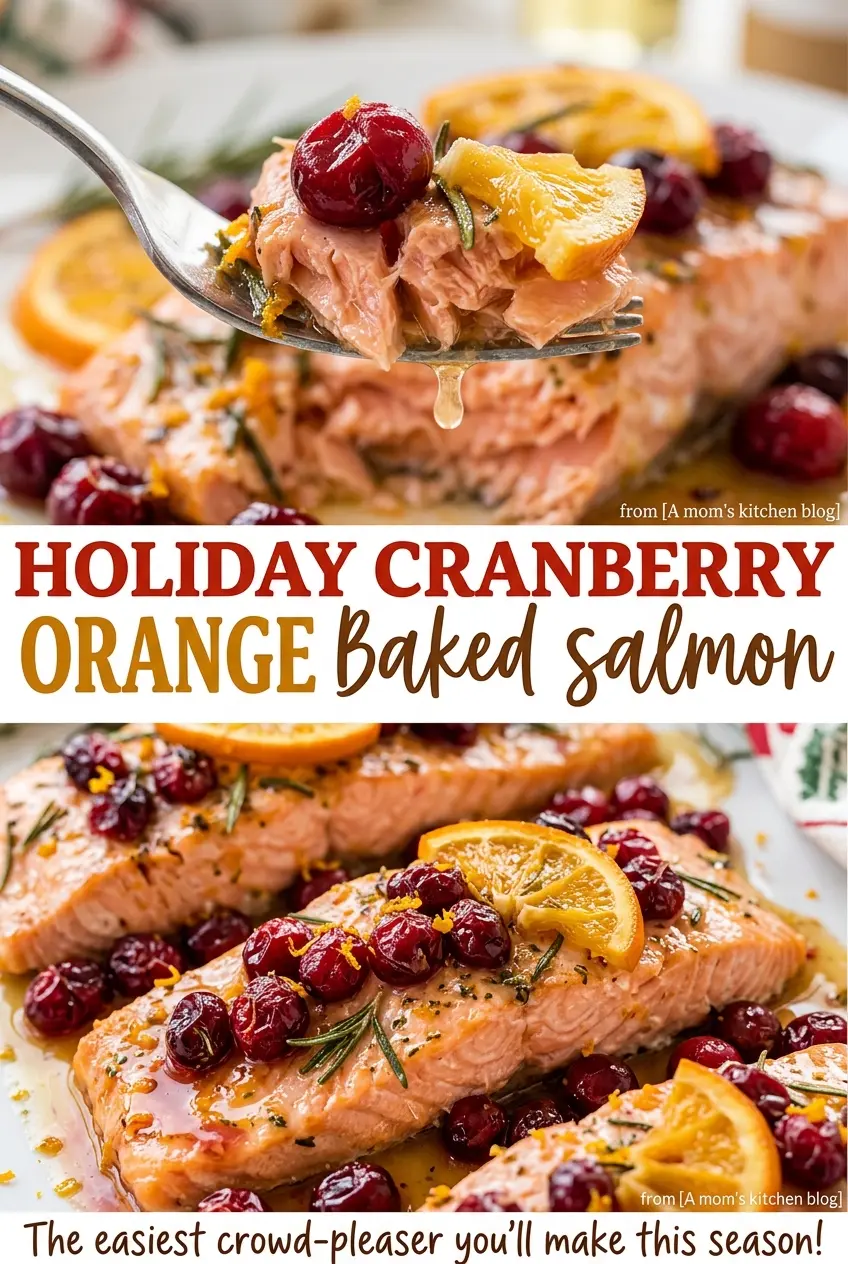
The cranberries soften and pop in the saucepan, turning orange juice into a ruby glaze that clings to the spoon. That little shift from tart berries to a glossy sauce is what makes Holiday Cranberry Orange Baked Salmon feel special without making dinner complicated. I like that the glaze cooks while the salmon is still waiting to go into the oven.
Keeping the skin on and baking the fillet skin-side down gives the salmon a steady base under the sweet-tart topping. The skin helps protect the flesh from the heat beneath it, while the glaze keeps the top bright and moist. A short rest after baking lets the fillet settle before you slice into its tender center.
Kitchen Note
Don’t wait for every cranberry to disappear into the glaze. I stop when most have burst and the sauce has thickened; a few whole berries give the finished topping a nice bit of texture.
Save this Holiday Cranberry Orange Baked Salmon for a festive dinner with a glossy cranberry-orange topping and tender, skin-on salmon.
Why the Thickest Part, Not the Tail, Sets Salmon’s Doneness
A salmon fillet rarely has the same thickness from end to end. The thinner tail can look ready while the center-cut portion still needs time, so judging the whole fillet by its narrowest edge is an easy way to end up with an underdone middle. The thickest part gives you the most useful reading for the entire piece.
This matters especially when a cranberry glaze covers the surface. Its color changes as it bakes, but the topping isn’t a reliable guide to what’s happening inside the fish. Use the temperature at the thickest section to decide when to take the salmon out, rather than waiting for the glaze to darken or the edges to look dry.
The 9×13-inch baking dish gives a two-pound fillet room to lie flat, and parchment keeps the glaze from baking onto the dish. Since the salmon stays skin-side down, you can spoon the topping over the flesh without having to turn the fillet partway through cooking.
How Cranberries, Orange, and Dijon Balance the Salmon
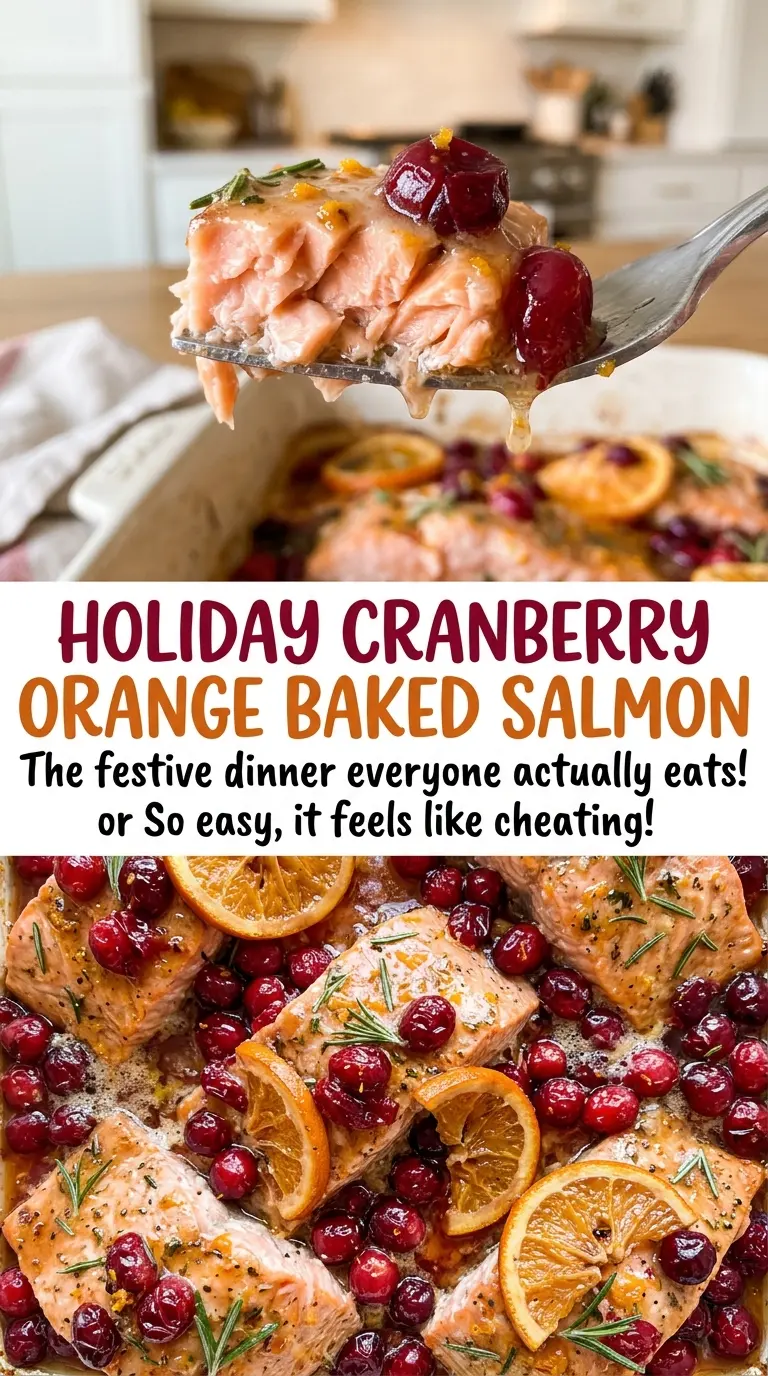
- Cranberries — Fresh berries cook down into a tart, textured glaze, and frozen cranberries work in the same saucepan. Choose either; the recipe is built to accommodate both. The berries are ready when most have burst and the liquid has thickened.
- Orange juice and zest — The juice gives the cranberries enough liquid to simmer, while finely grated zest brings a more concentrated orange aroma. Use a fresh, fragrant orange when you can; zest only the colored outer peel so the bitter white pith doesn’t get into the glaze.
- Honey — Honey softens the cranberries’ sharp acidity and helps round out the citrus. Its sweetness is part of the glaze’s balance, so don’t leave it out if you want the same sweet-tart finish.
- Dijon mustard — Dijon adds a gentle savory edge that keeps the topping from tasting like a fruit sauce. It blends into the glaze rather than making the salmon taste distinctly mustardy.
- Skin-on salmon and olive oil — A skin-on fillet holds together well in the baking dish, and a light brush of olive oil helps season the surface. Thaw frozen salmon before cooking and pat it dry so the oil and seasoning coat the fish instead of sliding over excess moisture.
Build the Glaze First, Then Bake the Salmon Skin-Side Down
Simmer the Cranberries Until the Glaze Thickens
Combine the cranberries, orange juice, orange zest, honey, and Dijon mustard in a small saucepan. Bring the mixture to a simmer over medium heat, stirring occasionally, and cook for 8 to 10 minutes. The berries will soften and pop as the liquid reduces; keep the heat at a steady simmer rather than letting the bottom scorch. The glaze is ready once most cranberries have burst and the mixture has thickened.
Season the Salmon in the Lined Dish
Heat the oven to 400°F and line a 9×13-inch baking dish with parchment paper. Pat the salmon dry, then set it in the dish skin-side down. Brush the top with olive oil and season evenly with kosher salt and black pepper. Drying the surface first helps the oil and seasoning stay in place instead of pooling around the fish.
Glaze, Bake, and Rest
Spoon the cranberry-orange glaze over the salmon, spreading it across the top. Bake for 12 to 18 minutes, checking the thickest part of the fillet rather than relying on the color of the topping. Take the salmon out when that center reaches 145°F; a thinner end may be ready sooner, but the thickest portion determines the timing. Let the fillet rest for 3 minutes before serving so it settles and is easier to portion.
Fresh or Frozen Cranberries, Plus a Simple Dietary Note
Use Frozen Cranberries When Fresh Ones Aren’t Available
Frozen cranberries are an easy, source-approved alternative to fresh berries in this glaze. They keep the same bright tartness, so the finished topping still contrasts nicely with the rich salmon.
Keep the Dish Gluten-Free and Dairy-Free
The ingredients listed here contain no gluten or dairy, so no replacement is needed for those dietary preferences. Keeping the ingredient list unchanged preserves the cranberry-orange glaze and the salmon’s clean, savory finish.
Storage and Reheating
- Refrigerator: Store leftover salmon in an airtight container for 3 to 4 days. The glaze may look thicker after chilling, and the salmon will be firmer.
- Freezer: Freeze portions in an airtight freezer-safe container for up to 2 to 3 months. Thaw them in the refrigerator before reheating; the fish may be a little softer after freezing.
- Reheating: Warm portions in a covered baking dish in a 275°F oven until just heated through. Avoid high heat or a long reheat, which can dry out the salmon.
Questions I Get About Cranberry Orange Baked Salmon
Holiday Cranberry Orange Baked Salmon
Ingredients
Equipment
Method
- Combine the cranberries, orange juice, orange zest, honey, and Dijon mustard in a small saucepan.
- Bring the mixture to a simmer over medium heat and cook for 8 to 10 minutes, stirring occasionally, until most cranberries have burst and the glaze has thickened.
- Heat the oven to 400°F.
- Line a 9x13-inch baking dish with parchment paper.
- Pat the salmon dry and place it skin-side down in the prepared dish.
- Brush the salmon with the olive oil and season evenly with the salt and pepper.
- Spoon the cranberry-orange glaze over the salmon.
- Bake for 12 to 18 minutes, until the thickest part reaches 145°F.
- Rest the salmon for 3 minutes before serving.