
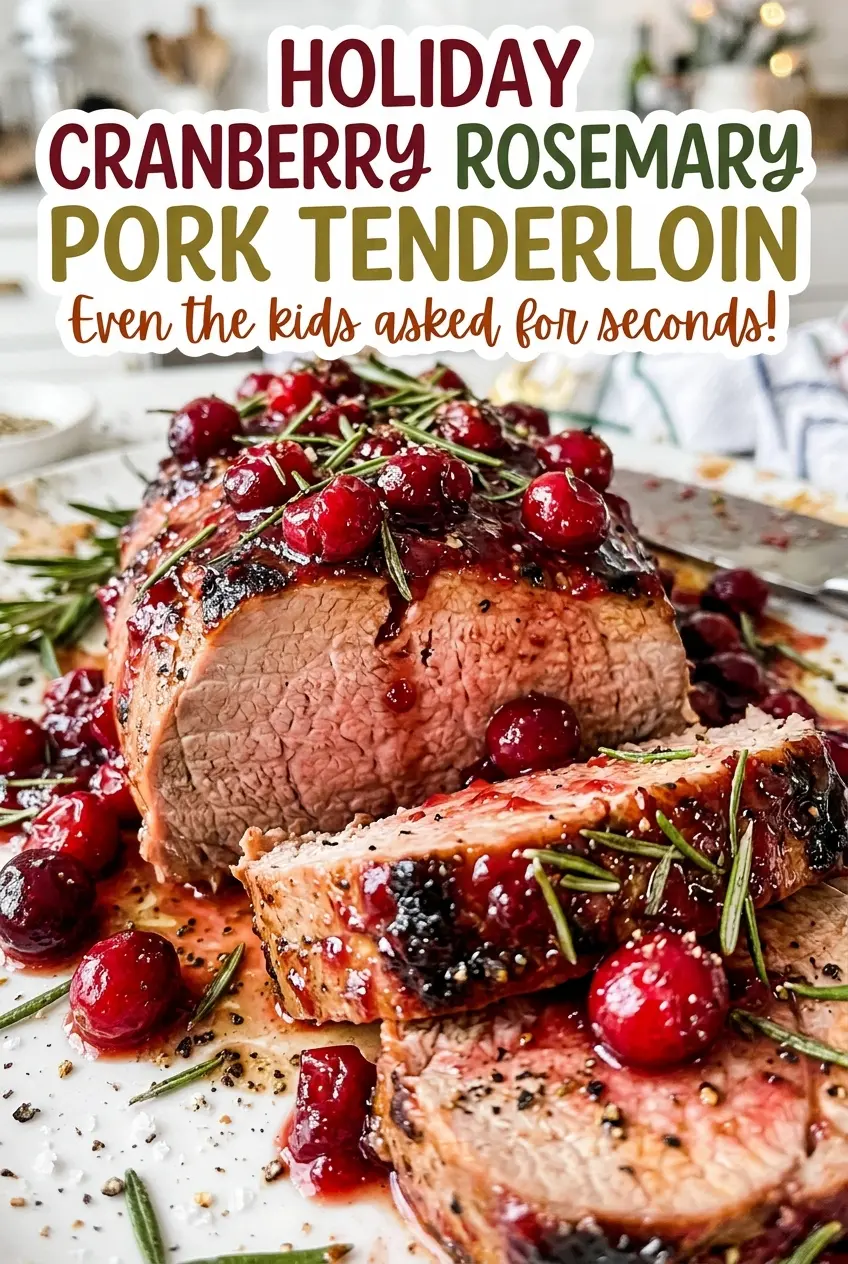
Once the cranberries start popping in the skillet, the sauce changes quickly: whole berries collapse into a glossy, ruby-colored spoonful that clings to a slice of pork. I like making this Holiday Cranberry Rosemary Pork Tenderloin in one oven-safe skillet, because the pork browns first and that same pan goes on to build the sauce. It feels special on the table, but the cooking stays straightforward.
Two tenderloins can look ready at different times, so I check each one rather than trusting the clock alone. While the meat rests, the cranberries simmer with orange juice, broth, brown sugar, rosemary, and a little Dijon. The finished sauce is tart, gently sweet, and fragrant with rosemary, with enough body to coat each slice. Put a spoonful over the warm pork and you get a bright, savory-sweet bite.
Kitchen Note
Give the pork at least 3 minutes on the cutting board before slicing. That little pause fits neatly while the sauce cooks, and the slices stay juicier than they do when cut straight from the pan.
Save this Holiday Cranberry Rosemary Pork Tenderloin for a centerpiece dinner with browned pork and a tart, rosemary-scented cranberry sauce.
Why This Cranberry Sauce Thickens Without a Starch
This sauce gets its body from the cranberries themselves and the time they spend simmering. As the berries burst, they soften into the liquid; a little evaporation helps the sauce cling to the pork. There’s no flour or cornstarch to whisk in, so the texture stays fruit-forward rather than turning into a smooth, opaque gravy.
That’s also why the sauce needs a proper simmer instead of a quick warm-through. The cranberries should be mostly broken down, but a few whole or partly burst berries give it a pleasing, uneven texture. If you stop while most of the fruit is still intact, the sauce will be thinner and sharper. Let it cook until it looks thick enough to coat a spoon, then take it off the heat.
Keep the sauce in the skillet where the pork was seared. The browned bits left behind add savory depth that balances the fruit, and the butter-softened shallot gives the sauce a gentle savory base. You end up with something more layered than cranberry relish, without needing a separate pot or an added thickener.
What Fresh Cranberries, Orange, and Rosemary Bring to the Pan

- Pork tenderloin — This lean cut cooks quickly, which makes careful timing worthwhile. Trimming away the silver skin before seasoning prevents a tough strip from tightening as the pork roasts.
- Fresh cranberries — Their firm skins hold together at first, then pop as they simmer and give the sauce its fruit texture. Dried cranberries aren’t a direct stand-in here; they’re chewy and won’t break down into the same sauce.
- Orange juice and brown sugar — The juice gives the cranberries a bright, rounded acidity, while the brown sugar softens their sharp edge. Use packed light brown sugar so the amount is consistent, and choose plain orange juice rather than a sweetened orange drink.
- Fresh rosemary — Finely chopping the rosemary helps its piney aroma spread through the sauce instead of leaving you with large, woody pieces. Fresh leaves give this particular sauce a cleaner, brighter fragrance than dried rosemary.
- Shallot, garlic, and Dijon — The shallot softens into a mellow base, and the garlic and Dijon add savory notes that keep the fruit from tasting like a dessert topping. Finely chop the shallot so it softens in the short cooking time.
- Olive oil and butter — Olive oil handles the hot sear, while butter gives the sauce a rounder finish. The oil doesn’t need to be a specialty bottle; a familiar everyday olive oil is fine for browning the pork.
From a Quick Sear to a Cranberry Sauce That Clings
Dry and Season the Tenderloins
Heat the oven to 400°F, then pat the pork dry and season it all over with kosher salt and black pepper. Dry surfaces brown more readily than damp ones, so take a moment to blot the tenderloins well. Set out a 12-inch oven-safe skillet for both the stovetop sear and the oven roast. The pork should be ready to go into the pan as soon as the oil is hot.
Brown the Pork Before It Goes in the Oven
Heat the olive oil in the skillet over medium-high heat. Add the tenderloins and turn them occasionally until they’re browned on all sides, about 6 minutes total. Don’t expect the centers to be cooked through at this point; the sear is for color, and the oven finishes the job. Move the skillet to the oven and roast for about 12 to 18 minutes, checking the thickest part of each tenderloin for 145°F.
Rest the Pork While You Start the Sauce
Transfer the pork to a cutting board, leaving the skillet ready for the sauce. While the meat rests, melt the butter in the skillet over medium heat and cook the shallot until softened, about 2 minutes. Add the garlic and finely chopped rosemary, stirring for 30 seconds so the garlic turns fragrant without browning. If the garlic starts to darken, move on to the next ingredients rather than letting it scorch.
Simmer Until the Berries Burst
Stir in the cranberries, orange juice, chicken broth, packed light brown sugar, and Dijon mustard. Let the mixture simmer for 8 to 10 minutes, until most of the berries have burst and the sauce has thickened. A few whole berries are fine; the sauce shouldn’t look like smooth jelly. Slice the rested pork and serve it with the warm sauce spooned over the top.
Three Small Changes That Shift the Sauce
Make the Sauce Dairy-Free
Use 1 tablespoon olive oil in place of the butter when softening the shallot. The sauce will be dairy-free and a little less round and rich, but the cranberries will still simmer into a spoonable sauce.
Let the Cranberries Taste Brighter
For a tarter sauce, use 1/4 cup packed light brown sugar instead of 1/3 cup. The berries’ natural sharpness will come through more clearly, while the orange juice still rounds out the flavor.
Turn Up the Rosemary
Use 1 1/2 teaspoons finely chopped fresh rosemary for a more pronounced herbal note. Keep it finely chopped and add it with the garlic so its fragrance opens up in the butter before the fruit and liquids go in.
Storage and Reheating
- Refrigerator: Refrigerate leftover pork and sauce in airtight containers for 3 to 4 days. The chilled sauce will firm up, and the pork will be less tender straight from the refrigerator.
- Freezer: Freeze the sliced pork and sauce separately in airtight containers for up to 2 to 3 months for best quality. Thaw them in the refrigerator before reheating.
- Reheating: Warm the pork with a spoonful of sauce in a covered skillet over low heat, or microwave it in short intervals. Reheat leftovers to 165°F, and avoid prolonged high heat, which can dry out the lean pork.
Questions That Come Up While Making This Pork
Holiday Cranberry Rosemary Pork Tenderloin
Ingredients
Equipment
Method
- Heat the oven to 400°F.
- Pat the pork dry and season it all over with the salt and pepper.
- Heat the olive oil in a 12-inch oven-safe skillet over medium-high heat, then sear the tenderloins, turning occasionally, until browned on all sides, about 6 minutes total.
- Transfer the skillet to the oven and roast until the thickest part of each tenderloin reaches 145°F, about 12 to 18 minutes.
- Transfer the pork to a cutting board and let it rest for at least 3 minutes while you make the sauce.
- Melt the butter in the skillet over medium heat, add the shallot, and cook until softened, about 2 minutes.
- Add the garlic and rosemary and cook, stirring, for 30 seconds.
- Stir in the cranberries, orange juice, chicken broth, brown sugar, and Dijon mustard; simmer until most of the cranberries have burst and the sauce has thickened, 8 to 10 minutes.
- Slice the pork and serve with the cranberry rosemary sauce.