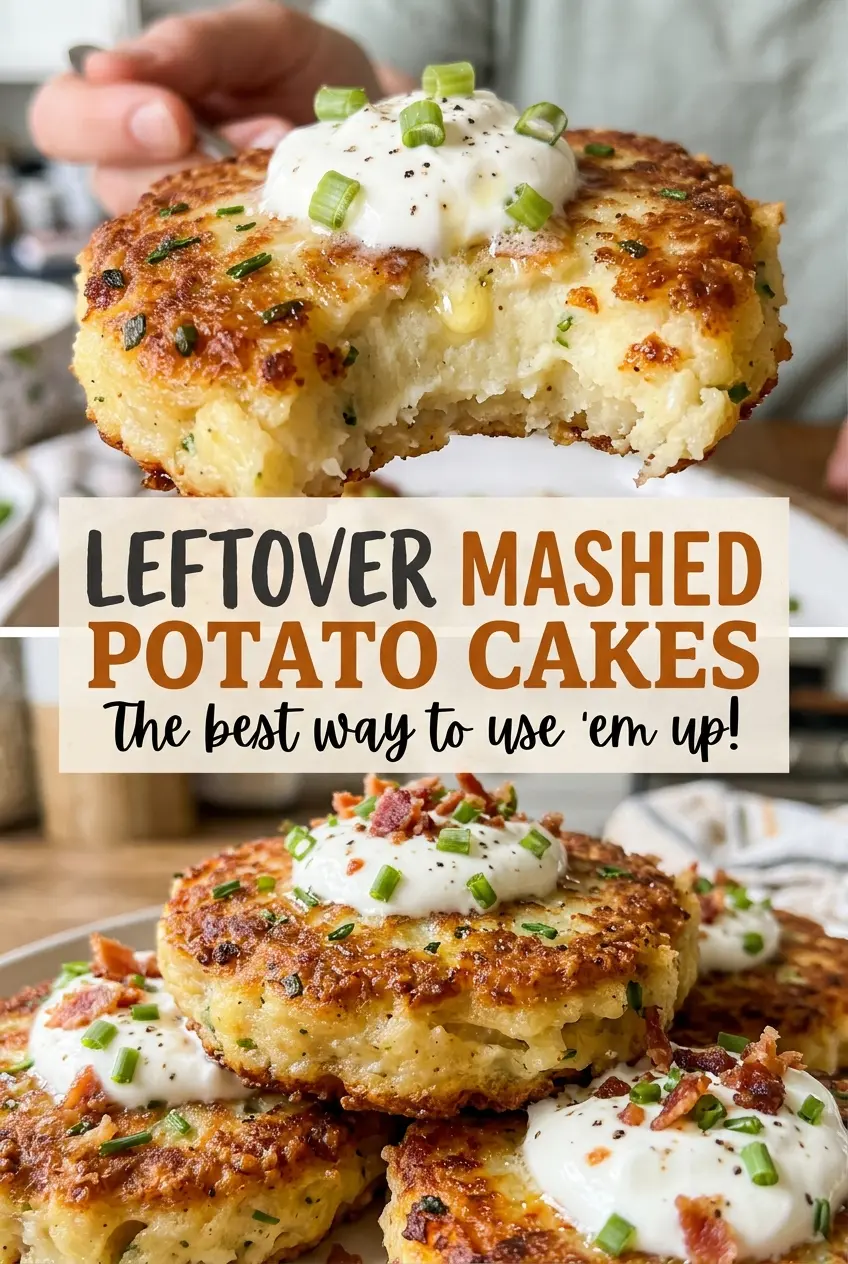
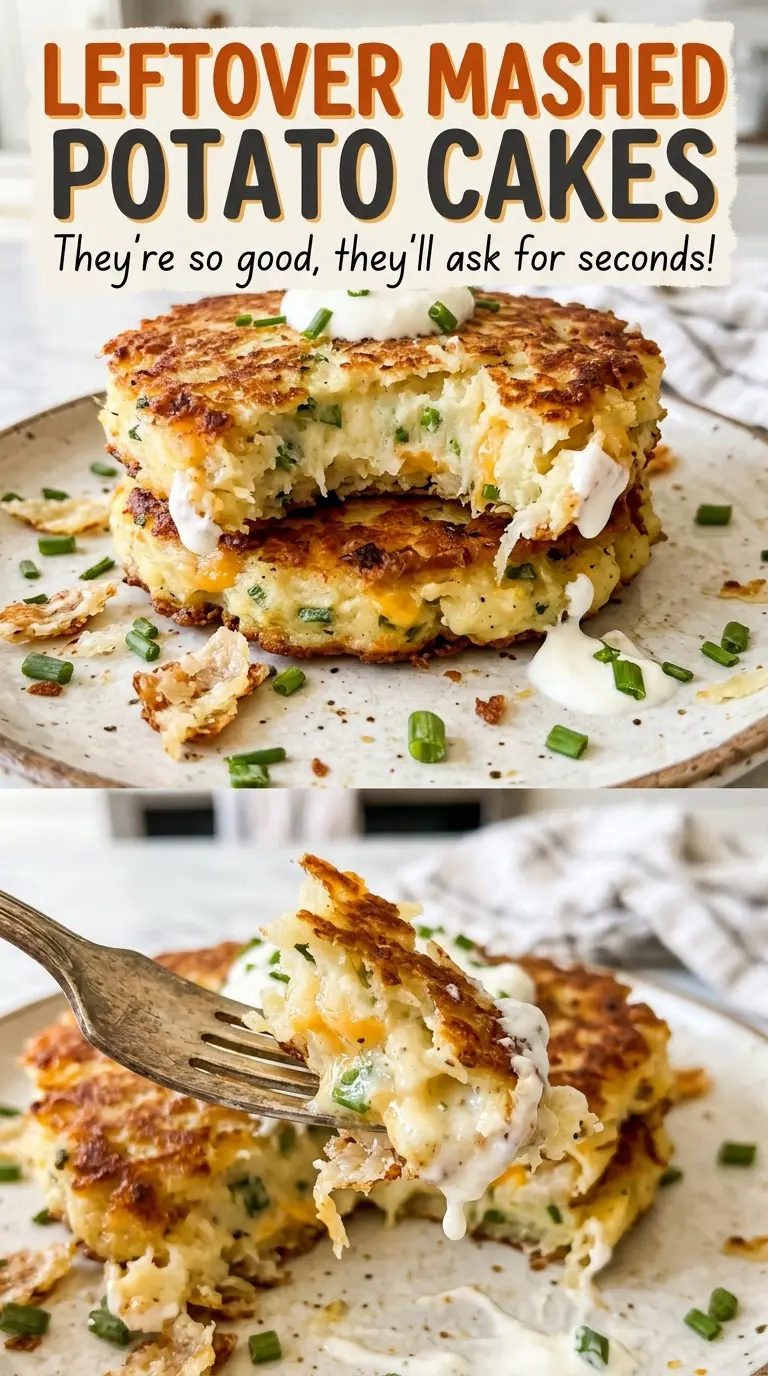
The first cake tells you whether the potatoes are ready: a cold, firm patty should hold its shape as it goes into the skillet, then develop a golden crust before you turn it. Leftover mashed potatoes can be a little unpredictable, but these leftover mashed potato cakes turn them into a crisp-edged lunch or side without asking you to start from scratch. Cheddar melts through the middle, and scallions keep each bite from tasting like plain reheated mash. I make eight patties so they cook in two batches in a 12-inch skillet.
Cold potatoes matter because warm mash loosens as soon as the egg and cheese go in. Chilled leftovers combine with the flour and egg to make patties you can lift and turn, while the cheddar keeps the centers tender. They’re straightforward, but they reward a little patience at the stove: give each side time to brown instead of poking or flipping early. The finished cakes have crisp edges and a soft, cheesy middle.
Kitchen Note
Let the cakes rest for the full 2 minutes before serving. That short pause helps them settle, so they’re easier to lift and bite into without losing their shape.
Save these Leftover Mashed Potato Cakes for the next time cold mashed potatoes are waiting in the fridge—golden edges, cheddar in the middle, and eight patties from one bowl.
Why These Potato Cakes Need a Golden Side Before You Turn Them
A potato cake can look set around the edges before its bottom is ready to release. If you turn it too soon, the crust hasn’t had time to firm up, and the soft center can drag or break as you move the patty. Let the color guide you: the underside should be golden brown, not just pale and warm.
Medium heat gives the middle time to warm while the outside browns. High heat can darken the surface before the center reaches the right temperature, while a cooler pan can leave the cakes sitting in oil without building a crisp crust. Keep the skillet to four patties at a time, as the space helps each one brown instead of crowding them together.
Once a cake has a browned underside, turn it gently and let the second side do the same. Don’t press down on the patties; pressing squeezes the tender interior and doesn’t help the crust form. The goal is a crisp shell around a soft center, not a flattened layer of mashed potatoes.
Cold Potatoes, Flour, and Egg: The Structure Behind These Cakes
- Cold mashed potatoes — They’re the base and determine how firm the mixture feels when you shape it. Plain, well-chilled leftovers are the most predictable; potatoes that are loose or heavily enriched can make softer patties. There isn’t a reliable stand-in for the leftover mash in this formula, so use the cold potatoes you have rather than trying to build the mixture from a different potato product.
- Egg and all-purpose flour — The egg helps hold the cakes together, while flour absorbs some moisture and gives the mixture enough body to shape. Standard all-purpose flour is a dependable choice here; switching flour types can change how the mixture behaves. Stir until the ingredients are evenly combined so you don’t end up with floury pockets or spots that lack binder.
- Shredded cheddar — Cheddar brings a savory, milky note and softens as the cakes cook. A regular grocery-store cheddar works well; a sharper cheddar gives a more pronounced taste, but you don’t need a specialty cheese. Use shredded cheese so it distributes through the potato mixture instead of leaving large pieces in a few cakes.
- Scallions — Their mild onion flavor cuts through the richness of the potato and cheese. Fresh scallions have the cleanest flavor, and thin slices spread through the mixture without making the patties lumpy. If the green tops are wilted or slimy, discard them and use fresh ones.
- Vegetable oil — It gives the cakes enough fat to brown in the skillet without competing with the cheddar. A standard vegetable oil is suitable; there’s no need for a specialty oil. Measure it between batches so the second group gets the same chance to crisp as the first.
From Cold Mash to Cakes With a Crisp, Even Crust
Mix the potato base evenly
Put the cold mashed potatoes in a large bowl with the egg, shredded cheddar, thinly sliced scallions, flour, kosher salt, and black pepper. Stir until the ingredients are evenly combined and the flour is no longer visible in dry patches. The mixture should look consistent from edge to edge, with scallions and cheese spread throughout. Don’t leave a pocket of plain potato at the bottom of the bowl.
Shape eight even patties
Divide the mixture into eight patties, each about 1/2 inch thick. Keeping them close to the same thickness helps them brown and heat through at a similar pace. If the edges look ragged, press them gently into shape rather than packing the potato down hard. Set the patties aside while the skillet heats.
Brown the first batch
Heat 1 tablespoon of vegetable oil in a 12-inch skillet over medium heat. Add four patties and cook for 3 to 4 minutes per side, until both sides are golden brown and the centers reach 160°F. If the underside is still pale when you try to turn a cake, give it more time within the cooking window so the crust can release cleanly. Transfer the cooked cakes to a plate.
Finish the second batch
Add the remaining 1 tablespoon of oil to the skillet, then cook the remaining four patties the same way. Keep the heat at medium so their outsides brown without racing ahead of the centers. Once the second batch is cooked, let the cakes rest for 2 minutes before serving. That’s all the stove time these patties need before they’re ready to eat.
Two Small Changes That Give These Cakes a Different Character
Skip the scallions for a milder cake
Leave out the scallions if you want the potato and cheddar to come through without the onion note. The patties still have the egg and flour to help bind them, but the flavor will be simpler and less fresh-tasting.
Make them dairy-free only if your mash is dairy-free
Omit the cheddar, and check that the leftover mashed potatoes themselves contain no dairy. The cakes will lose their cheesy richness, but the egg and flour still help them hold together; the cooking method stays the same.
Storage and Reheating
- Refrigerator: Store cooked cakes in an airtight container for 3 to 4 days. The crust softens as they sit.
- Freezer: Freeze cooled cakes in a single layer, then transfer them to an airtight container for up to 2 months. Thawing in the refrigerator before reheating gives the centers a more even texture.
- Reheating: Warm them in a skillet over medium heat, turning once, until the centers reach 165°F. Avoid high heat, which can brown the outside before the middle is hot.
Questions That Come Up When Making Potato Cakes
Leftover Mashed Potato Cakes
Ingredients
Equipment
Method
- Stir together the mashed potatoes, egg, cheddar, scallions, flour, salt, and pepper in a large bowl until evenly combined.
- Shape the mixture into 8 patties about 1/2 inch thick.
- Heat 1 tablespoon of the oil in a 12-inch skillet over medium heat.
- Cook 4 patties for 3 to 4 minutes per side, until golden brown and the centers reach 160°F; transfer to a plate.
- Add the remaining 1 tablespoon oil to the skillet and cook the remaining patties the same way.
- Rest the cakes for 2 minutes before serving.