
Silky linguine, juicy shrimp, and a lemon butter sauce that clings to every strand is the kind of dinner that disappears fast and still feels light at the table. The best versions of this dish don’t lean on cream to carry the sauce. They rely on pasta water, butter, and just enough wine and lemon to build something glossy, bright, and balanced.
The trick is keeping the shrimp tender while the sauce comes together in the same pan. Garlic only needs a short minute in the butter before the wine goes in, and the pasta water does the quiet work of turning everything into a sauce instead of a puddle. Fresh lemon zest matters here because the juice brings acidity, but the zest gives the dish its real top note.
Below, you’ll find the timing that keeps the shrimp from turning rubbery, plus the one texture cue that tells you the sauce is ready to coat the linguine. There’s also a smart way to adapt it if you want to make it dairy-free or add a little heat.
The sauce turned silky once I added the pasta water, and the shrimp stayed tender instead of getting chewy. My husband kept twirling up the last little bit from the pan.
Save this lemon butter shrimp linguine for the night you want glossy pasta, tender shrimp, and a bright sauce that comes together fast.
The Sauce Breaks When the Heat Stays Too High
This dish looks simple, but the sauce only works if you treat the pan like a place to build layers, not rush them. The shrimp need a hard, quick sear, then they come out so the garlic can soften in the butter without scorching. If the garlic browns, the whole sauce turns bitter before the wine even has a chance to do its job.
The other mistake is dumping in the pasta and expecting the sauce to coat it on its own. Lemon juice thins things out fast, so the starchy pasta water and the final knob of butter are what pull everything back together. That glossy finish is the difference between pasta with sauce and pasta that just happens to be sitting in sauce.
- High heat for the shrimp — you want a fast sear for color and texture. If the pan is crowded, the shrimp will steam and go rubbery before they ever pick up any browning.
- Pasta water — this is the binder. The starch helps the butter and lemon emulsify instead of separating into oil and liquid.
- Fresh lemon zest — juice gives the sharpness, but zest carries the lemon aroma through the whole dish. Bottled lemon juice won’t give the same clean finish.
What Each Ingredient Is Actually Doing in This Dish
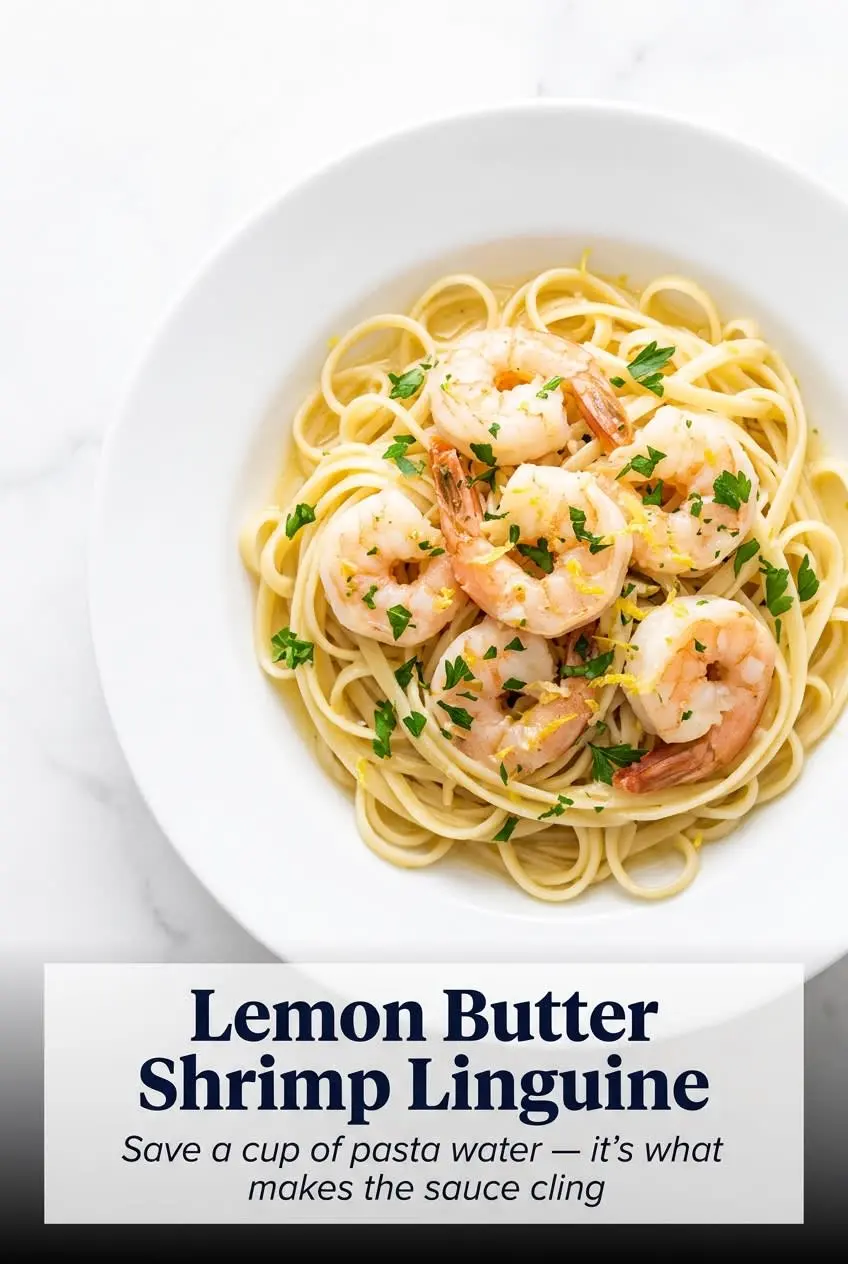
- Linguine — the flat shape gives the sauce more surface area to cling to. Spaghetti works in a pinch, but linguine holds the glossy butter-lemon sauce a little better.
- Large shrimp — size matters here because small shrimp overcook in a blink. If you only have smaller shrimp, shorten the sear time and pull them as soon as they turn opaque.
- Unsalted butter — this is what gives the sauce its body and shine. Salted butter works if that’s what you have, but it makes final seasoning harder to control.
- Dry white wine — it adds acidity and depth, then reduces into the pan instead of sitting on top of the sauce. Use a wine you’d actually drink, not anything sweet.
- Fresh lemon — both zest and juice matter. The juice sharpens the sauce, while the zest keeps it from tasting flat or one-note.
- Parmesan — optional, but a small handful adds savory weight. Add it off the heat so it melts into the sauce instead of turning grainy.
Building the Pan Sauce Without Turning the Shrimp Tough
Cook the Pasta to the Edge of Done
Boil the linguine in well-salted water until it’s al dente, with a little firmness in the center. Drain it while it still has some bite, because it will finish in the sauce and soak up flavor there. Reserve the pasta water before you drain; once it’s gone, you’ve lost the ingredient that ties the sauce together.
Sear Fast, Then Get the Shrimp Out
Pat the shrimp dry before they hit the skillet. Any surface moisture will fight browning and leave you with pale, steamed shrimp instead of sweet, lightly caramelized ones. They only need 1 to 2 minutes per side, just until pink and curled. The moment they’re opaque, move them out of the pan so they don’t keep cooking in residual heat.
Let the Garlic Fragrance Lead the Way
After the shrimp come out, lower the heat and melt half the butter in the same skillet. Add the garlic and stir for about a minute, just until it smells rich and nutty. If it starts to color, the heat is too high, and that bitterness will carry through the entire sauce.
Reduce, Emulsify, and Finish Glossy
Pour in the wine and let it simmer until it drops by about half. That reduction concentrates the flavor and cooks off the harsh alcohol edge. Add the lemon juice and zest, then toss in the pasta with a splash of pasta water at a time. Finish with the remaining butter and keep tossing until the sauce clings in a thin sheen instead of pooling at the bottom of the pan.
How to Adapt This for Different Tables and Pantry Stashes
Make It Dairy-Free
Swap the butter for a good olive oil and finish with a little extra pasta water to help the sauce stay glossy. You’ll lose some of the richness, but the lemon and garlic stay bright and clean, which actually suits the dish well.
Skip the Wine Without Losing the Sauce
Use an equal amount of low-sodium chicken broth with a squeeze of extra lemon. The sauce will be a little less sharp and a little less complex, but it still reduces nicely and gives the pasta enough depth.
Turn Up the Heat
Add another pinch of red pepper flakes with the garlic, or finish with a little cracked black pepper. That gives the sauce a sharper edge without changing the balance of butter and lemon.
Storage and Reheating
- Refrigerator: Store leftovers in an airtight container for up to 2 days. The shrimp are best the first day, and the pasta will absorb more sauce as it sits.
- Freezer: I don’t recommend freezing this dish. The shrimp turn mealy and the sauce separates once thawed.
- Reheating: Warm gently in a skillet over low heat with a splash of water or broth. High heat tightens the shrimp and makes the sauce split, so go slow and stop as soon as it’s hot.
Answers to the Questions Worth Asking
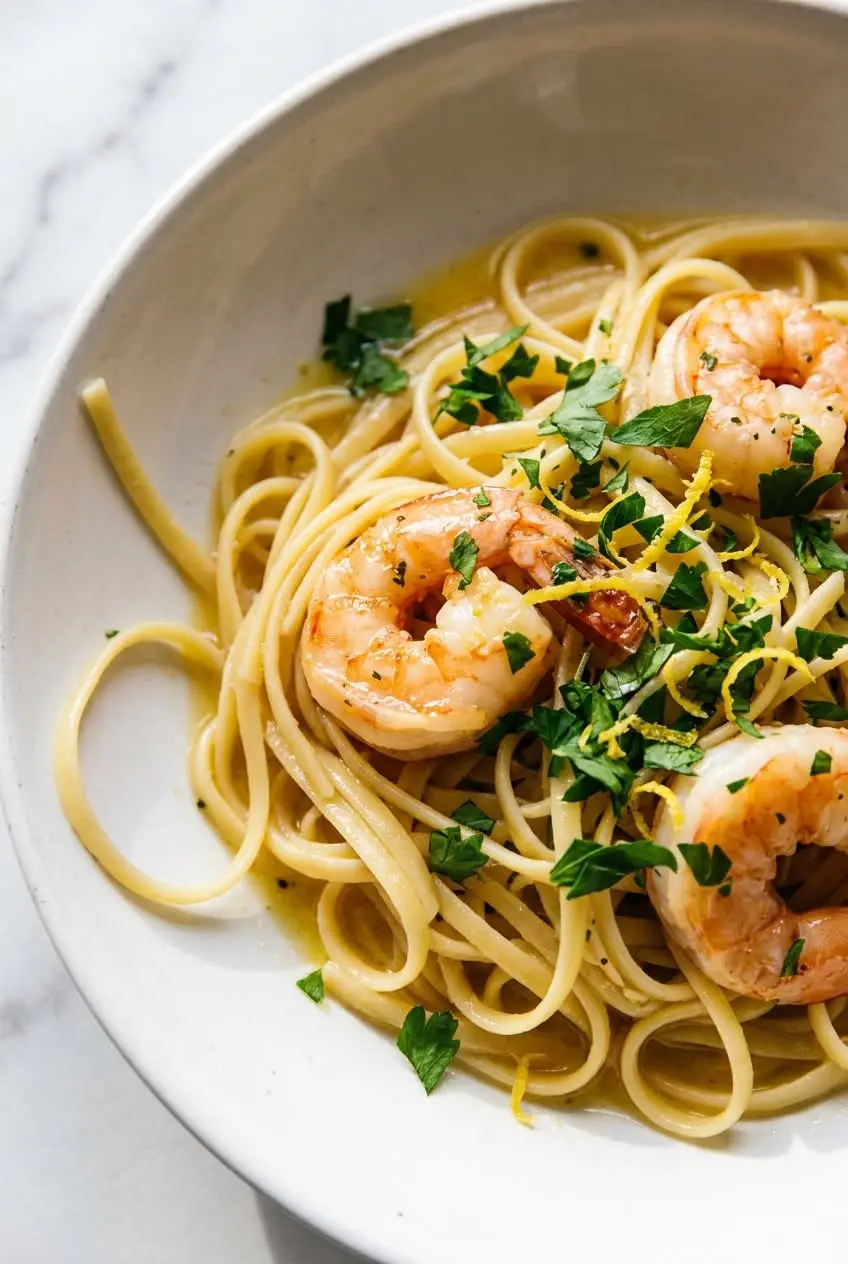
Lemon Butter Shrimp Linguine
Ingredients
Equipment
Method
- Bring a large pot of salted water to a boil, then cook 400 g linguine until al dente according to package directions. Before draining, reserve 120 ml pasta cooking water (reserved), then set pasta aside.
- Pat 500 g large shrimp, peeled and deveined dry and season with salt, pepper, and 0.5 tsp red pepper flakes. Heat 2 tbsp olive oil in a large skillet over high heat, then cook shrimp in a single layer for 1–2 minutes per side until pink and just cooked through, and remove to a plate.
- Reduce heat to medium and melt half of 80 g unsalted butter in the same pan. Sauté 5 minced garlic cloves for 1 minute until fragrant but not browned.
- Pour in 120 ml dry white wine and let it reduce by half, about 3 minutes. Stir in the lemon juice and zest from 3 lemons, then cook 30 seconds to combine.
- Add the drained pasta to the pan and toss well. Add 120 ml pasta cooking water (reserved) a splash at a time to loosen the sauce, then add the remaining 80 g unsalted butter and toss until the sauce is glossy and clings to the noodles.
- Return the shrimp to the pan and toss gently to warm through. Finish by tossing in 3 tbsp chopped fresh parsley and 40 g Parmesan (optional), then taste and adjust salt and pepper before serving immediately.