
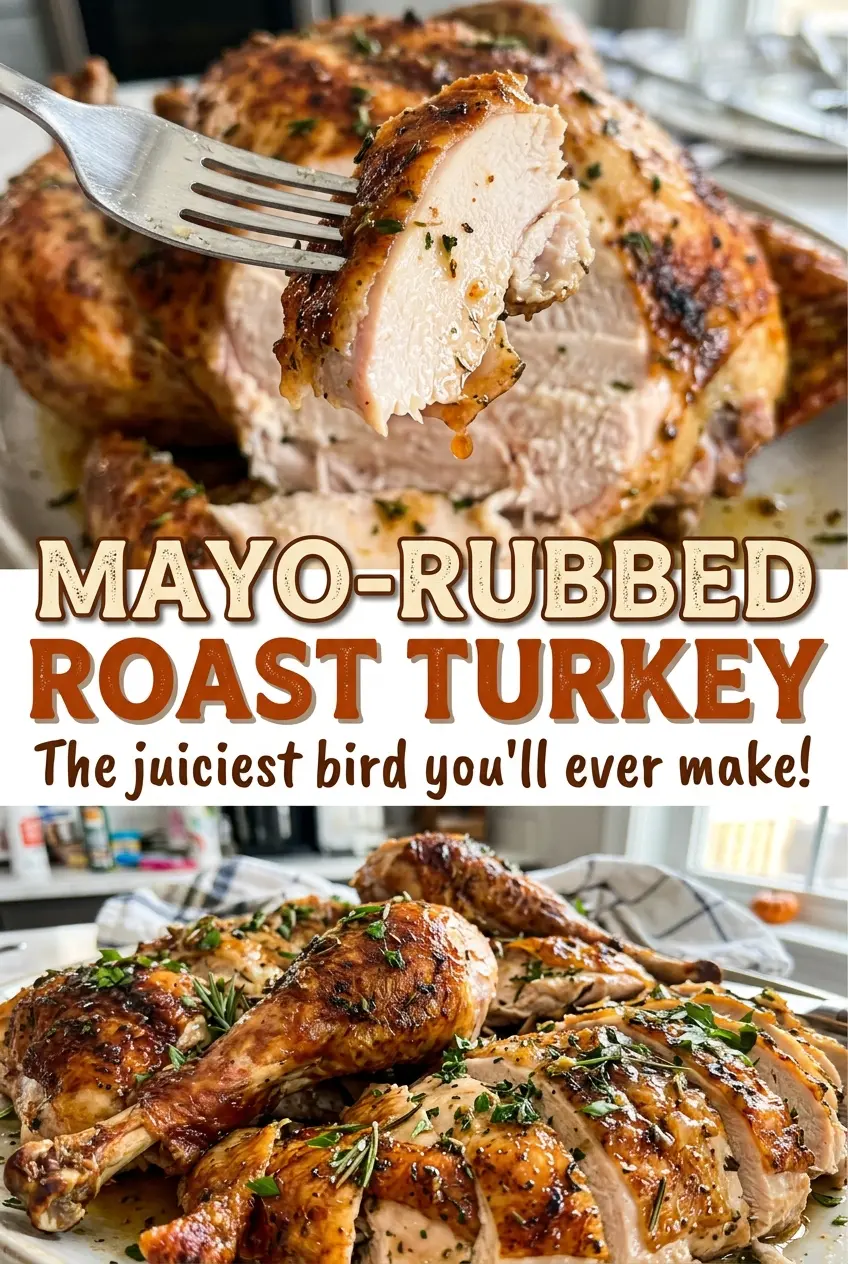
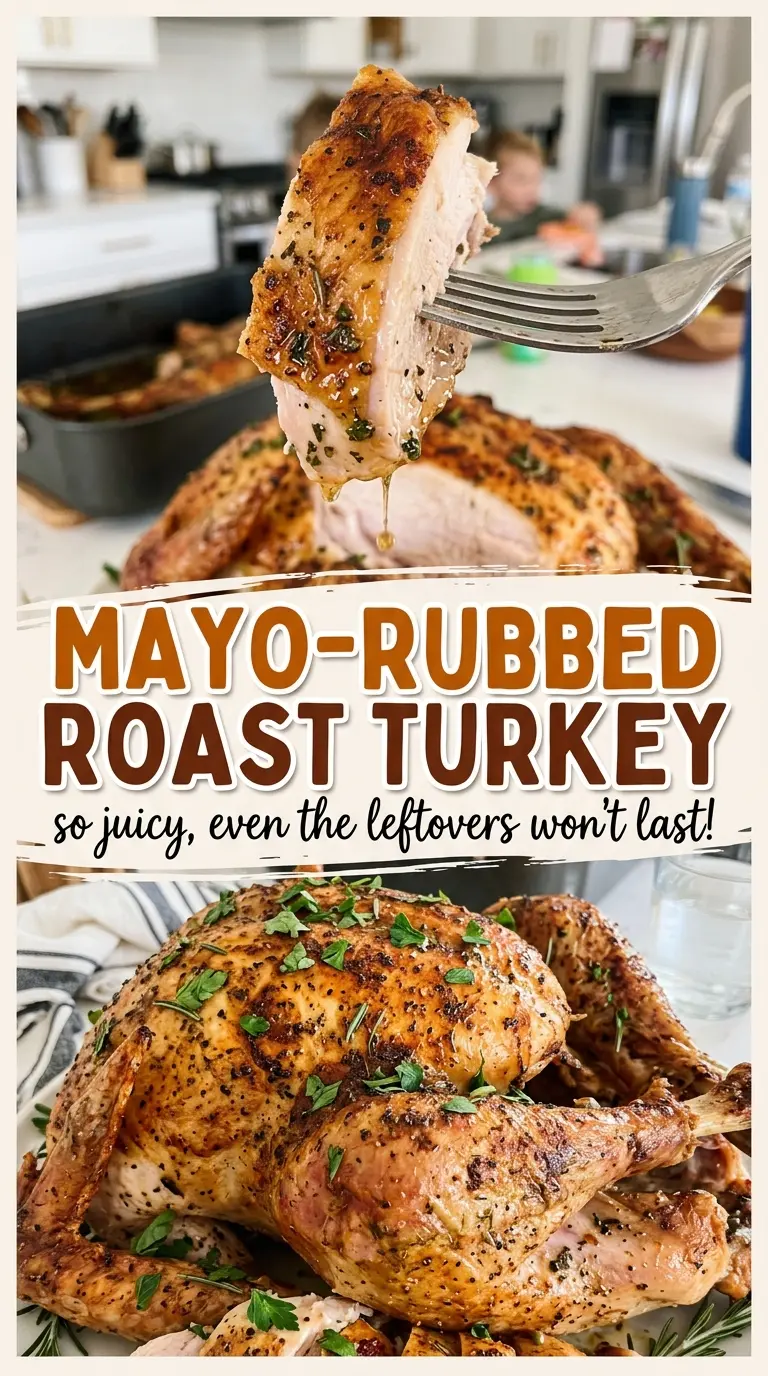
The first thing I watch is the skin: the mayonnaise turns into a thin, fragrant coating that starts to bronze while the turkey roasts. A darkening bird can look finished before the meat is ready, so I rely on a thermometer rather than color. This mayo-rubbed roast turkey is a straightforward way to get the garlic and herbs onto both the breast meat and the outside of a whole bird.
I stir the seasonings into the mayonnaise, then work some of it gently under the breast skin and spread the rest over the exterior. That gives the breast a direct layer of seasoning while the outside browns. The lemon and onion go in the cavity, where they bring their aroma to the roast without turning this into a stuffed turkey. After the turkey rests, the skin is bronzed and the slices are ready for the carving board.
Kitchen Note
Dry the turkey thoroughly inside and out before the mayonnaise goes on. If the skin is damp, the coating is harder to spread evenly and can slide around instead of clinging where you put it.
Save this mayo-rubbed roast turkey for its herb-coated skin and simple whole-bird method, with lemon and onion tucked inside.
The Mayo Coating Browns the Skin; It Doesn’t Seal In Juices
Mayonnaise gets talked about as though it forms a protective shell around meat. It doesn’t lock moisture inside the turkey. What it does here is give the garlic, herbs, salt, pepper, and lemon zest a smooth coating that stays put on the skin and can brown as the bird roasts. That makes it useful across the broad surface of a whole turkey, where a loose sprinkle of seasoning would be more likely to fall away.
Think of the coating as a seasoning carrier and a browning aid, not a shortcut around careful roasting. The breast and thigh are different sizes and don’t always finish cooking at the same moment, so a well-colored exterior can’t tell you what is happening at the center. Checking both parts with a thermometer is what keeps the decision grounded in the meat rather than the skin. If the outside gets deeply browned before the inside is ready, a loose foil tent slows the color without asking you to pull the bird early.
The mayonnaise itself shouldn’t leave the turkey tasting like a sandwich spread. As it cooks, the coating thins across the skin and the herbs and garlic become the more noticeable flavors. The result is savory, gently citrusy turkey with browned skin, not a thick layer of sauce.
Why Mayonnaise and Fresh Herbs Work So Well on a Whole Turkey
- Whole turkey — Start with a fully thawed bird with the neck and giblets removed. A 12- to 14-pound turkey gives the coating plenty of surface area, and the cavity is ready for the lemon and onion. The exact size affects where the bird falls within the roasting-time range, so use the thermometer reading rather than choosing by weight alone.
- Mayonnaise — Its creamy consistency helps the chopped herbs, garlic, and seasoning spread into a thin layer. A regular store-brand mayonnaise works; there is no need for a specialty product. I wouldn’t swap in plain oil here: it won’t hold the seasonings in the same way.
- Fresh thyme and rosemary — Chopped fresh leaves bring a distinct, woodsy aroma to the coating. Choose herbs with fragrant leaves rather than wilted or darkened bunches. If you only have one of these herbs, you can leave out the other; the turkey will have a simpler, single-herb flavor. Dried herbs won’t give the same fresh, flecked coating, so I don’t use them as a direct swap.
- Garlic and lemon — Minced garlic disperses through the mayonnaise, while the lemon zest gives the exterior a bright citrus note. The quartered lemon in the cavity adds aroma as the bird roasts. Zest the lemon before cutting it into quarters so you can use both parts without trying to zest awkward pieces.
- Yellow onion — Quartered onion adds a savory aroma inside the cavity. Choose a firm onion; an inexpensive one is fine because it is there to perfume the roast rather than serve as a separate side.
From a Dry Bird to a Properly Rested Roast
Set Up the Oven and Turkey
Heat the oven to 325°F with a rack in the lower third, then set a roasting rack in a roasting pan. Pat the fully thawed turkey dry inside and out with paper towels and place it breast side up on a work surface. Check that the neck and giblets have been removed. Keeping the bird breast side up from the start makes it easier to apply the coating where it belongs.
Mix the Herb Mayonnaise
Stir the mayonnaise, kosher salt, black pepper, minced garlic, chopped thyme, chopped rosemary, and lemon zest together in a small bowl. Mix until the herbs and garlic are distributed throughout, rather than sitting in one heavily seasoned patch. The finished mixture should look evenly speckled and spreadable. Set it beside the turkey before you begin working under the skin.
Season Under and Over the Skin
Gently loosen the skin over the turkey breast without tearing it. Spread about one-third of the mayonnaise mixture underneath, then rub the rest over the turkey’s exterior. Work with a light touch; a tear makes it harder to keep the mixture in an even layer beneath the skin. Smooth the outside coating across the bird instead of leaving thick clumps in one spot.
Add the Aromatics and Roast
Put the lemon quarters and onion in the cavity, tuck the wing tips under the body, and tie the legs together with kitchen twine. Roast for 3 to 3 3/4 hours. Check the thickest part of the breast and the innermost thigh with a thermometer, avoiding bone; both readings need to reach 165°F. If the skin becomes deeply browned before the turkey is done, tent it loosely with foil.
Let the Meat Rest Before Carving
Transfer the turkey to a carving board when it reaches the temperature target, then leave it to rest for 30 minutes before carving. That pause gives the hot meat time to settle after roasting and makes carving less rushed. Use a sharp carving knife and work from the breast first, then move to the legs and thighs. The skin will be at its best when you carve with deliberate strokes instead of sawing back and forth.
Three Simple Ways to Change the Herb and Citrus Balance
A Rosemary-Led Turkey
Leave out the thyme and keep the rosemary, garlic, and lemon zest in the mayonnaise. The coating will taste more piney and direct, with less of thyme’s soft herbal note; no new ingredient or change to the roasting method is needed.
A Milder Garlic Version
Omit the minced garlic but keep the salt, pepper, herbs, and lemon zest. The turkey still gets its savory, aromatic coating, but the garlic won’t be the first flavor you notice. This is a simple adjustment when you want the fresh herbs to lead.
A Less Citrusy Roast
Leave out the lemon zest and lemon quarters while keeping the onion in the cavity. The finished turkey will lean more savory and herbal, without the bright citrus aroma. This changes the flavor rather than the cooking method.
Storage and Reheating
- Refrigerator: Store carved turkey in a covered container for 3 to 4 days. The skin softens in the refrigerator, while the meat stays useful for sandwiches and meals.
- Freezer: Freeze carved meat in airtight portions for up to 2 to 6 months for best quality. Separate portions before freezing so you can thaw only what you need.
- Reheating: Reheat a portion in a covered microwave-safe dish in short intervals, or warm a larger portion covered in the oven, until it reaches 165°F. Reheat only what you plan to eat; repeated warming dries the meat out.
Questions I Get Asked About Mayo-Rubbed Roast Turkey
Mayo-Rubbed Roast Turkey
Ingredients
Equipment
Method
- Preheat the oven to 325°F with a rack in the lower third.
- Set a roasting rack in a roasting pan.
- Pat the turkey dry inside and out with paper towels.
- Place the turkey breast side up on a work surface.
- Stir the mayonnaise, salt, pepper, garlic, thyme, rosemary, and lemon zest together in a small bowl.
- Gently loosen the skin over the turkey breast without tearing it.
- Spread about one-third of the mayonnaise mixture under the skin.
- Rub the rest of the mayonnaise mixture over the turkey’s exterior.
- Put the lemon quarters and onion in the turkey cavity.
- Tuck the wing tips under the body.
- Tie the legs together with kitchen twine.
- Roast for 3 to 3 3/4 hours until a thermometer inserted into the thickest part of the breast and the innermost thigh, without touching bone, reads 165°F.
- Tent loosely with foil if the skin gets deeply browned before the turkey is done.
- Transfer the turkey to a carving board.
- Rest for 30 minutes before carving.