
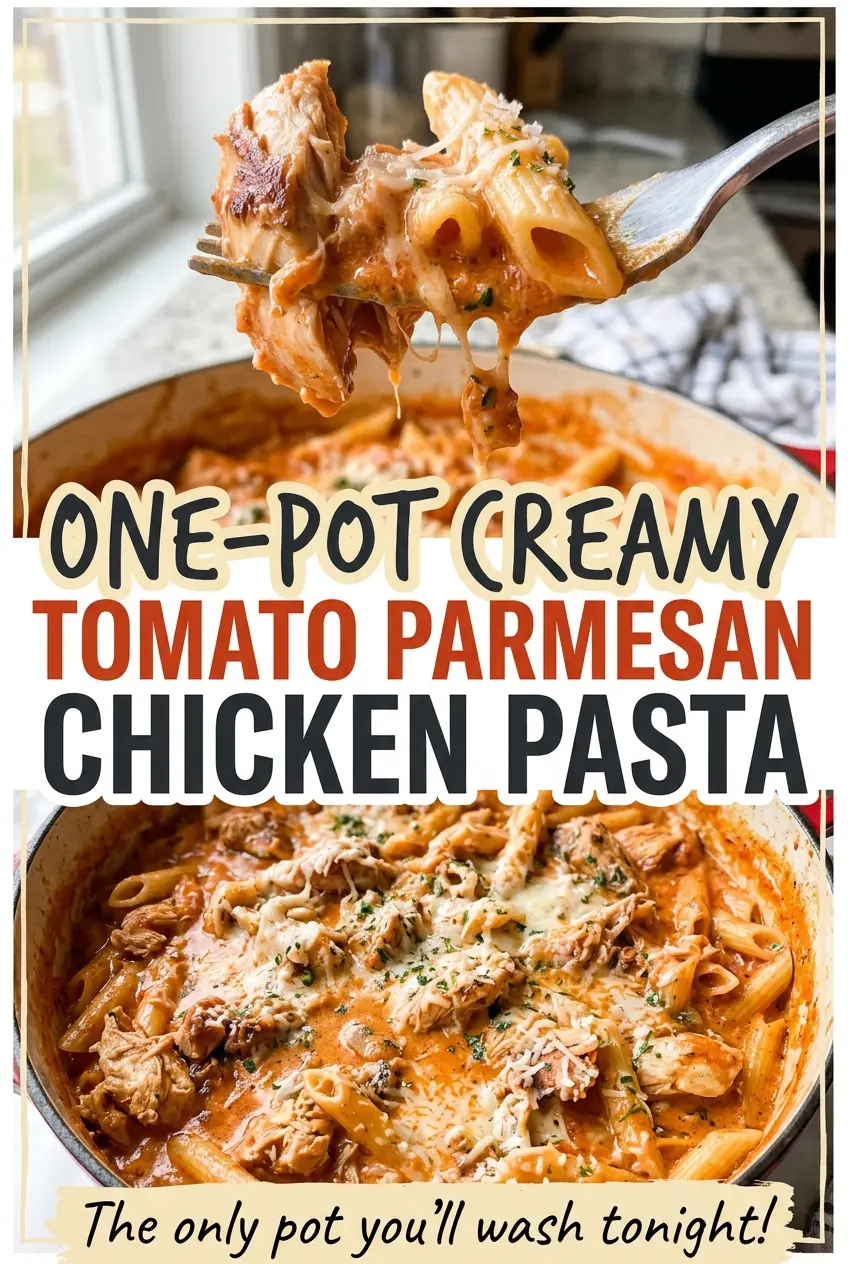
When the lid comes off, the penne should be tender and the skillet should still look a little saucy—not dry or swimming. That in-between moment is what makes this one-pot creamy tomato Parmesan chicken pasta work: the pasta cooks in tomato broth, then cream and Parmesan turn the starchy liquid into a smooth coating.
I brown the chicken first and set it aside, so it stays distinct while the pasta simmers. Onion, garlic, tomato paste, and Italian seasoning build a savory base in the same skillet; scraping up the browned bits gives the broth more depth without adding another pan.
It’s a practical dinner for four, with tender chicken and penne tucked into a creamy tomato sauce. Let it stand briefly after cooking, and the sauce settles around every piece.
Kitchen Note
Give the finished pasta its full two-minute rest off the heat. The sauce thickens just enough to cling, so it won’t run straight to the bottom of the bowl.
Save this creamy tomato Parmesan chicken pasta for a weeknight when you want tender chicken and saucy penne from one skillet.
Why the Pasta Needs to Cook in the Tomato Broth
Cooking the penne right in the broth and crushed tomatoes does more than save you from boiling a separate pot. As the pasta softens, it releases starch into the liquid, giving the sauce body before the cream and Parmesan go in. That’s why this skillet has a different texture from pasta tossed with a separately made tomato sauce: the sauce develops around the pasta rather than sitting on top of it.
The balance depends on letting the penne absorb most of the liquid while keeping enough moisture in the pan for a creamy finish. If the liquid disappears too soon, the pasta can stick before its center turns tender. Stirring every few minutes moves the pieces around and loosens anything settling on the bottom. The tomatoes also bring acidity, while the cream and Parmesan round it out at the end. Add those last, after the pasta has cooked, and the dairy can blend into the starchy tomato base instead of being boiled for the full simmer.
Use a deep skillet with a lid so the penne has room to move and the covered simmer stays gentle. The sauce should look cohesive and lightly thickened when the chicken and dairy go back in.
Why Penne, Tomato Paste, and Parmesan Matter Here

- Chicken breasts — Cutting them into even, bite-size pieces helps them brown at a similar pace. Boneless, skinless thighs are a workable swap if you prefer darker meat; cut them to the same size and cook until they reach the same safe temperature.
- Penne — Its hollow centers and ridged surface hold onto the thick sauce. Choose regular dried penne for the most predictable timing. Other pasta shapes may need different amounts of liquid or cooking time, so penne is the best choice when you want this timing to hold.
- Tomato paste and crushed tomatoes — The paste gives the base a concentrated tomato flavor, while crushed tomatoes provide the liquid and soft texture the pasta cooks in. A tube of tomato paste is handy for using a small amount; canned paste works just as well. Use crushed tomatoes rather than diced, which release liquid and pieces differently.
- Chicken broth — Low-sodium broth lets the Parmesan and seasoning contribute without the sauce getting too salty. If you only have regular broth, use it with care and taste the finished sauce before adding anything extra.
- Heavy cream and Parmesan — Heavy cream gives the sauce a rich, smooth finish. Finely grated Parmesan melts into it more evenly than coarse shreds; grate it fresh if you can, since finely grated cheese is less likely to leave little clumps. Keep the pan over low heat as it melts.
- Onion, garlic, and Italian seasoning — The finely chopped onion softens quickly and forms a savory base; minced garlic needs only a short cook so it doesn’t scorch. Italian seasoning is a convenient blend here, so there’s no need to add separate dried herbs.
Build the Sauce in the Same Skillet as the Chicken
Brown the Chicken, Then Set It Aside
Heat the olive oil in a lidded, 12-inch deep skillet over medium-high heat. Add the chicken pieces with the salt and pepper, then cook for 5–7 minutes, turning occasionally, until browned and the thickest pieces reach 165°F. The chicken doesn’t need to cook with the pasta for the full simmer; transfer it to a plate once it’s cooked through. Leaving the browned bits in the skillet gives the next stage a flavorful base.
Soften the Onion and Toast the Tomato Paste
Lower the heat to medium and add the chopped onion to the same skillet. Stir for 3–4 minutes, until it softens, then stir in the garlic, tomato paste, and Italian seasoning. Give them 30 seconds to cook together; the paste should darken slightly and smell fragrant, not scorched. Keep stirring so the garlic doesn’t stick to the hot skillet.
Simmer the Penne Until Just Tender
Add the penne, chicken broth, and crushed tomatoes, scraping the bottom as you stir to combine everything. Bring the mixture to a boil, then cover the skillet and reduce the heat to medium-low. Simmer for 12–15 minutes, stirring every few minutes so the pasta cooks evenly and doesn’t settle in one spot. Start checking for al dente near the shorter end of the range; the pasta should be tender with a little bite, and most of the liquid should be absorbed.
Stir in the Cream, Parmesan, and Chicken
When the penne is al dente, add the heavy cream, finely grated Parmesan, and reserved chicken. Cook uncovered over low heat for 2–3 minutes, stirring until the sauce looks creamy and the chicken is heated through. Keep the heat low so the cheese melts into the sauce rather than clumping. Take the skillet off the heat and let the pasta stand for 2 minutes before serving.
Three Useful Ways to Adapt This Skillet Pasta
Use chicken thighs for a juicier bite
Swap in boneless, skinless chicken thighs cut into 1-inch pieces. They bring a richer taste and stay juicy, though they may take a little longer to brown; use the temperature cue rather than relying only on the clock.
Make it vegetarian with vegetable broth
Leave out the chicken and replace the chicken broth with vegetable broth. Start the onion in the olive oil over medium heat, then continue with the garlic, tomato paste, and seasoning. The result is a meatless tomato Parmesan pasta, with a lighter, less protein-rich finish.
Reduce the added sodium
Choose no-salt-added crushed tomatoes and leave out the kosher salt. The low-sodium broth still brings savory flavor, while Parmesan contributes some saltiness; the finished dish will taste less seasoned than the standard version.
Storage and Reheating
- Refrigerator: Store leftovers in a covered container for 3–4 days. The penne will continue absorbing sauce and become softer as it sits.
- Freezer: Freeze in an airtight container for up to 2 months. The creamy sauce and pasta may soften or separate a little after thawing, but stirring while reheating helps bring them back together.
- Reheating: Warm gently in a covered saucepan over low heat or in the microwave, stirring partway through. Stir in a splash of broth to loosen thick sauce; high heat can make the cream sauce separate.
Questions That Come Up With One-Pot Chicken Pasta
One-Pot Creamy Tomato Parmesan Chicken Pasta
Ingredients
Equipment
Method
- Heat the olive oil in a 12-inch deep skillet with a lid over medium-high heat.
- Add the chicken, salt, and pepper, and cook for 5–7 minutes, turning occasionally, until browned and the thickest pieces reach 165°F.
- Transfer the chicken to a plate.
- Add the onion to the skillet and cook over medium heat for 3–4 minutes, stirring, until softened.
- Stir in the garlic, tomato paste, and Italian seasoning and cook for 30 seconds.
- Add the penne, chicken broth, and crushed tomatoes, scraping the bottom of the skillet and stirring to combine.
- Bring the mixture to a boil.
- Cover, reduce the heat to medium-low, and simmer for 12–15 minutes, stirring every few minutes, until the pasta is al dente and most of the liquid is absorbed.
- Stir in the heavy cream, Parmesan, and chicken.
- Cook uncovered over low heat for 2–3 minutes, stirring, until the sauce is creamy and the chicken is heated through.
- Remove the skillet from the heat.
- Let the pasta stand for 2 minutes before serving.