
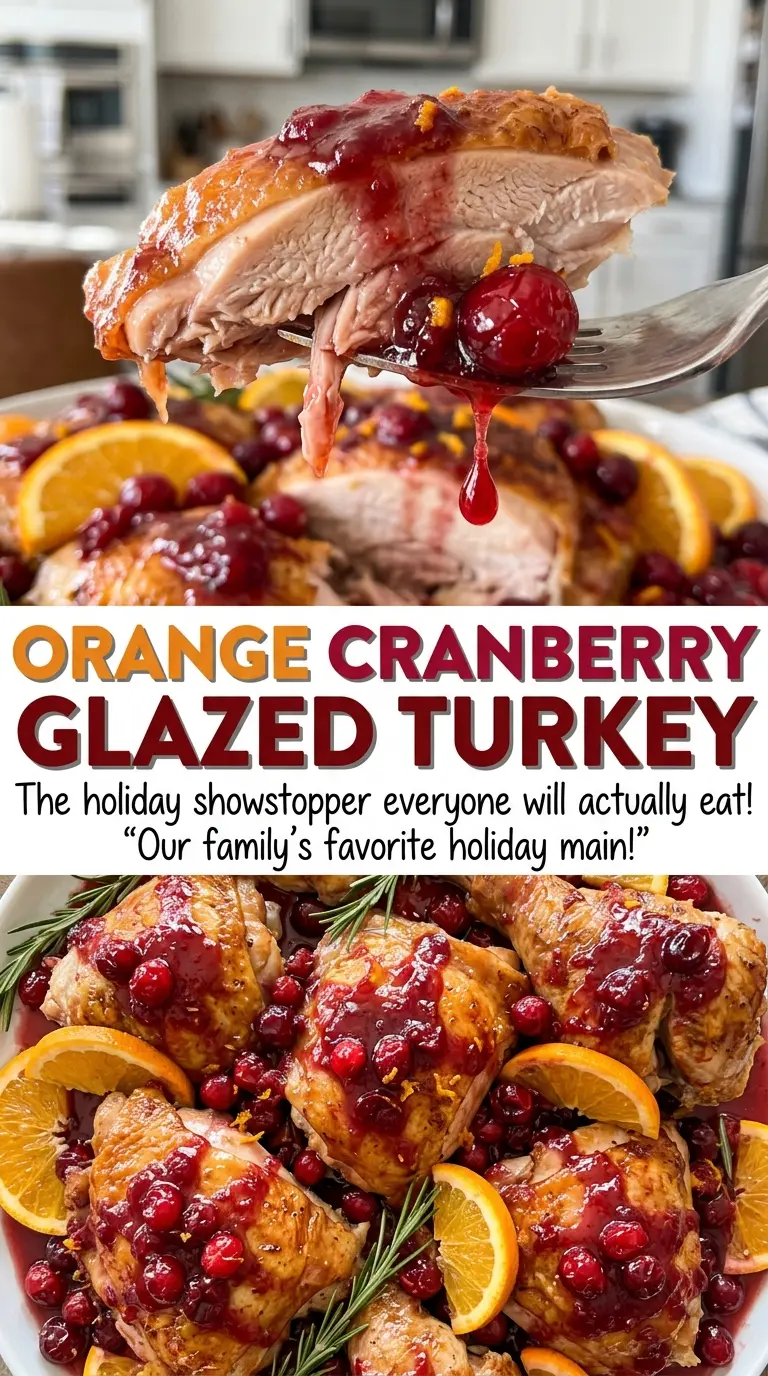
In the saucepan, the cranberries start out bobbing in orange juice, then pop and slump into a thick, ruby glaze. That change is what gives this orange cranberry glazed turkey its tart, glossy finish without needing a separate sauce on the stovetop at the last minute. I like that the glaze is made before the bird goes into the oven, so the sweet-tart flavor is ready when the turkey is.
The timing matters: the turkey roasts for a good stretch before any glaze goes on, and the cranberry mixture gets brushed over the skin near the end. I reserve some before it touches the turkey, too, so there’s a clean, bright spoonful to serve at the table. The finished bird comes out with savory, buttery skin and a cranberry-orange coating that clings to each carved slice.

Kitchen Note
Softened butter should spread easily over the turkey skin instead of sliding around in cold chunks. I let it soften until I can smear it with a spoon, which makes it much easier to coat the whole bird evenly.
Save this orange cranberry glazed turkey for a holiday table with a tart, glossy finish and extra cranberry-orange glaze to serve alongside.
Why the Cranberry Glaze Goes on After the Turkey Has Already Roasted
Cranberries bring plenty of tartness, but the glaze also has sugar, and sugar needs a little protection in a long roast. If it sits on the turkey from the beginning, the surface can darken before the bird is cooked through. Giving the skin time to roast first means the glaze gets a shorter turn in the oven, where it can set into a shiny coating instead of taking the full heat for the entire cook.
The glaze also thickens on its own as the cranberries burst and cook down with the juice. That texture matters: a watery sauce would run off the curved breast and collect in the pan, while a thickened one spreads across the skin and stays put. I wait until the turkey has roasted for 2 1/2 hours, then apply the glaze in two coats. The first gives it coverage; the second builds an even finish without piling on too much at once.
Keeping a portion aside before glazing the turkey solves a different problem. Once the glaze has touched raw turkey, it shouldn’t be treated as a ready-to-serve sauce. The reserved portion stays separate, then gets warmed for the table, so every slice can have a fresh spoonful of cranberry and orange.
Fresh Cranberries Build the Glaze; Orange Brings It into Balance
- Fresh cranberries — These soften and burst into the body of the glaze, bringing a clean tart flavor that balances the sugar. Choose a bag of fresh berries; dried cranberries won’t cook down into the same sauce without changing the liquid and timing.
- Granulated sugar — It dissolves into the cranberry and orange juice as the glaze simmers, rounding off the berries’ sharpness. Stick with granulated sugar here; brown sugar or a liquid sweetener changes the flavor and how the glaze thickens.
- Orange juice and zest — Juice gives the cranberries the liquid they need to simmer, while finely grated zest adds a more fragrant orange note. Fresh-squeezed or plain bottled orange juice works; the zest is where a fresh orange makes the biggest difference, so grate it finely and avoid the bitter white pith.
- Unseasoned whole turkey — A thawed bird without added seasoning gives you control over the salt and pepper rubbed onto the skin. Check that it’s within the recipe’s 12- to 14-pound range and that the giblets have been removed before roasting.
- Unsalted butter, kosher salt, and black pepper — Butter helps the seasoning cling to the skin and encourages an even roast. Unsalted butter lets the measured kosher salt do the seasoning; salted butter makes that balance harder to control.
Build the Cranberry Glaze First, Then Give the Turkey Time to Roast
Simmer the Berries Until the Sauce Thickens
Combine the cranberries, sugar, and orange juice in a 2-quart saucepan over medium heat. Stir occasionally as the berries soften and begin to burst; the mixture should look glossy and thicker, not like loose juice. This takes 10 to 12 minutes. Mash the berries until mostly smooth, stir in the finely grated orange zest, then cover and refrigerate 1/2 cup of glaze for serving.
Set Up and Season the Whole Bird
Heat the oven to 325°F and set a rack in a 16×13-inch roasting pan. Pat the thawed turkey dry, then place it breast side up on the rack. Rub the softened butter over the skin and season with kosher salt and black pepper. If the bird is damp, the butter can be harder to spread evenly, so take a moment to dry the skin before adding it.
Roast Before Adding the Sugary Glaze
Roast the turkey for 2 1/2 hours before brushing on any cranberry glaze. At this point, spread the remaining glaze over the turkey skin, covering the breast and other exposed areas. Waiting until now gives the turkey time to roast without the sugary coating taking prolonged heat. Keep the reserved serving portion separate from the glaze used on the turkey.
Coat Again, Check Both Temperatures, and Rest
Apply a second coat of glaze after the first coat has roasted for 15 minutes, then continue roasting for 30 to 60 minutes more. Check the thickest part of the breast and the innermost part of the thigh, keeping the thermometer away from bone; both spots need to read 165°F. Transfer the turkey to a carving board, tent it loosely with foil, and let it rest for 30 minutes. Warm the reserved glaze in a small saucepan over low heat for 2 to 3 minutes, stirring, and serve it with the carved turkey.
Three Small Ways to Change the Glaze and Serving Style
Leave the Cranberry Glaze a Little More Rustic
For a glaze with visible berry pieces, mash the cooked cranberries a little less, stopping while the mixture is still mostly smooth. The finish looks more rustic and has small bursts of tart cranberry in each spoonful, while still spreading over the turkey.
Use Fresh-Squeezed Juice for a Brighter Orange Note
Swap plain bottled orange juice for fresh-squeezed juice, keeping the recipe’s amount the same. The glaze will taste a little brighter and more citrus-forward; bottled juice gives a steady, mellow orange flavor.
Carve Thicker Slices for a Glaze-Forward Plate
Cut the rested turkey into thicker slices and serve the reserved glaze alongside, rather than spreading it across every piece. That keeps the roast’s savory turkey flavor in the foreground and lets each person add as much cranberry-orange sauce as they like.
Storage and Reheating
- Refrigerator: Store carved turkey in a covered container for 3 to 4 days. The skin softens in the refrigerator, though the meat stays moist when stored promptly.
- Freezer: Freeze carved portions in airtight containers for 2 to 6 months for best quality. Thaw them in the refrigerator before reheating.
- Reheating: Warm sliced turkey in the microwave in short intervals, turning the pieces as needed, until it reaches 165°F. Long, uninterrupted heating can dry the edges before the center is hot.
Questions That Come Up Before the Turkey Goes in the Oven
Orange Cranberry Glazed Turkey
Ingredients
Equipment
Method
- Combine the cranberries, sugar, and orange juice in a 2-quart saucepan; simmer over medium heat for 10 to 12 minutes, stirring occasionally, until the berries burst and the mixture thickens.
- Mash the berries until mostly smooth, then stir in the orange zest.
- Reserve 1/2 cup glaze in a covered bowl in the refrigerator for serving.
- Heat the oven to 325°F.
- Set a rack in a 16x13-inch roasting pan.
- Pat the turkey dry and place it breast side up on the rack.
- Rub the softened butter over the turkey skin.
- Season the turkey with the salt and pepper.
- Roast for 2 1/2 hours.
- Spread the remaining glaze over the turkey, apply a second coat after 15 minutes, and roast for 30 to 60 minutes more, until a thermometer reads 165°F in the thickest part of the breast and the innermost part of the thigh, away from bone.
- Transfer the turkey to a carving board, tent loosely with foil, and rest for 30 minutes.
- Warm the reserved glaze in a small saucepan over low heat for 2 to 3 minutes, stirring.
- Serve the warm glaze with the carved turkey.