
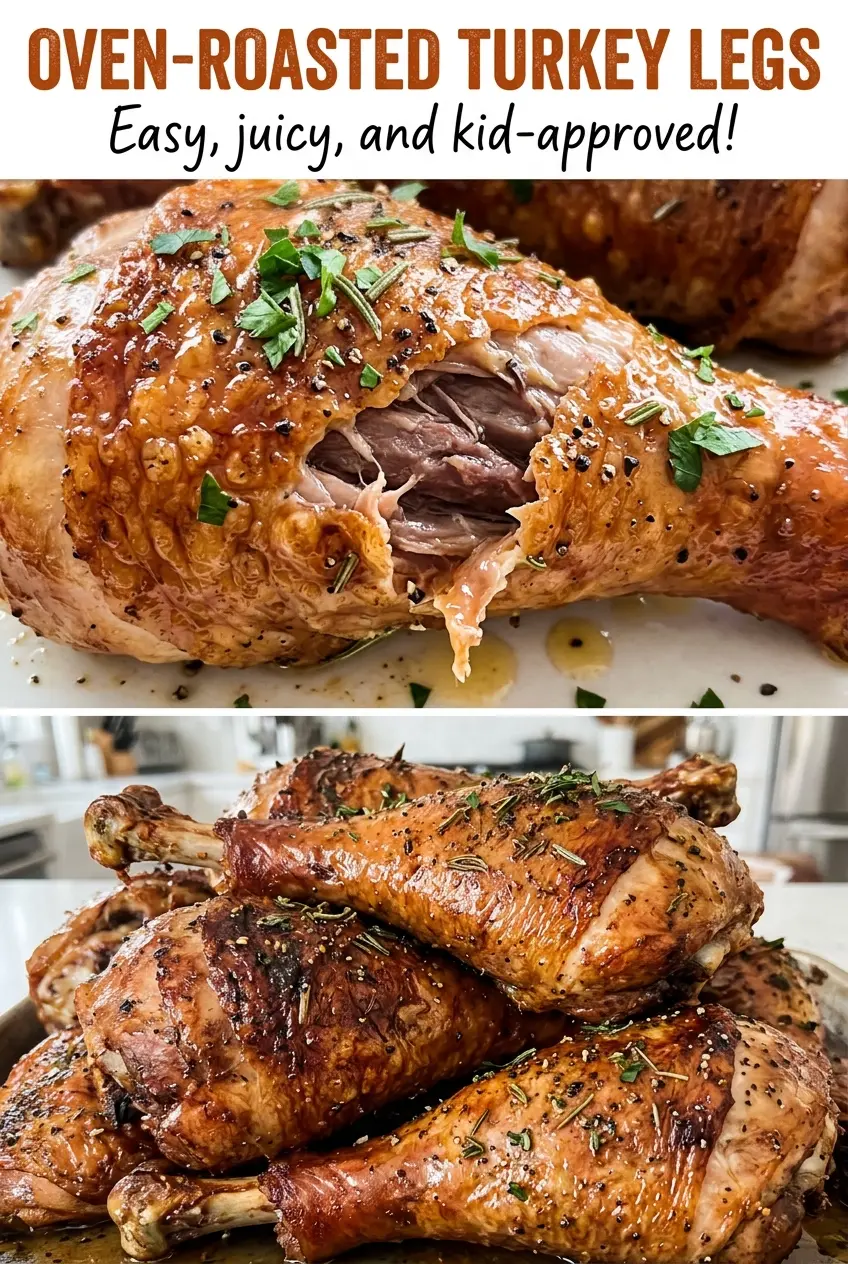
The skin tells you one thing; the thickest part of the leg tells you another. I learned not to pull these from the oven just because they look beautifully browned: turkey legs need a thermometer check to get the dark meat tender without guessing. These oven-roasted turkey legs roast on a rack, so hot air can reach the skin while the drippings fall onto the lined pan.
A quick rub of olive oil helps the salt, paprika, garlic powder, and thyme cling to the legs, and patting the skin dry first gives the oven a better start on browning. The timing has a range because legs vary in size, so I check each one separately and let the temperature—not the color alone—make the final call. After a short rest, the skin is deeply browned and the meat is ready to pull from the bone.
Kitchen Note
Take an extra moment to pat the skin dry before the oil goes on. Damp skin can steam at the start, and the spice rub clings better when the surface isn’t wet.
Save these Oven-Roasted Turkey Legs for browned paprika skin and tender dark meat, with a short ingredient list and an easy oven method.
Why Brown Skin Doesn’t Tell You When Turkey Legs Are Tender
Turkey legs are dark meat, and they can be browned on the outside before the thickest part has reached the texture you’re after. Skin color is useful to watch, but it isn’t a reliable doneness check. The thermometer reading is what keeps you from stopping too early or leaving the legs in the oven longer than they need.
There are two good temperature cues here. At least 165°F in the thickest part, with the thermometer tip clear of the bone, is the minimum; taking the legs to about 175°F gives dark meat more time to soften and become tender. The higher finish is a texture choice, not a reason to wait for the skin to get darker. If the skin looks ready first, keep checking the meat rather than judging by appearance. A rack helps the legs roast evenly, while the rimmed sheet catches the drips underneath.
What Each Part of the Rub Brings to Turkey Legs
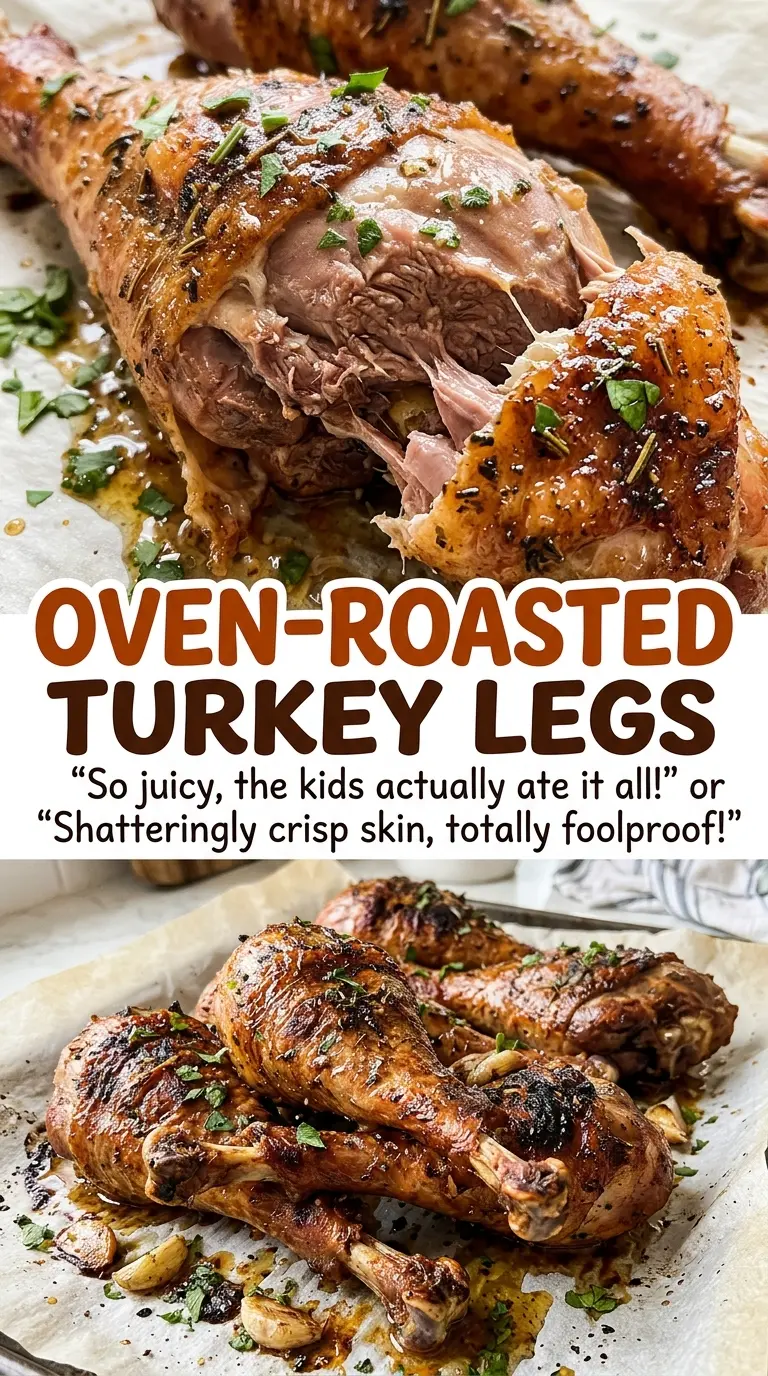
- Turkey legs — Choose legs that fit comfortably on your rimmed baking sheet with room around them. They vary in size, so use the thickest part of each leg to judge when it is ready rather than expecting both to finish at exactly the same moment.
- Olive oil — The oil coats the skin and gives the dry seasonings something to cling to. Use an olive oil you like the taste of, but there’s no need to reach for an expensive finishing oil for a roast.
- Kosher salt and black pepper — Salt seasons the meat, while pepper adds a gentle bite that balances the paprika. Keep the salt type consistent; fine table salt packs differently by volume and can make the rub saltier if swapped measure for measure.
- Paprika — Regular paprika gives the rub its warm color and mild pepper flavor. Smoked paprika is a useful swap if you’d like a smoky edge, though it changes the character of the seasoning.
- Garlic powder and dried thyme — Both spread evenly through the rub and hold up during the long roast. Dried oregano can replace the thyme in the same quantity, with a more assertive, slightly different herbal taste.
Roasting the Legs Until the Skin Browns and the Center Turns Tender
Set Up the Oven and Rack
Heat the oven to 375°F and line a rimmed baking sheet with foil. Set a wire rack on top before the turkey goes on, so the legs sit above the pan rather than in the drippings. Check that the rack is stable and that both legs fit without crowding. This simple setup also makes the pan easier to clean after roasting.
Dry and Coat the Turkey
Blot the legs all over with paper towels, including around the curves and joints. Rub them with olive oil so the skin has a light, even coating rather than oily puddles. If the surface is still wet, the skin is more likely to steam before it browns. Mix the salt, pepper, paprika, garlic powder, and thyme in a small bowl while you work.
Season and Roast Skin Side Up
Rub the seasoning mixture over the legs, coating all sides, then arrange them skin side up on the rack. Roast for 1½ to 2 hours, watching for browned skin as the legs cook. Insert a thermometer into the thickest part of each leg without touching bone; each should read at least 165°F, or about 175°F for more tender dark meat. If the legs are different sizes, check them individually rather than assuming they will finish together.
Rest Before Serving
Transfer the pan from the oven and leave the turkey legs to rest for 10 minutes before serving. This gives the juices time to settle after the long roast. Don’t cut into the meat as soon as it comes out; the brief pause helps keep each portion moist when you serve it.
Three Easy Ways to Change the Seasoning Without Changing the Method
Give the rub a smoky edge
Replace the regular paprika with smoked paprika in the same quantity. The legs keep the same savory seasoning base, but the smoky aroma becomes more noticeable as the skin browns.
Use a neutral oil instead
Canola or grapeseed oil works in place of olive oil in the same quantity. The seasoning still adheres well, with a less noticeable oil flavor beneath the paprika and herbs.
Trade thyme for oregano
Use dried oregano in place of the dried thyme in the same quantity. It makes the herb note bolder and a little more peppery, while the rest of the rub and roasting method stay the same.
Storage and Reheating
- Refrigerator: Refrigerate leftovers in a shallow, airtight container within 2 hours and use them within 3 to 4 days. The skin will soften in storage.
- Freezer: Freeze the cooled legs whole or remove the meat from the bone and pack it airtight; use within 2 to 3 months for the best quality. Thaw in the refrigerator.
- Reheating: Reheat covered in the oven or microwave until the meat reaches 165°F. Uncovered, prolonged reheating can dry out the meat before it warms through.
Questions That Come Up When Roasting Turkey Legs
Oven-Roasted Turkey Legs
Ingredients
Equipment
Method
- Heat the oven to 375°F.
- Line a rimmed baking sheet with foil and set a wire rack on the sheet.
- Pat the turkey legs dry with paper towels.
- Rub the turkey legs all over with the olive oil.
- Mix the salt, black pepper, paprika, garlic powder, and thyme.
- Rub the seasoning mixture over the legs.
- Arrange the legs skin side up on the rack.
- Roast for 1 1/2 to 2 hours, until the skin is browned and a thermometer inserted into the thickest part of each leg without touching bone reads at least 165°F; for more tender dark meat, cook to about 175°F.
- Rest the turkey legs for 10 minutes before serving.