
When the beef hits a hot skillet, it should sizzle and begin to brown—not release a puddle of liquid. I work in batches so each piece has room to build a deep, browned surface before it goes into the slow cooker. That quick start gives this slow-cooked beef stew with tender potatoes a richer base than a stew made by adding everything to the crock at once.
The chuck does the rest of the work over a long, gentle cook. Its connective tissue softens until the beef pulls apart easily, while the broth, tomato paste, and Worcestershire develop into a savory gravy. Yukon Gold potatoes have enough structure to stay in hearty chunks instead of disappearing into the liquid.
It’s a practical dinner, but the skillet steps are worth the few extra minutes. You’ll scrape up the browned bits with broth, then let the slow cooker bring everything together while the beef and vegetables turn tender. The finished stew is thick, deeply savory, and full of soft potatoes and carrots.
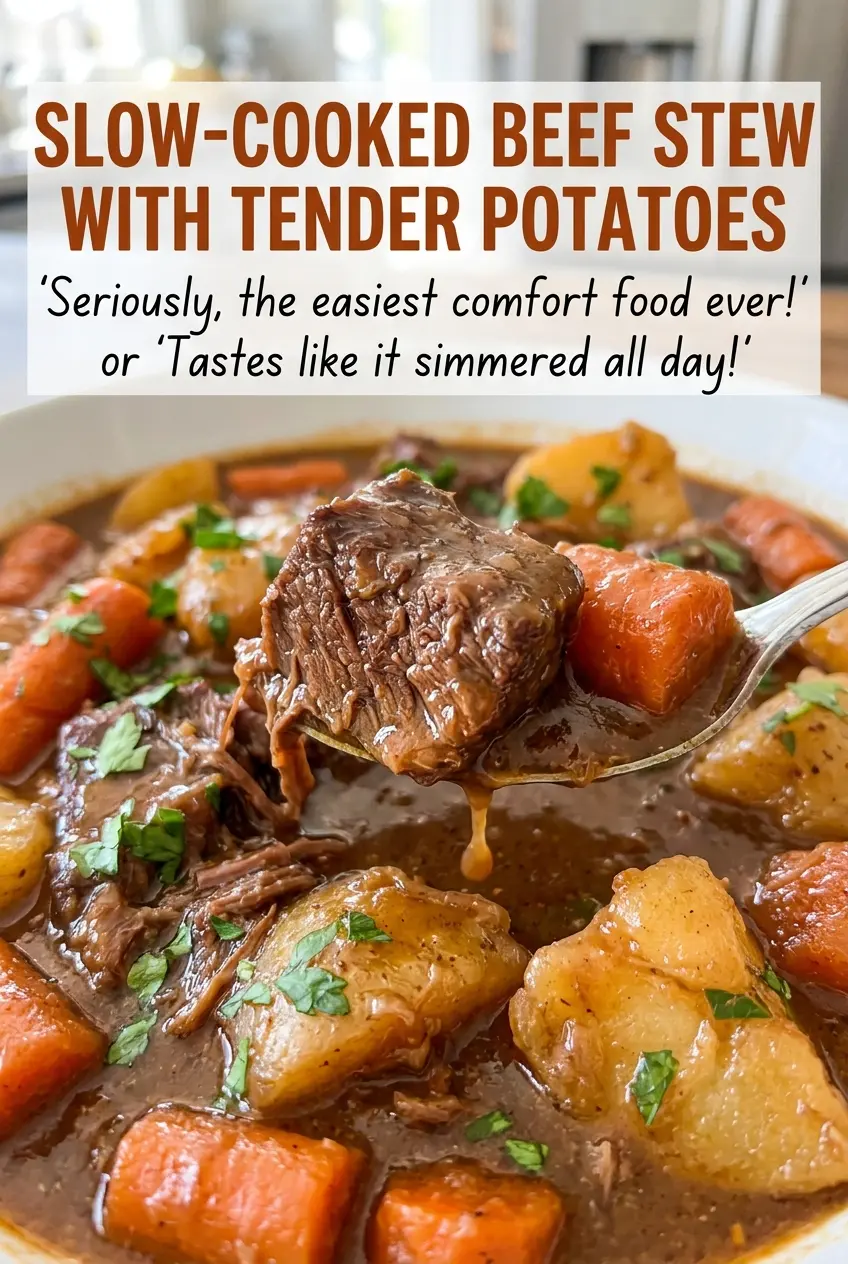
Kitchen Note
Keep the potatoes in generous 1 1/2-inch chunks. Smaller pieces soften faster during the long cook and are more likely to lose their shape before the beef is fork-tender.
Save this slow-cooked beef stew with tender potatoes for a cozy dinner built around fork-tender chuck and a rich, savory gravy.
Why Flour-Coated Beef Makes a Better Slow-Cooker Gravy
Slow cookers are excellent at making beef tender, but they don’t evaporate much liquid. Add uncoated meat and broth, and the result can be a flavorful stew with a thinner, more soup-like consistency. Tossing the beef with flour before browning gives the flour time to cling to the meat, so it can help thicken the cooking liquid as the stew simmers.
The skillet browning matters for a different reason: it leaves savory browned bits on the pan. Cooking the onion with tomato paste, then loosening those bits with broth, carries that concentrated flavor into the slow cooker instead of leaving it behind. The flour isn’t meant to form a thick breading, and the beef doesn’t need to be cooked through in the skillet. Aim for browned patches on several sides, then let the slow cooker finish the job.
That combination gives the broth body without asking the slow cooker to reduce it. If the stew looks loose when you first add everything, that’s expected; the flour-coated beef and long cook help bring the texture together.
The Beef, Potatoes, and Broth That Shape This Stew
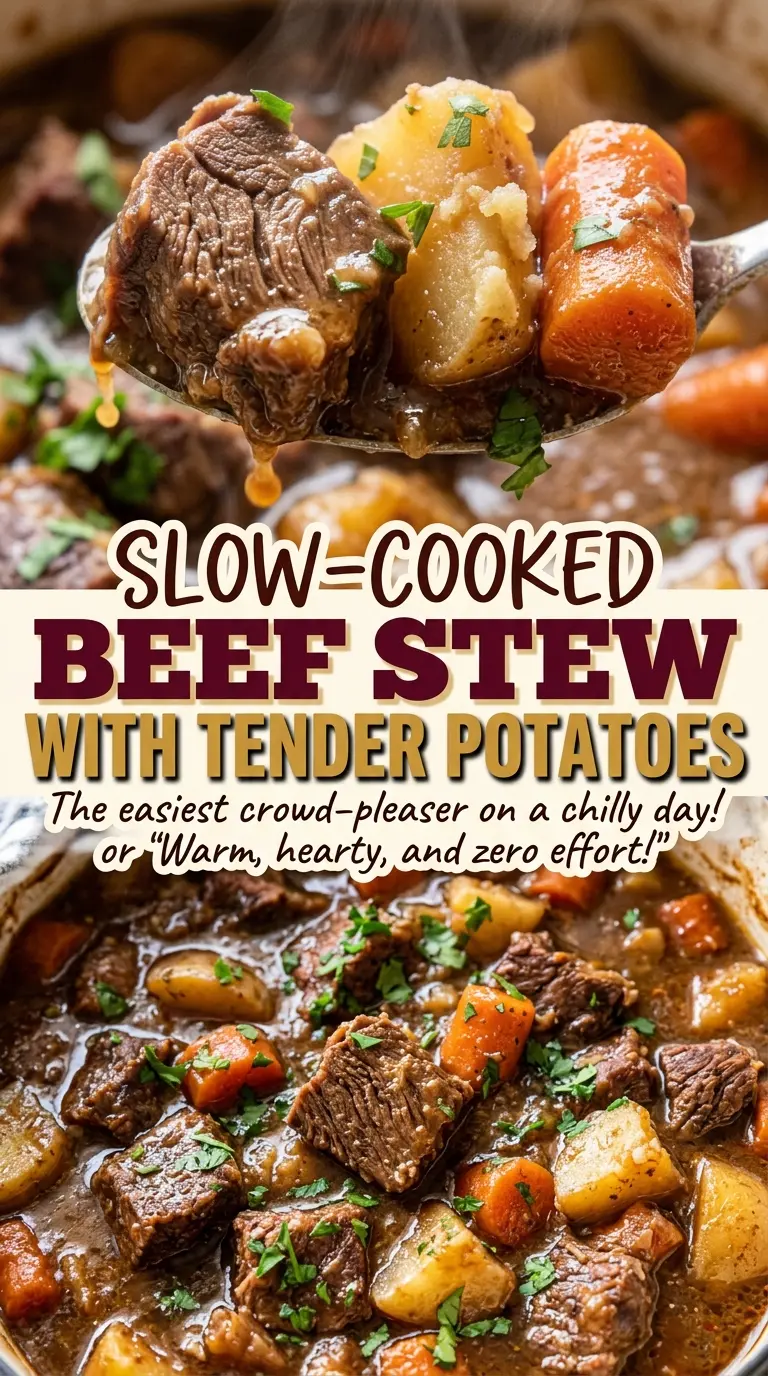
- Boneless beef chuck — Chuck has enough connective tissue and marbling to become tender during a long, slow cook. Cut the pieces evenly so they cook at a similar pace. Packaged stew meat works in a pinch, but it can come from a mix of cuts, so the finished pieces may vary in tenderness.
- Yukon Gold potatoes — Their creamy texture suits stew, and they hold together better than a floury potato during a long cook. Choose firm potatoes without soft spots and cut them into evenly sized chunks so some don’t collapse while others are still firm.
- Low-sodium beef broth — A low-sodium broth gives the stew a savory base without letting the broth brand determine how salty the finished pot tastes. Broths vary, so low-sodium is the more flexible choice here.
- Tomato paste — Tomato paste adds concentrated depth without making the broth taste like tomato soup. A tube is convenient when you don’t use a whole can at once; either works here.
- Onion, garlic, thyme, and bay leaves — These build the stew’s aromatic background as they cook. Dried thyme is useful for the long simmer, and whole bay leaves are easy to remove before serving.
Building the Stew in the Skillet Before the Slow Cooker
Dry and Brown the Chuck
Pat the thawed beef dry before tossing it with the flour, kosher salt, and black pepper. Damp surfaces tend to steam instead of brown, so take a moment to blot away moisture. Heat the vegetable oil in a large skillet over medium-high heat and brown the beef in batches, turning each piece to color several sides. Transfer the browned beef to the 6-quart slow cooker as you go; crowded pieces won’t brown as well.
Cook the Tomato Paste and Loosen the Pan
Add the chopped onion and tomato paste to the skillet, stirring as they cook for 3 minutes. The paste should darken slightly and coat the onion rather than sit in a raw-looking lump. Stir in the minced garlic and cook for 30 seconds; garlic can turn bitter if it browns too long. Pour in 1 cup of the beef broth and scrape the skillet until the browned bits lift into the liquid.
Load the Slow Cooker Evenly
Pour the skillet mixture over the browned beef. Add the remaining broth, Worcestershire sauce, dried thyme, bay leaves, potatoes, carrots, and celery, then stir to combine. Check that the vegetables are distributed through the pot rather than piled in one spot. The liquid won’t cover every piece, which is fine for this slow-cooker stew.
Cook Until the Beef and Potatoes Yield Easily
Cover and cook on LOW for 8 to 9 hours or HIGH for 4 to 5 hours. The stew is ready when a fork slides into the beef and potatoes without much resistance; if either still feels firm, it needs more time within the cooking window. Take out both bay leaves before serving. The beef should be tender, and the broth should look fuller than it did when the ingredients first went in.
Three Practical Ways to Adapt the Stew
Make It Gluten-Free
Replace the all-purpose flour with the same amount of a gluten-free all-purpose blend labeled for a one-to-one swap, then coat and brown the beef the same way. Choose gluten-free-labeled beef broth and Worcestershire sauce, too. The gravy may be a little less silky depending on the blend, but the stew keeps its hearty texture.
Use Red Potatoes for Firmer Pieces
Swap the Yukon Golds for red potatoes cut into the same 1 1/2-inch chunks. Red potatoes have a waxier texture and tend to hold their shape firmly, so the stew will have a less creamy potato bite.
Trade the Celery for More Carrots
Leave out the celery and add two more medium carrots, cut into 1-inch pieces. That gives the stew a sweeter, more carrot-forward flavor and removes the celery’s distinct savory note without changing the slow-cooker method.
Storage and Reheating
- Refrigerator: Store the cooled stew in an airtight container for 3 to 4 days. The broth will thicken as it chills.
- Freezer: Freeze in airtight containers for up to 3 months for best quality. Leave a little room at the top of each container for expansion.
- Reheating: Warm portions on the stovetop over medium-low heat, stirring occasionally, or microwave in a covered, microwave-safe dish. Reheat leftovers to 165°F; avoid a hard boil, which can break down the potatoes.
Questions That Come Up While the Stew Cooks
Slow-Cooked Beef Stew with Tender Potatoes
Ingredients
Equipment
Method
- Pat the thawed beef dry.
- Toss the beef with the flour, salt, and pepper until evenly coated.
- Heat the oil in a large skillet over medium-high heat.
- Brown the beef in batches, turning to brown several sides, then transfer it to a 6-quart slow cooker.
- Add the onion and tomato paste to the skillet and cook for 3 minutes, stirring.
- Add the garlic and cook for 30 seconds.
- Pour in 1 cup of the broth and scrape up the browned bits.
- Add the skillet mixture, the remaining 3 cups broth, Worcestershire sauce, thyme, bay leaves, potatoes, carrots, and celery to the slow cooker, then stir to combine.
- Cover and cook on LOW for 8 to 9 hours or HIGH for 4 to 5 hours, until the beef and potatoes are fork-tender.
- Remove the bay leaves before serving.