
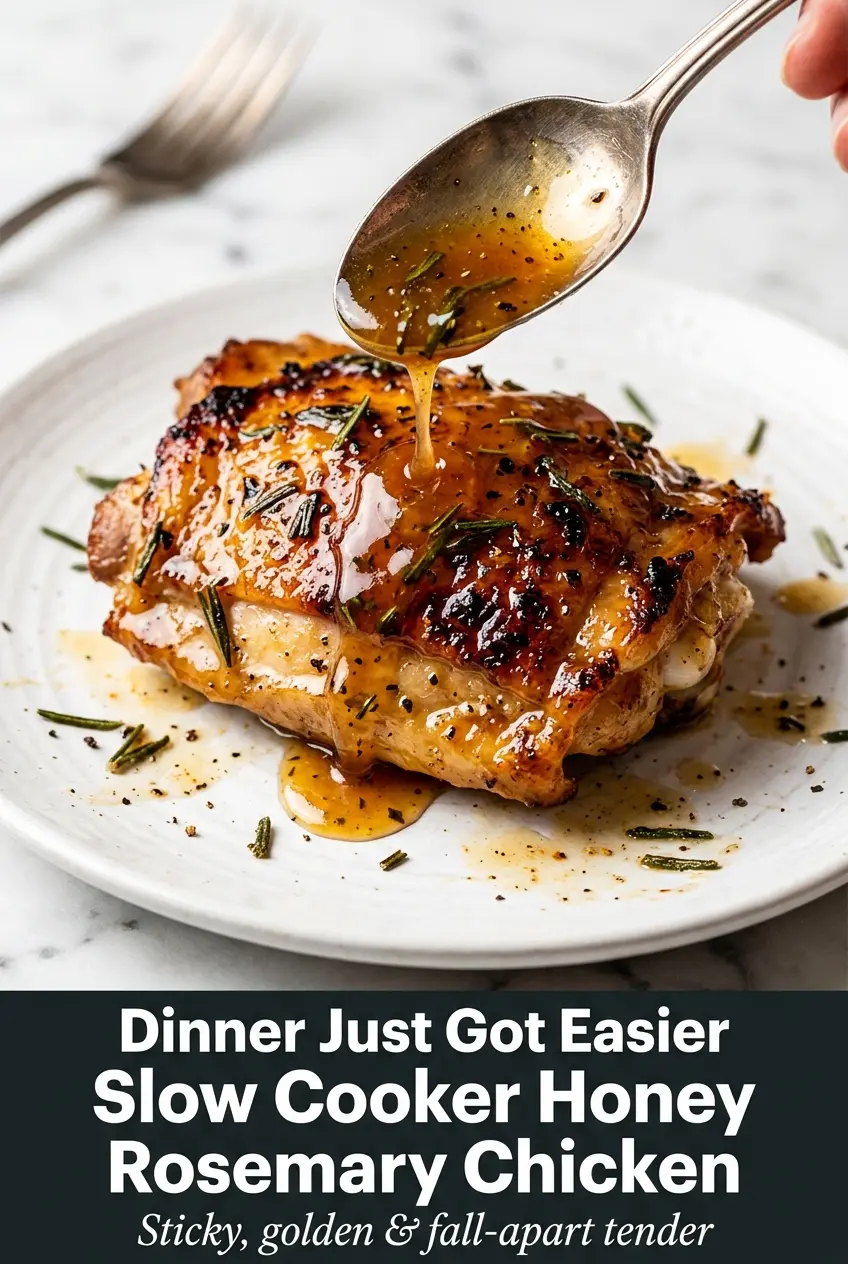
Sticky honey, fragrant rosemary, and tender chicken thighs turn into the kind of dinner that tastes like you worked on it all afternoon, even though the slow cooker did most of the heavy lifting. The skinless, glossy finish from the thickened sauce keeps every bite juicy, while the rosemary and Dijon cut through the sweetness so it never turns cloying. When the chicken is done right, it pulls away from the bone with almost no effort and the sauce clings instead of running off the plate.
The part that makes this version stand out is the balance. Honey brings the glaze, soy sauce adds salt and depth, apple cider vinegar keeps the whole thing bright, and a little smoked paprika gives the sauce a quiet warmth underneath. Searing the thighs first isn’t strictly required, but it gives you better flavor from the start and helps the skin hold up longer in the slow cooker.
Below, I’ve included the one step people tend to rush, the ingredient swap that actually works if you only have dried rosemary, and the exact move that turns the cooking liquid into a proper glaze instead of a thin sauce.
The sauce thickened into a perfect glaze, and the rosemary came through without overpowering the honey. I served it over mashed potatoes and my husband went back for seconds before I even sat down.
Save this slow cooker honey rosemary chicken for the nights when you want a sticky glaze, tender thighs, and almost no hands-on work.
The Reason the Chicken Stays Juicy Instead of Drying Out
Bone-in, skin-on thighs are the right cut here because they forgive a long cook. Breasts can work in a slow cooker, but they go stringy fast once the sauce starts reducing and the meat sits in heat for hours. Thighs stay tender, and the bone gives you more flavor in the final sauce.
The other thing that matters is where the sauce goes. Once the chicken is seared, it should be tucked into the cooker skin-side up, not buried under the liquid. That keeps the skin from turning completely soggy and lets the honey glaze flavor the top as it cooks. If the sauce tastes flat at the end, it usually needed more salt or a longer simmer after thickening.
What Each Ingredient Is Actually Doing in This Dish
- Bone-in, skin-on chicken thighs — These hold up to long cooking and give you richer juices for the glaze. Boneless thighs work in a pinch, but they’ll cook faster and won’t have quite the same depth. If you use them, start checking early.
- Honey — This is the base of the glaze and the reason the sauce turns sticky and glossy. Maple syrup can stand in, but it tastes different and won’t give the same floral sweetness. Honey also browns beautifully once the sauce is reduced on the stove.
- Fresh rosemary — Fresh rosemary gives a cleaner, piney aroma that perfumes the whole dish. Dried rosemary works if that’s what you have, but use less because it can taste sharper and more woody. Chop it finely so it disperses instead of ending up in little tough needles.
- Soy sauce and Dijon mustard — These add salt, depth, and enough acidity to keep the honey from tasting one-note. Low-sodium soy sauce is the safer choice because the sauce reduces later. Dijon helps emulsify the glaze a bit and gives it a subtle bite that flat mustard can’t match.
- Apple cider vinegar — This is the bright edge that keeps the sauce lively. Lemon juice can work, but it tastes more obvious and less rounded with honey. A tablespoon is enough; more than that starts pushing the sauce into sharp territory.
- Cornstarch slurry — Slow cooker liquid needs help turning into a glaze. Cornstarch thickens cleanly if you whisk it into a simmering sauce, but it has to go into a saucepan, not straight into the cooker, or you’ll get uneven lumps and a cloudy finish.
How to Build the Glaze Without Ending Up With Watery Sauce
Getting Color on the Chicken First
Pat the thighs dry until the skin feels almost tacky, then season them well. Moist skin steams; dry skin sears. When the chicken hits the hot skillet, it should sizzle immediately and release once it has taken on color. If it sticks when you try to flip it, give it another minute and let the crust form.
Mixing the Sauce So the Honey Doesn’t Clump
Whisk the honey, soy sauce, garlic, rosemary, Dijon, vinegar, smoked paprika, and pepper flakes together before it goes into the cooker. Honey can sink and sit in one spot if you just pour everything in separately, which leaves the seasoning uneven. You want a loose, cohesive sauce that coats the chicken in the slow cooker instead of pooling like separate layers.
Finishing the Sauce on the Stove
Once the chicken is tender, lift it out carefully and pour the liquid into a saucepan. That step matters because the slow cooker won’t evaporate enough moisture to thicken the sauce on its own. Whisk in the cornstarch slurry and simmer until the glaze goes from thin and cloudy to shiny and nappe-like, meaning it coats the back of a spoon. If it still looks loose after a few minutes, keep simmering; cornstarch thickens as it heats.
How to Adapt It for Different Kitchens and Different Eaters
Dairy-Free and Naturally Gluten-Free
This recipe already fits both diets as written if you use a gluten-free soy sauce or tamari. The sauce still thickens the same way, and you won’t lose any body or shine. Just check the label on the soy sauce, since that’s usually the hidden source of gluten.
Using Boneless Thighs Instead
Boneless thighs cook faster and are easier to serve, but they won’t baste the sauce with quite as much richness. Start checking them an hour earlier than the bone-in version. If you overcook them, they still stay more forgiving than chicken breast, but they’ll lose some of that fall-apart texture.
Swapping in Dried Rosemary
Use 1 teaspoon dried rosemary instead of the fresh leaves. Dried rosemary has a sharper, more concentrated flavor, so too much will make the sauce taste piney instead of fragrant. Crush it lightly between your fingers before adding it so it has a chance to bloom in the sauce.
Making It Spicier or Milder
The red pepper flakes are optional, but they do more than add heat; they keep the honey glaze from tasting too soft. Leave them out for a gentler version, or increase them a little if you want a subtle warm finish. I wouldn’t go heavy here, because the rosemary needs room to stay recognizable.
Storage and Reheating
- Refrigerator: Store leftovers in an airtight container for up to 4 days. The sauce will thicken more as it chills.
- Freezer: It freezes well for up to 2 months. Cool it completely first, then freeze the chicken and sauce together so the meat stays moist.
- Reheating: Warm gently on the stove over low heat or in the microwave at medium power. High heat can make the chicken dry and the honey glaze sticky in the wrong way, so add a splash of water if the sauce feels too tight.
Answers to the Questions Worth Asking
Slow Cooker Honey Rosemary Chicken
Ingredients
Equipment
Method
- Pat the chicken thighs completely dry with paper towels, then season generously on both sides with salt and black pepper.
- Heat olive oil in a large skillet over medium-high heat, then sear the chicken skin-side down for 3–4 minutes until golden and crispy.
- Flip and sear the chicken for 1–2 minutes more, then transfer to the slow cooker skin-side up in a single layer.
- In a small bowl, whisk together honey, soy sauce, minced garlic, chopped rosemary, Dijon mustard, apple cider vinegar, smoked paprika, and red pepper flakes until combined.
- Pour the honey rosemary sauce evenly over the chicken, cover, and cook on LOW for 5–6 hours, or HIGH for 3–3.5 hours, until the chicken is completely tender and registers 165°F internal temperature.
- Carefully remove the chicken from the slow cooker and set aside, then pour the cooking liquid into a small saucepan over medium heat.
- Stir cornstarch and cold water together until smooth, then whisk into the saucepan.
- Simmer for 2–3 minutes, stirring, until the sauce thickens to a glossy glaze.
- Return the chicken to the slow cooker or plate it, then spoon the thickened honey rosemary glaze over the top.
- Garnish with fresh rosemary sprigs and a pinch of flaky sea salt, then serve with mashed potatoes, rice, or roasted vegetables.