
The onion and celery soften slowly in butter, and the kitchen starts to smell like sage before the bread cubes even hit the bowl. I like this slow cooker stuffing when oven space is tight, but it still needs the right kind of bread: dried cubes that can take in broth without collapsing into paste.
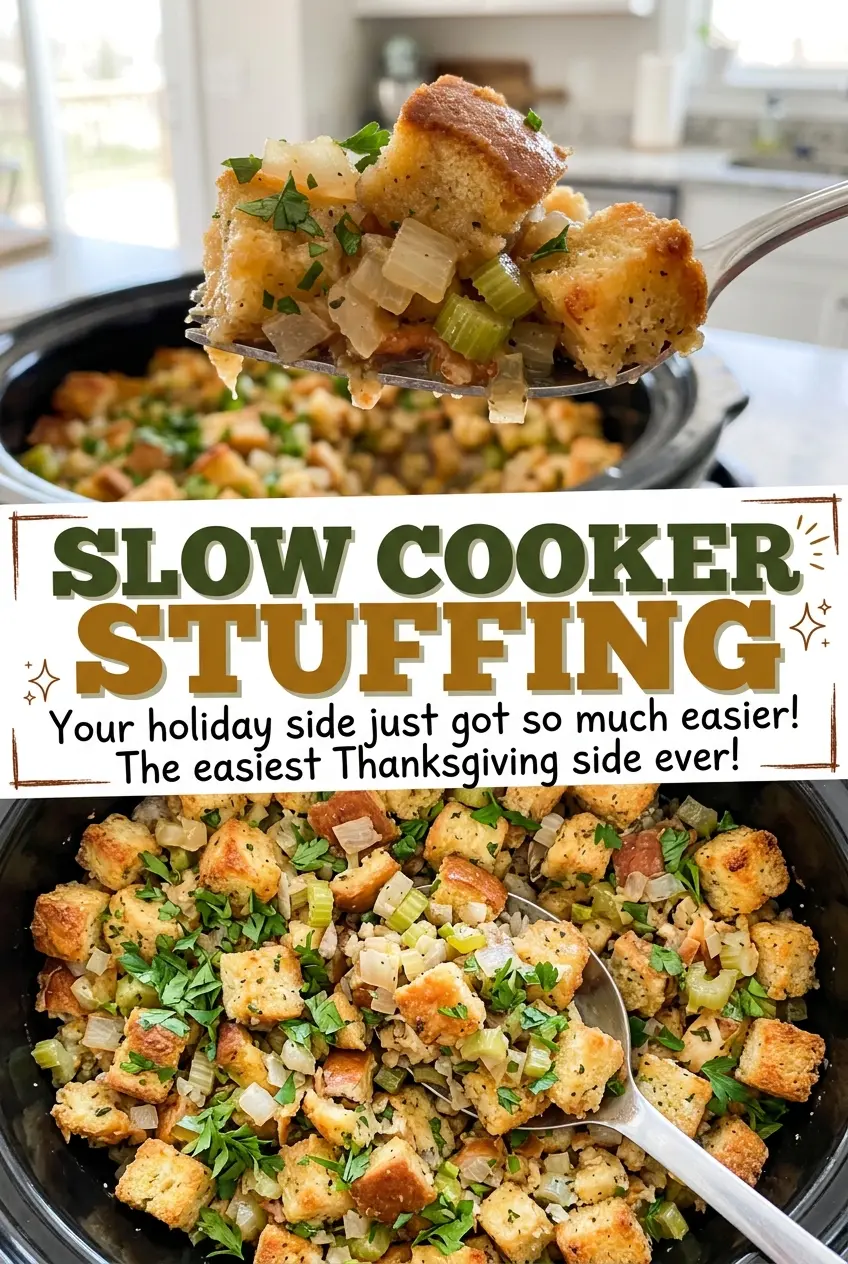
For this Slow Cooker Stuffing, I toss the buttery vegetables through plain dried bread cubes first, then add broth whisked with eggs. That order spreads the vegetables and herbs across the bread before the liquid goes in, so each scoop gets seasoned evenly. The slow cooker keeps the stuffing covered as it cooks, and the center should reach 165°F before it’s ready. After a short rest, it’s set enough to serve and still tender in the middle.
Kitchen Note
I turn the slow cooker off and uncover the stuffing for its 10-minute rest before serving. That pause gives the center a chance to settle, so the stuffing is easier to scoop instead of falling apart on the spoon.
Save this Slow Cooker Stuffing for an oven-free side with buttery vegetables, sage, and a tender center.
The 12-Cup Measure Is an Estimate—The Pound of Bread Is Your Anchor
Bread cubes don’t all take up the same amount of space. A small, compact cube packs differently from a larger, airy one, which is why the volume here is described as about 12 cups rather than an exact equivalent. If the cup count and weight don’t line up perfectly, use the pound of dried bread as your guide.
That matters because the bread has to absorb a measured amount of broth and egg while keeping enough structure to set into stuffing. Plain dried cubes are already low in moisture, so they can take on the liquid without starting out soft and damp. Fresh bread isn’t a direct swap: it brings its own moisture, which can leave the finished center heavier and less defined. Keep the cubes plain, dry, and close to the listed weight, and the broth mixture has a consistent job to do.
The slow cooker also gives this stuffing a different finish from a pan baked uncovered in the oven. The covered cooking environment keeps the mixture moist rather than building a crisp, browned top. Think tender, savory stuffing that holds together when scooped, not a crunchy casserole crust.
Why Plain Bread, Butter, and Eggs Matter in This Stuffing
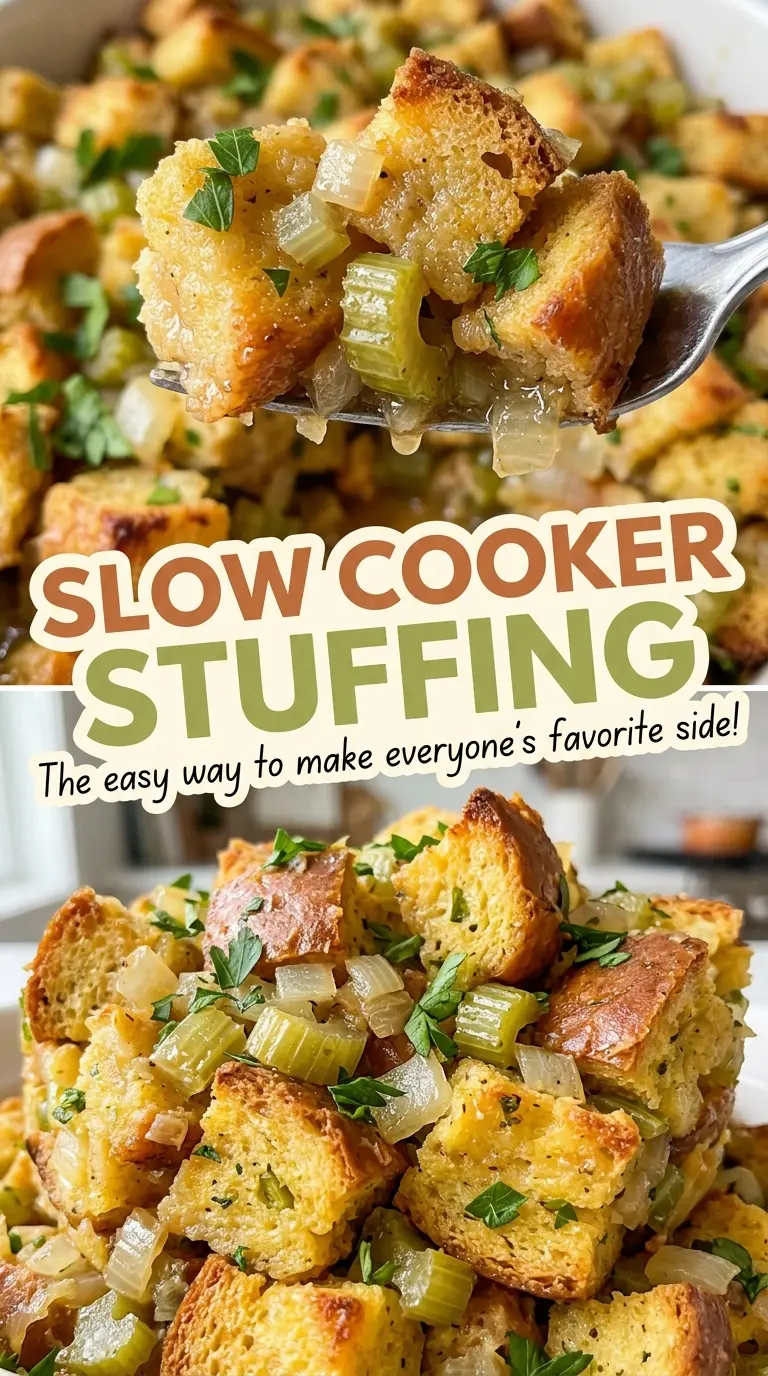
- Plain dried bread cubes — Choose cubes without added seasoning so the sage, poultry seasoning, and parsley in this dish stay balanced. A store brand is fine; what matters is that the cubes are plain and thoroughly dried. Fresh bread cubes aren’t an equal swap because they carry more moisture.
- Unsalted butter — It gives the onion and celery a rich base and lets you control the seasoning with the measured kosher salt. A basic butter works well here; there’s no need for a specialty brand.
- Yellow onion and celery — These bring the familiar savory foundation and soften into the bread rather than staying crisp. Finely chopping both helps them distribute through the cubes instead of collecting in a few bites.
- Sage, poultry seasoning, and dried parsley — The combination gives the stuffing its classic herbal character. Rubbed sage has a soft, leafy texture that blends into the buttered vegetables; dried parsley is convenient and appropriate here, so fresh herbs aren’t necessary.
- Chicken broth and eggs — Broth brings moisture and savory flavor, while the eggs help the mixture set as it cooks. For a vegetarian version, vegetable broth is the practical broth swap; it makes the result a little less poultry-forward. Keep the eggs for the same set texture.
Build the Stuffing in the Right Order for Even Seasoning
Soften the Onion and Celery in Butter
Coat the inside of a 6-quart slow cooker with nonstick cooking spray before you start cooking. Melt the butter in a large skillet over medium heat, then add the finely chopped onion and celery. Cook for 8 to 10 minutes, stirring occasionally, until both vegetables are softened. Keep the heat at medium; you want tender vegetables, not browned edges that can make the finished stuffing taste bitter.
Stir the Herbs Into the Warm Vegetables
Add the rubbed sage, poultry seasoning, dried parsley, kosher salt, and black pepper to the softened vegetables. Stir until the herbs are distributed through the butter and vegetables, then take the skillet off the heat. Adding the seasonings at this point lets them mix into the warm base before it meets the bread. Scrape the vegetable mixture into the bowl while the herbs are still coating it evenly.
Coat the Bread Before Adding the Liquid
Put the dried bread cubes in a large bowl and add the vegetable mixture. Toss until the buttered vegetables are spread throughout the cubes rather than sitting in one spot. In a separate medium bowl, whisk the chicken broth and eggs until combined. Pour that mixture over the bread and toss again, taking care to moisten the cubes evenly instead of leaving a dry layer at the bottom.
Cook Covered Until the Center Is Set
Transfer the moistened bread mixture to the prepared slow cooker and cover it. Cook on LOW for 4 to 5 hours or on HIGH for 2 to 3 hours, until the center reaches 165°F and the stuffing is set. Slow cookers can vary, so use the center temperature and set texture as your doneness cues rather than relying on the clock alone. When it’s cooked through, turn off the slow cooker, uncover it, and follow the resting pause in the Kitchen Note before serving.
Two Practical Swaps for Different Tables
Make It Vegetarian With Vegetable Broth
Replace the chicken broth with vegetable broth, keeping the same amount. The stuffing will still be moistened and bound by the eggs, but it loses some of the deeper poultry flavor. This is a straightforward swap when you’re serving a vegetarian meal.
Use Gluten-Free Dried Bread Cubes
Choose plain, dried gluten-free bread cubes in place of the regular bread cubes, keeping the listed weight as your starting point. Different gluten-free breads absorb liquid differently, so toss thoroughly and check that the cubes are evenly moistened before transferring the mixture. The texture may be a little more delicate, but the herb-and-butter base stays the same.
Storage and Reheating
- Refrigerator: Refrigerate leftovers within 2 hours and keep them covered for 3 to 4 days. The bread softens further as it sits.
- Freezer: Freeze cooled portions in airtight containers for up to 2 months for best quality. Thaw in the refrigerator before reheating; the texture may be slightly softer after freezing.
- Reheating: Reheat individual portions covered in the microwave, stirring if needed so they warm evenly, until they reach 165°F. Avoid heating uncovered for too long, which dries the bread out.
Questions I Get Asked About Slow Cooker Stuffing
Slow Cooker Stuffing
Ingredients
Equipment
Method
- Coat the inside of a 6-quart slow cooker with nonstick cooking spray.
- Melt the butter in a large skillet over medium heat.
- Add the onion and celery, and cook for 8 to 10 minutes, stirring occasionally, until softened.
- Stir the sage, poultry seasoning, parsley, salt, and pepper into the vegetables.
- Remove the skillet from the heat.
- Put the bread cubes in a large bowl.
- Add the vegetable mixture to the bread cubes and toss to combine.
- Whisk the chicken broth and eggs in a medium bowl.
- Pour the broth mixture over the bread mixture.
- Toss until evenly moistened.
- Transfer the mixture to the slow cooker.
- Cover the slow cooker.
- Cook on LOW for 4 to 5 hours or HIGH for 2 to 3 hours, until the center reaches 165°F and the stuffing is set.
- Turn off the slow cooker and uncover it.
- Let the stuffing rest for 10 minutes before serving.