
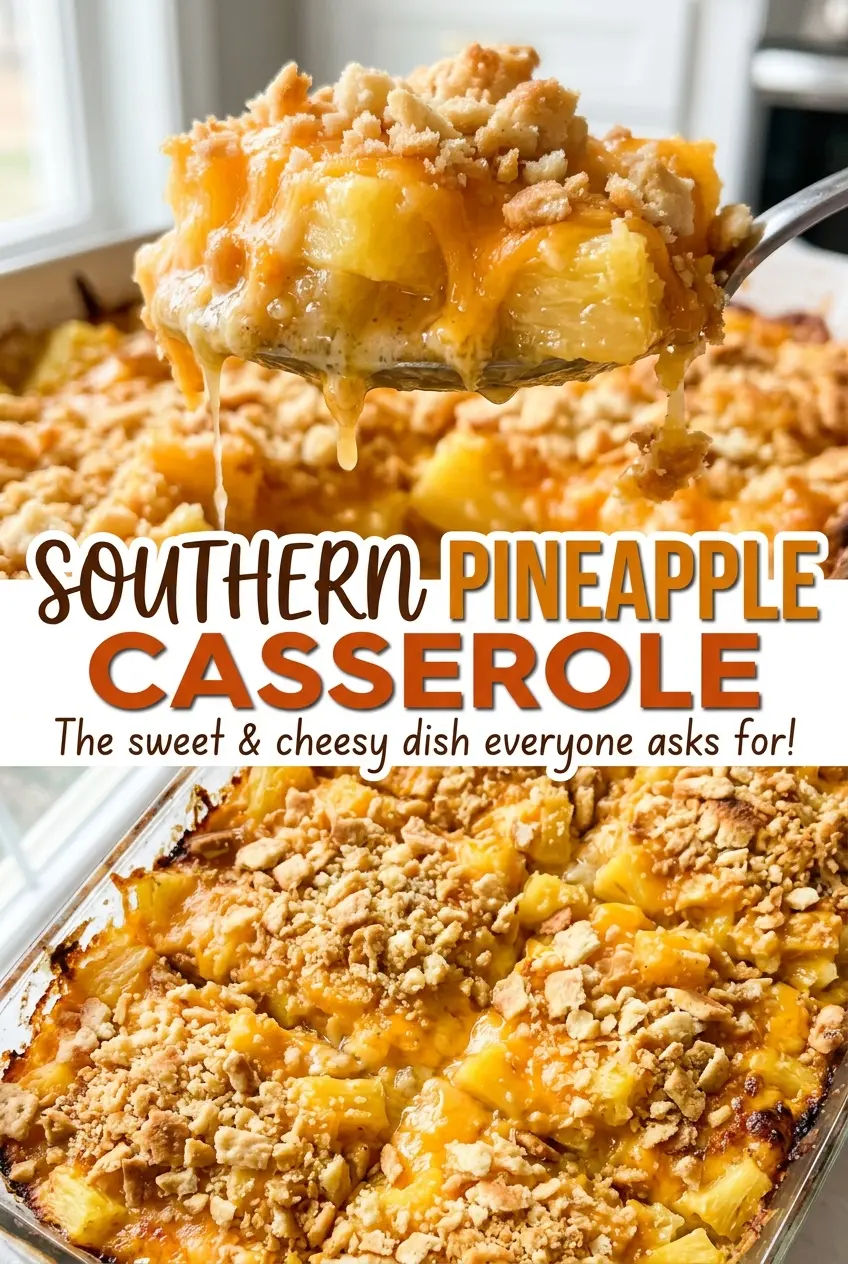
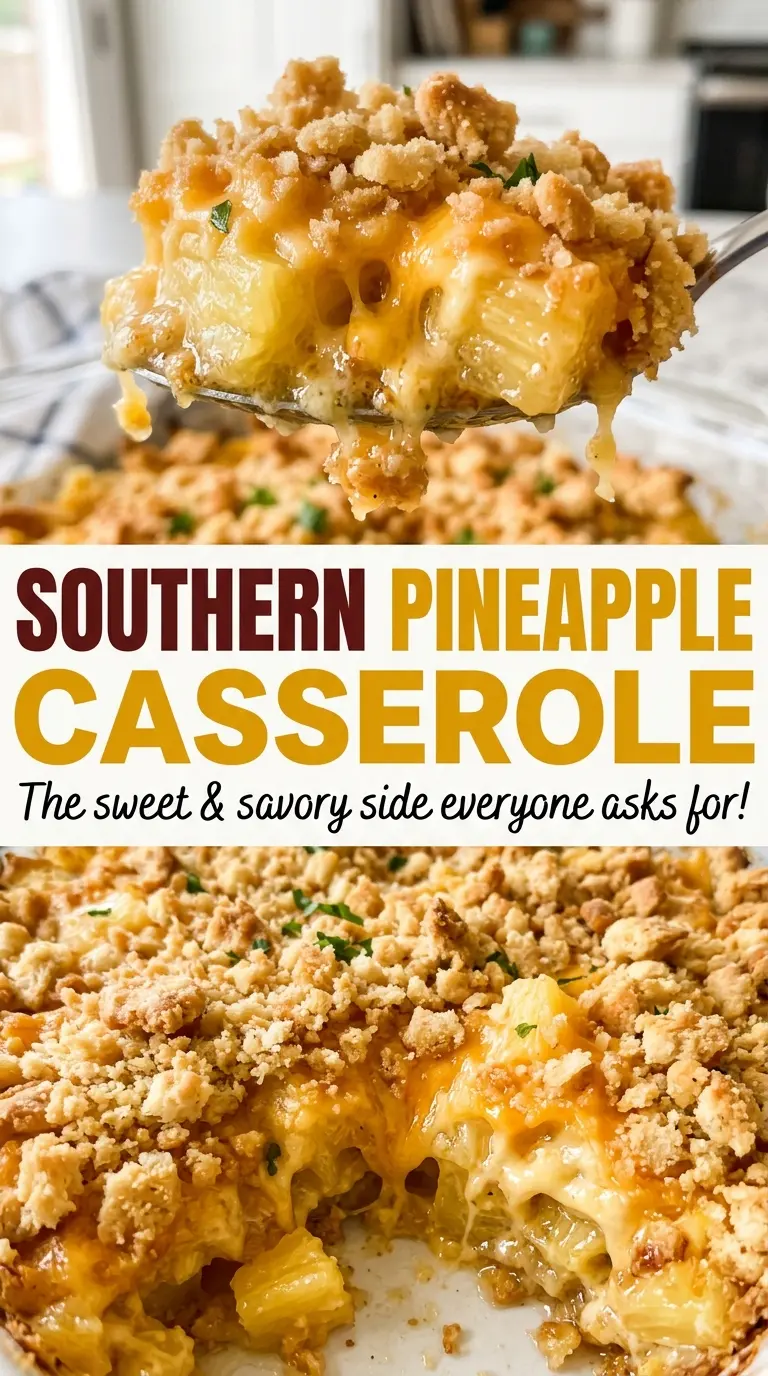
The filling starts bubbling at the edges while the buttery cracker topping turns golden, and the middle stays soft beneath the crust. That contrast is what makes Southern Pineapple Casserole more than fruit under a crunchy topping. It’s sweet, savory, and built to serve eight as a side dish.
I whisk flour and sugar with the juice saved from the canned pineapple, then fold in the fruit and sharp cheddar. The juice gives the flour a chance to blend smoothly before the pineapple goes in, so the filling bakes up cohesive instead of having dry flour pockets.
Once the cracker crumbs are coated in melted butter and spread over the top, the oven does the rest. You get tender pineapple and melted cheese underneath a crisp, buttery layer that’s still golden when it reaches the table.
Kitchen Note
Give the casserole its full 10-minute rest before serving. The filling settles during that pause, so it’s easier to scoop without losing the tender fruit beneath the crust.
Save Southern Pineapple Casserole for its sweet-savory filling and buttery, golden cracker topping.
Why Pineapple Casserole Needs a Savory Counterpoint
Sweet pineapple and sugar make the filling taste fruit-forward, but sharp cheddar keeps the dish from leaning into dessert territory. Its tangy, savory edge is what makes each bite feel at home alongside a main dish rather than in a pie plate. Choose sharp cheddar for a clear contrast; a mild cheese melts, but it won’t balance the fruit in quite the same way.
The topping matters for the same reason. Buttery crackers bring salt and crunch, giving the soft fruit-and-cheese filling a crisp finish instead of making every bite uniformly tender. Keep the topping in an even layer so you get some in each scoop. This casserole isn’t meant to be a smooth, custardy bake—the pineapple should remain in distinct pieces, with the cheese binding the fruit and the crumbs providing the crunch.
That sweet-savory balance is also why I serve it warm, when the cheese is melted and the topping still has its crisp texture. The flavor is familiar, but the combination of fruit, cheddar, and buttery crackers makes it stand apart from a standard vegetable casserole.
What the Pineapple Juice, Cheddar, and Crackers Bring
- All-purpose flour — It thickens the juice into a filling that clings to the pineapple rather than pooling at the bottom of the baking dish. Standard all-purpose flour is a good fit here; if you need a gluten-free version, use a measure-for-measure gluten-free flour blend and pair it with gluten-free buttery crackers.
- Granulated sugar — Plain white sugar sweetens the pineapple without adding extra moisture or a strong flavor of its own. It’s a pantry staple, so there’s no need to seek out a specialty brand. Light brown sugar can stand in, though it gives the filling a faint molasses note.
- Canned pineapple chunks in juice — Canned fruit keeps the pieces consistent and supplies the juice used in the filling. Choose pineapple packed in juice rather than syrup, which would make the casserole sweeter. Drain the chunks well, but save the specified juice before you pour anything away.
- Sharp cheddar — Its pronounced tang gives the sweet fruit a savory counterpoint. Extra-sharp cheddar works if you want a stronger cheese note; a milder cheddar softens that contrast. A block you shred yourself is a reliable choice for an even melt.
- Buttery round crackers and unsalted butter — The crackers make a crisp, savory lid, while melted butter helps the crumbs brown and hold together. A store-brand buttery round cracker works just as well as a name brand. Unsalted butter keeps the topping from becoming saltier than intended; salted butter will work, but the finished crust will taste more seasoned.
How to Layer the Filling and Get the Cracker Top Golden
Whisk the Juice Base Smooth
Heat the oven to 350°F and grease a 9×13-inch baking dish. In a large bowl, whisk the flour and sugar together first, then whisk in the reserved pineapple juice until smooth. Take a moment to work out any visible flour lumps before adding the fruit. A smooth base helps the filling bake evenly.
Fold in the Fruit and Cheese
Add the drained pineapple chunks and shredded sharp cheddar to the bowl. Fold gently until the pieces are coated and the cheese is distributed throughout; stirring hard can break up the pineapple. Spread the mixture evenly in the prepared dish so the fruit and cheese bake at a similar pace. Keep the filling level rather than mounded in the middle.
Coat the Cracker Crumbs
Stir the crushed buttery round crackers into the melted butter until the crumbs are evenly moistened. If you spot a pocket of dry crumbs, give the mixture another stir before topping the casserole. Scatter the crumbs over the filling in an even layer instead of pressing them down. A light, loose topping browns more evenly than a compacted one.
Bake Until the Edges Bubble
Bake for 30–35 minutes, watching for the filling to bubble around the edges and the topping to turn golden brown. The edges give you a useful cue that the filling is hot; a pale topping means it needs more time within that range. If the top is golden and the edges are bubbling, take the dish from the oven. Let it rest for 10 minutes before serving.
Three Ways to Adapt Southern Pineapple Casserole
Make It Gluten-Free
Replace the all-purpose flour with the same amount of a measure-for-measure gluten-free flour blend, and use gluten-free buttery round crackers in the topping. The filling and topping keep the same basic structure, though the cracker texture may be a little different from the original.
Add a Pecan Crunch
Stir 1/2 cup finely chopped pecans into the buttered cracker crumbs before scattering them over the filling. The nuts add a toasted, earthy bite and make the topping more substantial, while the pineapple and cheddar stay at the center of the dish.
Choose a Milder Cheese
Use Colby in place of the sharp cheddar if you prefer a softer cheese flavor. It melts into the filling, but the casserole will taste sweeter overall because Colby brings less tang than sharp cheddar.
Storage and Reheating
- Refrigerator: Cover leftovers and refrigerate them within 2 hours. They keep for 3–4 days; the cracker topping softens as it sits.
- Freezer: For the best texture, freezing isn’t my first choice. The pineapple can release liquid as it thaws, and the cracker crust loses its crunch; if you do freeze leftovers, seal them in a freezer-safe container and expect a softer topping.
- Reheating: Reheat in a 350°F oven until the center reaches 165°F. Cover loosely with foil if the topping is already dark, and uncover near the end if you want to bring back some crispness.
Questions That Come Up When Making Pineapple Casserole
Southern Pineapple Casserole
Ingredients
Equipment
Method
- Heat the oven to 350°F.
- Grease a 9x13-inch baking dish.
- Whisk the flour and sugar together in a large bowl, then whisk in the reserved pineapple juice until smooth.
- Fold in the drained pineapple chunks and cheddar, then spread the mixture evenly in the prepared baking dish.
- Stir the crushed crackers into the melted butter.
- Scatter the cracker mixture evenly over the pineapple filling.
- Bake for 30–35 minutes, until the filling is bubbling around the edges and the topping is golden brown.
- Let the casserole rest for 10 minutes before serving.