
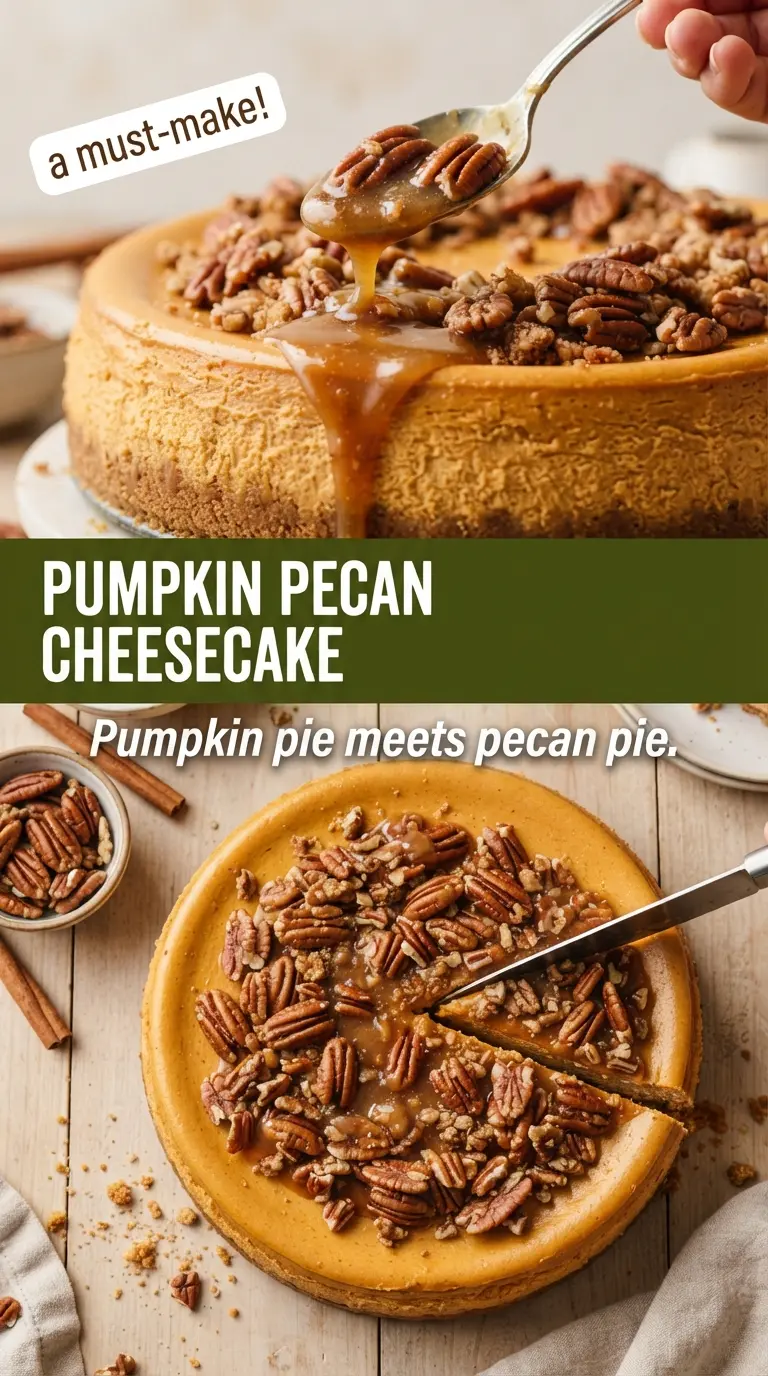
Ultra-creamy pumpkin cheesecake on a toasted pecan graham crust earns its place at the center of the table because it gives you two classic desserts in one slice without tasting heavy or muddy. The filling sets into a smooth, velvety wedge with a gentle tang from the sour cream, and the praline pecans on top bring a glossy crunch that keeps every bite interesting.
What makes this version work is restraint. The pumpkin purée gets enough spice to taste warm and familiar, but not so much that it overwhelms the cream cheese. The water pan in the oven matters too; it keeps the top from drying out and helps the cheesecake bake evenly instead of cracking across the middle.
Below, you’ll find the trick that keeps the crust sturdy, the point where overmixing turns a cheesecake dense, and the reason this dessert tastes even better after a night in the fridge. If you’ve had pumpkin cheesecake turn grainy or sink in the center before, this method fixes both problems.
The cheesecake baked up smooth with no cracks, and the praline pecans set into this shiny, crunchy layer that tasted like pecan pie on top. I made it the day before and the texture was even better after chilling overnight.
Save this baked pumpkin pecan cheesecake for the kind of holiday dessert that slices cleanly, chills beautifully, and finishes with that glossy praline topping.
The Cracks Usually Start Before the Oven Does
A cheesecake that splits on top is usually telling you one of two things: the batter was beaten too hard, or the oven was too hot and too dry. Both problems show up before the pan ever comes out. Overmixing adds air, and that air expands in the oven, then collapses as the cake cools. A water pan helps even out the heat and keeps the surface from setting too fast.
The other place people run into trouble is the eggs. Once they go in, the batter only needs the shortest mix possible. You’re not trying to whip the filling; you’re trying to bring it together. If the batter looks glossy and smooth before the eggs, stop there and let the oven finish the job.
- The crust gets pre-baked so it stays crisp under the filling instead of turning sandy.
- The filling bakes at 325°F, not 350°F, because cheesecake needs gentle heat to set without curdling.
- The center should still jiggle slightly when it comes out. That wobble is what gives you a creamy slice after chilling.
What Each Ingredient Is Actually Doing in This Cake
- Cream cheese — This is the backbone of the cheesecake, so use full-fat blocks, not spreadable tubs. Tub cream cheese is softer and usually contains more water, which changes the way the filling sets and makes it harder to get that dense, smooth slice.
- Pumpkin purée — Use pure pumpkin, not pumpkin pie filling. The pie filling already contains sugar and spice, and that throws off both the texture and the balance of the batter.
- Sour cream — This brings tang and loosens the filling just enough to keep the texture silky. If you don’t have it, full-fat Greek yogurt works, but the flavor will be a little sharper.
- Pecans — Chopping some for the crust and toasting the halves for the topping gives the whole dessert a deeper nut flavor. Skip the toasting step and the praline topping tastes flatter.
- Pumpkin pie spice and cinnamon — The two together give the filling warmth without making it taste like a spice cabinet. If your pumpkin pie spice blend is older than a year, add a little extra cinnamon to carry the flavor.
Building the Cheesecake Without Overworking It
Pressing the Crust So It Stays Put
Mix the crust until every crumb looks damp, then press it firmly into the pan with the bottom of a measuring cup. You want an even layer with a little wall up the sides, not a loose pile that will crumble when you slice. Bake it just long enough to smell toasted at the edges. If it cools before you fill it, that is fine; a fully cooled crust actually holds together better.
Mixing the Filling in the Right Order
Beat the cream cheese first until there are no lumps left, then add the sugars before anything else goes in. That smooth base matters, because once the pumpkin and eggs are added, stubborn lumps are harder to remove without overmixing. Add the eggs one at a time on low speed and stop as soon as each disappears. If the batter starts to look fluffy, you’ve gone too far.
Baking Until the Center Still Moves
Set the springform pan in the oven with a pan of hot water below it and bake until the edges look firm while the center wobbles like set gelatin. Don’t wait for the middle to look fully solid; it will continue to cook from residual heat as it cools. Turning off the oven and leaving the door cracked gives the cheesecake a slow cool-down, which cuts down on cracks and sinking.
The Praline Topping Last
The topping comes together fast, so don’t start it until the cheesecake is chilled. Once the butter, brown sugar, and cream simmer into a glossy syrup, remove the pan from the heat right away or the mixture can turn grainy. Stir in the toasted pecans, vanilla, and salt, then let it cool just enough to thicken before spooning it over the top. If it’s too hot, it will run off the sides instead of sitting in a shiny layer.
How to Adapt This for Different Tables and Diets
Gluten-Free Crust Swap
Use gluten-free graham-style crumbs in place of the regular graham crumbs and keep the pecans and butter the same. The texture stays close to the original, though the crust may be a touch more delicate when you slice it.
Dairy-Free Version
Use dairy-free cream cheese and a thick unsweetened dairy-free yogurt in place of the sour cream, then swap in vegan butter for both the crust and topping. The result will still slice well, but it won’t taste as rich or tangy as the classic version.
Make-Ahead Holiday Timing
Bake the cheesecake a full day ahead and add the praline topping just before serving. That gives the filling time to set fully, and the topping stays glossy instead of softening into the surface.
More Spice, Less Sweet
If you like a sharper, more pumpkin-forward dessert, cut the granulated sugar by 2 tablespoons and add an extra 1/4 teaspoon cinnamon. That change keeps the cheesecake balanced without turning the praline topping into the only sweet element.
Storage and Reheating
- Refrigerator: Keep covered for up to 5 days. The crust softens a little over time, but the flavor stays excellent.
- Freezer: Freeze without the praline topping for up to 2 months. Wrap the chilled cheesecake tightly, then thaw overnight in the refrigerator before topping and serving.
- Reheating: Don’t reheat this cheesecake. Serve it cold or let it sit at room temperature for 20 to 30 minutes so the texture softens slightly without losing its clean slice.
Answers to the Questions Worth Asking
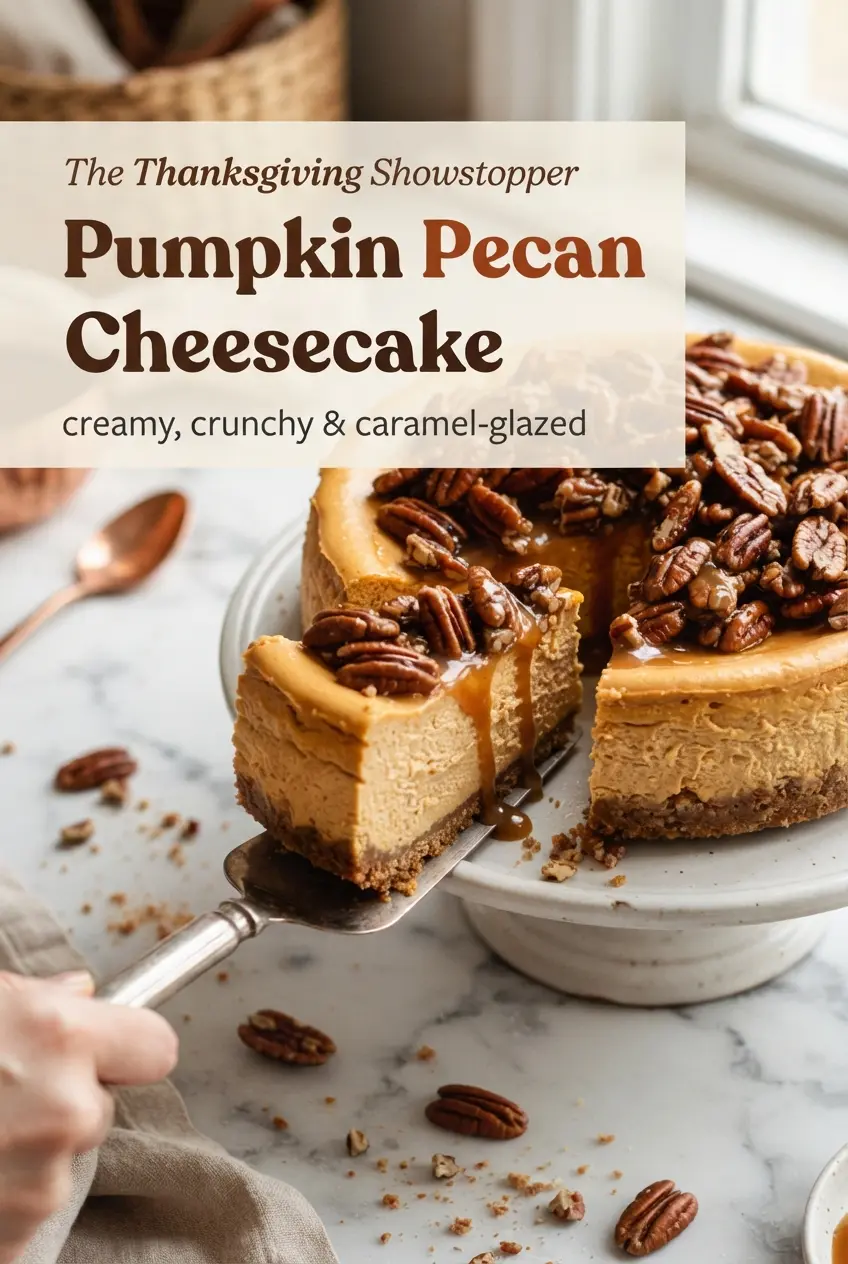
Baked Pumpkin Pecan Cheesecake with Praline Topping
Ingredients
Equipment
Method
- Preheat the oven to 350°F (175°C) and grease a 9-inch springform pan. This prepares the pan so the crust can bake evenly right away.
- Stir together the graham cracker crumbs, chopped pecans, brown sugar, and melted butter until evenly moistened. The mixture should look like damp sand and hold together when pressed.
- Press the mixture firmly into the bottom and about 1 inch up the sides of the pan. Pack it tightly so it forms a sturdy, sliceable crust.
- Bake for 10 minutes at 350°F (175°C), then cool while you make the filling. The crust should look set and slightly darker at the edges.
- Reduce the oven to 325°F (165°C) and place a baking pan filled with 1 inch of hot water on the lower rack. The water will help prevent cracks and keep the top smooth.
- Beat the cream cheese on medium-low until completely smooth, about 2 minutes. Stop and scrape the bowl if you see any lumps.
- Add the granulated sugar and brown sugar and beat until creamy. Mix until the texture turns silky and light.
- Beat in the pumpkin purée, sour cream, flour, pumpkin pie spice, cinnamon, and vanilla until smooth. Stop as soon as the batter looks uniform and thick.
- Add the eggs one at a time, mixing on low just until each disappears. Keep the speed low so the cheesecake bakes tender, not puffy.
- Scrape the bowl well to fully incorporate the batter. This removes streaks and helps everything bake evenly.
- Pour the filling over the crust and smooth the top. Tap the pan lightly to settle any bubbles.
- Bake on the middle rack for 60–70 minutes at 325°F (165°C), until the edges are set and the center jiggles slightly. Look for a gentle wobble in the middle, not sloshing.
- Turn off the oven, crack the door open, and let the cheesecake cool inside for 1 hour. This gradual cooling helps prevent sudden temperature shock.
- Run a thin knife around the edge, then refrigerate for at least 6 hours or overnight. Chill until firm enough to slice cleanly.
- Melt the butter in a saucepan over medium heat, then stir in the brown sugar and heavy cream. Keep stirring until the mixture looks smooth and begins to simmer.
- Simmer for 2 minutes until glossy. It should thicken slightly and coat the spoon.
- Remove from the heat, then stir in the toasted pecans, vanilla, and salt. The pecans should be evenly coated and glossy.
- Let the praline mixture cool for 10 minutes. This makes it easier to spoon without melting the chilled cheesecake.
- Spoon the praline pecans over the chilled cheesecake, then release the springform ring. Remove the ring carefully so the sides stay intact.
- Slice with a knife wiped clean between cuts. Wipe and repeat so each slice shows a clean, creamy layer.