
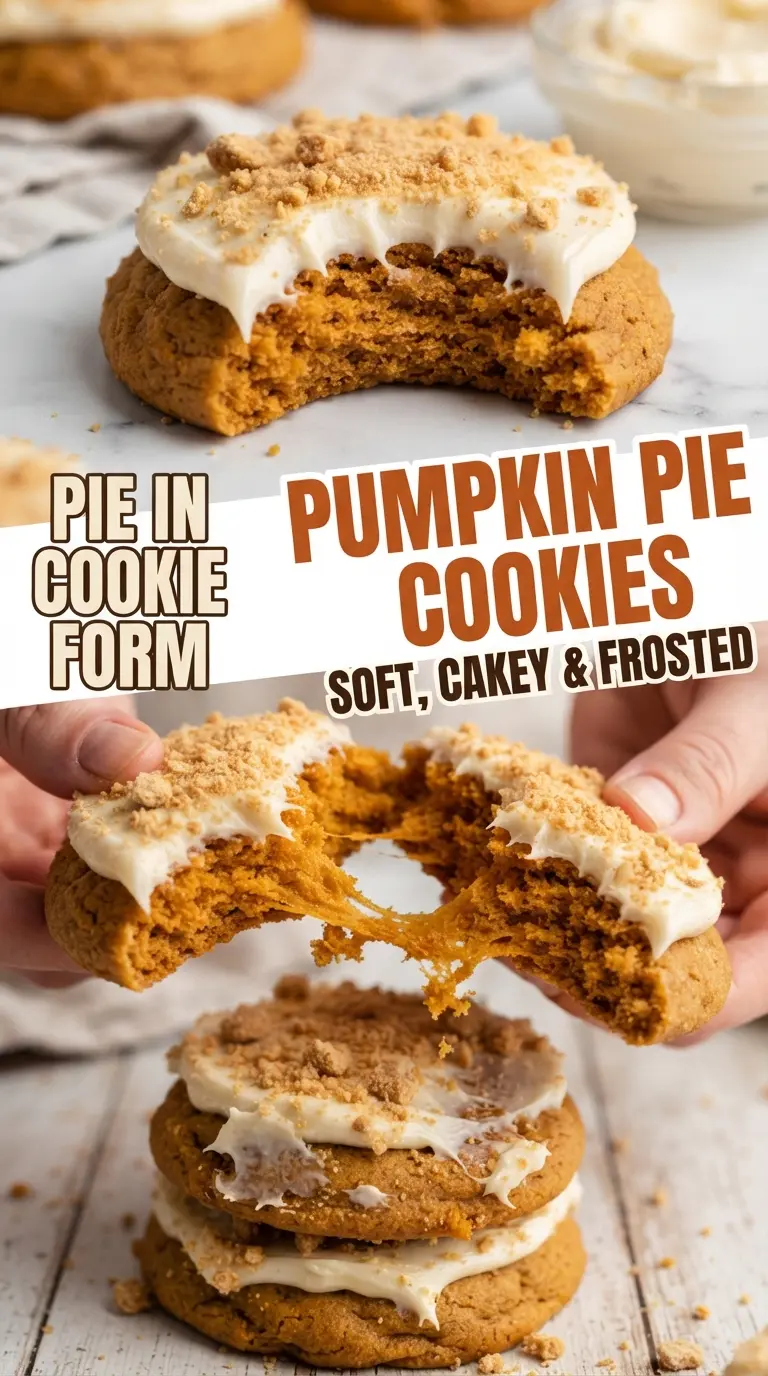
Pillowy pumpkin cookies with a soft, cakey center and a thick swipe of cream cheese frosting hit the same comfort note as pumpkin pie, just in a form that’s easier to stack on a tray and pass around. The cookies bake up tender instead of dense, with edges that set just enough to hold the frosting without losing that little bit of give when you bite in.
The trick is using blotted pumpkin purée, which keeps the dough from turning wet and heavy. Brown sugar brings warmth and chew, while a little egg yolk adds richness without making the cookies spread like cake. The graham crumb topping matters too: it gives the frosting that pie-crust finish and makes the whole cookie taste more deliberate, not just dressed up.
Below you’ll find the small details that keep these cookies soft, the frosting stable, and the pumpkin flavor balanced instead of muddy. If you’ve ever had pumpkin cookies bake up puffy but bland, or frosting slide off a warm cookie, the steps here fix both problems.
The pumpkin flavor came through cleanly and the frosting held its shape after chilling. I loved the graham crumb topping because it made them taste like little pumpkin pies instead of just frosted cookies.
Save these soft pumpkin pie cookies for the days when you want pumpkin pie flavor with a thick cream cheese swirl and a graham cracker finish.
The Small Pumpkin Problem That Makes or Breaks These Cookies
Most pumpkin cookie dough goes wrong before it ever reaches the oven. Pumpkin purée carries a lot of water, and if you add it straight from the can, the dough turns slack and the cookies bake up cakey in the wrong way: puffy, fragile, and a little gummy in the center. Blotting the pumpkin first pulls back just enough moisture to keep the cookies soft without making them heavy.
The other thing to watch is the mixing. Once the flour goes in, stop as soon as the dough comes together. Overmixing develops too much gluten, which is how a tender pumpkin cookie turns bready. You want a dough that looks soft and slightly sticky, not smooth like cake batter.
- Pumpkin purée — Blotting it is the difference between a dough that holds shape and one that spreads into domes. Canned pumpkin works perfectly here as long as it’s not pumpkin pie filling.
- Brown sugar — This gives the cookies their soft chew and deep molasses note. Light brown sugar is ideal; dark brown sugar will work, but the flavor lands a little heavier.
- Egg yolk — The yolk adds richness and structure without the extra water in a whole egg. If you use a whole egg, the dough loosens and the cookies lose some of that dense, pie-like bite.
- Pumpkin pie spice and cinnamon — These need to be measured with a light hand because pumpkin can taste muddy when the spice blend is too aggressive. The cinnamon in both the dough and frosting keeps the flavor clear.
Building the Dough and Frosting Without Losing the Texture
Start With a Fluffy Butter Base
Beat the butter with both sugars until the mixture looks lighter in color and a little fluffy around the edges. That step traps air, which helps the cookies bake up soft instead of dense. If the butter is too cold, the sugar won’t dissolve into it and the finished cookies can feel grainy, so soften it just enough that your mixer leaves clean tracks.
Mix in the Pumpkin Without Turning the Dough Loose
Add the blotted pumpkin purée, egg yolk, and vanilla and beat until the mixture looks smooth. It may look slightly curdled at first; that settles once the flour goes in. The key is that the pumpkin should be thick, not wet enough to slump off a spoon, or the dough will need extra flour and the cookies will bake up dry.
Fold in the Dry Ingredients Gently
Sprinkle the flour, baking soda, baking powder, salt, pumpkin pie spice, and cinnamon over the top, then mix on low until the dough just comes together. Stop the mixer when you still see a few floury streaks, then finish with a spatula if needed. That keeps the cookies tender and prevents the tops from cracking into a tough crust.
Bake Until Puffy, Then Let Them Finish Setting on the Pan
Scoop the dough into even mounds and flatten them lightly with your palm so they bake into thick cookies instead of domes. Pull them when the edges are set and the centers still look soft and matte. They’ll finish cooking from the heat of the pan, and if you wait for deep browning, you’ll lose the soft middle that makes these worth making.
Whip the Frosting and Chill the Finished Cookies
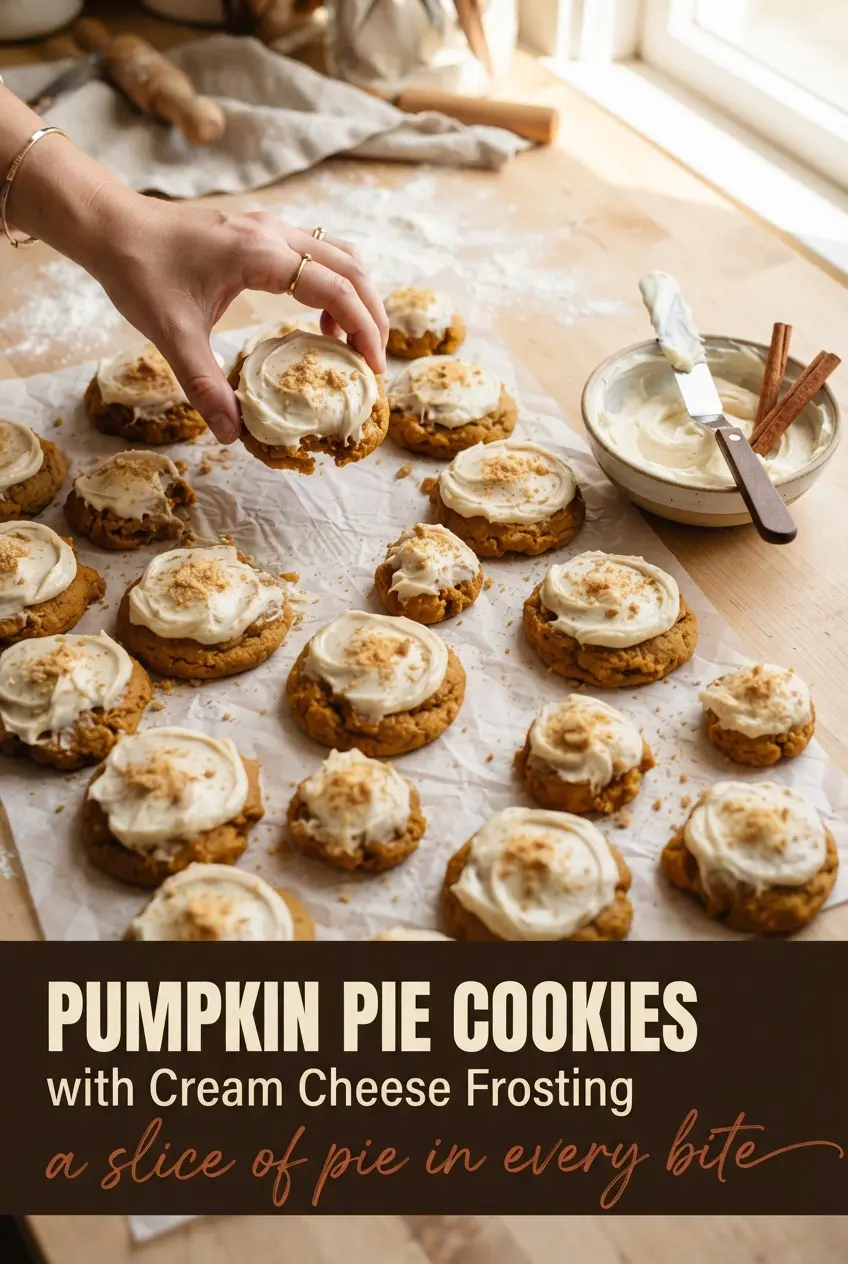
Beat the cream cheese and butter until there are no lumps left, then add the powdered sugar, vanilla, and cinnamon. If the frosting looks loose, keep beating for another minute; cream cheese frosting tightens as it aerates. Spread or pipe it only after the cookies are completely cool, then add the graham crumb topping and chill briefly so the swirl sets cleanly.
How to Adapt These Pumpkin Cookies for Different Needs
Make Them Dairy-Free
Use a plant-based butter that behaves like stick butter in both the cookie dough and the frosting. The texture stays close, but the frosting will be a little softer, so chill the cookies after decorating to help it set. Choose a dairy-free cream cheese that’s meant for baking rather than a whipped tub version.
Skip the Frosting for a More Cookie-Like Bite
These are still good plain, especially if you finish them with the graham crumb topping while they’re warm enough for it to cling. You lose the tangy contrast, but the pumpkin spice becomes more pronounced and the cookies stack better for shipping or lunchboxes.
Use Gluten-Free Flour With One Adjustment
A cup-for-cup gluten-free flour blend works well here, but the dough benefits from an extra 10 to 15 minutes of chilling because those blends hydrate more slowly. The cookies will be a touch more delicate, but the soft, cakey texture still holds if you cool them on the baking sheet before moving them.
Make the Cookies Ahead
Bake the cookies a day in advance and frost them the day you plan to serve them. The texture stays soft, and the frosting looks cleaner when it goes onto a fully set cookie. If you frost them too early, the graham topping can soften and disappear into the cream cheese.
Storage and Reheating
- Refrigerator: Store in an airtight container for up to 4 days. The cookies stay soft, but the frosting firms up, which helps the texture hold.
- Freezer: Freeze the baked cookies without frosting for up to 2 months, then thaw and frost after they come back to room temperature. Frosted cookies can freeze, but the topping loses some of its clean look.
- Reheating: Let refrigerated cookies sit at room temperature for 15 to 20 minutes before serving. Warming them in the microwave softens the frosting and can make the cookies collapse, so room-temperature thawing is the safer move.
Answers to the Questions Worth Asking
Soft Pumpkin Pie Cookies with Cream Cheese Frosting
Ingredients
Equipment
Method
- In a large bowl, beat the butter, brown sugar, and granulated sugar until light and fluffy, about 2 minutes.
- Beat in the blotted pumpkin purée, egg yolk, and vanilla until smooth.
- Add the flour, then sprinkle the baking soda, baking powder, salt, pumpkin pie spice, and cinnamon over the top, and mix on low just until a soft dough forms.
- Cover and chill the dough for 30 minutes.
- Preheat the oven to 350°F (175°C) and line two baking sheets with parchment paper.
- Scoop 2-tablespoon balls of dough onto the sheets, 2 inches apart, and gently flatten each one with your palm.
- Bake for 11–13 minutes, until the edges are set and the tops look puffy and slightly matte.
- Cool on the baking sheets for 5 minutes, then move to a wire rack to cool completely.
- Beat the cream cheese and butter until smooth, then add the powdered sugar, vanilla, and cinnamon and beat until fluffy.
- Stir the graham cracker crumbs with a pinch of pumpkin pie spice.
- Spread or pipe a generous swirl of frosting onto each cooled cookie and sprinkle with the graham topping.
- Chill for 15 minutes to set the frosting, then serve.