
Caramel pumpkin poke cake delivers the kind of soft, spoon-tender crumb that soaks up every bit of the sweet caramel filling without turning soggy. The cake stays plush and moist for days, and the cream cheese frosting on top keeps each bite balanced instead of cloying. That mix of spiced pumpkin, gooey caramel, and cool tangy frosting is what makes people go back for a second slice before the first one is even gone.
What makes this version work is the order of the layers. The cake gets poked while it’s still warm, then the condensed milk and caramel mixture runs straight into those holes where it settles into the crumb instead of sitting on top. Letting the cake chill before frosting gives it time to absorb the filling and firm up enough for clean slices later. The frosting also uses cinnamon to echo the cake instead of fighting it, which keeps the whole dessert tasting cohesive.
Below, you’ll find the small details that keep the cake tender, the soak evenly distributed, and the frosting fluffy instead of heavy. There’s also a few practical notes on make-ahead timing and the best way to slice it once it’s fully chilled.
The caramel soaked in all the way through and the cake stayed super moist after chilling overnight. I was worried the frosting would be too sweet, but the cream cheese and cinnamon kept it balanced.
Save this caramel pumpkin poke cake for the dessert table when you want a make-ahead cake with gooey caramel layers and cinnamon cream cheese frosting.
The Part That Keeps Poke Cake Gooey Instead of Wet
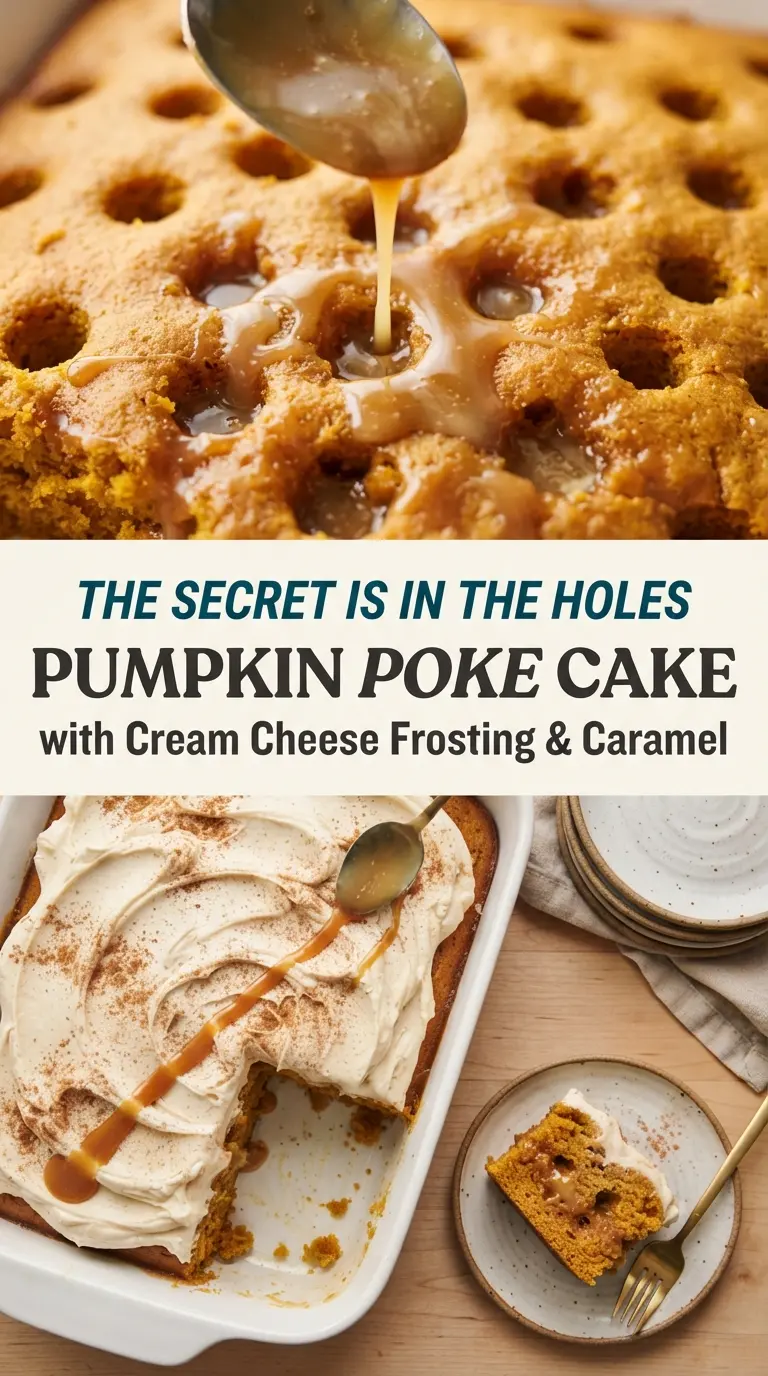
A poke cake only works when the filling sinks into the crumb without flooding it. If the holes are too close together, the top turns soft and dense. If they’re too far apart, you end up with dry patches between the caramel pockets. The sweet spot is poking the warm cake in a loose grid, then pouring the filling slowly so it can settle instead of pooling.
Warm cake matters here. A cooled cake won’t absorb the caramel mixture as evenly, and the filling just sits in the holes like sauce. The other trap is overbaking. Once the cake is baked past the point where the center springs back and a toothpick comes out clean, it can’t hold as much soak and the texture starts to feel bready instead of tender.
What Each Ingredient Is Actually Doing in This Cake
The pumpkin purée brings moisture and body, but it also adds density, which is why the baking soda and baking powder both matter. You need that lift to keep the crumb soft enough to absorb the caramel soak without collapsing. Canned pumpkin purée is the right choice here; pumpkin pie filling won’t work because it already contains sugar and spices and throws the whole balance off.
Brown sugar adds a little molasses depth that plain white sugar can’t give you, and the vegetable oil keeps the cake tender even after chilling. Butter would set firmer in the fridge and fight the poke cake texture. For the frosting, block-style cream cheese gives a sturdier finish than whipped tubs, and soft butter helps it whip smooth without lumps. The caramel sauce should be pourable, not stiff from the jar, so warm it just enough to loosen before mixing it with the condensed milk.
- Pumpkin purée — Use plain canned pumpkin purée, not pumpkin pie filling. If you use fresh pumpkin, cook it down until it’s thick and dry or the batter gets too loose.
- Sweetened condensed milk — This is what gives the cake its sweet, milky soak. There isn’t a clean substitute that gives the same texture, so don’t swap it unless you’re changing the dessert entirely.
- Caramel sauce — Jarred or homemade both work as long as it pours easily. If it’s too thick, warm it for a few seconds so it blends into the condensed milk instead of clumping.
- Cream cheese — Full-fat cream cheese gives the frosting tang and structure. Low-fat versions soften too fast and can turn slack on a cake this moist.
How to Build the Cake So the Layers Set Cleanly
Mix the Batter Just Until It Comes Together
Whisk the dry ingredients first so the spice and leavening are evenly distributed, then stir them into the wet mixture just until no dry streaks remain. The batter will be thick and smooth, not airy. If you beat it hard, the cake can bake up tight and lose the soft crumb that helps it absorb the filling.
Bake Until the Center Springs Back
Spread the batter evenly in the pan so the cake bakes at the same rate from edge to center. Pull it when the top springs back lightly and a toothpick in the middle comes out clean. If you bake it too long, the crumb dries out and the caramel soak has nowhere to go.
Poke While It’s Still Warm
Use the round handle of a wooden spoon and press holes about 1 inch apart across the whole surface. Go deep enough to reach most of the cake, but don’t punch through to the pan. Warm cake yields clean holes and drinks in the filling; a cooled cake resists it.
Pour the Caramel Mixture Slowly
Whisk the sweetened condensed milk with the caramel sauce, then pour it in a thin stream over the cake so it has time to sink into the holes. Don’t dump it in one spot or you’ll end up with a soggy patch and dry corners. After that, the cake needs to cool completely and chill, which lets the soak settle and the frosting spread without tearing the surface.
How to Adapt This for Different Needs
Dairy-Free Version
Use a dairy-free caramel sauce and swap in a thick coconut-based cream cheese alternative for the frosting. The cake itself is already dairy-free, so most of the change is in the toppings. The flavor stays close, though the frosting will be a little softer and less tangy.
Less-Sweet Version
Cut the frosting sugar back by about 1/2 cup and use a darker caramel sauce on top. That keeps the cake rich without pushing it into candy-sweet territory. The texture stays the same, but the finish tastes more balanced.
Cupcake Version
Bake the batter in lined muffin tins and reduce the bake time until the centers spring back. Poke each cupcake once or twice and spoon the caramel soak over the tops instead of trying to flood them. You’ll get a tighter, more portable version, though it won’t hold as much filling as the sheet cake.
Storage and Reheating
- Refrigerator: Keeps for 4 to 5 days covered. The cake actually gets more cohesive after the first day as the caramel settles into the crumb.
- Freezer: Freeze slices tightly wrapped and then bagged for up to 2 months. The frosting can soften a bit after thawing, but the cake itself freezes well.
- Reheating: Serve it chilled or let it sit at room temperature for 20 to 30 minutes. Don’t microwave frosted slices, or the cream cheese topping will melt and the caramel layer can turn greasy.
Answers to the Questions Worth Asking
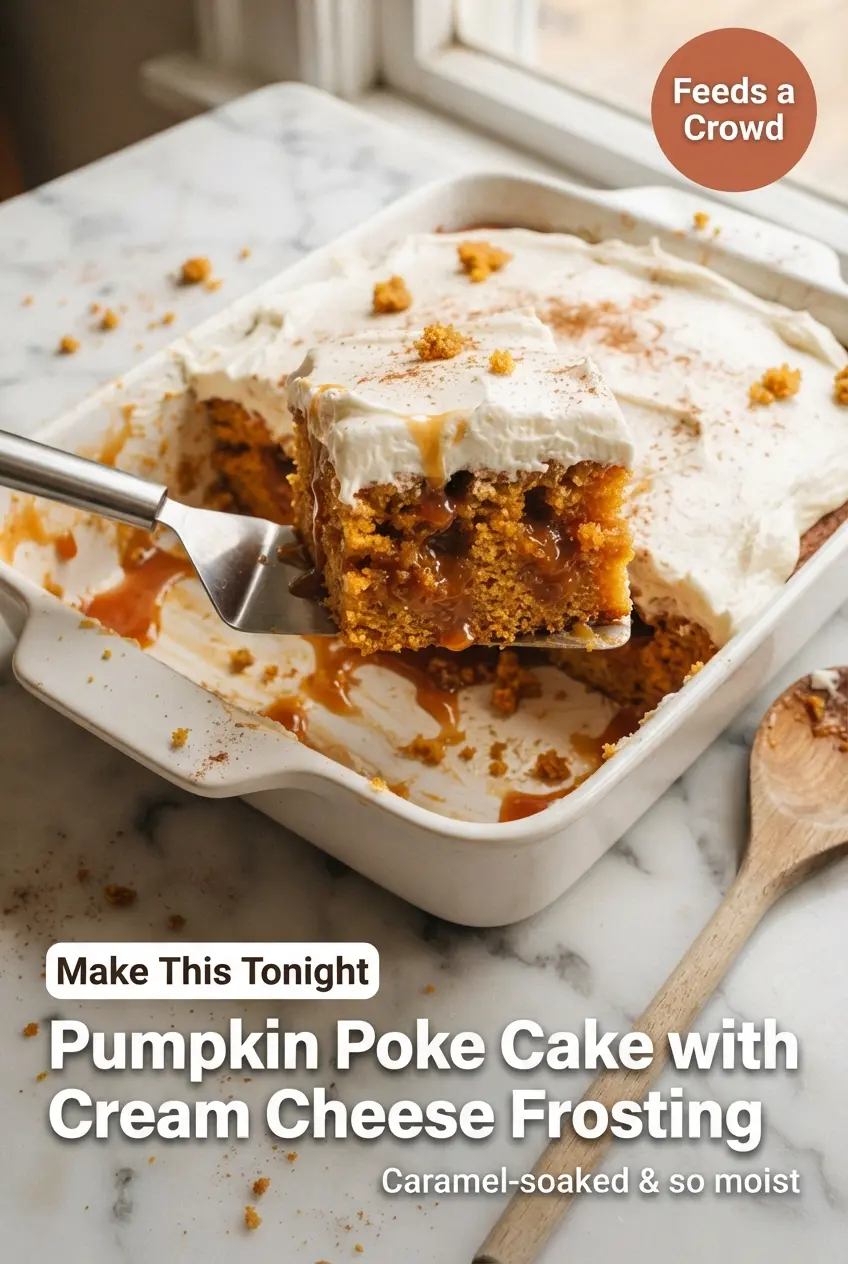
Caramel Pumpkin Poke Cake with Cream Cheese Frosting
Ingredients
Equipment
Method
- Preheat the oven to 350°F (175°C) and grease a 9x13-inch baking pan, ready for the batter. The pan should look evenly coated before adding ingredients.
- In a medium bowl, whisk the all-purpose flour, baking powder, baking soda, salt, pumpkin pie spice, and ground cinnamon until evenly combined. The mixture should look uniform in color with no visible spice clumps.
- In a large bowl, whisk the pumpkin purée, granulated sugar, packed light brown sugar, vegetable oil, large eggs, and pure vanilla extract until smooth. Stop when the batter is glossy and fully blended.
- Add the dry ingredients to the wet ingredients and stir just until combined. Mix only until no dry streaks remain to keep the cake tender.
- Spread the batter evenly in the prepared pan and smooth the top. Aim for an even layer so the cake bakes uniformly.
- Bake at 350°F (175°C) for 28–32 minutes, until the top springs back when lightly pressed and a toothpick inserted in the center comes out clean. The center should not look wet.
- While the cake is still warm, poke holes all over the top about 1 inch apart using the round handle of a wooden spoon. Press down firmly so the holes reach near the base.
- Whisk the sweetened condensed milk and caramel sauce together, then pour slowly and evenly over the warm cake. Watch the liquid sink into the holes as you pour.
- Cool the cake completely at room temperature, about 60 minutes, until it is no longer warm to the touch. The surface should feel set before refrigeration.
- Refrigerate the cake for 1 hour, uncovered if possible, to help the soak firm up. It should look slightly jiggly but fully chilled.
- Beat the cream cheese and unsalted butter until smooth. Stop when no lumps remain and the mixture looks creamy.
- Add the powdered sugar, pure vanilla extract, and ground cinnamon, then beat until light and fluffy. The frosting should hold soft peaks.
- Spread the frosting evenly over the chilled cake. Use an offset spatula or the back of a spoon to create an even layer.
- Drizzle 1/4 cup caramel sauce over the top and dust with a pinch of ground cinnamon. Finish with thin, even lines so the drizzle doesn’t pool.
- Refrigerate for at least 1 hour before slicing and serve chilled. The cake should slice cleanly after it sets.