
Pillowy pumpkin cinnamon rolls land somewhere between a bakery treat and a comfort-food ritual. The dough bakes up soft and tender, with a gentle pumpkin sweetness that keeps every bite plush instead of dry, and the swirls of brown sugar and cinnamon melt into a sticky center that pulls apart in long, fluffy strands. Warm frosting over the top finishes the whole pan with that tangy-sweet contrast that makes people linger at the counter for one more roll.
What makes this version work is the balance of moisture and structure. Pumpkin purée brings softness, but it also adds weight, so the flour amount matters more than it does in a standard sweet roll dough. The dough should feel slightly tacky, not sticky enough to coat your hands. That small difference is what gives you rolls that rise high and stay tender after baking. The filling is kept simple on purpose, because the brown sugar and softened butter do the heavy lifting while the pumpkin pie spice just rounds everything out.
Below, you’ll find the exact cues I watch for when the dough is ready, plus a few ways to adjust the recipe if you need to work around what you’ve got in the kitchen. The frosting comes together fast, but the timing of when you spread it matters more than most people think, especially if you want that glossy melt into the spirals.
The dough rose beautifully and baked up so soft, even around the center roll. I loved that the frosting melted into the warm spirals instead of sitting on top like a thick layer.
Save these soft pumpkin cinnamon rolls for the weekend you want a pan of fluffy spirals with warm spice and tangy cream cheese frosting.
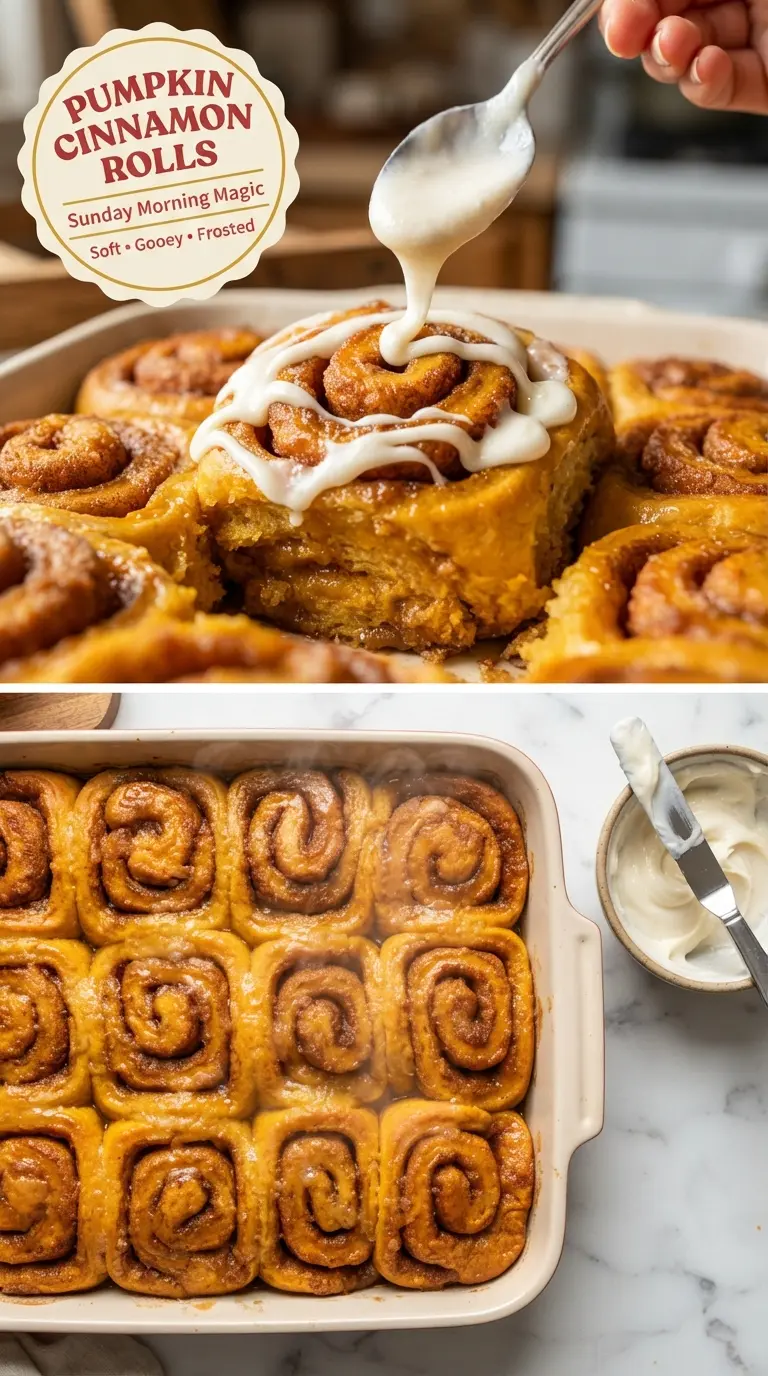
The Trick to Keeping Pumpkin Dough Soft, Not Heavy
Pumpkin dough can go wrong in two familiar ways: it turns dense from too much flour, or it bakes up pale and gummy because the dough never had enough structure to hold the filling. The fix starts before you even knead. This dough should feel soft and a little tacky, which is the sign that the pumpkin is doing its job without being overpowered by flour. If you keep adding flour until the dough feels dry, the rolls will lose that plush, bakery-style crumb.
The other thing that matters is the first rise. Pumpkin slows the dough down just enough that a warm, draft-free spot pays off. You want the dough doubled and puffy, not rushed by heat that melts the butter or leaves the yeast underpowered. Once you roll and cut the dough, the second rise gives the spirals space to press against each other in the pan, which is what helps the center rolls bake up soft instead of tight.
- Whole milk — Warm milk wakes up the yeast and gives the dough a richer base. If the milk is too hot, it can kill the yeast; if it feels just warm at the wrist, you’re in the right range.
- Pumpkin purée — Use pure pumpkin, not pumpkin pie filling. Pie filling is already sweetened and spiced, which throws off both the dough texture and the flavor balance.
- Instant yeast — This speeds the rise and keeps the recipe straightforward. Active dry yeast works too, but dissolve it in the warm milk mixture and give the first rise a little more time.
- Pumpkin pie spice — It ties the dough and filling together so the rolls taste layered, not flat. If you don’t have it, use cinnamon with a pinch of nutmeg and cloves.
- All-purpose flour — Start with 3 1/2 cups and add more only as needed. The exact amount depends on how much moisture your pumpkin purée holds, and that extra half cup can be the difference between soft rolls and dry ones.
Building the Spirals So the Filling Stays Inside
Mixing the Soft Dough
Stir the warm milk, yeast, and sugar together first and wait for the surface to look foamy. That foam tells you the yeast is awake and active. Whisk in the pumpkin, butter, egg, and vanilla until the mixture looks smooth, then add the flour gradually so the dough forms shaggy clumps before you knead. If it looks wet at first, don’t panic; pumpkin dough needs a few minutes of kneading before it tells you whether it wants a little more flour.
Kneading Until It Springs Back
Knead on a lightly floured surface for 5 to 7 minutes until the dough is smooth and elastic with a slight tack when you press it. If it tears immediately, it needs more kneading, not more flour. Add flour in small pinches only if the dough is so sticky it clings to the counter and your hands. Overflouring is the fastest way to get rolls that bake up dry and bready instead of soft and tender.
Rolling, Filling, and Cutting Cleanly
Roll the dough into a neat rectangle so the filling spreads evenly from edge to edge. Soft butter goes on first, then the cinnamon sugar mixture, and the border on one long side helps the seam close without leaking. Roll from the opposite long side and keep the log tight enough that the spirals stay defined, but not so tight that the filling squeezes out. For clean cuts, use dental floss or a sharp knife with a gentle sawing motion; smashing down with a dull blade compresses the layers and gives you lopsided rolls.
Baking to the Right Color
The rolls are done when the tops are golden and the centers look set, not wet, and the middle roll springs back lightly when touched. Don’t wait for deep brown color; pumpkin dough can darken before the center is fully baked. A 9×13 pan helps the rolls support each other, which keeps them tall and soft. Let them cool for about 5 minutes before frosting so the icing melts into the swirls without disappearing completely into the pan.
How to Adapt These Pumpkin Rolls Without Losing the Soft Crumb
Dairy-Free Pumpkin Cinnamon Rolls
Swap the milk for an unsweetened non-dairy milk and use plant-based butter in both the dough and filling. The rolls will still rise well and stay soft, though the frosting will be a little less tangy unless you use a dairy-free cream cheese that has enough acidity.
Make the Frosting Thicker or Lighter
For a thicker frosting, reduce the milk a teaspoon at a time until it holds soft peaks on the spoon. For a looser glaze, add another teaspoon of milk and spread it while the rolls are still warm so it sinks into the spirals. The base flavor stays the same either way.
Using Active Dry Yeast Instead of Instant
Active dry yeast works fine here, but it needs the warm milk mixture to sit a little longer before the dough is mixed. Expect the first rise to take closer to 75 to 90 minutes depending on your kitchen. The final texture ends up the same once the dough has doubled.
Making Them Ahead for the Next Morning
Shape the rolls, place them in the pan, and cover tightly after the second rise starts. Refrigerate overnight, then let them sit at room temperature while the oven preheats the next day. Cold rolls need a little extra time in the oven, but the overnight rest deepens the flavor and makes the morning bake much easier.
Storage and Reheating
- Refrigerator: Store covered for up to 4 days. The rolls stay soft, though the frosting firms up in the fridge.
- Freezer: Freeze unfrosted baked rolls tightly wrapped for up to 2 months, or freeze the assembled unbaked rolls after shaping. Thaw overnight in the fridge before warming or baking.
- Reheating: Warm individual rolls in the microwave for 20 to 30 seconds or cover a pan loosely with foil and heat in a 300°F oven until just warmed through. Overheating dries out the edges before the center gets soft again.
Answers to the Questions Worth Asking
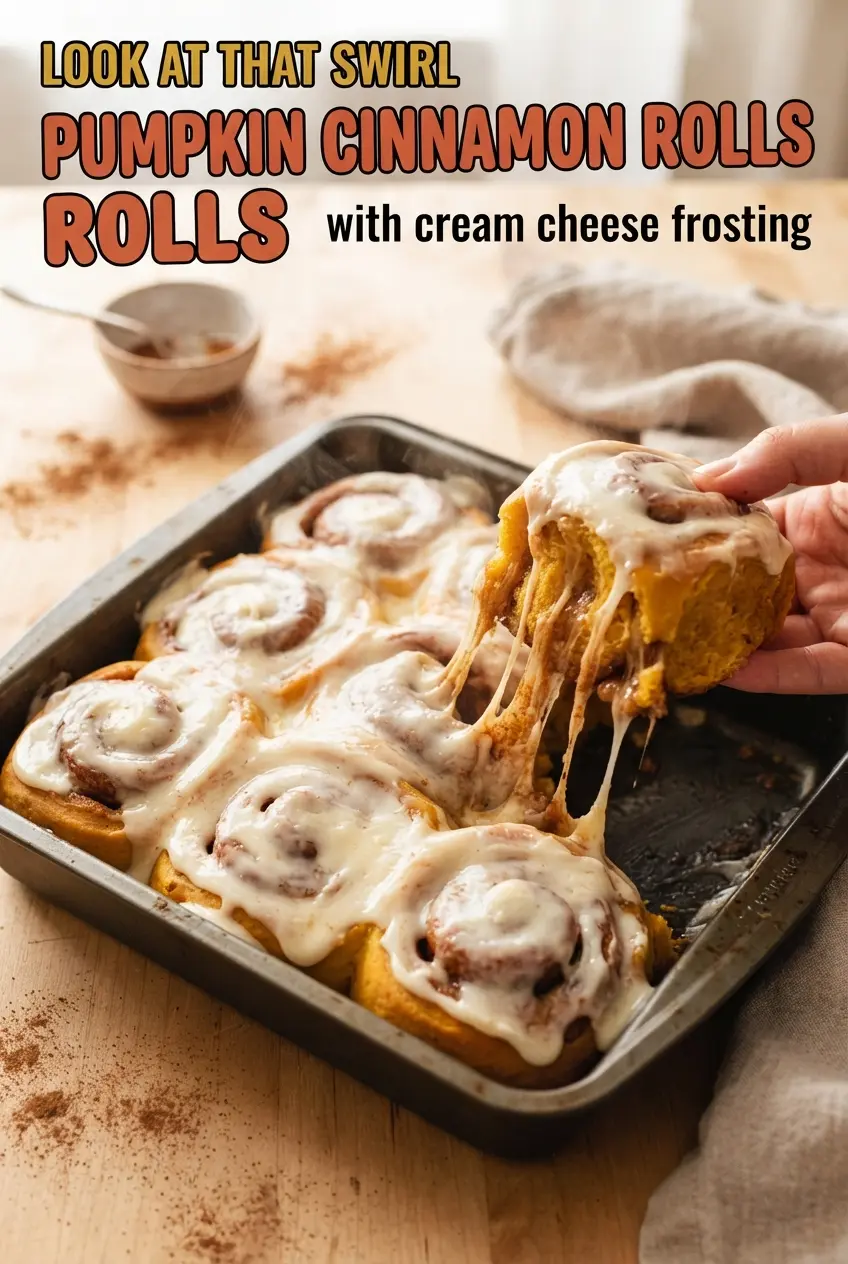
Soft Pumpkin Cinnamon Rolls with Cream Cheese Frosting
Ingredients
Equipment
Method
- In a large bowl, stir warm whole milk, instant yeast, and granulated sugar together. Let sit 5–10 minutes until foamy, looking for a creamy top layer.
- Whisk in pumpkin purée, melted unsalted butter, large egg, and pure vanilla extract until smooth. Stop when no streaks remain and the mixture looks uniform.
- Add pumpkin pie spice, salt, and 3½ cups all-purpose flour, then stir until a shaggy dough forms. It should look rough and thick rather than smooth.
- Knead on a floured surface for 5–7 minutes, adding all-purpose flour 1 tablespoon at a time as needed. The dough should be soft, smooth, and slightly tacky, not dry.
- Place the dough in a greased bowl, cover, and let rise in a warm spot for about 1 hour. It’s ready when doubled in size with a puffy, airy look.
- Grease a 9x13-inch baking pan. Make sure the corners are coated so the rolls release easily.
- Mix light brown sugar, ground cinnamon, and pumpkin pie spice in a small bowl. Stir until the mixture is evenly speckled.
- Roll the dough into a 16x12-inch rectangle. Stretch gently until the rectangle holds together with even thickness.
- Spread softened unsalted butter evenly over the dough, then sprinkle the cinnamon sugar mixture over top, leaving a ½-inch border on one long edge. Keep the border clean so it seals.
- Starting from the opposite long side, roll the dough up tightly into a log and pinch the seam to seal. The log should look firm and cohesive.
- Cut into 12 even rolls and arrange them in the prepared pan. Space them so they touch as they expand.
- Cover and let rise for 30–45 minutes until puffy and touching. They should look swollen and close enough to form one soft layer.
- Preheat the oven to 350°F (175°C) and bake for 22–25 minutes until golden brown on top. Watch for an amber-gold crust.
- While the rolls bake, beat cream cheese and softened unsalted butter until creamy. The mixture should turn smooth and lump-free.
- Add powdered sugar, pure vanilla extract, and milk, then beat until fluffy. It should spread thickly with a glossy texture.
- Let the rolls cool for 5 minutes, then spread frosting generously over the warm rolls. The frosting should melt slightly into swirled layers.
- Serve the rolls while the centers are still tender. The best cue is a soft pull when you lift one apart.