
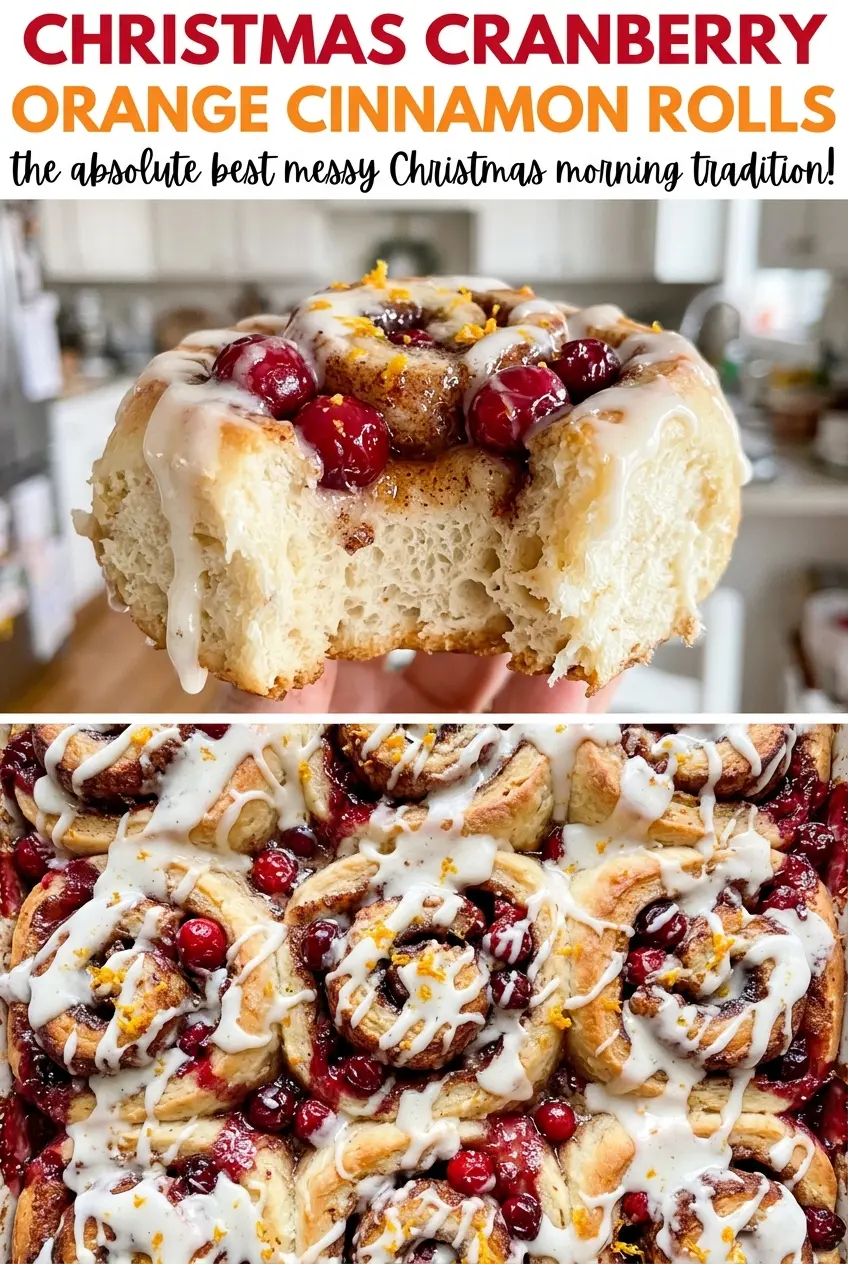
When the cinnamon-brown sugar starts to peek through the spirals and the cranberries dot the dough, these rolls look festive before they even reach the oven. I like how the orange zest cuts through the sweetness, while the dried cranberries bring a little chew to every bite. The dough is soft and buttery, but it still rolls neatly into a log for twelve generous pieces.
Fresh orange zest goes right into the filling with the brown sugar and cinnamon, so its aroma travels through the whole pan as the rolls bake. I chop the cranberries before scattering them over the dough; smaller pieces are easier to distribute and less likely to tug at the dough as you roll it up. Once the cream cheese glaze meets the warm rolls, it softens into the cinnamon swirls without disappearing completely. The finished rolls are tender in the middle, golden on top, and bright with orange.
Kitchen Note
Give the yeast its full 5–10 minutes in the warm milk and sugar. When the surface turns foamy, you know it has started working; if it stays flat, pause before adding the rest of the dough ingredients.
Save these cranberry orange cinnamon rolls for a soft, citrusy holiday bake with a cream cheese glaze that melts into the warm swirls.
Why These Rolls Need a Light Hand With the Flour
The dough needs enough structure to hold the cranberry filling, but adding extra flour as you knead can make the baked rolls firm instead of tender. That’s why I set aside a tablespoon for the counter before mixing the rest into the dough. It gives you just enough to roll the dough without treating the counter like a flour bin.
After kneading, look for dough that feels smooth and elastic, not stiff or crumbly. It may still feel a little soft; that’s a better starting point than a dry dough that’s already fighting the rolling pin. Roll it into the specified rectangle with a light dusting of the reserved flour, and stop adding flour once the dough no longer clings to the counter. Keeping that balance helps the rolls stay soft while still holding their shape around the filling.
What the Orange, Cranberries, and Enriched Dough Each Bring

- Whole milk, egg, and butter — Together, these give the dough its soft, rich texture. Whole milk and unsalted butter are useful here for consistency; there isn’t a simple swap among the listed ingredients that keeps the dough the same, so I stick with them.
- Active dry yeast — This yeast is bloomed in warm milk before the flour goes in, which lets you see that it’s active before you commit to the dough. Use a fresh, properly stored packet or jar; old yeast is a common reason a dough rises slowly.
- Orange zest — Finely grated zest brings concentrated citrus aroma without adding liquid to the filling. A fresh orange matters more here than an expensive brand of cinnamon; grate only the colored peel and leave the bitter white pith behind.
- Dried cranberries — Their concentrated tartness and chewy texture balance the brown sugar filling. Chopping them gives you smaller, more evenly scattered pieces; standard grocery-store dried cranberries work well.
- Cream cheese — Softened cream cheese gives the glaze its tang and body, so it’s not interchangeable with powdered sugar alone. A basic block of cream cheese is fine; letting it soften first is what helps it beat smoothly.
How to Build the Rolls Without Tearing the Dough
Wake the Yeast and Knead a Smooth Dough
Warm the milk to 105–110°F, then stir in the yeast and one tablespoon of the sugar. Let it stand for 5–10 minutes until foamy before mixing in the remaining sugar, egg, and melted, cooled butter. Stir the remaining flour with the salt and add it to the milk mixture, keeping one tablespoon of flour aside for rolling. Knead by hand for 8–10 minutes or with a dough hook for 6–8 minutes, until the dough feels smooth and elastic rather than shaggy.
Let the Dough Rise Until Doubled
Coat a large bowl with the neutral oil, add the dough, and turn it so the surface is lightly coated. Cover the bowl and leave the dough at room temperature for 1–1½ hours, watching for it to double in size. A clock gives you a useful range, but the dough’s volume is the cue to look for. If it still looks compact, it hasn’t finished this rise.
Spread the Filling and Roll the Log
Dust the counter lightly with the reserved flour and roll the dough into a 12×16-inch rectangle. Spread the softened butter over the surface, then mix the brown sugar, cinnamon, and orange zest and scatter that mixture evenly over the butter. Add the chopped cranberries across the top so each slice gets some fruit. Roll from a long edge, pinch the seam closed, cut the log into 12 equal rolls, and set them cut side up in the buttered 9×13-inch baking dish.
Proof, Bake, and Glaze While Warm
Cover the shaped rolls and let them rise at room temperature for 30–45 minutes, until they look puffy. During the last 15 minutes, heat the oven to 350°F so it’s ready when the rolls are proofed. Bake on the middle rack for 25–30 minutes, until the tops are golden and the centers are set, then let the rolls rest in the dish for 10 minutes. Beat the softened cream cheese smooth, beat in the powdered sugar, orange juice, and vanilla, then spread the creamy glaze over the warm rolls.
Three Ways to Change the Cranberry-Orange Rolls
Make them cranberry-free
Leave the dried cranberries out and keep the rest of the filling the same. The rolls will have a sweeter, more straightforward cinnamon-orange center, without the chewy tart bites.
Move the orange zest into the glaze
For a brighter orange finish, leave the zest out of the brown sugar mixture and beat it into the cream cheese glaze with the orange juice. The cinnamon filling tastes warmer and less citrusy, while the glaze carries a fresh orange aroma.
Skip the cream cheese glaze
Leave off the glaze for rolls that are less rich and easier to hold. The cinnamon-brown sugar filling still gives each spiral sweetness, and the orange zest keeps the flavor lively.
Storage and Reheating
- Refrigerator: Store the glazed rolls in an airtight container for up to 4 days. The chilled glaze firms up, and the dough becomes less tender over time.
- Freezer: Freeze the rolls without glaze, once completely cool, wrapped tightly for up to 2 months. Thaw them in the refrigerator, then glaze after warming.
- Reheating: Warm thawed rolls covered with foil in a 300°F oven for about 10 minutes. Leaving them uncovered can dry the edges before the centers warm through.
Questions That Come Up While Making These Rolls
Christmas Cranberry Orange Cinnamon Rolls
Ingredients
Equipment
Method
- Grease a 9x13-inch baking dish with the softened butter.
- Stir the yeast and 1 tablespoon of the sugar into the warm milk and let stand for 5–10 minutes, until foamy.
- Stir in the remaining sugar, egg, and melted butter.
- Reserve 1 tablespoon of the flour for rolling.
- Mix the remaining flour with the salt and stir it into the milk mixture.
- Knead by hand for 8–10 minutes or with a dough hook for 6–8 minutes, until smooth and elastic.
- Coat a large bowl with the neutral oil, add the dough and turn it to coat, then cover and let rise at room temperature for 1–1 1/2 hours, until doubled.
- Lightly dust the counter with the reserved flour and roll the dough into a 12x16-inch rectangle.
- Spread the softened butter over the dough.
- Mix the brown sugar, cinnamon, and orange zest, then sprinkle the mixture evenly over the dough.
- Scatter the cranberries on top.
- Roll the dough up from a long edge into a log and pinch the seam closed.
- Cut into 12 equal rolls and arrange them cut side up in the prepared dish.
- Cover and let rise at room temperature for 30–45 minutes, until puffy.
- During the last 15 minutes, heat the oven to 350°F.
- Bake on the middle rack for 25–30 minutes, until the tops are golden and the centers are set.
- Let the rolls rest in the dish for 10 minutes.
- Beat the cream cheese until smooth.
- Beat in the powdered sugar, orange juice, and vanilla until creamy.
- Spread the glaze over the warm rolls.