
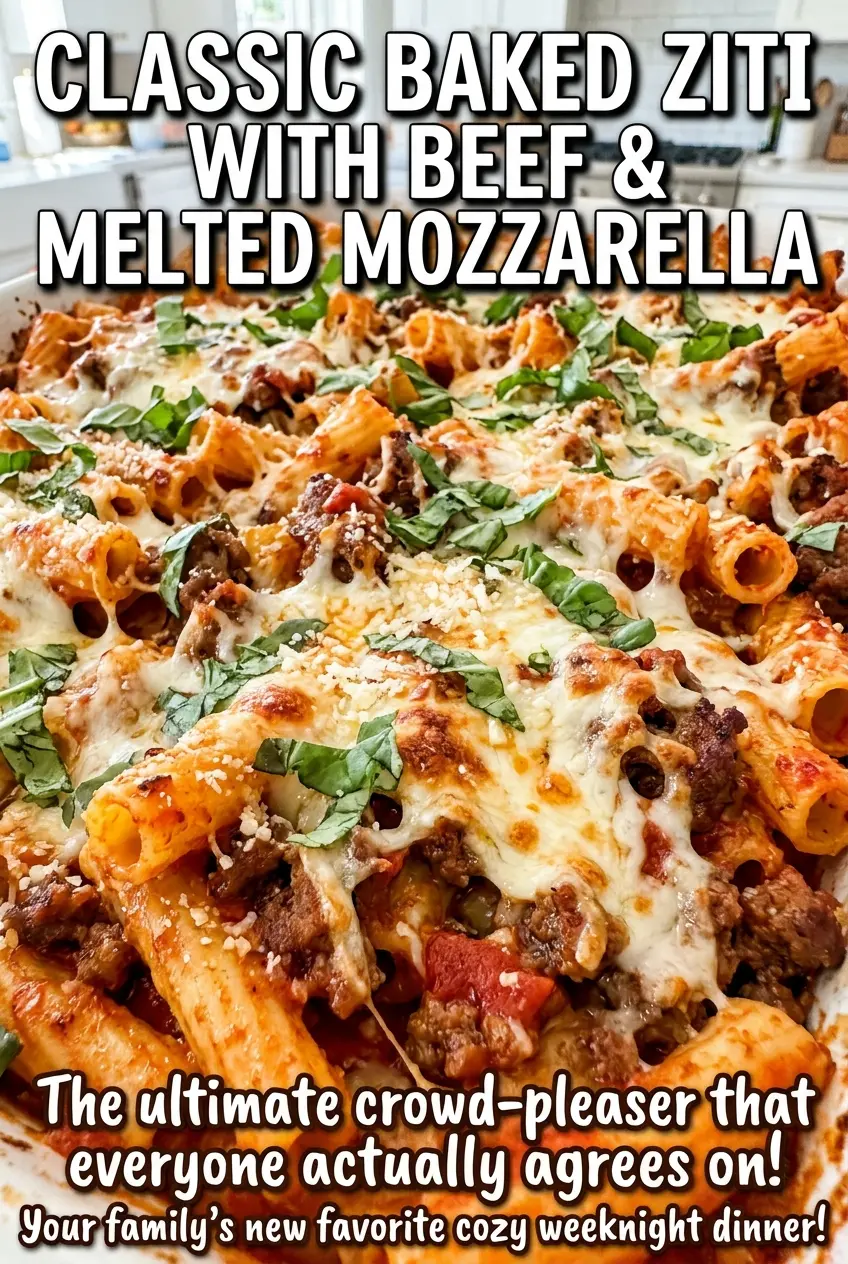
When the foil comes off, the edges of this baked ziti are already bubbling, while the mozzarella on top is just beginning to turn golden. That’s the moment I look for: the pasta has had time to take on the beef sauce, and the ricotta is tucked into creamy pockets through the middle. This classic baked ziti with beef comes together in stages, but none of them need much fuss.
I cook the ziti briefly before it goes into the oven, then let it finish in the sauce as the casserole bakes. The beef sauce gets a low simmer before it meets the pasta, which gives the tomato and seasoning time to settle into a fuller, rounder taste. After a short rest, each scoop holds together with tender pasta, rich sauce, and melted mozzarella.
Kitchen Note
The sauce shouldn’t cook down until it’s thick like a finished meat sauce. That half cup of water keeps it loose enough to coat the pasta, and the oven will continue reducing it as the ziti bakes.
Save this classic baked ziti with beef for a cozy dinner: saucy pasta, creamy ricotta in the middle, and a browned mozzarella top.
Why the Sauce Goes in Twice, Not Just Over the Top
Pouring all the beef sauce over the finished casserole might look convenient, but it leaves the pasta in the middle relying on whatever sauce trickles down. Here, some sauce is tossed directly with the drained ziti before the layers go into the dish. That way, the pasta starts baking with sauce on it instead of waiting for the topping to seep through.
The remaining sauce goes over the top layer, where it can bubble into the casserole and meet the mozzarella. Ricotta has its own place in the center: spread across the first layer of pasta, it stays in creamy pockets instead of disappearing into the sauce. The layers give you a little of everything in a serving, without needing to stir the cheeses into the whole bowl.
It’s also why the sauce should still be loose when you assemble the dish. Ziti continues to soften in the oven, and the sauce thickens as the casserole bakes. If the sauce is already very reduced in the skillet, the exposed edges of pasta are more likely to turn dry before the cheese has melted and browned.
What the Beef, Ricotta, and Mozzarella Each Bring to the Layers

- Ground beef — The 85% lean beef gives the sauce a meaty base without leaving it overly greasy. Break it into small pieces as it cooks so it distributes evenly through the tomato sauce.
- Crushed tomatoes and tomato paste — Crushed tomatoes make a sauce that clings to pasta while still flowing into the layers. Tomato paste gets a brief cook with the garlic and seasoning; that short step deepens its flavor before the tomatoes go in.
- Whole-milk ricotta — Its thicker, creamy texture makes distinct pockets in the center. A lower-fat ricotta can be less rich and may leave the middle drier, so whole-milk is the better choice here.
- Mozzarella and Parmesan — Mozzarella gives the top its stretchy melt, while Parmesan adds a saltier, more savory edge. Keep the cheese divided between the ricotta mixture and topping so each layer has its own texture.
- Ziti — The straight tubes hold sauce inside and between them. If ziti isn’t available, penne is a close substitute; follow its package’s shortest suggested cook time and stop two minutes early, just as you would with the ziti.
How to Keep the Ziti Tender Without Turning It Mushy
Brown the Beef and Soften the Onion
Heat the oven to 375°F and bring a large pot of water to a boil while you start the sauce. Warm the olive oil in a 12-inch skillet over medium heat, then add the beef and finely chopped onion. Break up the beef as it cooks, and cook for 8 to 10 minutes, until the beef reaches 160°F and the onion is softened. Keep the pieces small and even so the meat cooks through without leaving large chunks in the finished dish.
Cook the Seasoning Before Adding Tomatoes
Stir the garlic, tomato paste, Italian seasoning, one teaspoon of kosher salt, and black pepper into the skillet. Cook for one minute, stirring, until the garlic smells fragrant and the paste darkens slightly. Add the crushed tomatoes and water, bring the sauce to a simmer, then cook over low heat for 15 to 20 minutes. Stir occasionally; if the bottom starts catching, lower the heat so the sauce simmers gently rather than scorching.
Stop the Pasta Short of Tender
Add the remaining kosher salt to the boiling water, then add the ziti. Cook it for two minutes less than the package’s shortest suggested cooking time; it should still have a firm bite because it will finish in the oven. Drain it well, but don’t leave it sitting in the colander while you finish other tasks. A quick drain is all it needs before it meets the sauce.
Layer, Cover, and Finish the Cheese
Stir the ricotta with one cup of mozzarella and one-quarter cup of Parmesan in a large bowl. Toss the drained pasta with about three cups of beef sauce, spread half in a 9×13-inch baking dish, and dot with all the ricotta mixture. Add the remaining ziti, spread the rest of the sauce over it, and finish with the remaining mozzarella and Parmesan. Cover with foil and bake for 20 minutes, then uncover and bake for 15 to 20 minutes, until bubbling at the edges with melted, lightly browned cheese; let it rest for 10 minutes before serving.
Small Changes That Give This Baked Ziti a Different Balance
Put More Mozzarella in the Middle
Shift some of the mozzarella meant for the topping into the ricotta mixture, keeping the total amount the same. The top will have a thinner blanket of cheese, while the middle gets stretchier and more cheese-forward.
Make the Parmesan More Prominent on Top
Use less Parmesan in the ricotta mixture and reserve more of it for the surface, without changing the total amount. You’ll get a sharper, saltier finish at the top and a milder ricotta layer underneath.
Lean Into the Italian Seasoning
For a more herb-forward tomato sauce, increase the Italian seasoning slightly when you add the garlic and tomato paste. The sauce will taste more savory and aromatic, with the herbs coming through more clearly against the beef and cheese.
Storage and Reheating
- Refrigerator: Keep leftovers covered for 3 to 4 days. The pasta will soften a little as it sits, but the sauce keeps it from drying out.
- Freezer: Freeze cooled portions in airtight, freezer-safe containers for up to 2 to 3 months. Thaw overnight in the refrigerator for more even reheating.
- Reheating: Cover with foil and reheat in a 375°F oven until the center reaches 165°F; uncover near the end if you want the cheese on top to brown again. Don’t reheat uncovered from the start, or the pasta around the edges can dry before the middle is hot.
Questions That Come Up When Baked Ziti Goes Into the Oven
Classic Baked Ziti with Beef and Melted Mozzarella
Ingredients
Equipment
Method
- Heat the oven to 375°F.
- Bring a large pot of water to a boil.
- Heat the olive oil in a 12-inch skillet over medium heat, then add the ground beef and onion; cook, breaking up the beef, until the beef reaches 160°F and the onion is softened, 8 to 10 minutes.
- Stir in the garlic, tomato paste, Italian seasoning, 1 teaspoon of the salt, and the black pepper; cook for 1 minute.
- Stir in the crushed tomatoes and water.
- Bring the sauce to a simmer.
- Cook over low heat for 15 to 20 minutes, stirring occasionally.
- Add the remaining 1 tablespoon salt to the boiling water, add the ziti, and cook for 2 minutes less than the package’s shortest suggested cooking time.
- Drain the ziti.
- In a large bowl, stir together the ricotta, 1 cup of the mozzarella, and 1/4 cup of the Parmesan.
- Toss the drained ziti with about 3 cups of the beef sauce.
- Spread half the ziti in a 9x13-inch baking dish.
- Dot it with all the ricotta mixture.
- Spread the remaining ziti on top.
- Spread the remaining beef sauce over the ziti.
- Top with the remaining 2 cups mozzarella and 1/4 cup Parmesan.
- Cover the dish with foil and bake for 20 minutes.
- Uncover and bake for 15 to 20 minutes, until bubbling around the edges and the cheese is melted and lightly browned.
- Let the baked ziti rest for 10 minutes before serving.