
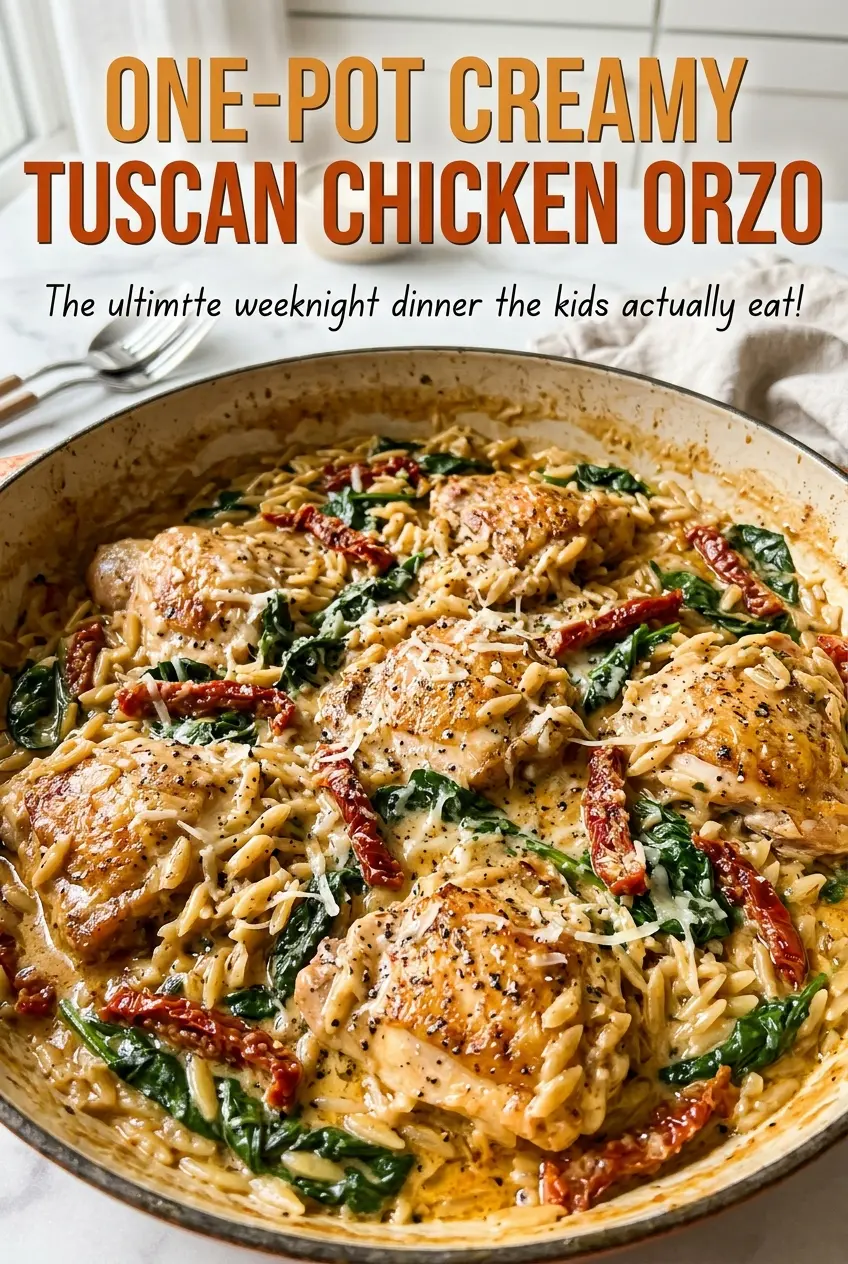
The chicken gets a proper golden sear in the skillet, then the orzo cooks right in the flavorful broth left behind. That’s the part I love about this One-Pot Creamy Tuscan Chicken Orzo: you don’t need a separate pot or a flour-thickened sauce to get a creamy finish. The pasta releases starch as it simmers, and a little cream brings it all together.
I keep the chicken in bite-size pieces so it browns quickly and cooks through without taking over the pan. The sun-dried tomatoes add a tangy, savory note, while spinach and lemon keep the creamy sauce from feeling heavy. Stir the orzo often as it simmers; you want it tender with just a little bite, not soft and swollen. Each spoonful has juicy chicken, silky orzo, and just enough Parmesan to make the sauce cling.
Kitchen Note
Take the skillet off the heat before stirring in the Parmesan. The residual warmth melts it into the sauce without cooking it too hard, and the two-minute rest lets everything settle into a creamy, spoonable finish.
Save this One-Pot Creamy Tuscan Chicken Orzo for a cozy one-skillet dinner with tender chicken, tangy sun-dried tomatoes, and a creamy Parmesan finish.
Why This Orzo Turns Its Broth Into the Sauce
There’s no separate pot of pasta water to drain away here. The orzo simmers directly in chicken broth, and as it cooks it releases starch into the liquid. That gives the finished dish body before the cream or Parmesan goes in. It’s a different kind of creaminess from a heavy roux-based sauce: the pasta stays part of the sauce rather than sitting underneath it.
The order matters. Let the orzo absorb most of the broth and reach al dente before adding the cream. Add the dairy too early and you’ll be asking it to simmer for the entire pasta-cooking time, which can make the sauce heavier than it needs to be. The broth should be mostly absorbed, but the pan shouldn’t look dry; that little bit of liquid helps the cream and cheese coat each piece. Stirring often also keeps the small pasta from settling into a sticky layer on the bottom of the skillet.
Why Oil-Packed Tomatoes and Orzo Matter More Than You’d Expect

- Chicken thighs — Boneless, skinless thighs stay juicy in this quick skillet cook and have enough richness to balance the tomatoes and cream. Cut the pieces evenly so they brown and cook at a similar pace. Chicken breast can stand in piece-for-piece by weight, but it’s leaner and less forgiving if left in the pan too long.
- Oil-packed sun-dried tomatoes — They’re already tender, so a short sizzle with the garlic is enough to bring out their savory, tart flavor. Drain them well to avoid adding excess oil to the sauce. A jar from the regular grocery aisle works; there’s no need to seek out a specialty brand.
- Orzo — Its small shape cooks quickly and releases the starch that helps the broth become creamy. Another pasta shape won’t absorb liquid on the same schedule, so it isn’t a direct swap. Check that the orzo is al dente before moving on to the cream.
- Chicken broth — Low-sodium broth lets the Parmesan and seasoned chicken contribute salt without making the finished skillet too salty. A basic carton is fine. Regular-sodium broth will work, but the dish may taste saltier, especially if you use a salty Parmesan.
- Heavy cream — It gives the sauce a smooth, rich finish. Half-and-half can replace it in the same amount for a lighter sauce, though the result won’t be quite as velvety; milk is thin enough to make the sauce noticeably looser.
- Baby spinach — The leaves wilt quickly into the hot orzo, so they add color without needing a separate cooking step. Baby spinach is tender and convenient, and it doesn’t need to be chopped.
- Parmesan and lemon — Finely grated Parmesan melts more smoothly than coarse shreds, while lemon juice brightens the creamy finish. Freshly grated cheese gives the smoothest texture, but packaged grated Parmesan is a practical option if that’s what you have.
The Order That Keeps Chicken Juicy and Orzo Creamy
Brown the Chicken in a Single Layer
Season the chicken pieces with kosher salt and black pepper while you heat the olive oil in a 12-inch deep skillet over medium-high heat. Arrange the chicken in one layer; if the pieces are crowded, they’ll steam instead of browning. Cook for 5–7 minutes, turning occasionally, until browned and the thickest pieces reach 165°F. Transfer the chicken to a plate so it doesn’t keep cooking while you build the rest of the dish.
Soften the Onion, Garlic, and Tomatoes
Add the diced onion to the same skillet and cook for 3–4 minutes, stirring, until softened. The onion should look glossy and yield easily when pressed against the pan, not take on dark, crisp edges. Stir in the minced garlic and drained sun-dried tomatoes for 30 seconds. Keep them moving so the garlic becomes fragrant without scorching.
Simmer the Orzo Until Just Tender
Stir in the orzo and Italian seasoning, then pour in the chicken broth and bring everything to a boil. Reduce the heat to maintain a steady simmer and cook uncovered for 9–11 minutes, stirring often. Look for orzo that’s tender with a slight bite and a pan where most—but not all—of the broth has disappeared. If the liquid boils hard, lower the heat; a gentler simmer gives the pasta time to cook without sticking.
Wilt the Spinach and Finish Off the Heat
Stir in the heavy cream, spinach, browned chicken, and any juices on the plate. Simmer for 2–3 minutes, stirring, until the spinach wilts and the chicken is hot throughout. Remove the skillet from the heat before stirring in the Parmesan and lemon juice. Let it stand for 2 minutes, then serve while the sauce is creamy and the orzo is still distinct.
How to Change the Creaminess or Heat Without Losing the One-Pot Method
Make It Dairy-Free with Oat Cream
Use 1/2 cup unsweetened oat-based cooking cream in place of the heavy cream, omit the Parmesan, and stir in 2 tablespoons nutritional yeast with the lemon juice. The nutritional yeast brings savory depth, though the sauce won’t have the same salty, nutty finish as Parmesan.
Add a Gentle Chili Kick
Stir 1/4 teaspoon red pepper flakes into the skillet with the garlic and sun-dried tomatoes. The brief cook blooms their heat in the oil, giving the creamy sauce a warm finish without burying the tangy tomatoes.
Storage and Reheating
- Refrigerator: Store leftovers in an airtight container for 3–4 days. The orzo will absorb more sauce as it sits, so it’ll be thicker the next day.
- Freezer: Freeze in an airtight, freezer-safe container for up to 2 months. The sauce and orzo may soften after thawing, but the dish is still suitable for reheating.
- Reheating: Warm gently in a covered skillet over low heat with a splash of chicken broth, stirring occasionally until hot. High heat can make the sauce separate and the chicken tough.
Questions That Come Up While the Orzo Simmering
One-Pot Creamy Tuscan Chicken Orzo
Ingredients
Equipment
Method
- Season the chicken with the salt and pepper.
- Heat the olive oil in a 12-inch deep skillet over medium-high heat.
- Add the chicken in a single layer and cook for 5–7 minutes, turning occasionally, until browned and the thickest pieces reach 165°F.
- Transfer the chicken to a plate.
- Add the onion to the skillet and cook for 3–4 minutes, stirring, until softened.
- Add the garlic and sun-dried tomatoes and cook for 30 seconds.
- Stir in the orzo and Italian seasoning.
- Add the chicken broth and bring to a boil.
- Reduce the heat to maintain a steady simmer and cook uncovered for 9–11 minutes, stirring often, until the orzo is al dente and most of the broth is absorbed.
- Stir in the heavy cream, spinach, chicken, and any juices on the plate.
- Simmer for 2–3 minutes, stirring, until the spinach wilts and the chicken is hot throughout.
- Remove the skillet from the heat and stir in the Parmesan and lemon juice.
- Let stand for 2 minutes before serving.