
That first slice of pumpkin roll is always the one that makes people pause. The cake stays soft and springy, the cream cheese filling settles into a clean ribbon, and the swirl looks neat instead of messy or cracked. It tastes like the kind of dessert that belongs on a holiday table, but it comes together with a handful of pantry ingredients and a method that actually protects the cake instead of fighting it.
The trick is in the structure. A thin sponge cake bakes fast, which keeps it flexible enough to roll while it’s still warm. The towel dusted with powdered sugar does two jobs at once: it keeps the cake from sticking and helps it hold the rolled shape as it cools. That first warm roll is what sets you up for a clean finish later, not a broken cake on the counter and a rescue job with extra frosting.
Below, I’ll walk through the part that keeps the cake from cracking, the filling texture you’re after, and the storage trick that makes this one such a good make-ahead dessert.
The cake rolled up without cracking, and the filling set up so nicely after chilling. I dusted the top right before serving and it looked like something from a bakery.
Save this pumpkin roll cake for the kind of dessert that slices clean, spirals beautifully, and can be made ahead without losing its soft crumb.
The Roll That Keeps Pumpkin Cake From Cracking
A pumpkin roll fails in one of two places: the bake is too dry, or the cake cools flat before it has any memory of being rolled. This version avoids both problems by using a thin sponge that bakes just until springy and then gets rolled while still warm. That first roll does the heavy lifting. It trains the cake into a curve before the filling ever goes near it.
The other mistake is overbaking. Pumpkin sponge should feel set at the edges and bounce back when lightly touched in the center. If it stays in the oven until it looks deeply browned, it loses the flexibility that makes the whole dessert work. You’re after a cake that looks pale-golden, not a dry sheet that tears the second you touch it.
- Eggs — The beaten eggs give this cake its lift and structure. They trap air, which is why you beat them with the sugar until thick and pale instead of rushing straight to the flour.
- Pumpkin purée — Use plain pumpkin purée, not pumpkin pie filling. The purée adds moisture and that signature flavor without extra sugar or spices throwing off the texture.
- Powdered sugar on the towel — This is not garnish. It keeps the warm cake from sticking and helps create that smooth exterior you want when the roll is finished.
What Each Ingredient Is Doing in This Pumpkin Roll
The flour amount is small on purpose. That keeps the cake light and flexible instead of turning it into a dense pumpkin sheet cake. All-purpose flour works fine here; cake flour makes it a touch more delicate, but it’s not necessary.
The cream cheese filling needs to be soft enough to spread without tearing the cake, but not loose enough to slide out when you slice it. Full-fat cream cheese gives the cleanest set and the best tang. If you use a lower-fat version, expect a softer filling that won’t hold its shape as neatly.
Butter matters here too. It gives the filling body and helps it whip into something fluffy instead of heavy. Let both the cream cheese and butter soften fully before beating them together, or you’ll end up with little lumps that never smooth out.
How to Roll, Fill, and Chill Without Breaking the Cake
Baking the Thin Sponge
Spread the batter all the way into the corners of the pan so the cake bakes evenly. The surface should spring back when pressed lightly, and the center should be set without looking dry. If the edges darken too much before the center is ready, the cake is probably overbaked, which is where cracking starts.
The Warm Towel Roll
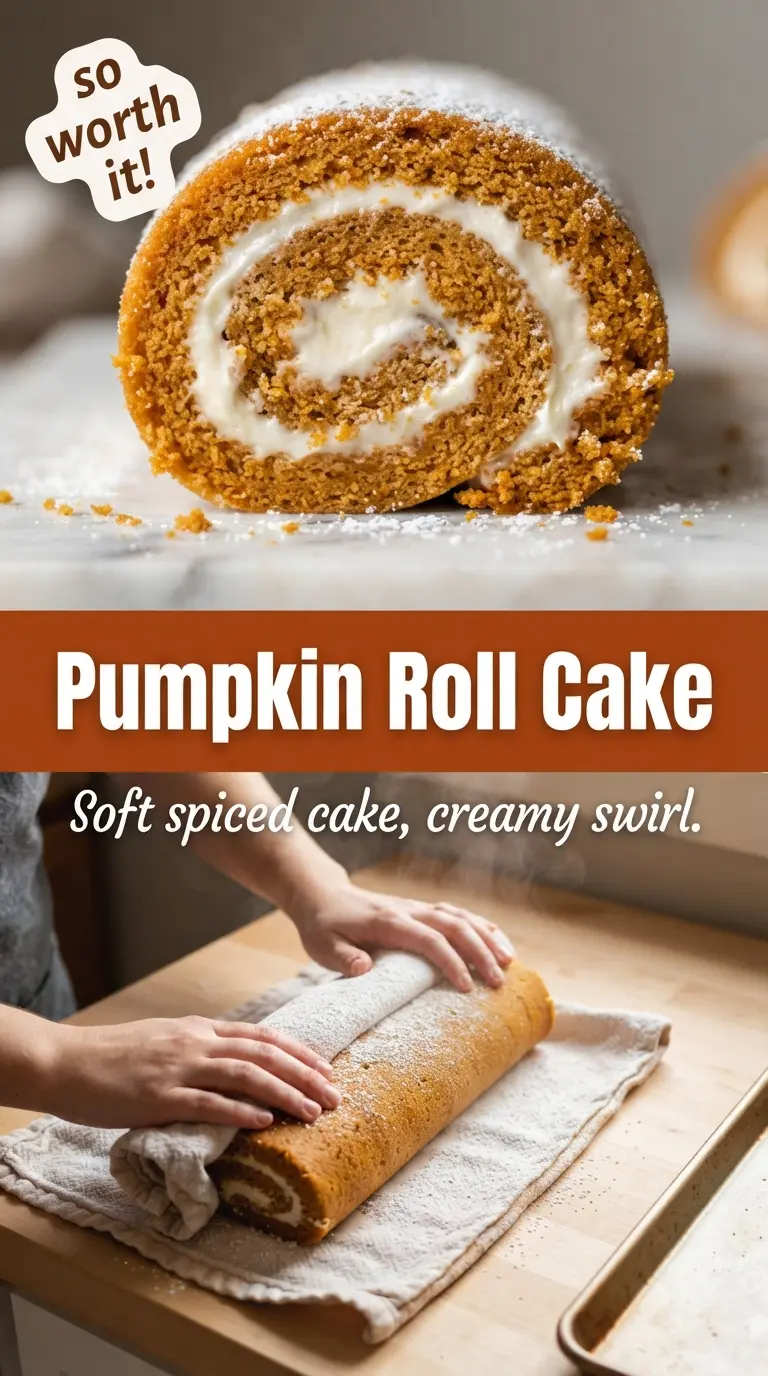
Flip the cake onto the sugared towel as soon as it comes out of the oven and peel off the parchment right away. Then roll it from a short end while it’s still warm. Don’t wait for it to cool flat on the pan; that’s when it loses its flexibility and starts to split later.
Whipping the Filling Smooth
Beat the cream cheese and butter until no lumps remain before adding the sugar. Once the powdered sugar goes in, the filling should look fluffy and spreadable, almost like a thick frosting. If it looks grainy, the dairy was still too cold, and those bits won’t disappear once the cake is rolled.
Filling, Rerolling, and Chilling
Unroll the cooled cake gently and spread the filling in an even layer, leaving a small border so it doesn’t squeeze out the sides. Roll it back up without the towel and wrap it tightly before chilling. That hour in the fridge firms the filling and makes the slices clean instead of slumping at the cut edge.
Three Ways to Adapt This Pumpkin Roll
Dairy-Free Filling With the Same Swirl
Use a dairy-free cream cheese and a plant-based butter that’s meant for baking. The texture will be slightly softer than the original, but it still spreads and chills into a sliceable filling. Let it chill a little longer before serving so the roll holds its shape.
Gluten-Free Pumpkin Roll
A good 1:1 gluten-free flour blend can work here, but only if it includes xanthan gum or another binder. The cake may be a little more delicate when you roll it, so don’t overbake it. Pull it the moment the top springs back, even if it still looks lightly pale.
Make-Ahead Freezer Version
This cake freezes well once it’s fully assembled and chilled. Wrap it tightly in plastic wrap, then in foil, and freeze it whole. Thaw it in the refrigerator overnight, then dust with powdered sugar just before slicing so the top stays fresh and clean.
Storage and Reheating
- Refrigerator: Store covered for up to 4 days. The filling firms up a bit in the fridge, which actually helps the slices stay neat.
- Freezer: Freeze the whole roll, tightly wrapped, for up to 2 months. Thaw it in the refrigerator overnight before slicing.
- Reheating: This dessert is served chilled or cool, not warmed. Reheating softens the filling too much and can make the cake lose its clean spiral.
Answers to the Questions Worth Asking
Classic Pumpkin Roll Cake with Cream Cheese Filling
Ingredients
Equipment
Method
- Preheat the oven to 375°F (190°C). Grease a 15x10-inch jelly roll pan, line with parchment, and grease the parchment for easy release.
- Lay a thin, clean kitchen towel flat and dust it evenly with 1/4 cup powdered sugar so the hot cake won’t stick when rolled.
- In a small bowl, whisk all-purpose flour, baking powder, baking soda, ground cinnamon, pumpkin pie spice, and salt until evenly combined.
- In a large bowl, beat eggs and granulated sugar on medium-high for 3 minutes until thick and pale for a lighter sponge.
- Beat in pumpkin purée and pure vanilla extract until smooth.
- Fold in the dry ingredients just until combined, keeping the batter airy.
- Spread the batter evenly in the prepared pan, all the way to the corners.
- Bake for 13–15 minutes at 375°F (190°C) until the top springs back when lightly touched.
- Immediately loosen the edges and flip the cake onto the sugared towel. Peel off the parchment while the cake is still warm.
- Starting from a short end, roll the warm cake up together with the towel, seam side down. Cool completely on a wire rack for about 1 hour.
- Beat cream cheese and unsalted butter until smooth. Beat in powdered sugar and pure vanilla extract until fluffy.
- Gently unroll the cooled cake and spread the filling evenly over it, leaving a 1/2-inch border.
- Roll the cake back up without the towel. Wrap tightly in plastic wrap and refrigerate for at least 1 hour to set the swirl.
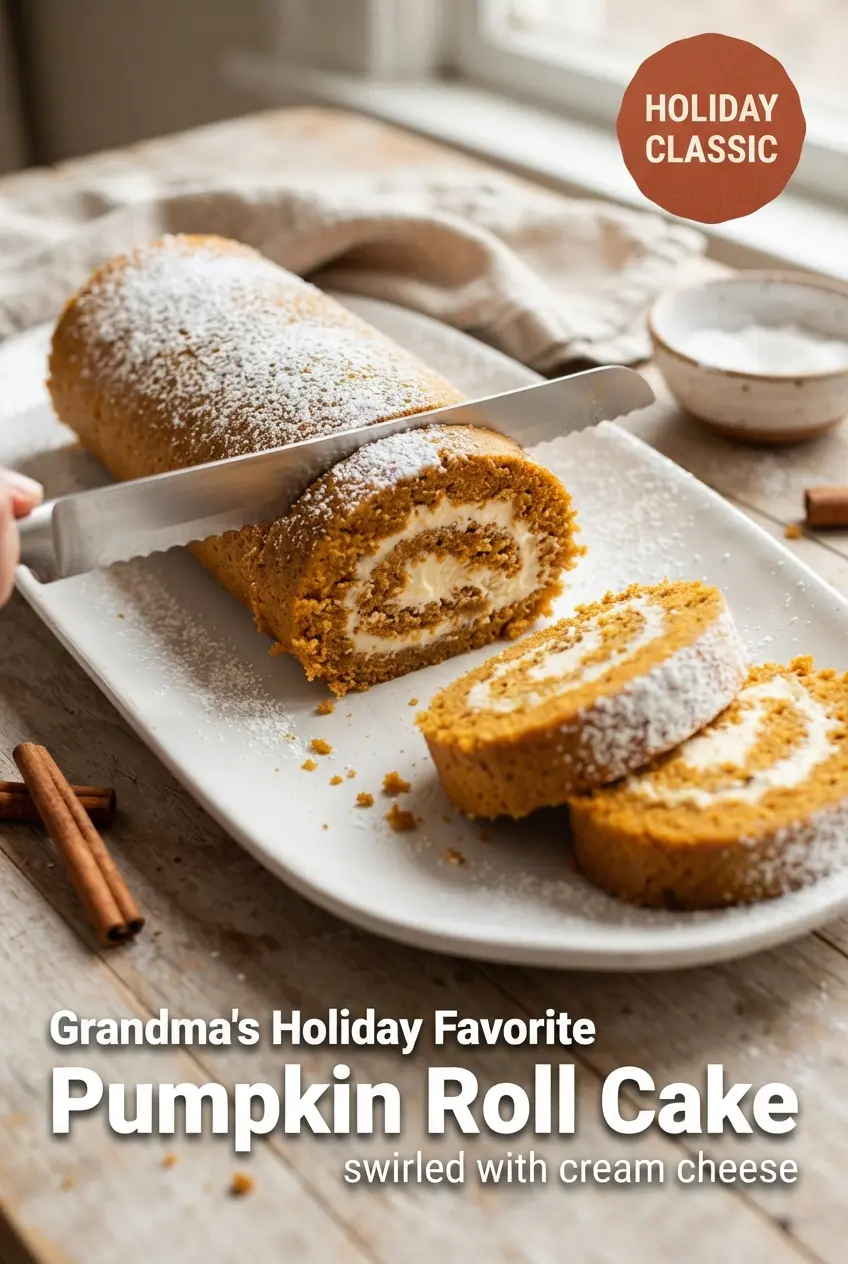
- Trim the ends, dust with 1 tbsp powdered sugar, and cut into 1-inch slices to serve.