
When the macaroni comes out of the pot, it should still have a little firmness in the middle. That can feel early, but it’s exactly what you want before the pasta goes into the oven with a blanket of cheese sauce. In this five cheese mac and cheese, the elbows finish cooking as the edges bubble, so they stay tender instead of turning soft and swollen.
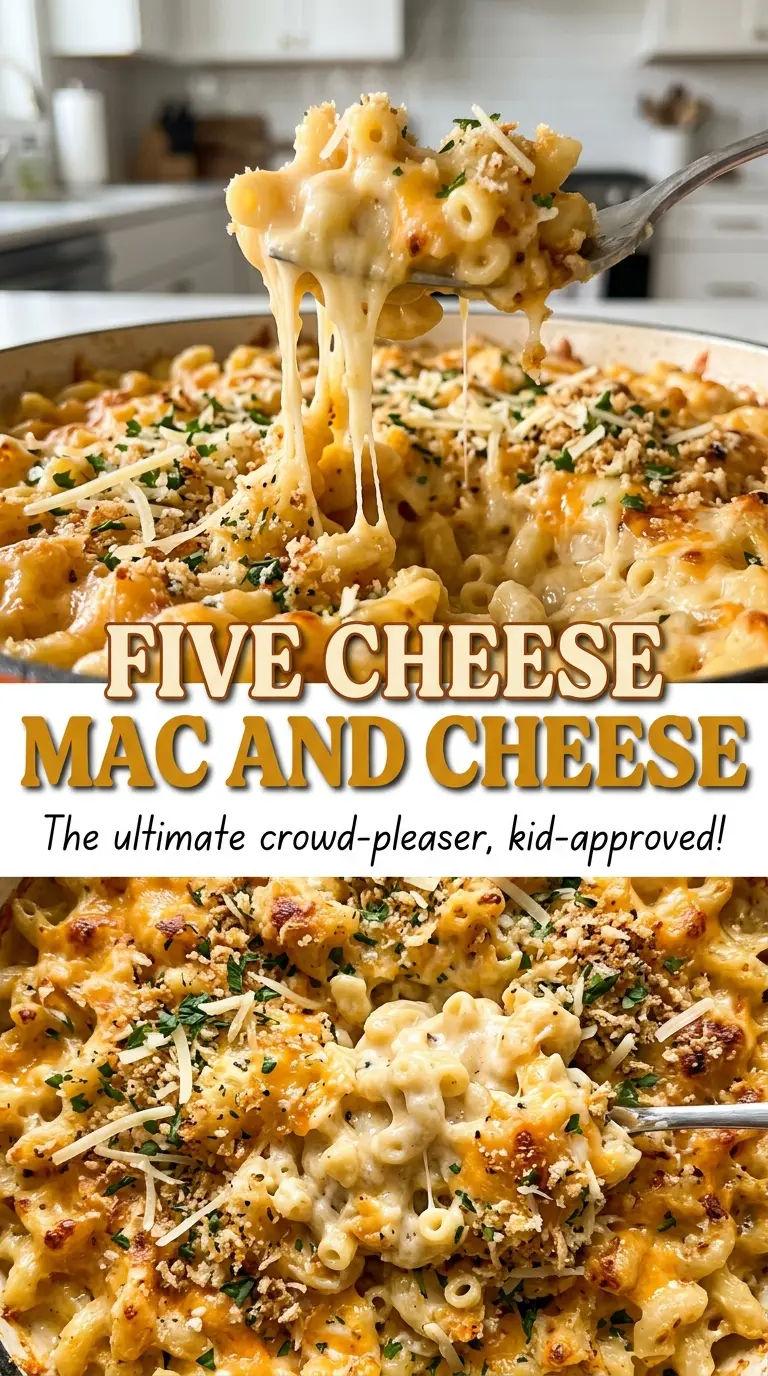
I build the sauce in the same pot, starting with a quick butter-and-flour roux, then stir in the cheeses after taking the pot off the heat. Freshly shredded cheddar, Monterey Jack, Gruyere, mozzarella, and Parmesan melt into a smooth, full-bodied sauce, while a little mustard and garlic give it depth without taking over. The golden top and creamy center make every scoop feel generous.

Kitchen Note
Give the baked macaroni its full 10-minute rest before serving. The sauce settles and thickens during that pause, so the first scoop holds together without losing its creamy center.
Save this five cheese mac and cheese for a bubbling casserole with a golden top and a creamy, cheese-packed center.
Why This Mac Needs Pasta That’s Not Quite Al Dente
Baked macaroni keeps cooking after it leaves the boiling water. The pasta also sits in a warm, thick sauce before the dish goes into the oven, then spends another 20 to 25 minutes baking. Starting with fully tender elbows leaves little room for those stages; the noodles can absorb too much sauce and lose their shape.
Cooking the elbows two minutes short of the package’s al dente time gives them a head start without taking them all the way to the finish line. They’ll soften in the oven while taking on the cheese sauce, and the casserole will come out tender rather than mushy. This small timing adjustment is especially helpful in a rich baked mac and cheese, where the pasta needs to stay distinct under all that sauce.
Look for a slight bite when you taste a piece after draining. It shouldn’t feel hard or chalky, but it shouldn’t be completely soft either. That in-between texture is the starting point for a casserole with creamy pasta and a set, lightly golden top.
What Each Cheese Brings to This Five-Cheese Sauce
- Sharp cheddar — It brings the familiar tangy, savory backbone. A standard block is fine; shredding it fresh helps it melt into the sauce more smoothly than pre-shredded cheese. Monterey Jack can stand in for some cheddar, but the sauce will taste milder.
- Monterey Jack — This mild cheese helps keep the blend creamy without competing with the sharper cheeses. Freshly shredding is useful here, too. If you need to replace it, cheddar works, though it will make the overall flavor more assertive.
- Gruyere — Its nutty, savory character adds something the milder cheeses can’t quite supply. If it’s not available, replacing it with Monterey Jack will still give you a smooth sauce, but you’ll lose that deeper, toasted-cheese note.
- Low-moisture mozzarella — This is the stretchy part of the blend. Use low-moisture mozzarella rather than fresh mozzarella, which carries more moisture and can make the sauce looser. A basic block is all you need.
- Parmesan — Finely grated Parmesan melts into the sauce and adds a salty, savory edge. A wedge grated at home is lovely, but a good-quality finely grated Parmesan works well. Keep the texture fine so it blends in instead of leaving coarse bits.
- Whole milk, butter, and flour — Together, these form the creamy base and give the sauce enough body to cling to the elbows. Whisk the flour into melted butter before adding milk; skipping that step can leave lumps. Whole milk gives the sauce its intended richness, so I wouldn’t swap in a thinner milk for this version.
- Dry mustard and seasonings — Dry mustard, garlic powder, paprika, black pepper, and kosher salt season the sauce without masking the cheese. The mustard doesn’t make the dish taste like mustard; it helps the cheddar’s savory flavor come through.
Building a Smooth Sauce Before the Casserole Goes in the Oven
Get the elbows and baking dish ready
Heat the oven to 350°F and lightly coat a 9×13-inch baking dish with nonstick cooking spray. Bring a 6-quart pot of water to a boil, add 1 tablespoon of the kosher salt and the elbow macaroni, and cook the pasta two minutes less than the package directions for al dente. Drain it well so extra water doesn’t thin the cheese sauce. Keep the remaining salt for the sauce.
Set aside the topping and make the roux
Before making the sauce, set aside 1/2 cup of cheddar, 1/4 cup of Monterey Jack, 1/4 cup of Gruyere, and 1/4 cup of Parmesan for the top. Melt the butter in the same pot over medium heat, then whisk in the flour until it’s smooth. Cook the mixture for 1 minute, whisking as it cooks. Don’t let the flour sit in a clump at the bottom; steady whisking helps the roux cook evenly.
Thicken the milk, then melt in the cheeses
Gradually whisk in the whole milk along with the remaining 1 teaspoon of kosher salt, dry mustard, garlic powder, paprika, and black pepper. Cook for 5 to 7 minutes, whisking often, until the sauce thickens enough to coat the back of a spoon. If it still looks thin, give it a little more time within that range and keep whisking so the bottom doesn’t scorch. Take the pot off the heat before stirring in the remaining cheddar, Monterey Jack, Gruyere, all the mozzarella, and the remaining Parmesan; the sauce should turn smooth as the cheese melts.
Coat, top, and bake until the edges bubble
Add the drained macaroni and stir until every elbow is coated, then transfer the mixture to the prepared baking dish. Scatter the reserved cheeses evenly across the top so there aren’t bare patches. Bake for 20 to 25 minutes, until the edges are bubbling and the surface is lightly golden. Let the casserole rest for 10 minutes before serving.
Two Cheese Adjustments That Keep the Casserole in Balance
Make it more cheddar-forward
Replace 1/2 cup of the Gruyere with 1/2 cup more sharp cheddar. The sauce will have a more familiar tang and less nutty depth, while keeping the same total amount of cheese.
Soften the sharpness
Replace 1/2 cup of the sharp cheddar with 1/2 cup more Monterey Jack. You’ll get a gentler cheese flavor and a creamy sauce, though it won’t have quite as much cheddar bite.
Storage and Reheating
- Refrigerator: Store leftovers covered for 3 to 4 days. The pasta will absorb some sauce as it sits, so the texture will be firmer the next day.
- Freezer: Freeze portions in airtight containers for up to 2 months. Thaw overnight in the refrigerator; the sauce may be a little less smooth after freezing.
- Reheating: Reheat covered in a 350°F oven until hot throughout. Keep it covered while it warms so the top doesn’t darken before the center is hot.
Questions I Get Asked About Baked Five Cheese Mac
Five Cheese Mac and Cheese
Ingredients
Equipment
Method
- Preheat the oven to 350°F and lightly coat a 9x13-inch baking dish with nonstick cooking spray.
- Bring a 6-quart pot of water to a boil.
- Add 1 tablespoon of the kosher salt and the macaroni, and cook 2 minutes less than the package directions for al dente; drain.
- Set aside 1/2 cup cheddar, 1/4 cup Monterey Jack, 1/4 cup Gruyere, and 1/4 cup Parmesan for the topping.
- In the same pot, melt the butter over medium heat.
- Whisk in the flour and cook for 1 minute.
- Gradually whisk in the milk, the remaining 1 teaspoon kosher salt, dry mustard, garlic powder, paprika, and black pepper.
- Cook, whisking often, for 5 to 7 minutes, until the sauce thickens enough to coat the back of a spoon.
- Remove the pot from the heat and stir in the remaining cheddar, Monterey Jack, Gruyere, all the mozzarella, and the remaining Parmesan until melted and smooth.
- Add the drained macaroni and stir until evenly coated in the cheese sauce.
- Transfer the macaroni mixture to the prepared dish and sprinkle the reserved cheeses evenly over the top.
- Bake for 20 to 25 minutes, until bubbling around the edges and lightly golden on top.
- Let rest for 10 minutes before serving.