
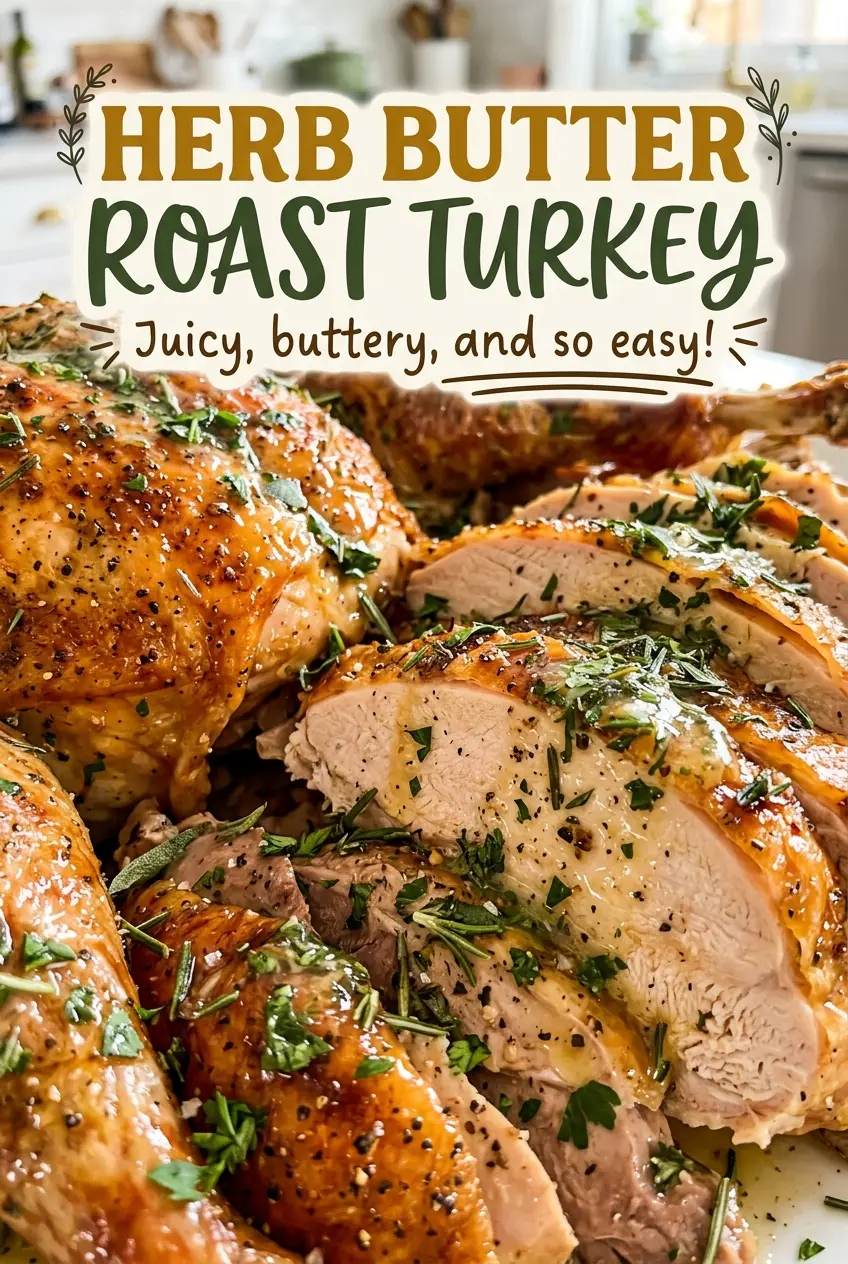
The skin starts pale and glossy, then slowly turns golden as the butter melts and the herbs perfume the kitchen. I used to spread all the butter over the outside, but that left the breast tasting less seasoned than I wanted. With this Herb Butter Roast Turkey, I work some of the mixture under the skin and rub the rest over it, so the meat gets the herbs close by and the skin gets its own buttery coating.
A fully thawed bird and a thermometer matter more than guessing by color or the clock. The roasting time gives you a useful window, but each turkey finishes on its own schedule. I keep the cavity simple with onion and lemon, and let the fresh parsley, sage, rosemary, thyme, and garlic do the talking. The result is tender turkey under fragrant, browned skin, with bright herbs in every slice.
Kitchen Note
Use softened butter that holds its shape but spreads easily. Melted butter runs off the turkey before it can cling under the skin or coat the outside evenly.
Save this Herb Butter Roast Turkey for a golden centerpiece with fresh herbs tucked under the skin.
Why the Herb Butter Belongs Under the Skin, Too
Butter on the outside gives the skin a rich coating, but it can’t season the meat through that layer. Loosening the breast skin lets some of the herb butter sit directly against the turkey, where its garlic and herbs are close to the meat instead of all resting on the surface. The outside still gets the remaining butter, so you get herbs and color there as well.
That division matters because the breast is broad and exposed, while the legs and thighs have a different shape and texture. Spreading the butter in both places gives the breast more than a surface rub without asking you to change the roasting method. Keep your fingers gentle as you loosen the skin; a small opening is enough to work the butter underneath. If the skin tears, don’t force the opening wider. Spread what you can reach and rub the rest over the bird.
What the Butter, Fresh Herbs, and Aromatics Each Bring
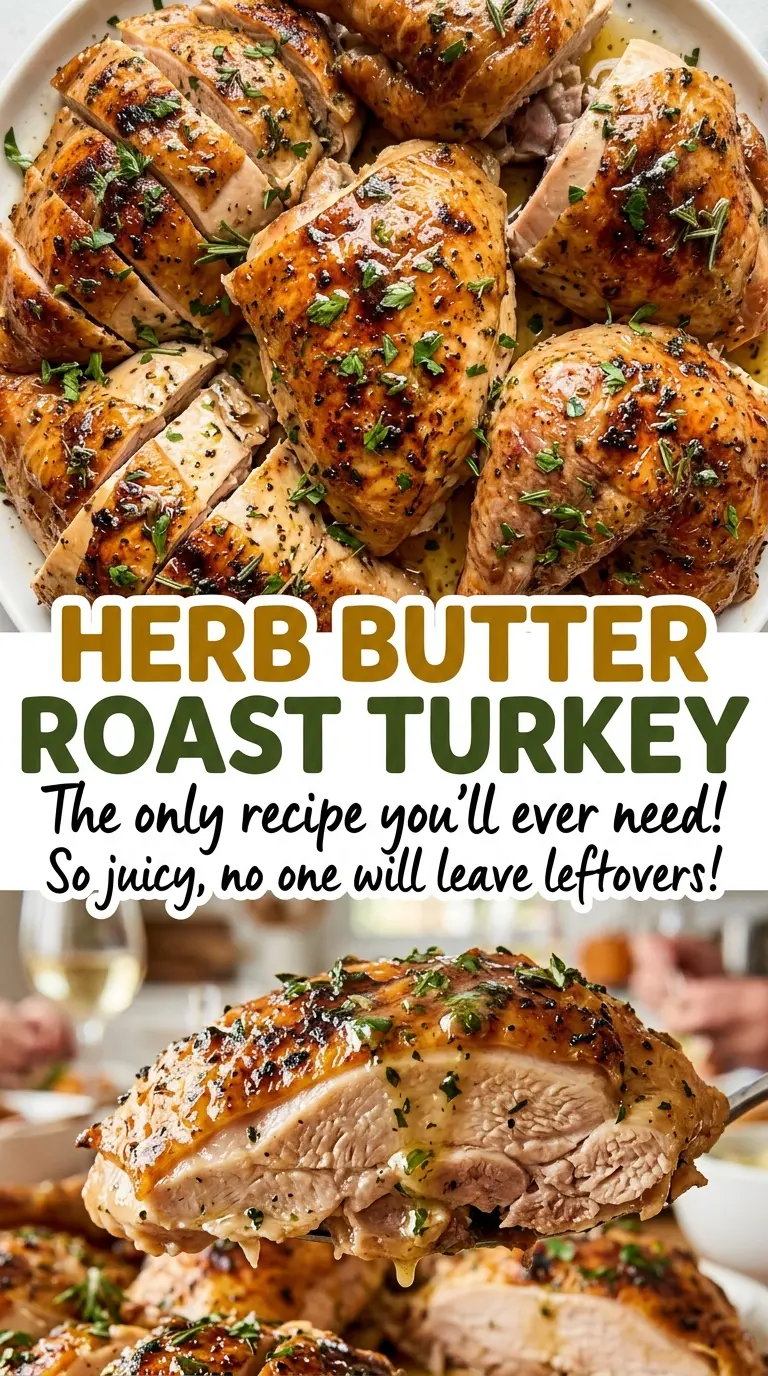
- Whole turkey — A fully thawed bird in the listed size range gives this roasting time a useful starting point. A basic store-brand turkey works well; you don’t need a specialty bird. A turkey breast or a much larger whole bird isn’t a direct swap because its cooking time changes.
- Unsalted butter — Unsalted butter lets you control the salt in the herb mixture, and a standard supermarket brand is fine. If salted butter is what you have, leave out the added kosher salt so the coating doesn’t become too salty.
- Fresh parsley, sage, rosemary, and thyme — Fresh herbs bring a bright, distinct aroma to the butter. If you need to use dried herbs, use one-third of each listed fresh amount: 2 teaspoons dried parsley and 1 teaspoon each dried sage, rosemary, and thyme. Crush the dried herbs between your fingers before stirring them in.
- Garlic — Fresh minced garlic gives the butter a sharper, more immediate savory note. Jarred minced garlic works in its place; use 1½ teaspoons for the three cloves.
- Yellow onion and lemon — These go loosely inside the cavity for a gentle aromatic lift rather than a heavily stuffed bird. An inexpensive onion and lemon are perfectly good here; quarter the onion and halve the lemon so they fit without packing the cavity tightly.
How to Roast the Turkey Without Guessing at Doneness
Set Up a Dry, Aromatic Bird
Heat the oven to 325°F and place a rack in a 16×13-inch roasting pan. Remove the neck and giblets from the cavity, then pat the turkey dry with paper towels; a dry surface gives the butter a better chance to stay put. Put the onion and lemon loosely in the cavity, not packed tightly together. Tuck the wing tips under the body so they’re held close during roasting.
Mix the Herb Butter Evenly
Stir the softened butter with the parsley, sage, rosemary, thyme leaves, minced garlic, kosher salt, and black pepper in a medium bowl. Keep mixing until you don’t see pockets of plain butter or clumps of herbs. A soft, even mixture is easier to spread in a thin layer than butter that’s still firm from the refrigerator. If it starts looking oily, it’s too warm to handle neatly.
Coat Under the Skin and Over the Outside
Carefully loosen the skin over the breast with your fingers, working slowly so you don’t tear it. Spread some of the herb butter underneath the skin, then rub the rest over the outside of the turkey. Set the bird breast-side up on the roasting-pan rack. The butter doesn’t need to form a thick blanket; an even coating is easier to manage as it melts.
Roast, Check Both Areas, and Rest
Roast for 3 to 3¾ hours, loosely tenting the turkey with foil if it browns too quickly. Check the thickest part of the breast and the innermost thigh with a thermometer, keeping the tip away from bone; both spots need to read at least 165°F. Don’t rely on skin color alone, since browning can finish before the meat does. Transfer the turkey to a carving board and let it rest for 30 minutes before carving.
Three Easy Ways to Adapt the Herb Butter Turkey
Make the Butter Dairy-Free
Replace the unsalted butter with an equal amount of unsalted, stick-style plant butter and mix in the herbs as usual. The herb coating still works, though the taste and browning may differ slightly from dairy butter; avoid soft tub spreads, which are harder to spread evenly.
Use Orange for a Softer Citrus Note
Swap the halved lemon in the cavity for a halved orange. It gives the turkey a rounder, less tart citrus aroma, while the onion and herb butter keep the savory character intact.
Leave Out the Garlic
For a garlic-free version, omit the minced garlic and keep the rest of the herb butter unchanged. The turkey will taste less savory and more focused on the fresh herbs, but the butter will still spread and roast the same way.
Storage and Reheating
- Refrigerator: Store carved turkey in airtight containers for 3 to 4 days. The skin softens once chilled, but the meat stays moist when covered.
- Freezer: Freeze carved portions in airtight freezer-safe packaging for 2 to 6 months for best quality. Smaller portions thaw and reheat more evenly than a large frozen piece.
- Reheating: Reheat only what you plan to serve, covered in the oven or microwave, until steaming hot throughout. Repeatedly warming the whole batch dries the slices out faster.
Questions That Come Up When Roasting a Whole Turkey
Herb Butter Roast Turkey
Ingredients
Equipment
Method
- Preheat the oven to 325°F.
- Set a rack in a 16x13-inch roasting pan.
- Remove the neck and giblets from the turkey cavity.
- Pat the turkey dry with paper towels.
- Place the onion and lemon loosely in the cavity.
- Tuck the wing tips under the body.
- Stir the softened butter, parsley, sage, rosemary, thyme, garlic, kosher salt, and black pepper together in a medium bowl until evenly combined.
- Carefully loosen the skin over the breast with your fingers and spread some herb butter underneath.
- Rub the remaining herb butter over the outside of the turkey.
- Set the turkey breast-side up on the roasting-pan rack.
- Roast for 3 to 3 3/4 hours, loosely tenting with foil if it browns too quickly, until a thermometer inserted into the thickest part of the breast and the innermost thigh without touching bone reads at least 165°F.
- Transfer the turkey to a carving board.
- Let it rest for 30 minutes before carving.