
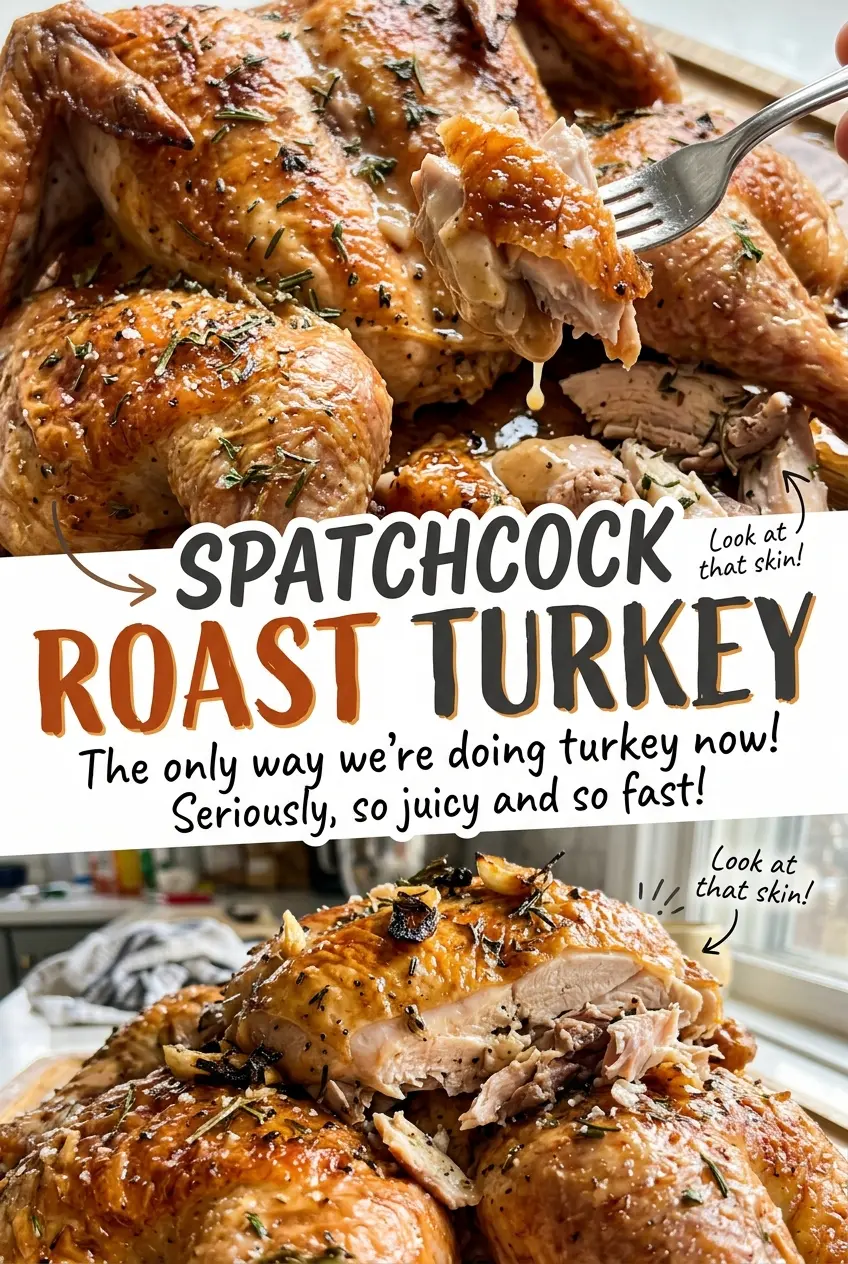
The backbone comes out, the breastbone gives with one firm press, and the turkey settles flat across the pan. That change makes Spatchcock Roast Turkey easier to handle than a whole bird, and it gives me a clear view of how each part is cooking.
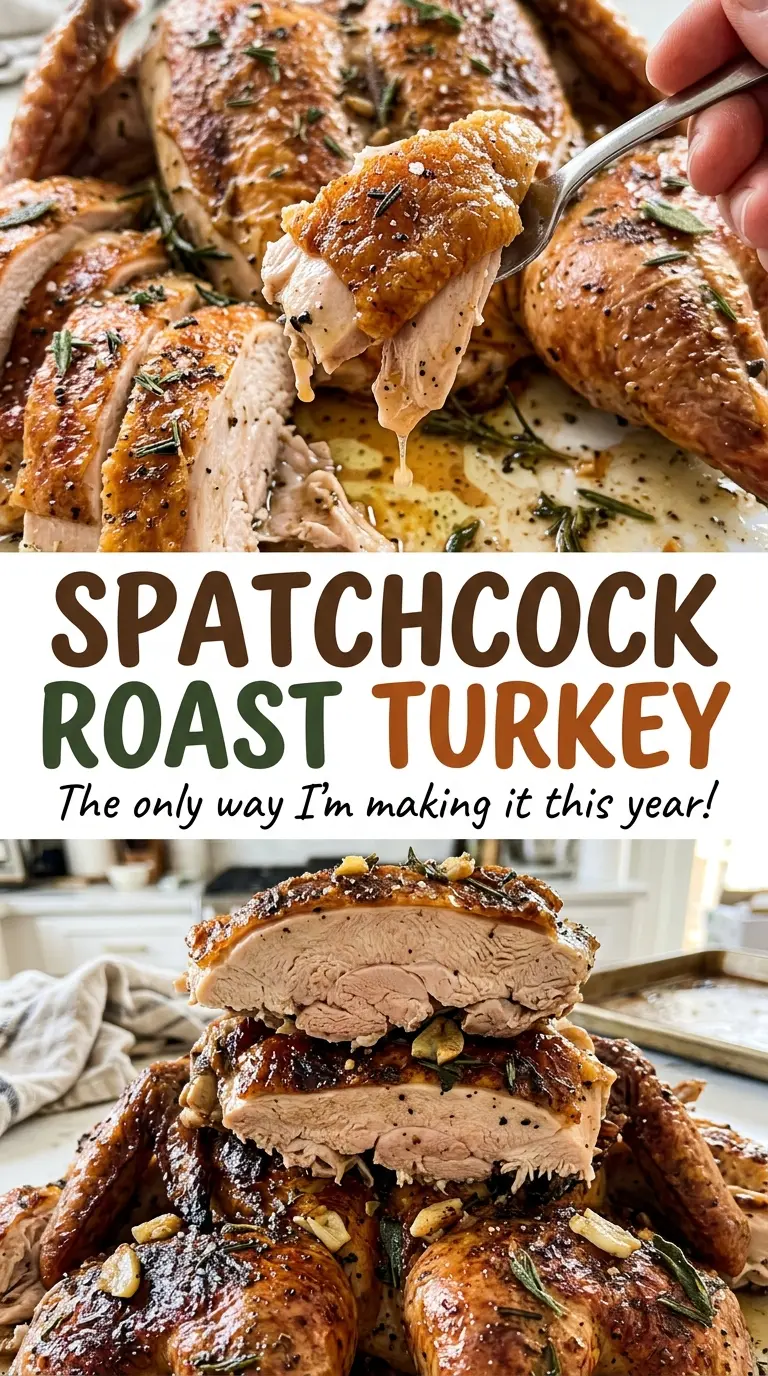
I salt the turkey ahead and leave it uncovered in the refrigerator, then tuck a garlic-herb butter under and over the skin before roasting. The open-air rest dries the surface, while the butter brings thyme and rosemary right to the meat. Once carved, the turkey has browned skin, tender slices of breast, and juicy dark meat ready for the platter.
Kitchen Note
After the uncovered refrigerator rest, the skin should look dry rather than damp. Keep the pan uncovered for the full resting time; that exposed air helps the surface dry before it goes into the oven.
Save this Spatchcock Roast Turkey for a holiday table or a big Sunday dinner, with garlic, thyme, and rosemary tucked into the butter.
Why the Breast and Thigh Don’t Finish at the Same Time
Flattening the turkey gives the legs, thighs, and breast more even access to the oven’s heat than they get when the bird is whole. It doesn’t make every part cook at precisely the same pace, though. Breast meat is lean, while the thighs and wings have different shapes and thicknesses, so one area may reach its target before another.
That’s why I check the thickest part of the breast and the innermost parts of the thigh and wing separately instead of relying on the skin color or a single reading. If the breast is ready first, a loose foil cover protects it while the darker parts finish. The flat shape makes the turkey easier to monitor, but a thermometer—not the clock alone—decides when it’s ready. You get tender breast meat without pulling the whole bird before the legs are cooked through.
The Turkey and Herb Butter Choices That Shape the Roast
- Turkey — Start with a fully thawed bird that hasn’t been pre-brined or injected. Those treatments add salt before you season, making it hard to control the result. A 12- to 14-pound turkey is the size this pan and timing are built around.
- Diamond Crystal kosher salt — The crystal size affects how much salt fits in a spoon, so stick with the specified brand and amount rather than swapping in a denser salt measure for measure. Seasoning the bird all over gives the salt time to work beyond the surface.
- Unsalted butter — Softened butter blends easily with the garlic and herbs and can be spread beneath the skin without tearing it. Unsalted butter also lets the turkey’s seasoning stay under your control.
- Garlic — Finely grated garlic disperses through the butter instead of leaving large chunks in one spot. Use fresh cloves for the sharp, savory flavor in this herb butter.
- Fresh thyme and rosemary — These chopped herbs bring the roast’s main herbal aroma. Fresh leaves distribute through softened butter; dried herbs have a different texture and aren’t a direct swap in this preparation.
- Black pepper — It rounds out the butter with a little warmth. Regular black pepper works here; there’s no need to seek out a specialty variety.
How to Flatten, Season, and Roast the Turkey Evenly
Cut Out the Backbone and Press the Bird Flat
Remove and discard the neck and giblets, then use sturdy kitchen shears to cut along both sides of the backbone and take it out. Turn the turkey breast-side up and press firmly on the breastbone until the bird lies flat. If it rocks or springs up in the middle, press again so it sits evenly on the rack. The flattened shape is what lets the breast, legs, and wings roast in a single layer.
Salt the Turkey and Give the Skin Time to Dry
Pat the turkey dry, then season it all over with the kosher salt. Set it skin-side up on a wire rack inside an 18-by-13-inch rimmed baking sheet and refrigerate it uncovered for 12 to 24 hours. The rack keeps the bird raised above the pan, while the uncovered rest exposes the skin to the refrigerator’s air. Don’t cover the turkey during this stage.
Mix and Spread the Garlic-Herb Butter
Take the turkey out of the refrigerator 45 minutes before roasting and heat the oven to 425°F. Stir the softened butter together with the grated garlic, thyme, rosemary, and black pepper until the herbs are spread throughout. Gently loosen the skin over the breast and thighs, then spread about half of the butter beneath it. Rub the rest over the skin, working carefully so the loosened skin stays intact.
Roast Until Each Section Reaches Temperature
Roast the turkey skin-side up for 1 hour 15 minutes to 1 hour 45 minutes, and begin checking after 1 hour 15 minutes. Insert a thermometer into the thickest part of the breast and the innermost part of the thigh and wing, avoiding bone; each spot should reach 165°F. If the breast gets there before the thigh and wing, loosely cover the breast with foil while the other areas continue cooking. Transfer the turkey to a cutting board and let it rest for 30 minutes before carving.
Small Changes That Keep This Roast in Your Comfort Zone
A Milder Garlic-Free Herb Butter
For a less pungent butter, leave out the garlic and keep the listed butter, thyme, rosemary, and pepper amounts unchanged. The roast still gets a fragrant coating, with the herbs more prominent and no sharp garlic note.
A Thyme-Forward Butter Without Rosemary
If rosemary’s piney aroma isn’t your favorite, omit it and leave the other ingredients and their amounts as listed. The butter will taste gentler and more focused on thyme, without changing the spatchcocking or roasting method.
A Naturally Gluten-Free Roast
The ingredients in this turkey roast are naturally gluten-free, so there’s no flour coating or breading to replace. The cooking method stays the same; the adaptation is useful when you want the centerpiece itself to fit a gluten-free meal.
Storage and Reheating
- Refrigerator: Refrigerate leftover turkey in a covered container for 3 to 4 days. The skin softens as it sits, even when the meat stays tender.
- Freezer: Freeze carved portions in airtight freezer-safe packaging for up to 4 months for best quality. Thaw them in the refrigerator before reheating.
- Reheating: Warm sliced turkey covered in the microwave in short intervals, turning or rearranging the pieces so they heat evenly. Long, uncovered reheating dries out the lean breast meat.
Questions I Get Asked About Spatchcock Roast Turkey
Spatchcock Roast Turkey
Ingredients
Equipment
Method
- Remove the neck and giblets from the turkey and discard them.
- Using sturdy kitchen shears, cut along both sides of the turkey backbone and remove it.
- Turn the turkey breast-side up and press firmly on the breastbone until the turkey lies flat.
- Pat the turkey dry and season it all over with the salt.
- Set the turkey skin-side up on a wire rack in an 18x13-inch rimmed baking sheet and refrigerate uncovered for 12 to 24 hours.
- Remove the turkey from the refrigerator 45 minutes before roasting.
- Preheat the oven to 425°F.
- Mix the butter with the garlic, thyme, rosemary, and black pepper.
- Gently loosen the skin over the breast and thighs and spread about half the butter under the skin.
- Rub the rest of the butter over the turkey skin.
- Roast the turkey skin-side up for 1 hour 15 minutes to 1 hour 45 minutes, checking the temperature after 1 hour 15 minutes.
- Cook until the thickest part of the breast and the innermost part of the thigh and wing reach 165°F, avoiding the bones.
- If the breast reaches 165°F first, loosely cover it with foil while the thigh and wing finish cooking.
- Transfer the turkey to a cutting board and let it rest for 30 minutes.
- Carve the turkey and serve.