
The breast is the part I watch most closely when a roast turkey comes out of the oven. A deep golden color looks promising, but it doesn’t tell you whether the meat underneath will stay moist. For Juicy Roast Turkey, I season beneath the skin as well as on top, then spread thyme butter where it can coat the breast and thighs.
The onion, lemon, garlic, and thyme stems go loosely into the cavity—not packed in like stuffing. That keeps the preparation simple and lets the bird roast uncovered. I use a thermometer to judge when it’s ready, then give it a full rest before carving; cutting too soon is an easy way to lose the juices you’ve worked to keep.
There’s a little planning ahead, but the hands-on work is straightforward. Once the turkey is in the oven, the job is mostly watching its color and checking the temperature in the right places. The finished bird has fragrant herbs, browned skin, and slices that are ready for the platter.
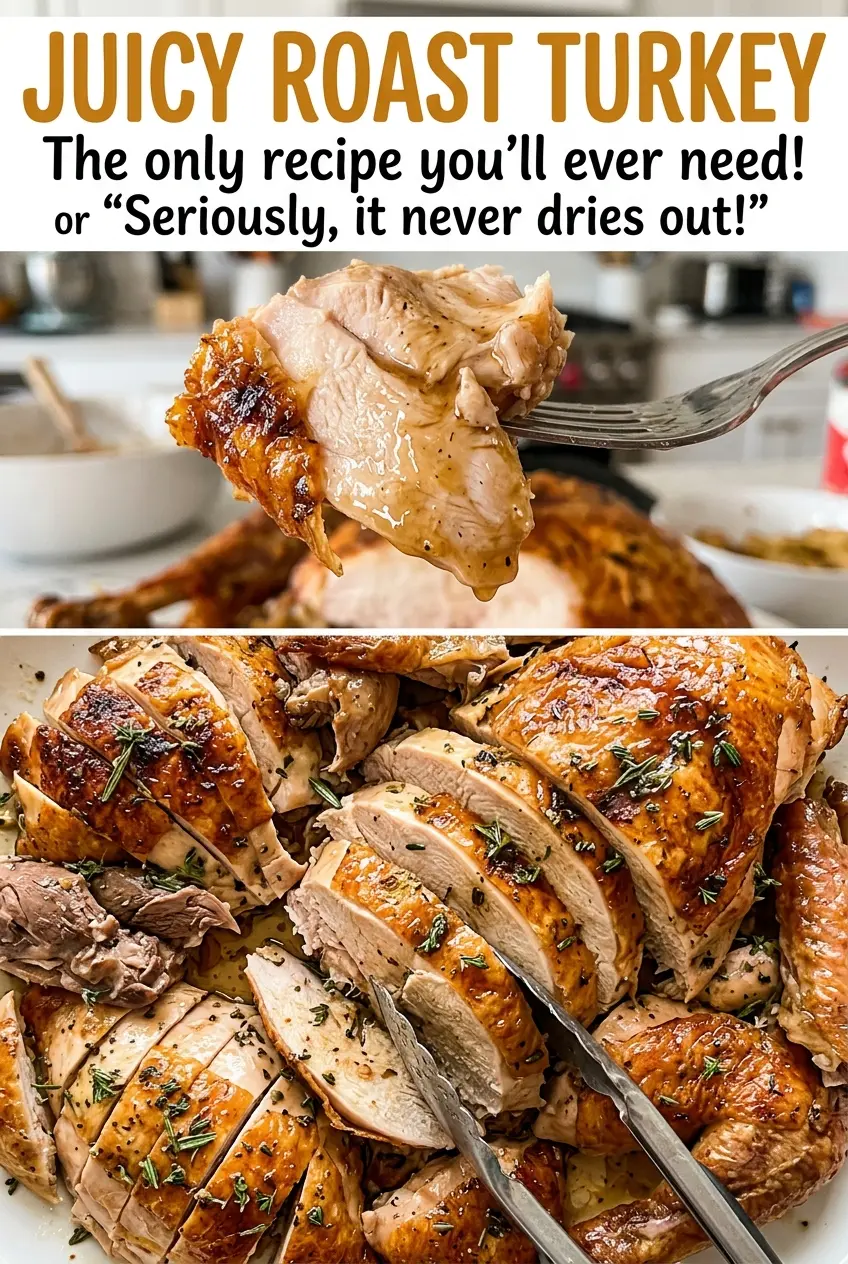
Kitchen Note
Keep the onion, lemon, garlic, and thyme stems loose in the cavity instead of wedging them in tightly. A packed cavity can slow the heat moving through the center; these aromatics need room around them.
Save Juicy Roast Turkey for the big dinner: a make-ahead salt rest, thyme butter under the skin, and a thermometer-guided finish.
Why This Turkey Gets an Uncovered Salt Rest Before the Butter
Salting a turkey just before it goes into the oven seasons the outside, but giving the salt time under the loosened skin lets it reach the meat more directly. Salt on the surface also draws out a little moisture. An uncovered rest in the refrigerator gives that dampness a chance to evaporate instead of leaving the skin wet when roasting begins.
That dry surface matters for browning. Wet skin tends to soften before it can turn golden, while a well-dried exterior roasts more readily. The salt rest also means you don’t need to rely on frequent basting to get seasoning across the bird. Keep the turkey on its rack, breast side up, and leave it uncovered for the full rest. The 24-to-48-hour window gives you flexibility when you’re organizing a large meal; both ends of that range fit this method.
Patting the turkey dry before salting starts the process on the right foot. Don’t rinse it first: rinsing doesn’t improve the seasoning, and splashing water around raw poultry can spread germs across the sink and nearby surfaces. Dry hands, a clean work area, and careful handling are a better start.
What the Butter, Thyme, and Cavity Aromatics Each Contribute
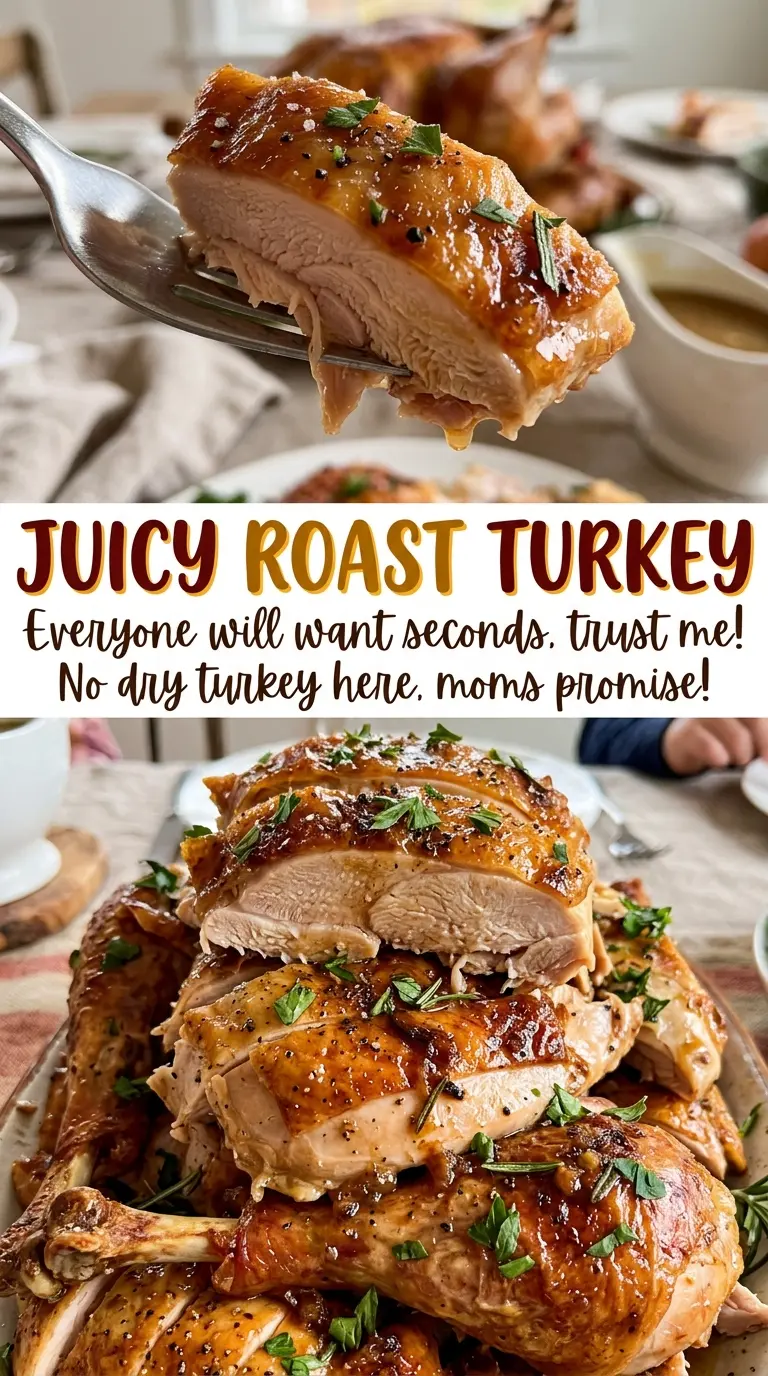
- The whole turkey — A 12- to 14-pound bird is the size this roasting window is built around. Start with it completely thawed and remove the neck and giblets; a partly frozen center makes the timing harder to judge.
- Diamond Crystal kosher salt — The crystal size affects how much salt fits in a spoon, so don’t swap in table salt measure-for-measure. Keeping the specified kosher salt makes the seasoning amount dependable.
- Unsalted butter — Softened butter spreads under the skin without needing to pull or tug at it, and unsalted butter leaves the salt level in your control. It provides the rich coating that a leaner fat-free version won’t have.
- Fresh thyme and black pepper — Chopped thyme leaves season the butter, while the reserved stems bring their aroma to the cavity. Freshly ground pepper gives the butter a more pronounced peppery note; dried thyme won’t provide the same fresh leaves and stems for both jobs.
- Onion, lemon, and garlic — These go inside the cavity as aromatics, not as a tightly packed filling. Choose a firm onion and an unblemished lemon; the garlic’s cut face can release its aroma as the bird roasts. If one of these isn’t available, leaving it out is more straightforward than adding another ingredient.
How to Roast the Turkey Without Guessing at Doneness
Salt the Skin and the Meat Beneath It
Pat the completely thawed turkey dry; don’t rinse it. Carefully loosen the skin over the breasts and thighs, then rub the Diamond Crystal kosher salt over the bird and beneath the loosened skin. Set it breast side up on a rack in a 16-inch roasting pan and refrigerate uncovered for 24 to 48 hours. If the skin feels damp when the rest is over, pat it dry again before continuing.
Spread Thyme Butter Under the Skin
Take the turkey out of the refrigerator 45 minutes before roasting, and preheat the oven to 325°F with a rack in the lower third. Mix the softened butter with the chopped thyme leaves and freshly ground black pepper. Spread the mixture under the breast and thigh skin, then over the outside of the turkey. If the skin resists, work gently rather than pulling hard enough to tear it.
Fill the Cavity Loosely and Tuck the Wings
Put the quartered onion and lemon, the halved garlic head, and the reserved thyme stems loosely in the cavity. Don’t press them in or turn the cavity into a packed bundle. Tuck the wing tips underneath the bird so they stay close to the body as it roasts. Set the turkey in the prepared pan breast side up.
Roast to Temperature, Then Let It Rest
Roast uncovered for 3 to 3¾ hours, beginning to check at 2½ hours. If the breast browns too quickly, tent it loosely with foil while the rest of the bird continues roasting. Check the thickest part of the breast and the innermost thigh with a thermometer, taking care not to touch bone; both should read 165°F. Move the turkey to a cutting board, tent it loosely with foil, and rest for 30 minutes before carving.
Simple Ingredient Changes That Still Suit This Roast
A dairy-free bird without butter
For a dairy-free version, leave out the butter and chopped thyme leaves rather than substituting another fat. Keep the salt rest and the onion, lemon, garlic, and thyme stems in the cavity; the skin will lack the buttery richness, but the roast still works with the same turkey and oven method.
A garlic-free cavity
Leave out the garlic if you want a gentler allium aroma, and keep the onion, lemon, and reserved thyme stems. The turkey still gets its herb-and-citrus fragrance, just without the deeper roasted garlic note.
Storage and Reheating
- Refrigerator: Refrigerate carved leftovers within 2 hours and use them within 3 to 4 days. Chilled breast meat firms up, so slice it before storing for easier portions.
- Freezer: Freeze carved turkey in airtight freezer-safe bags or containers for 2 to 6 months for best quality. Thaw frozen portions in the refrigerator before reheating.
- Reheating: Warm sliced portions covered in a 325°F oven or covered in the microwave until steaming hot throughout. Leaving the meat uncovered while reheating can dry the edges before the center is warm.
Questions That Come Up While Roasting This Turkey
Juicy Roast Turkey
Ingredients
Equipment
Method
- Pat the turkey dry; do not rinse it.
- Carefully loosen the skin over the breasts and thighs, then rub the salt over the turkey and under the loosened skin.
- Set the turkey breast side up on a rack in a 16-inch roasting pan and refrigerate uncovered for 24 to 48 hours.
- Remove the turkey from the refrigerator 45 minutes before roasting.
- Preheat the oven to 325°F with a rack in the lower third.
- Mix the softened butter with the chopped thyme leaves and black pepper.
- Spread the butter mixture under the breast and thigh skin and over the outside of the turkey.
- Put the onion, lemon, garlic, and reserved thyme stems loosely in the cavity.
- Tuck the wing tips under the bird.
- Roast uncovered for 3 to 3 3/4 hours, loosely tenting the breast with foil if it browns too quickly.
- Begin checking at 2 1/2 hours and roast until a thermometer in the thickest part of the breast and the innermost thigh reads 165°F, without touching bone.
- Transfer the turkey to a cutting board and tent loosely with foil.
- Rest for 30 minutes before carving.