
The pot is easy; getting mashed potatoes ready at the same time as everything else is the part that can make dinner feel rushed. I like having the peeling, simmering, and mashing finished ahead, then baking the potatoes in the dish they’ll be served from. These make-ahead mashed potatoes are rich and creamy, but they’re still straightforward: boil the Yukon Golds, mash in the dairy, and chill the casserole until it’s time to heat it through.
The order matters for a smooth mash. I mash the cooked potatoes first, then mix in softened butter and cream cheese, sour cream, and warmed milk. That gives the potatoes a chance to break down before the dairy goes in, and the warmed milk blends in without cooling the mash. Once everything is creamy, spread it in a greased 9×13-inch baking dish and let the oven take care of the last stretch. The result is a soft, savory potato casserole that’s ready when you are.

Kitchen Note
After draining, give the potatoes their full minute back in the warm pot over low heat, shaking it gently. I used to rush this part, but drying off that extra moisture keeps the finished mash from tasting watery.
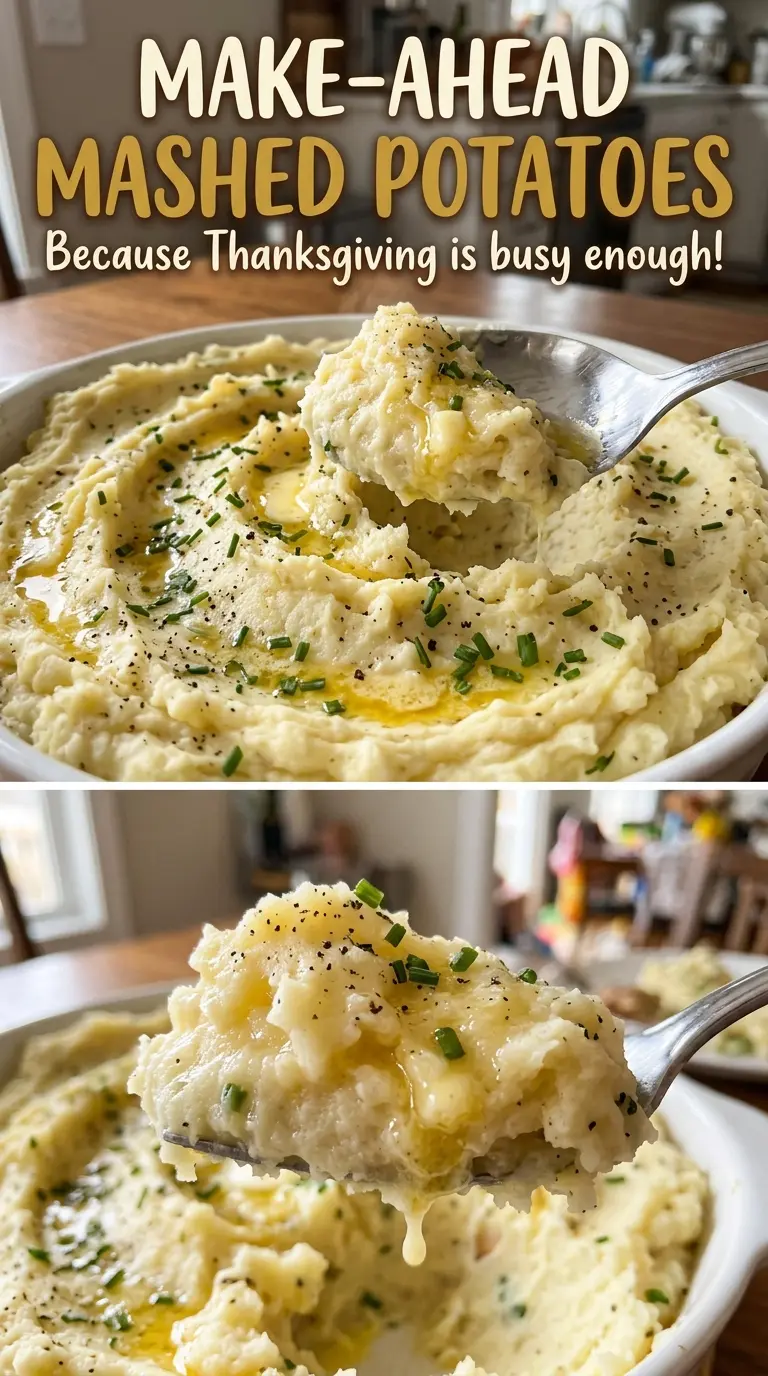
Save these make-ahead mashed potatoes for a smoother dinner prep: creamy Yukon Golds baked warm in one covered casserole.
Why I Mash the Potatoes Before Adding the Cream Cheese
For this casserole, I don’t mix the dairy into the potatoes while they’re still in large chunks. Mashing first gives the cooked potatoes a head start on becoming smooth; then the softened butter and cream cheese can blend through instead of lingering in little pockets. Sour cream and warmed milk loosen the mash into a creamy consistency, and the salt and pepper season it throughout.
That order also makes the make-ahead step easier. Once the potatoes are evenly creamy, they spread into the baking dish without needing extra liquid or another round of mashing. Chill the casserole as one even layer, then warm it covered in the oven. The texture stays soft and cohesive instead of turning into a loose mixture that needs to be stirred back together. I aim for mostly smooth potatoes before adding the dairy, not a completely beaten, gluey mash.
What Each Dairy Ingredient Brings to These Make-Ahead Potatoes
- Yukon Gold potatoes — They mash into a naturally creamy base with a buttery taste. Choose firm potatoes without soft spots; peeling them and cutting them into even pieces helps them cook at the same pace. For this version, I stick with Yukon Golds rather than promising the same texture from a different potato.
- Unsalted butter — Softened butter mixes into the mash without leaving hard streaks. A basic unsalted butter works well here, and it lets the recipe’s measured salt do the seasoning. I wouldn’t replace it with a liquid fat; the buttery richness and texture would change.
- Cream cheese — This is what gives the potatoes their extra body and rich, smooth finish after chilling and baking. Let it soften and cut it into pieces before mixing so it doesn’t stay in lumps. There isn’t a simple swap that keeps this casserole’s characteristic creamy texture.
- Sour cream — Sour cream brings a gentle tang that keeps the rich mash from tasting flat. Use a fresh, plain sour cream; a flavored or sweetened one would pull the potatoes in the wrong direction. I keep it in rather than trying to reproduce its tang with another ingredient.
- Whole milk — Warm milk blends more easily into the potatoes than cold milk and helps make the mash creamy without an abrupt temperature drop. Warm it before mixing, and pour it in with the other dairy ingredients. The whole milk contributes a fuller texture than a thinner milk would.
The Five Stages That Keep the Mash Creamy from Pot to Oven
Simmer the Potato Pieces Until Fork-Tender
Bring a large pot of water to a boil and stir in 2 teaspoons of the kosher salt. Add the peeled potatoes cut into 1 1/2-inch pieces, then lower the heat to keep the water at a steady simmer. Cook for 15 to 20 minutes, until a fork slips easily into the center of a piece. If the centers still feel firm, give them more time rather than draining them early.
Drain Well and Dry Off Excess Moisture
Drain the potatoes thoroughly, then return them to the pot. Set the pot over low heat for 1 minute and shake it gently as the potatoes warm. This helps excess moisture evaporate before it can thin the dairy-rich mash. Keep the heat low; the goal is to dry the potatoes, not brown or scorch them.
Mash First, Then Mix in the Dairy
Mash the potatoes until mostly smooth before adding the softened butter and cream cheese pieces. Add the sour cream, warmed whole milk, remaining 1 teaspoon of kosher salt, and black pepper, then mix until creamy. The cream cheese should disappear into the mash rather than remain in visible pieces. If you spot lumps, keep mixing until the texture looks even, without beating the potatoes past creamy.
Cool the Casserole Before Covering
Grease a 9×13-inch baking dish and spread the mashed potatoes evenly in it. Let the dish cool for 20 minutes, then cover it and refrigerate it. Keeping the potatoes in an even layer helps the whole casserole warm consistently later. Don’t cover the dish immediately while it’s still steaming.
Bake Covered Until the Center Is Hot
When it’s time to serve, heat the oven to 350°F and keep the dish covered with foil. Bake for 50 to 60 minutes, checking the center rather than relying on the warmer edges. The middle should reach 165°F before you take the casserole out. Leave the foil on during baking so the top stays moist as the center heats.
Two Small Changes for a Different Potato Texture
Leave the Mash a Little More Rustic
Stop mashing while a few small pieces of potato remain instead of working toward a completely smooth texture. The finished casserole will have more potato bite and feel a little heartier, especially after chilling. Keep the pieces small enough that the dairy can still mix through evenly.
Make the Pepper Less Prominent
For a milder-tasting batch, use less black pepper than the listed amount. You’ll still get the creamy, buttery potato flavor, but the pepper won’t stand out as much. Keep the other ingredients the same so the casserole keeps its intended rich texture.
Storage and Reheating
- Refrigerator: Cover the unbaked casserole and refrigerate it for up to 2 days. Refrigerate baked leftovers promptly and use them within 2 days.
- Freezer: I don’t recommend freezing this dairy-rich mash; the cream cheese and sour cream can leave it grainy or watery after thawing.
- Reheating: Bake the chilled casserole covered with foil at 350°F for 50 to 60 minutes. Keep it covered so the edges don’t dry out before the middle warms through.
Questions That Come Up When Making Mashed Potatoes Ahead
Make-Ahead Mashed Potatoes
Ingredients
Equipment
Method
- Bring a large pot of water to a boil, then stir in 2 teaspoons of the salt.
- Add the potatoes, reduce the heat to maintain a steady simmer, and cook for 15 to 20 minutes, until easily pierced with a fork.
- Drain the potatoes well and return them to the pot.
- Let the potatoes sit over low heat for 1 minute, shaking the pot gently, to dry off excess moisture.
- Mash the potatoes until mostly smooth.
- Mix in the butter, cream cheese, sour cream, warmed milk, remaining 1 teaspoon salt, and pepper until creamy.
- Grease a 9x13-inch baking dish and spread the potatoes evenly in it.
- Let the potatoes cool for 20 minutes, then cover and refrigerate for up to 2 days.
- When ready to serve, heat the oven to 350°F.
- Keep the dish covered with foil and bake for 50 to 60 minutes, until the center reaches 165°F.