
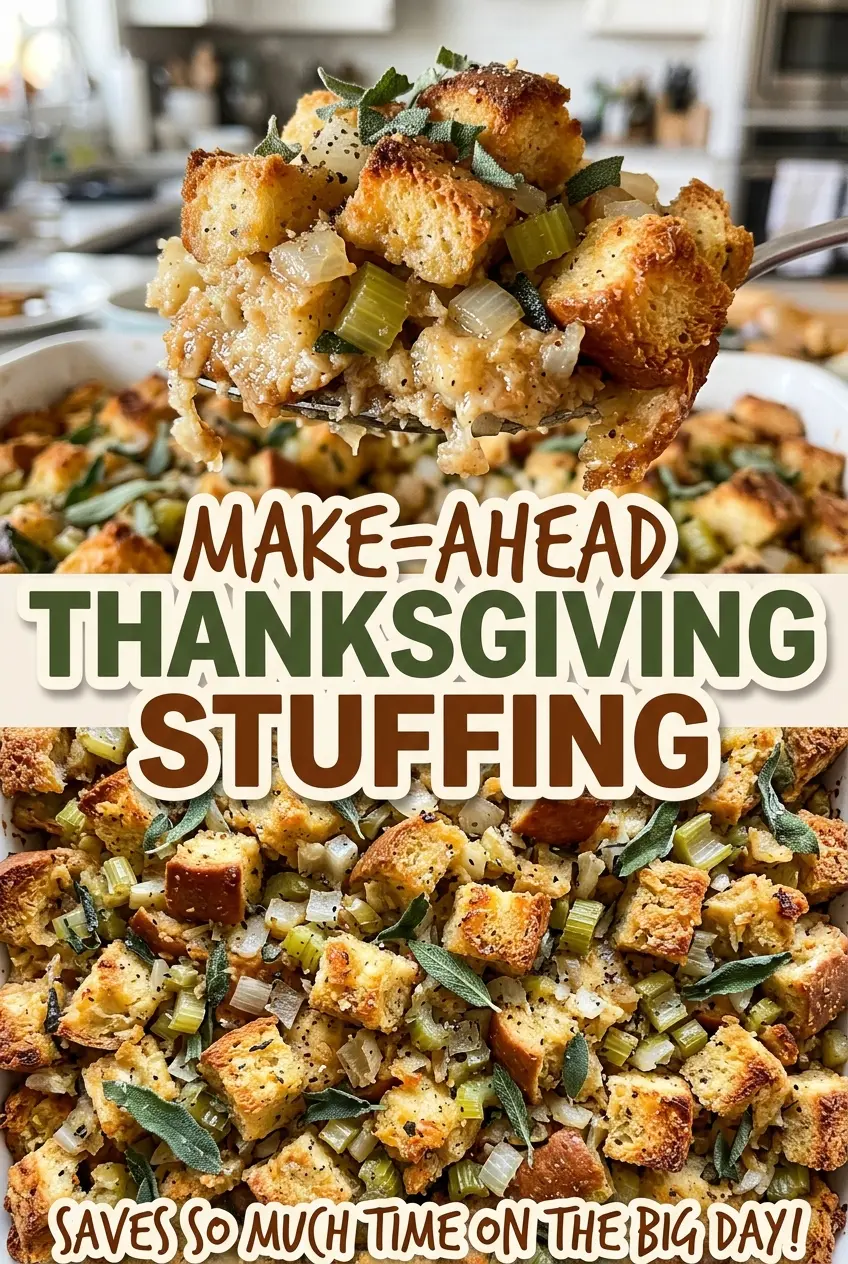
The bread cubes are the part that can quietly make or break Thanksgiving stuffing. If they’re still soft when the broth goes in, they soak up the custard unevenly and the middle can turn heavy. I dry them in a low oven first, then let them cool before tossing them with the vegetables and herbs. That small bit of planning is what makes this Make-Ahead Thanksgiving Stuffing easy to assemble the day before and bake when you need it.
The mixture rests in the refrigerator so the bread has time to take in the broth and eggs throughout, rather than getting wet on the outside while staying dry inside. I like that the hands-on work is finished before the holiday rush: the onion and celery are cooked, everything is tossed together, and the covered dish is waiting in the fridge. After baking, the top turns golden while the center stays soft and savory.
Kitchen Note
Give the baked stuffing its full 10-minute rest before scooping. The center settles during that pause, so servings hold together instead of slumping onto the plate.
Save this Make-Ahead Thanksgiving Stuffing for a holiday side with a golden top and the prep finished before dinner day.
Why Dry Bread Makes the Difference Between Stuffing and a Heavy Casserole
Soft bread and broth seem like a natural match, but bread that hasn’t been dried first starts absorbing liquid before it has a chance to distribute evenly. The outside of the cubes gets saturated quickly, while the centers can stay firm. Once the dish bakes, that uneven hydration shows up as a dense, wet middle beside drier edges. Drying the bread first gives it room to absorb the broth and egg mixture more consistently.
The goal isn’t to toast the cubes until they’re brown or crisp like croutons. You want them dry all the way through, with no soft spots, so they can take on the seasoned liquid during the refrigerator rest. Firm white bread keeps the flavor mild and lets the sage, thyme, and parsley come through. Cut the cubes evenly, too: pieces that are close in size soften at a similar pace.
What the Bread, Broth, and Herbs Bring to the Dish
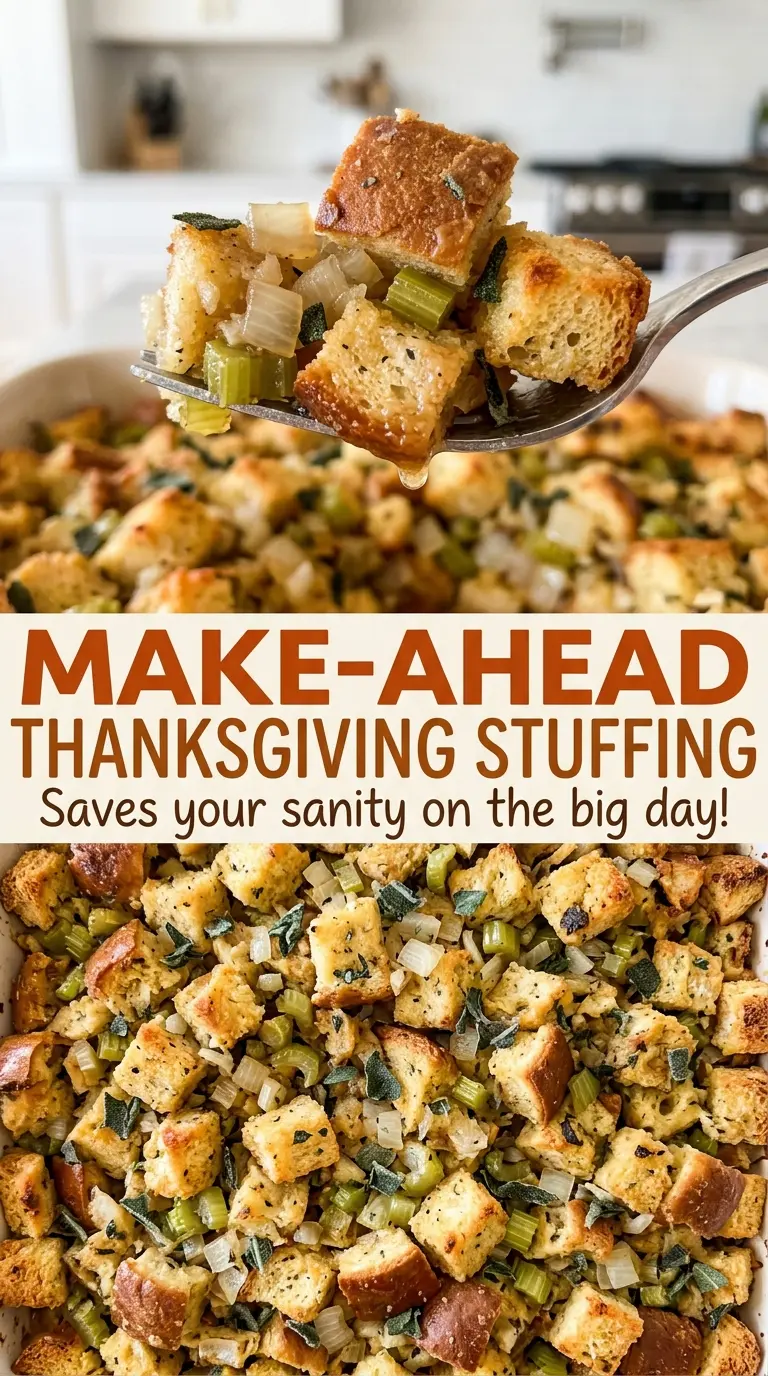
- Firm white bread — Its mild flavor lets the herbs and cooked vegetables lead, and its sturdy crumb holds the broth mixture without disappearing. Choose a firm loaf rather than very soft sandwich bread; the latter is more likely to collapse as it absorbs liquid. Cut the cubes evenly so they dry and hydrate at roughly the same rate.
- Low-sodium chicken broth — Broth seasons the bread from the inside, while a low-sodium version leaves room for the measured salt to do its job. A low-sodium vegetable broth is a practical swap for a vegetarian version, though it gives the stuffing a less poultry-forward flavor.
- Onion, celery, and butter — Cooking the vegetables in butter softens their sharpness before they’re mixed with the bread. Yellow onion and celery are inexpensive choices here; look for celery that feels crisp rather than limp, since it should soften in the skillet without turning watery.
- Sage, thyme, and parsley — Dried sage and thyme season the whole dish, while fresh parsley adds a brighter note. Use fresh parsley with lively green leaves; dried herbs are a fine pantry choice for the sage and thyme, as their flavor has time to spread through the broth-soaked bread.
- Eggs — Whisked into the broth, eggs help the mixture set into a scoopable casserole. Keep them in the mixture if you want the stuffing to hold together rather than eat like loose, broth-softened bread.
How to Dry, Soak, and Bake the Stuffing Without Guesswork
Dry the Cubes Without Browning Them
Heat the oven to 250°F and spread the bread cubes in a single layer on a large rimmed baking sheet. Bake for 45–60 minutes, stirring once, until the cubes feel dry rather than soft in the middle. Watch for dryness, not color; they shouldn’t need to turn golden. Let the cubes cool before adding the vegetables so the warm bread doesn’t soften unevenly.
Soften the Onion and Celery in Butter
Grease a 9×13-inch baking dish, then melt the butter in a 12-inch skillet over medium heat. Add the finely chopped onion and celery and cook for 10–12 minutes, stirring often. They’re ready when softened, with no raw crunch left, but they don’t need to brown. Stirring regularly keeps the vegetables cooking evenly across the skillet.
Coat the Bread Evenly with the Broth Mixture
Put the cooled bread cubes in a large bowl and add the cooked vegetables, sage, thyme, and parsley. Toss them together before pouring in the broth mixture so the seasonings don’t land in one concentrated spot. In a medium bowl, whisk the broth with the eggs, salt, and pepper, then pour it over the bread. Toss until the cubes are evenly moistened, transfer everything to the prepared dish, cover tightly, and refrigerate for 8–24 hours.
Bake Covered, Then Uncover for the Golden Top
Set the covered dish at room temperature for 20 minutes while the oven heats to 350°F. Bake it covered for 45–50 minutes, then uncover and bake for another 20–25 minutes. Look for a golden top and check that the center reaches 160°F. If the top is golden before the center is ready, keep baking until the center reaches that temperature.
Two Swaps That Change the Stuffing Without Losing Its Shape
Make It Vegetarian with Vegetable Broth
Replace the chicken broth with low-sodium vegetable broth and keep the rest of the method the same. The stuffing stays savory and the eggs still help it set, but the finished flavor is less distinctly poultry-like.
Use Gluten-Free White Bread
Swap in firm gluten-free white bread, cut into the same-size cubes, and dry it until the pieces are fully dry. Gluten-free loaves vary in texture, so the stuffing may be a little more compact or delicate when served; handle the cubes gently as you toss them with the liquid.
Storage and Reheating
- Refrigerator: Refrigerate leftovers within 2 hours, covered, and use within 3–4 days. The top softens after chilling.
- Freezer: Freeze baked portions in an airtight container for up to 2–3 months. Thaw in the refrigerator before reheating; the bread will be softer than when freshly baked.
- Reheating: Cover the dish and warm it in a 325°F oven until the center reaches 165°F. Reheating uncovered can dry the top before the middle is hot.
Questions That Come Up When Planning Thanksgiving Stuffing
Make-Ahead Thanksgiving Stuffing
Ingredients
Equipment
Method
- Heat the oven to 250°F.
- Spread the bread cubes in a single layer on a large rimmed baking sheet.
- Bake for 45–60 minutes, stirring once, until dry, then cool.
- Grease a 9x13-inch baking dish.
- Melt the butter in a 12-inch skillet over medium heat.
- Add the onion and celery, and cook for 10–12 minutes, stirring often, until softened.
- Put the bread cubes in a large bowl.
- Add the cooked vegetables, sage, thyme, and parsley, and toss to combine.
- In a medium bowl, whisk together the broth, eggs, salt, and pepper.
- Pour the broth mixture over the bread mixture, and toss until evenly moistened.
- Transfer the mixture to the prepared baking dish and cover tightly.
- Refrigerate for 8–24 hours.
- Heat the oven to 350°F.
- Let the covered dish sit at room temperature for 20 minutes.
- Bake the covered dish for 45–50 minutes.
- Uncover and bake for 20–25 minutes, until golden on top and the center reaches 160°F.
- Let the stuffing rest for 10 minutes before serving.