
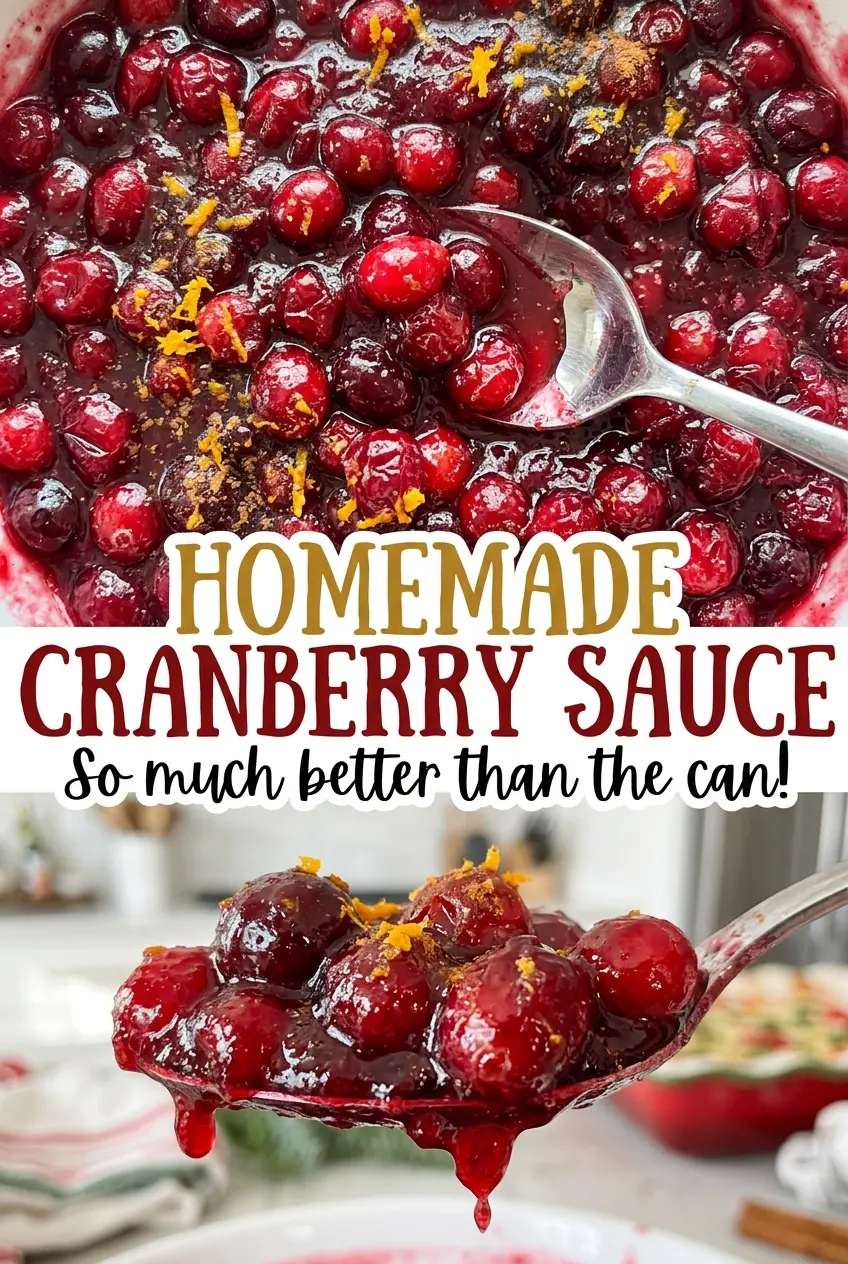
The first cranberry pops always sound louder than they should. A few minutes into the simmer, the berries split and the clear syrup turns ruby red; that’s the moment this simple pot of homemade cranberry sauce starts to look like itself.
I like this version because it needs only water, sugar, and fresh cranberries, but still has a bright tartness that keeps the sweetness from taking over. The berries bring plenty of their own character, so there’s no need to add another flavor to make the sauce taste like cranberry.
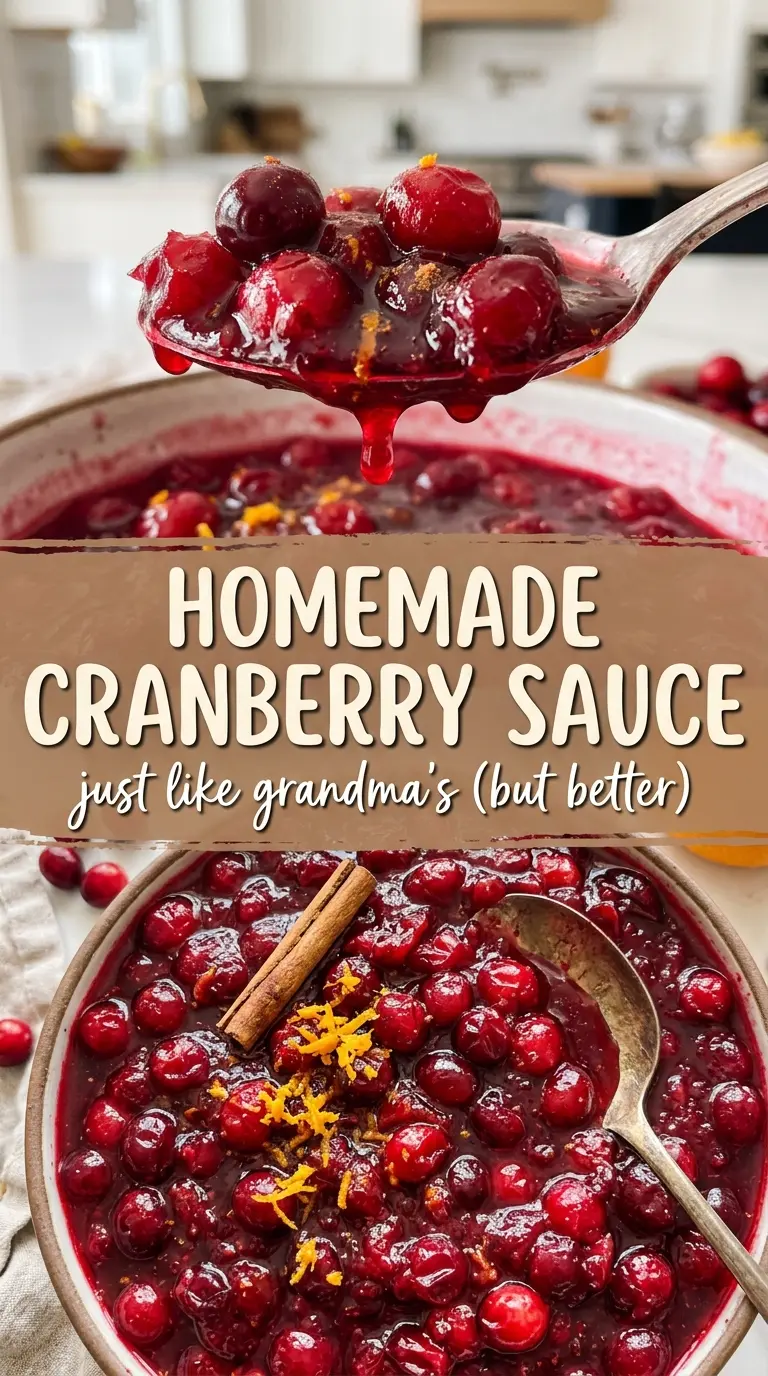
What matters most is giving the sauce time to cool before deciding whether it’s thick enough. Warm from the pan, it looks looser than it will on the table. Once cooled, it settles into a glossy sauce with soft berries and a spoonable, lightly jammy texture.
Kitchen Note
Stir the water and sugar until the sugar has dissolved before adding the cranberries. That gives the berries a clear syrup to simmer in, without gritty sugar settling at the bottom of the pan.
Save this homemade cranberry sauce for its bright, tart berry flavor and glossy texture that thickens as it cools.
Why Cranberry Sauce Looks Thin in the Pan—and Sets as It Cools
Hot cranberry sauce can be surprisingly loose, even after the berries have split and released their juices. Don’t keep cooking it just because it hasn’t reached its final thickness yet. Cranberries contain natural pectin, which helps the sauce firm up as it cools; the texture you see in the saucepan isn’t the texture you’ll have after resting.
The gentle simmer does the work of softening the fruit and combining its juice with the syrup. As the berries cook, their skins break and the sauce becomes more cohesive, but it won’t turn into a stiff jelly in the pan. The finished consistency is meant to be spoonable, with a little movement when you tip the bowl.
That cooling time is part of the method, not a pause to skip. After at least 30 minutes off the heat, the sauce will be thicker and easier to judge. If you cook it much longer in pursuit of a firm, cold texture, you can end up with fruit that’s more broken down than you wanted. Let the resting period finish the job.
What Fresh Cranberries, Sugar, and Water Each Bring to the Pot
- Fresh cranberries — Pick over the berries and rinse them before they go into the pan. Look for firm fruit with bright color; discard berries that are shriveled or soft. Their tart flavor and natural pectin define the sauce, so dried cranberries aren’t a direct stand-in. Frozen whole cranberries are a workable alternative, described below.
- Granulated sugar — It sweetens the sharp berries and dissolves cleanly into the water to create the syrup. Granulated sugar keeps the cranberry flavor clear; a strongly flavored sweetener would change the taste and color, so it isn’t a like-for-like swap here.
- Water — Water gives the sugar a liquid base and lets the cranberries simmer without competing with their tart, fruity taste. It’s an intentionally neutral choice. Replacing it with a flavored liquid would make a different sauce rather than improve this one.
Because there are only three ingredients, each one shows up clearly in the finished spoonful. Fresh, good-quality cranberries matter most; the sugar and water don’t need anything special. Use ordinary granulated sugar and tap water, and take a moment to sort through the bag before rinsing.
From Dissolved Sugar to a Sauce That Sets as It Cools
Start with a Smooth Sugar Syrup
Combine the water and granulated sugar in a 2-quart saucepan over medium heat. Stir as the mixture comes to a boil, and keep stirring until the sugar dissolves. The liquid should look clear rather than sandy, with no visible crystals on the bottom of the pan. A 2-quart saucepan gives the berries room to bubble without crowding the pot.
Simmer Until Most Berries Have Burst
Stir in the rinsed cranberries and bring the mixture back to a boil. Once it boils, reduce the heat so it holds a gentle simmer for 10 to 12 minutes, stirring occasionally. You’ll hear the berries pop as their skins split, and the liquid will turn a deep red as the fruit softens. Keep the simmer gentle; a hard boil makes it harder to maintain an even cook.
Let the Sauce Thicken Off the Heat
When most of the berries have burst, take the saucepan off the heat. Leave the sauce to cool for at least 30 minutes rather than expecting it to look fully thick in the pan. During that rest, the liquid settles and the sauce becomes glossier and more spoonable. The berries that remain intact add little soft pockets of fruit throughout.
Two Useful Ways to Adapt the Cranberry Texture
Use Frozen Whole Cranberries
If fresh cranberries aren’t available, use a 12-ounce bag of frozen whole cranberries instead. Add them frozen, without thawing, and follow the same simmering method until most of the berries have burst. The texture may be a little softer, but you’ll still get a tart, spoonable cranberry sauce.
Make a Smoother, Seedless-Feeling Sauce
For a more uniform texture, press the cooked sauce through a fine-mesh sieve after it comes off the heat. This removes the skins and gives you a smoother result, though you’ll lose the whole-berry texture and some of the sauce’s body. Leave it as-is if you prefer a rustic, fruit-forward spoonful.
Storage and Reheating
- Refrigerator: Refrigerate in a covered container for 3 to 4 days. It will become firmer and more jelly-like when cold.
- Freezer: Freeze in an airtight container for up to 2 months, leaving a little room for expansion. Thaw it in the refrigerator before serving.
- Reheating: Warm it gently in a saucepan over low heat, stirring as it loosens. Avoid a hard boil, which can break down the berries further; serve it cold if you like its chilled, firmer texture.
Questions That Come Up When the Cranberries Hit the Pan
Homemade Cranberry Sauce
Ingredients
Equipment
Method
- Combine the water and sugar in a 2-quart saucepan and bring to a boil over medium heat, stirring until the sugar dissolves.
- Stir in the cranberries and return the mixture to a boil, then reduce the heat to maintain a gentle simmer for 10 to 12 minutes, stirring occasionally, until most of the berries have burst.
- Remove the saucepan from the heat and let the sauce cool for at least 30 minutes; it will thicken as it cools.