
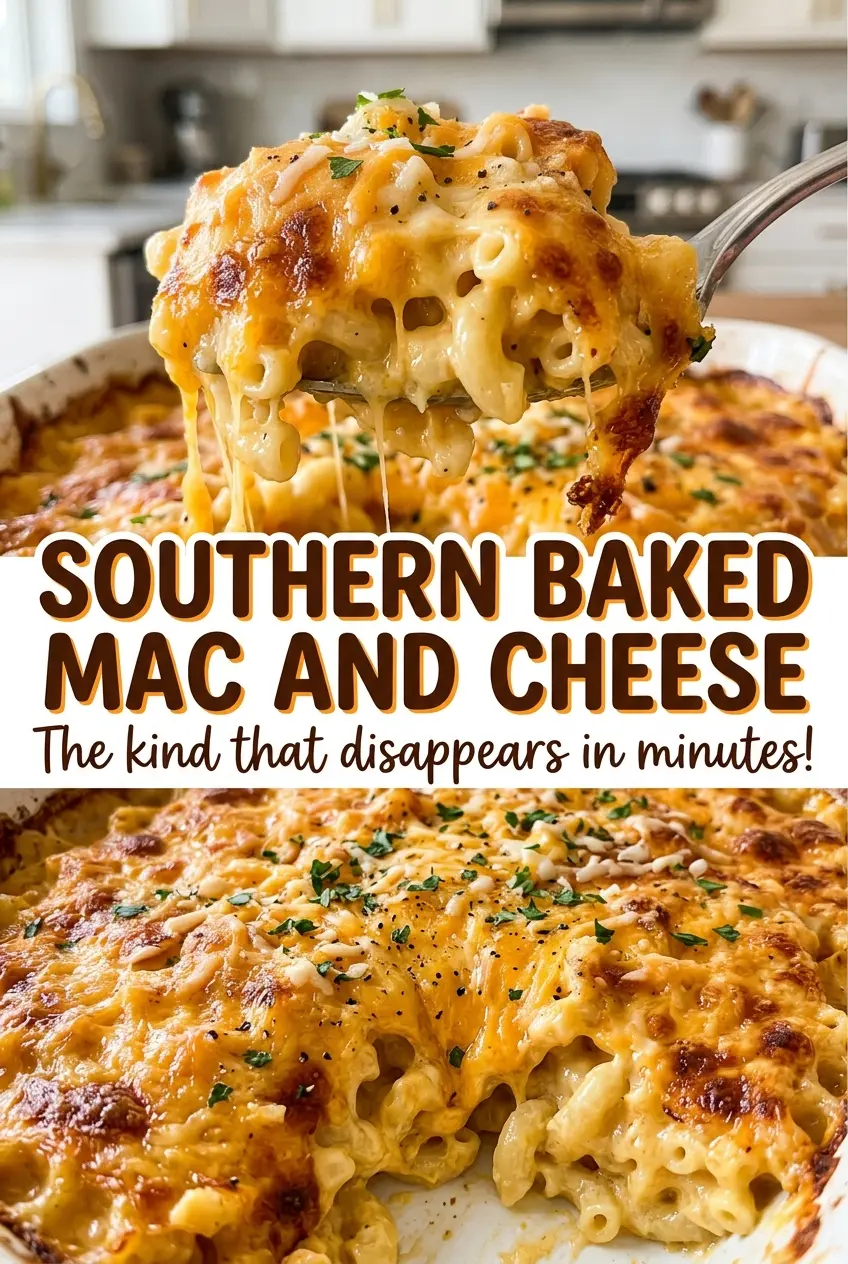
The top turns golden before the center has fully settled, and that’s the moment I pay attention to with Southern baked mac and cheese. The edges should look set, but the middle still needs time to firm up into a creamy, sliceable casserole. Pulling it too soon leaves the center loose; baking it too long can make the macaroni dry.
This version gets its structure from an egg-and-milk custard rather than a stovetop cheese sauce. I toss the hot elbows with butter and some of the cheddar first, then pour the custard over and stir it through. That gives the cheese a head start melting while the eggs bind everything together in the oven. Each forkful comes out tender, savory, and covered with a golden layer of cheddar.
Kitchen Note
Give the casserole its full 10 to 15 minutes to rest before serving. The custard firms as it settles, so the first scoop holds together instead of sliding apart.
Save Southern Baked Mac and Cheese for a cozy supper or a potluck table—tender elbows, a set custard center, and a golden cheddar top.
Why This Baked Mac and Cheese Sets Like a Custard
A stovetop macaroni and cheese stays creamy because its sauce is emulsified and served right away. This casserole works differently: eggs give the milk mixture enough structure to hold the macaroni together once it bakes. The center should be set, not loose like a pourable sauce, while the cheddar still keeps each bite rich.
Even distribution matters more than elaborate mixing. Whisk the eggs and milks until they’re combined, then pour that mixture across the macaroni and stir gently so it reaches between the elbows. If the custard pools in one corner, that part can bake up soft while another section turns firm. The extra cheddar on top forms its own layer, so you get a browned surface without relying on a thick sauce to coat every noodle.
Use the center as your guide rather than judging the whole dish by its edges. The perimeter heats first, which is why it can look finished while the middle needs a little longer. When the center has set and reaches 160°F, the casserole is ready to come out.
What the Cheddar and Milk Bring to the Casserole
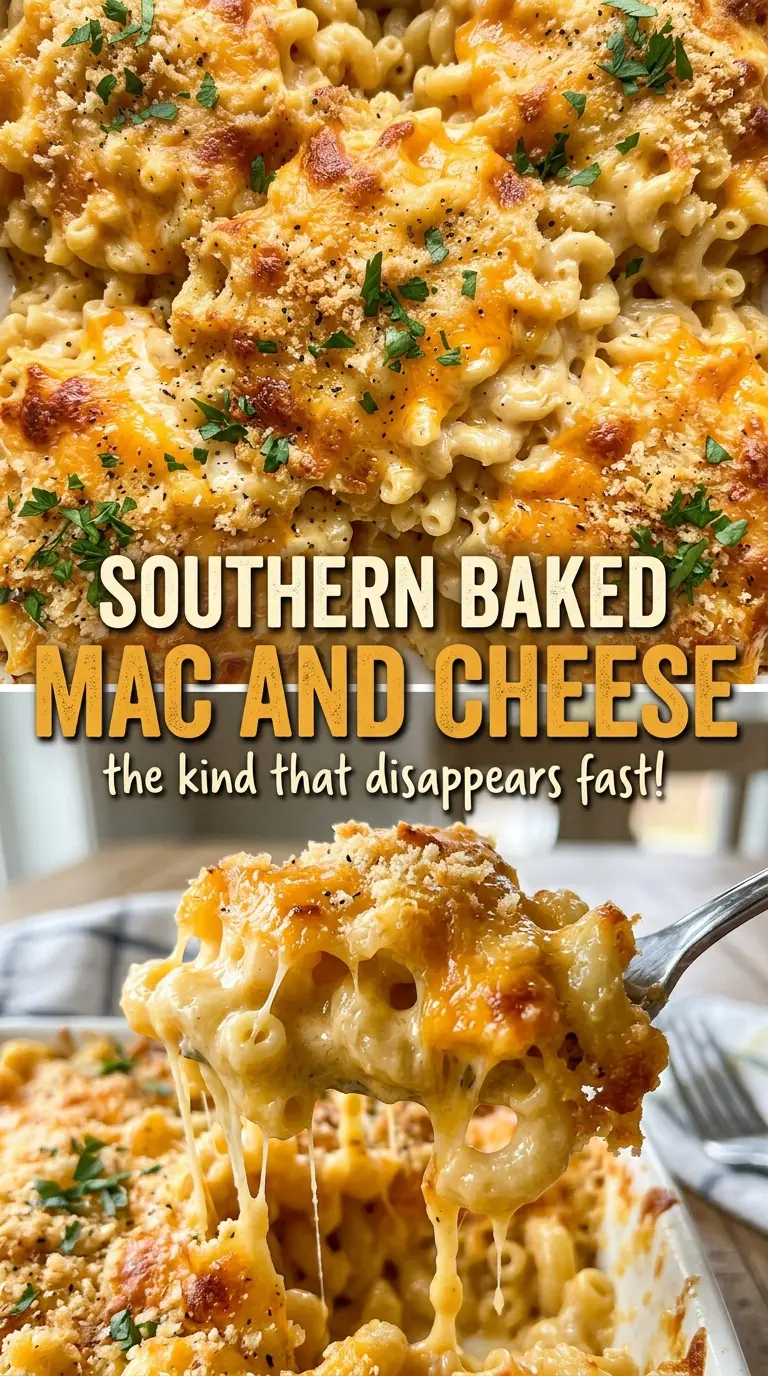
- Elbow macaroni — Its short curves catch the custard and make neat forkfuls. A similar short pasta, such as small shells, works if that’s what you have; cook it just to al dente according to its package because shapes vary in timing. For the gluten-free adaptation, use gluten-free elbows and watch the texture closely as they boil.
- Sharp cheddar — Sharpness gives the casserole its assertive cheese flavor, and freshly shredding it helps it melt more evenly than pre-shredded cheese, which is coated to prevent clumping. Medium cheddar is the easiest swap: use it in place of the sharp cheddar measure-for-measure for a milder result. Choose a block that tastes good on its own; there’s no need to buy an expensive aged cheddar here.
- Eggs — They bind the milk mixture as it bakes, giving the dish its set center. There isn’t a dependable direct swap in this style of casserole; leaving them out changes the structure and can leave the middle loose.
- Evaporated milk and whole milk — Evaporated milk brings concentrated dairy richness, while whole milk keeps the custard fluid enough to spread through the pasta. If you’re out of evaporated milk, whole milk can stand in at the same volume, but expect a less rich, softer set. Don’t mistake sweetened condensed milk for evaporated milk; it’s sweetened and would throw off the savory casserole.
- Butter — It coats the hot macaroni and adds richness before the custard goes in. Salted butter can replace unsalted butter, though the finished dish may taste a little saltier.
- Paprika and dry mustard — They give the cheese a gentle warmth and savory edge without making the casserole spicy. Smoked paprika makes a good flavor variation; if you’re missing the dry mustard, leave it out rather than adding a different seasoning blend.
Build the Custard Around Just-Tender Macaroni
Prepare the Dish and Pasta Water
Heat the oven to 350°F and grease a 9×13-inch baking dish with 1 tablespoon of the butter. Bring a large pot of water to a boil, then add the kosher salt and elbow macaroni. Starting the water first gives you time to prep the custard while the pasta cooks. Keep the baking dish close by so the drained macaroni can go straight into it while hot.
Stop the Pasta at Al Dente
Cook the elbows for 7 to 9 minutes, just until al dente, then drain them well. They’ll continue cooking in the oven, so soft pasta at this stage is likely to turn mushy by the time the casserole sets. Let the water drain off rather than carrying it into the baking dish; excess water can dilute the custard. A shake of the colander helps clear water from the curved centers.
Coat the Elbows Before Adding Custard
In a medium bowl, whisk together the eggs, evaporated milk, whole milk, black pepper, paprika, and dry mustard until combined. Melt the remaining butter, then toss it with the hot macaroni and 3 cups of the cheddar in the prepared dish. Pour the egg mixture evenly over the pasta and gently stir so it doesn’t collect at the bottom. Scatter the remaining cheddar across the top for an even layer.
Bake Until the Middle Is Set
Bake for 35 to 45 minutes, until the top is golden and the center is set and registers 160°F. The edges will look firmer first, so check the middle instead of relying on the corners. If the center still looks loose, give it more time within the baking window and check again. Let the finished casserole rest before scooping so the custard can settle.
Three Small Changes That Suit This Casserole
Make It Gluten-Free
Swap in gluten-free elbow macaroni, using the same amount, and cook it according to the package until just al dente. Gluten-free pasta can soften quickly, so start checking it early rather than carrying the standard pasta timing over automatically. The custard and cheddar stay the same, though the finished texture depends on the pasta brand.
Make the Cheese Flavor Milder
Use medium cheddar instead of sharp cheddar, keeping the same quantity. It melts into the casserole while bringing a gentler, less tangy flavor. This is an easy choice if you prefer the pasta and custard to come through more than the bite of sharp cheese.
Give the Top a Smoky Note
Replace the regular paprika with the same amount of smoked paprika. It adds a woodsy, smoky aroma that stands out against the cheddar without changing the casserole’s texture. Keep the rest of the seasoning as it is so that smoky note doesn’t take over.
Storage and Reheating
- Refrigerator: Store leftovers covered for 3 to 4 days. The macaroni will absorb some custard as it sits, so the texture becomes firmer.
- Freezer: Freeze portions or the whole cooled casserole, wrapped airtight, for up to 2 to 3 months for best quality. Thaw it in the refrigerator before reheating; the pasta will be softer after freezing.
- Reheating: For a larger portion, cover and warm it in a 325°F oven with a small splash of whole milk until hot throughout; individual portions reheat well in the microwave in short bursts. Don’t leave it uncovered in the oven, which can dry the top before the middle warms.
Questions That Come Up Before the First Scoop
Southern Baked Mac and Cheese
Ingredients
Equipment
Method
- Preheat the oven to 350°F.
- Grease a 9x13-inch baking dish with 1 tablespoon of the butter.
- Bring a large pot of water to a boil, add the kosher salt and macaroni, and cook for 7-9 minutes until just al dente; drain well.
- In a medium bowl, whisk the eggs, evaporated milk, whole milk, black pepper, paprika, and dry mustard until combined.
- Melt the remaining 3 tablespoons butter.
- Toss the hot macaroni with the melted butter and 3 cups of the cheddar in the prepared dish.
- Pour the egg mixture evenly over the macaroni and gently stir to distribute it.
- Sprinkle the remaining 1 cup cheddar over the top.
- Bake for 35-45 minutes, until the center is set and registers 160°F and the top is golden.
- Let the macaroni and cheese rest for 10-15 minutes before serving.