
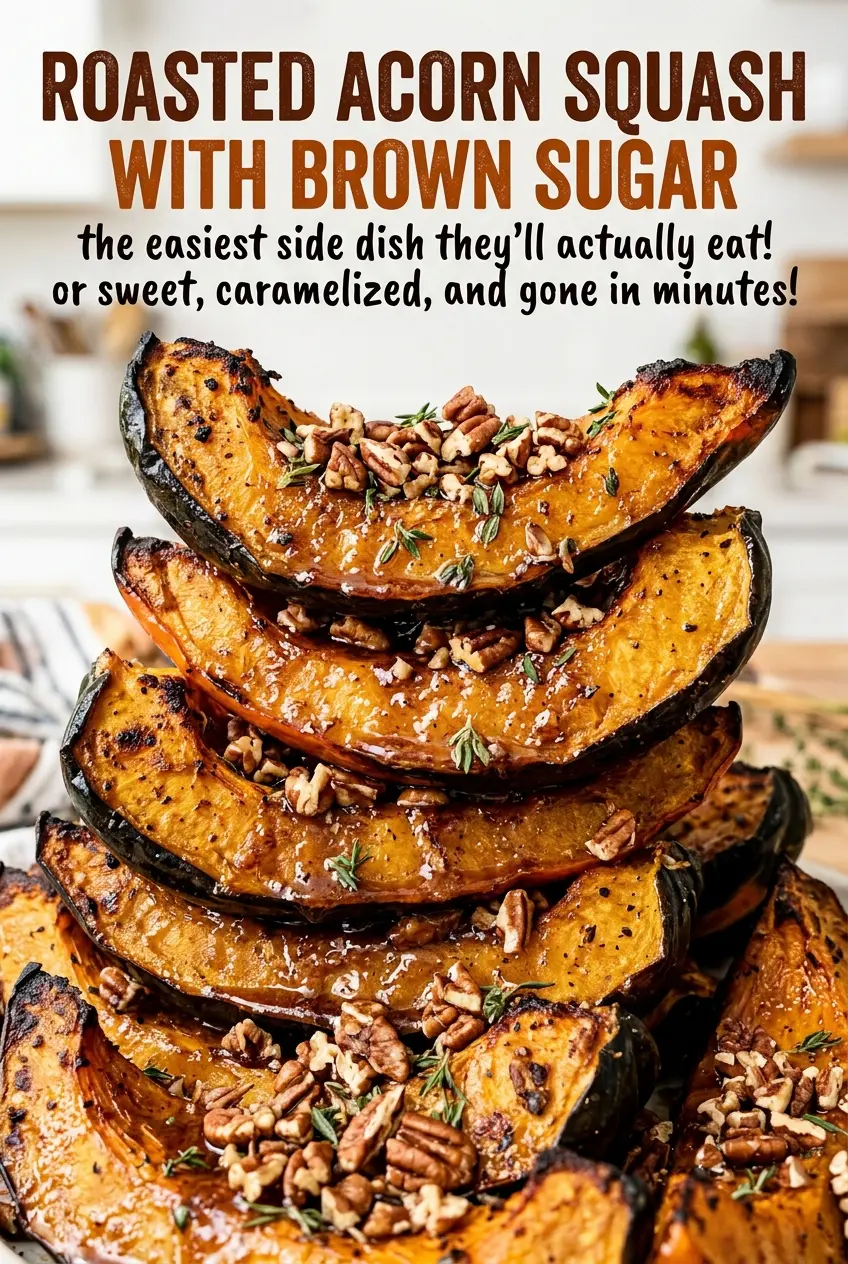
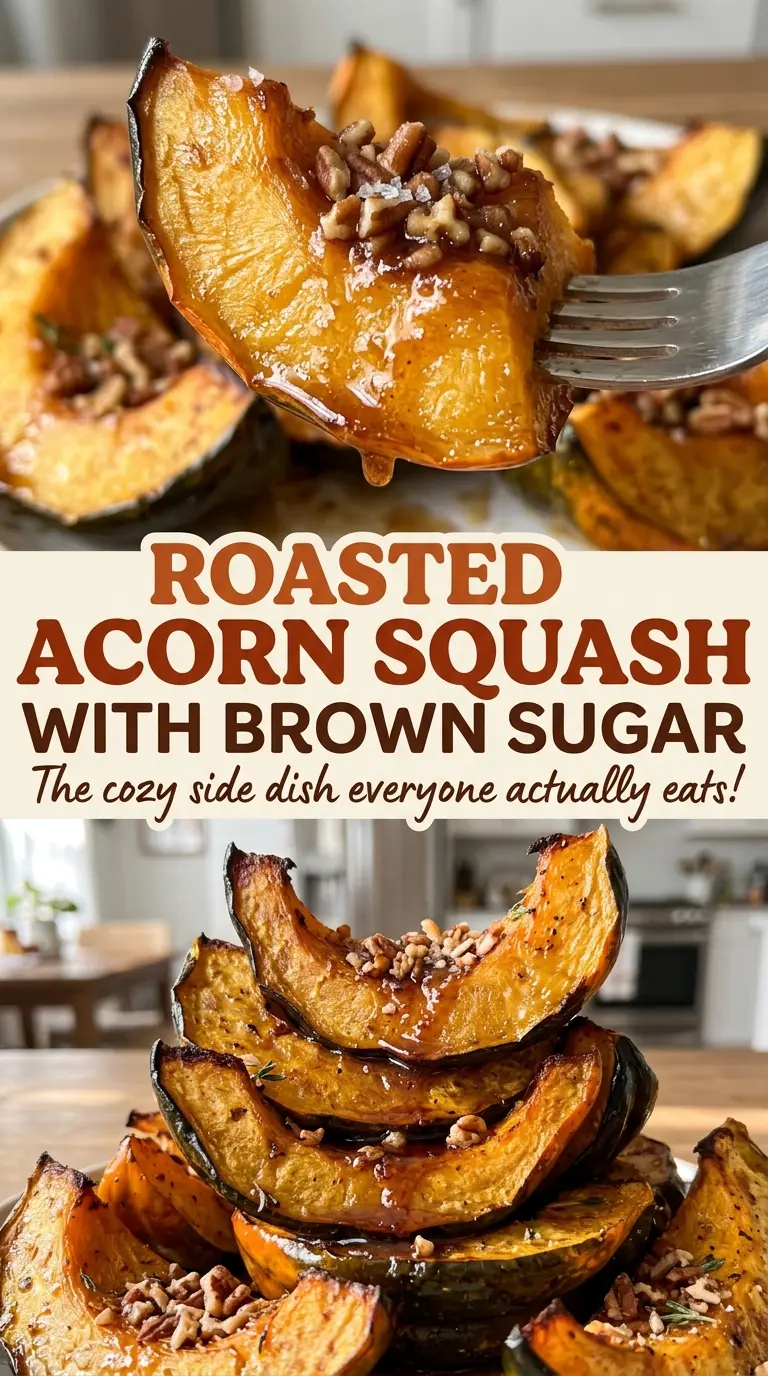
The cut edges are the first thing I look for when a pan of squash comes out of the oven: they should be browned, while the flesh gives easily to a fork. The little hollow in each half does useful work here, holding butter, brown sugar, and a pinch of salt right where they can melt together as the squash roasts. I like this preparation when I want a simple side dish that feels complete without a separate sauce or a long ingredient list.
Halving the squash lengthwise gives each piece a natural cup, and roasting it cut-side up keeps that sweet buttery filling in place. I scrape out the stringy center along with the seeds, then fill each cavity individually so the sugar and salt are divided across all four halves. Once the squash is tender and the edges have browned, the flesh is soft enough to scoop straight from its skin, with a buttery, caramel-like sweetness in every bite.
Kitchen Note
Scrape out the stringy flesh along with the seeds, not just the seeds themselves. Those loose strands can cling to the cavity and make it harder for the butter and sugar to sit neatly in each half.
Save this brown sugar acorn squash for a side dish with tender centers, browned edges, and a sweet buttery filling.
Why the Cut-Side-Up Position Keeps the Sweet Filling in the Squash
Acorn squash has a ready-made hollow, but that only helps if it stays facing up. The butter and brown sugar melt as the squash roasts; with the cavity upright, they settle into the center instead of running onto the baking sheet. The squash itself also holds the filling close to the flesh, so each portion gets some of the buttery sweetness rather than leaving it behind on the pan.
That orientation matters more than trying to coat the outside. The skin supports each half while the flesh softens, and the cut surface is exposed to the oven so its edges can brown. If a half tips and spills some filling, it will still roast, but you may lose part of the sweet topping to the parchment. Arrange the pieces securely before they go in, with the cavities open and facing up. It’s a small detail that gives this straightforward dish its best balance: tender squash underneath and a concentrated brown-sugar butter spooned over it.
What the Squash, Butter, and Brown Sugar Each Bring
- Acorn squash — Choose squash that feel firm and heavy, with no soft or sunken spots. Two medium squash give you four substantial halves, each with a cavity for the filling. Very unevenly sized squash may soften at different rates, so use the fork test rather than judging every piece by the same browned edge.
- Unsalted butter — Unsalted butter lets the small amount of kosher salt stay in balance with the sugar. Fresh butter is all you need; there’s no benefit to using a premium brand for this simple roast. If you’re making a dairy-free version, use a plant-based butter in the same amount, as described below.
- Light brown sugar — Pack it when measuring so the amount is consistent, and break up any hard clumps before filling the cavities. Light brown sugar brings sweetness with a gentle molasses note. Dark brown sugar works as a direct swap if you want that molasses flavor to come through more strongly.
- Kosher salt — A pinch in each cavity keeps the sweetness from tasting one-note. Distribute it across the halves rather than leaving all of it in one spot; the small amount seasons the filling as the butter melts.
From Hollowed Squash to Tender, Browned Edges
Heat the Oven and Prepare the Squash
Heat the oven to 400°F and line a rimmed baking sheet with parchment paper. Halve each squash lengthwise, then scoop out the seeds and stringy flesh until the center is clean. Work carefully through the firm skin and keep the halves intact so they can hold their filling. Set them cut-side up on the prepared sheet, checking that each one sits securely rather than rocking to one side.
Fill Each Cavity Evenly
Put one piece of butter, one tablespoon of packed light brown sugar, and a pinch of kosher salt into each squash cavity. Keep each portion in its own hollow instead of scattering the sugar across the cut surface. The butter will soften and the sugar will melt as the squash roasts, so the filling doesn’t need to be stirred together ahead of time. If a half is tilted, straighten it before the baking sheet goes into the oven.
Roast Until the Flesh Gives Easily
Roast for 45 to 55 minutes, until the flesh is fork-tender and the edges are browned. Start checking the squash near the shorter end of the range, since size and shape can affect how quickly the centers soften. Push a fork into the thickest part of the flesh; browned edges alone don’t tell you whether the middle is tender. When the fork slides in easily and the edges have color, take the pan out.
Two Straightforward Ways to Change the Flavor or Fit a Dairy-Free Table
Use Dark Brown Sugar for a Deeper Molasses Note
Replace the light brown sugar with the same amount of packed dark brown sugar. The squash keeps the same texture and method, but the filling tastes more deeply caramel-like, with a stronger molasses flavor.
Make It Dairy-Free with Plant-Based Butter
Swap the unsalted butter for the same amount of plant-based butter and keep the brown sugar and salt the same. Choose a plain, unsweetened version so it doesn’t add competing flavors; the filling may taste a little less rich than one made with dairy butter.
Storage and Reheating
- Refrigerator: Store leftovers in an airtight container for 3 to 4 days. The flesh softens further as it chills, but the flavor holds well.
- Freezer: Freeze cooled roasted squash in an airtight container for up to 3 months. The flesh will be softer after thawing, so it’s best for reheating rather than serving as a freshly roasted side.
- Reheating: Warm a portion in the microwave in short intervals until heated through. Avoid a long blast on high, which can dry the exposed edges before the middle is warm.
Questions That Come Up While Roasting Acorn Squash
Roasted Acorn Squash with Brown Sugar
Ingredients
Equipment
Method
- Heat the oven to 400°F.
- Line a rimmed baking sheet with parchment paper.
- Halve the 2 medium acorn squash lengthwise and scoop out the seeds and stringy flesh.
- Arrange the squash halves cut-side up on the baking sheet.
- Place 1 piece of butter in each cavity.
- Place 1 tablespoon brown sugar in each cavity.
- Divide the 1/4 teaspoon kosher salt among the cavities, using a pinch in each.
- Roast for 45 to 55 minutes, until the flesh is fork-tender and the edges are browned.