
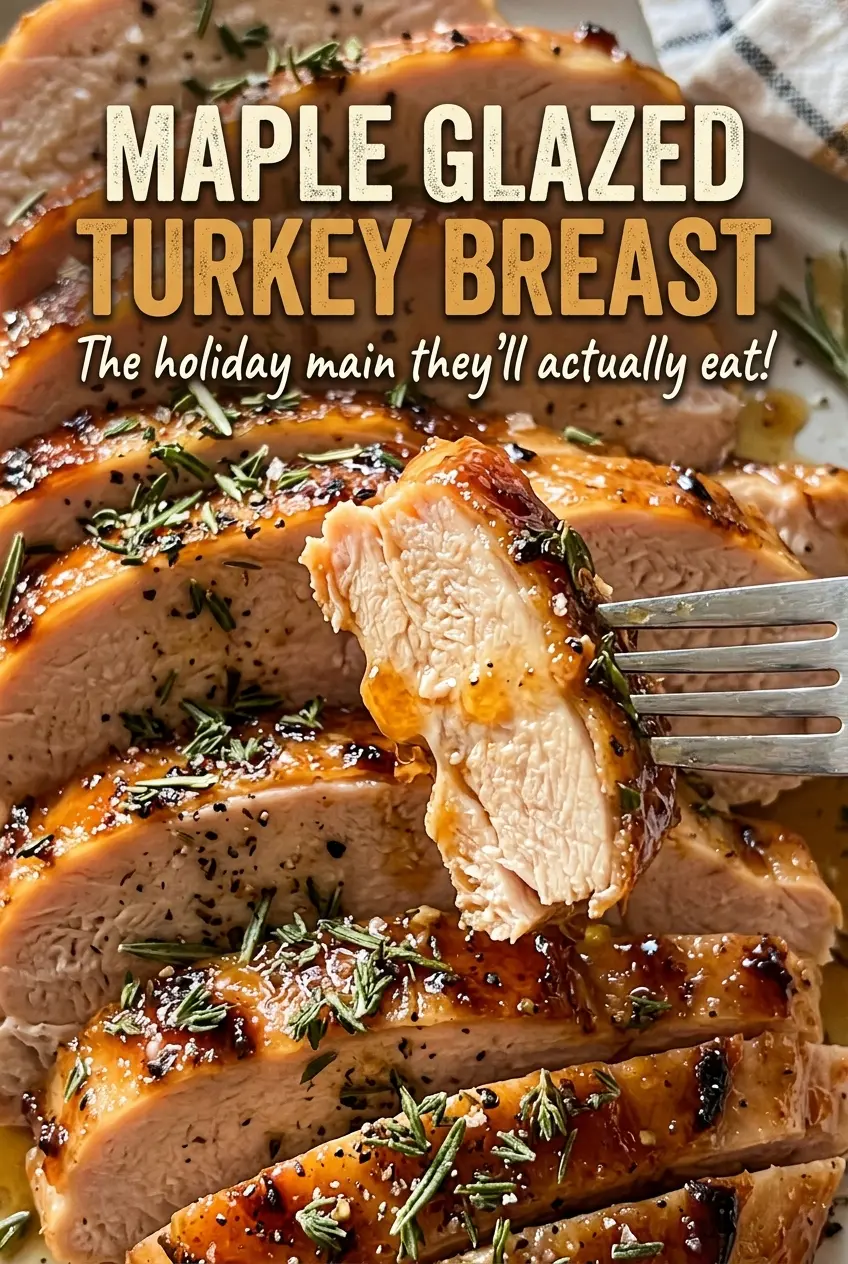
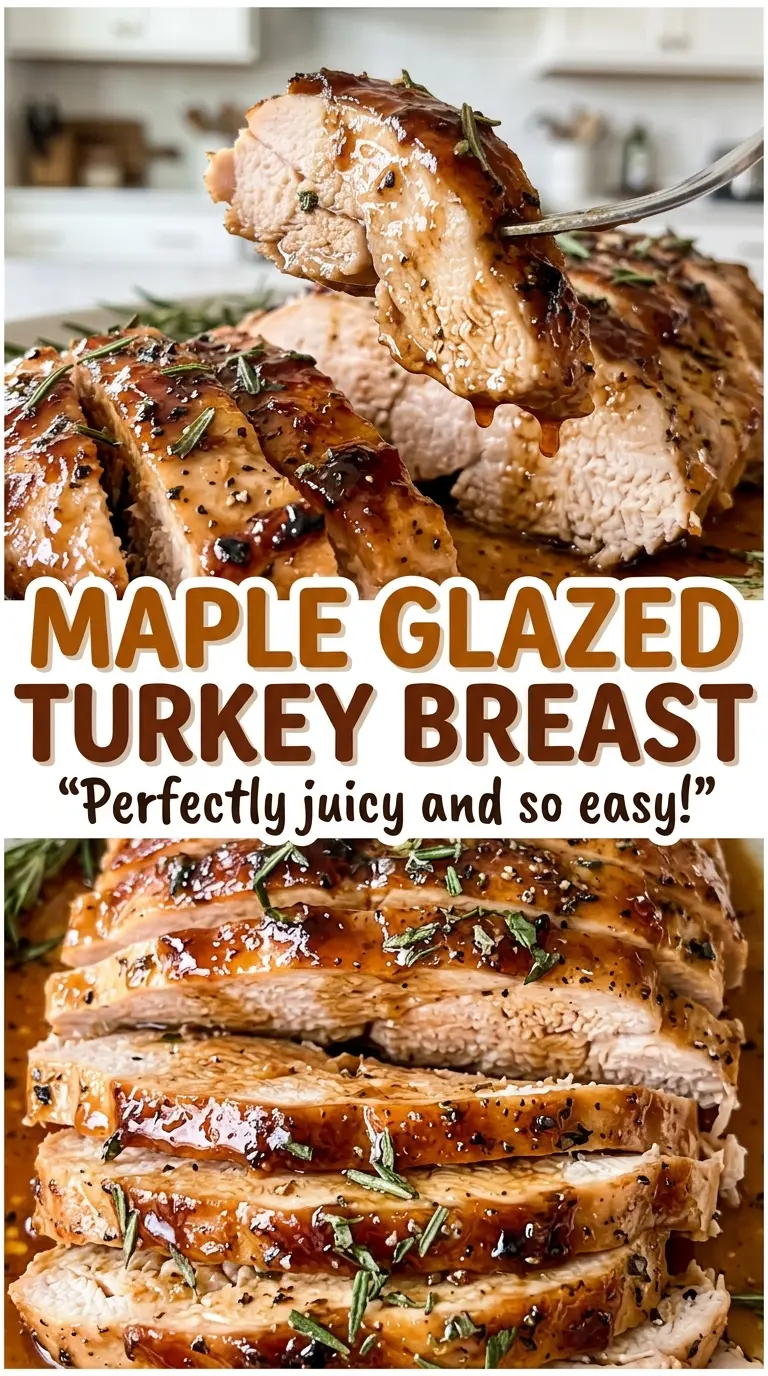
Maple syrup can darken long before a turkey breast is cooked through, so brushing it on at the start of roasting is a risky shortcut. I roast the turkey uncovered first, then add the maple-Dijon glaze near the end, when there’s just enough time for it to cling and turn glossy. The result is a bone-in, skin-on breast with seasoned meat and a sweet-tangy finish.
Softened butter rubbed beneath the skin does a lot of the quiet work here: it seasons the meat directly while the breast roasts. The glaze is kept simple, too. Pure maple syrup brings sweetness, Dijon adds sharpness, and apple cider vinegar keeps the finish from tasting heavy. For a 5- to 6-pound breast that serves eight, the thermometer matters more than the clock.
Kitchen Note
Give the turkey the full 20-minute rest before carving. Cutting into it right away lets more of the juices run onto the board instead of staying in the slices.
Save this Maple Glazed Turkey Breast for a centerpiece with tender, butter-seasoned meat and a glossy maple-Dijon finish.
Why the Maple Glaze Goes On Only After the Breast Reaches 140°F
The turkey needs a long stretch in the oven before the glaze goes on. Maple syrup contains sugar, and sugar can darken quickly under steady heat. Giving the breast that first uncovered roast keeps the glaze from spending the entire cooking time on the skin, where it could become too dark before the center is ready.
That first temperature reading is a handoff point, not the finish line. Once the thickest part reaches 140°F, brush on the glaze and continue roasting until the breast reaches 165°F. The late glaze has time to coat the skin and build color without being exposed to the full roast. Use the thermometer to judge doneness; the estimated times are helpful, but breast size and oven performance can shift them.
The glaze also needs to be thick enough to stay on the turkey rather than run straight off. A short simmer brings the syrup, mustard, and vinegar together until the mixture is slightly thickened. Keep stirring and stop at that texture; it will continue to cling as you brush it over the hot skin.
Why Pure Maple Syrup and Dijon Make This Turkey Glaze Work
- Bone-in, skin-on turkey breast — The bone-in cut and skin are part of how this roast is designed. The skin gives the butter and glaze a surface to coat, while the bone-in breast has a different shape and cooking time from a boneless one. Choose a breast in the stated size range rather than applying this timing to another cut.
- Softened unsalted butter — Soft butter spreads beneath the skin without needing to melt it first. Unsalted butter lets the measured kosher salt season the turkey without adding an unknown amount of salt from the butter itself. If it’s cold and firm, it’s harder to work under the skin evenly.
- Pure maple syrup — Pure maple syrup gives the glaze its clear maple flavor and sweetness. Pancake syrup isn’t a like-for-like stand-in; its added ingredients can change the flavor and how the glaze cooks. Use pure maple syrup for the intended finish.
- Dijon mustard and apple cider vinegar — Dijon gives the glaze a savory, tangy edge, while the vinegar cuts through the syrup’s sweetness. Together they keep the glaze from tasting like straight syrup. The Dijon’s sharpness matters more here than choosing an expensive brand.
- Dried thyme, kosher salt, and black pepper — Dried thyme seasons the butter and turkey without adding extra moisture beneath the skin. Fresh thyme isn’t the ingredient used here, so stick with dried thyme for the measured seasoning. Kosher salt and black pepper give the breast its simple savory base.
Roast First, Glaze at the Finish, Then Let the Breast Rest
Season beneath the skin
Heat the oven to 350°F, then pat the turkey dry. Gently loosen the skin and rub softened butter beneath it and over the outside; if the skin resists, ease your fingers along rather than pulling hard. Season the breast evenly with kosher salt, black pepper, and dried thyme. Set it skin-side up on a rack in a 9×13-inch roasting pan.
Roast until the glaze can go on
Roast the turkey uncovered at 350°F until the thickest part of the breast reaches 140°F, about 1 1/2 to 1 3/4 hours. Insert the thermometer into the thickest area of meat for a useful reading. Don’t use browned skin as a sign that the center is finished; color and internal temperature don’t always move at the same pace.
Simmer the maple-Dijon glaze
While the turkey roasts, combine the maple syrup, Dijon mustard, and apple cider vinegar in a small saucepan. Bring the mixture to a simmer over medium heat and cook for 3 to 4 minutes, stirring. Look for a slight thickening rather than a heavy, sticky reduction. If you let it boil hard, it can reduce too far before it reaches the turkey.
Brush, finish, and rest
When the breast reaches 140°F, brush it with glaze and return it to the oven at 350°F. Brush again every 8 to 10 minutes, using all the glaze, and roast until the thickest part reaches 165°F; this final stretch takes about 15 to 25 minutes. If the outside looks ready before the temperature does, trust the thermometer and keep roasting. Transfer the turkey to a cutting board and let it rest before carving.
Two Useful Ways to Adapt the Maple Turkey
Make the glaze ahead
For a calmer cooking window, simmer the maple syrup, Dijon, and apple cider vinegar while you have time, then cool and refrigerate the glaze in a covered container. Warm it gently until it’s easy to brush before the turkey reaches its glazing stage. This changes the prep schedule, not the glaze’s sweet-tangy balance.
Skip the glaze for a savory roast
Leave out the maple syrup, Dijon, and vinegar, then roast the butter- and thyme-seasoned turkey at 350°F until the thickest part reaches 165°F. You’ll lose the sweet, glossy coating and get a simpler savory roast instead. Don’t use the glazed version’s final-stage timing as the total cooking time; follow the thermometer.
Storage and Reheating
- Refrigerator: Carve leftovers and refrigerate them within 2 hours. Store in an airtight container for 3 to 4 days; the meat will firm up as it chills.
- Freezer: Freeze carved portions in airtight packaging for up to 3 to 4 months for best quality. Thaw in the refrigerator before reheating.
- Reheating: Warm slices in a covered baking dish in a 325°F oven until hot throughout, or heat a smaller portion in the microwave. Reheat only what you plan to eat; repeated heating can dry out the breast.
Questions That Come Up When Roasting a Turkey Breast
Maple Glazed Turkey Breast
Ingredients
Equipment
Method
- Preheat the oven to 350°F.
- Pat the turkey dry and gently loosen the skin.
- Rub the softened butter under the skin and over the outside.
- Season the turkey evenly with the kosher salt, black pepper, and dried thyme.
- Set the turkey skin-side up on a rack in a 9x13-inch roasting pan.
- Roast uncovered at 350°F until the thickest part of the breast reaches 140°F, about 1 1/2 to 1 3/4 hours.
- While the turkey roasts, combine the maple syrup, Dijon mustard, and apple cider vinegar in a small saucepan.
- Bring the mixture to a simmer over medium heat.
- Cook for 3 to 4 minutes, stirring, until slightly thickened.
- Brush the turkey with the glaze.
- Continue roasting at 350°F, brushing again every 8 to 10 minutes and using all the glaze, until the thickest part reaches 165°F, about 15 to 25 minutes.
- Transfer the turkey to a cutting board and let it rest for 20 minutes before carving.