
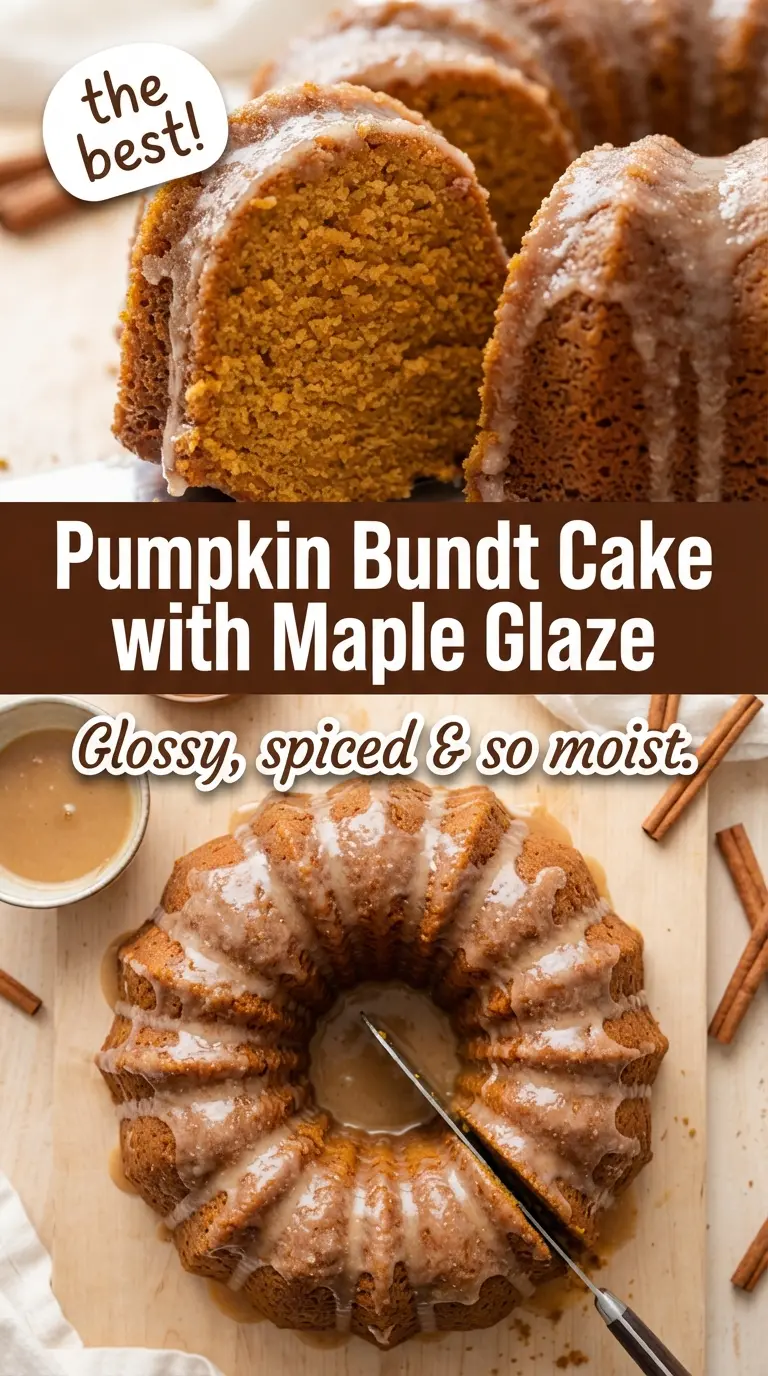
Tall slices of pumpkin bundt cake should feel plush, not heavy, with a crumb that stays soft for days and a glaze that settles into the ridges instead of sliding straight off. This one does exactly that. The batter bakes up with a tender, fine crumb, plenty of warm spice, and just enough richness to keep every bite moist without turning dense.
The combination that makes it work is simple: pumpkin purée for flavor and body, sour cream for moisture and a little tang, and oil for a crumb that stays soft long after the cake cools. Pumpkin cakes can get dry or gummy fast when they’re overmixed or overbaked, so this version leans on a gentle fold and a careful bake time. The maple glaze finishes the cake with a buttery sweetness that tastes better than a standard powdered sugar icing and looks right at home on a holiday table.
If bundt cakes have ever stuck in the pan or baked up with a dull, tight texture, the notes below will help you avoid both problems. I also included the adjustments I’d use if you want to swap the dairy or make the cake ahead.
The cake came out so moist and the maple glaze set up perfectly in the ridges. I used sour cream like suggested and it stayed tender even on day two.
Love a bundt cake with a soft crumb and maple drizzle? Save this moist pumpkin bundt cake for the next time you want an easy centerpiece dessert.
The Trick to Keeping a Pumpkin Bundt Cake Moist Without Making It Heavy
Pumpkin batter is unforgiving when it gets overworked. The flour hydrates fast, and once that happens the cake can tip from tender to tight in a few extra strokes. The goal here is to mix just until the dry streaks disappear, then stop. That little bit of restraint is what keeps the crumb soft instead of bready.
The other place people lose texture is in the pan and in the oven. A bundt pan has sharp details and a lot of surface area, so every ridge needs a real coating of butter and flour. Then the bake has to come off while the center is set but still springy. If you wait for the cake to look completely dry on top, it usually goes past the point where it stays plush after cooling.
- Pumpkin purée — Use canned pumpkin purée, not pumpkin pie filling. Pie filling already contains sugar and spices, which throws off both the flavor and the texture.
- Sour cream — This is the ingredient that gives the cake its lasting moisture and a little lift. Full-fat plain Greek yogurt works if that’s what you have, but the cake will be just a touch less rich.
- Oil — Butter tastes great, but oil keeps this cake softer for longer. That matters in a bundt cake, especially if you’re baking it a day ahead.
- Maple syrup — Use real maple syrup in the glaze. Pancake syrup won’t set with the same clean sweetness, and the glaze will taste thinner.
Building the Batter So the Crumb Stays Tender
The pan comes first. Brush every ridge and curve with softened butter, then dust it with flour and tap out the excess. If you miss a spot, that missing patch is where the cake sticks, usually right in the prettiest part.
Whisk the dry ingredients together before they meet the wet bowl. That distributes the baking soda, spice, and salt evenly, so the cake rises with a consistent crumb instead of one odd pocket that tastes flat or bitter. In the wet bowl, whisk the pumpkin, sugars, and oil until smooth before the eggs go in. That helps the eggs emulsify instead of clumping.
Once the flour goes in, fold with a spatula and stop the second you stop seeing streaks. A few small lumps are better than a batter that’s been beaten into submission. The batter should look thick and glossy, not loose and pourable like a quick bread.
Preparing the Pan
Heat the oven to 350°F and get the bundt pan ready before you mix the batter. Softened butter gets into the grooves better than spray, and flour gives the cake a clean release. If the pan is greased unevenly, the top edge often tears when you invert it.
Mixing the Wet and Dry Ingredients
Whisk the pumpkin, sugars, oil, eggs, sour cream, and vanilla until the mixture looks smooth and slightly satiny. Add the dry ingredients in one addition and fold just until combined. Overmixing at this stage is the fastest way to lose the fine, tender crumb this cake is supposed to have.
Baking and Unmolding
Pour the batter into the pan, smooth the top, and tap it once on the counter to release trapped air. Bake until a skewer comes out clean from the thickest part and the top springs back lightly when pressed. Let the cake rest in the pan for 15 minutes, then invert it onto a rack while it’s still warm enough to release cleanly.
How to Adapt This Pumpkin Bundt Cake for Different Tables
Dairy-Free Version
Swap the sour cream for an equal amount of unsweetened dairy-free yogurt with some body, and use plant-based butter in the glaze. The cake will still bake up moist, though the glaze will be a little less rich and more straightforwardly sweet.
Gluten-Free Option
Use a good 1:1 gluten-free flour blend that includes xanthan gum. The cake will be slightly more delicate, so let it cool fully before moving it more than necessary or slicing it.
Make It Ahead for a Gathering
Bake the cake a day ahead and glaze it the next day after it has fully cooled. The crumb actually settles in overnight, and the flavor gets deeper without losing moisture.
Spice It Differently
If you don’t have pumpkin pie spice, use extra cinnamon plus a mix of ginger, nutmeg, and cloves. That combination gives the cake the same warm backbone, but each spice comes through a little more distinctly.
Storage and Reheating
- Refrigerator: Store covered for up to 5 days. The crumb stays moist, though the glaze may soften a bit on top.
- Freezer: This cake freezes well without the glaze. Wrap the cooled cake tightly in plastic and foil, then freeze for up to 2 months. Glaze after thawing for the cleanest look.
- Reheating: Bring slices to room temperature or warm them briefly in the microwave for 10 to 15 seconds. Long reheating dries out the edges and dulls the glaze.
Answers to the Questions Worth Asking
Moist Pumpkin Bundt Cake with Maple Glaze
Ingredients
Equipment
Method
- Preheat the oven to 350°F (175°C). Brush a 10–12 cup bundt pan with softened butter, dust with flour, then tap out the excess.
- Set the pan on a sheet pan for easier handling. Keep it ready while you mix the batter.
- In a medium bowl, whisk together all-purpose flour, baking powder, baking soda, salt, pumpkin pie spice, and ground cinnamon until evenly combined.
- In a large bowl, whisk pumpkin purée, granulated sugar, packed light brown sugar, and vegetable oil until smooth.
- Whisk in the large eggs one at a time, then add sour cream and pure vanilla extract and whisk until glossy.
- Add the dry ingredients and fold gently with a spatula just until no flour streaks remain.
- Pour the batter into the prepared bundt pan and smooth the top. Tap the pan on the counter to release air bubbles.
- Bake at 350°F (175°C) for 55–65 minutes, until a skewer inserted into the thickest part comes out clean and the top springs back when pressed.
- Cool the cake in the pan on a wire rack for 15 minutes. Then invert onto the rack and lift the pan away.
- Let the cake cool completely for about 2 hours before glazing.
- Whisk powdered sugar, pure maple syrup, melted unsalted butter, milk, and salt until smooth and pourable.
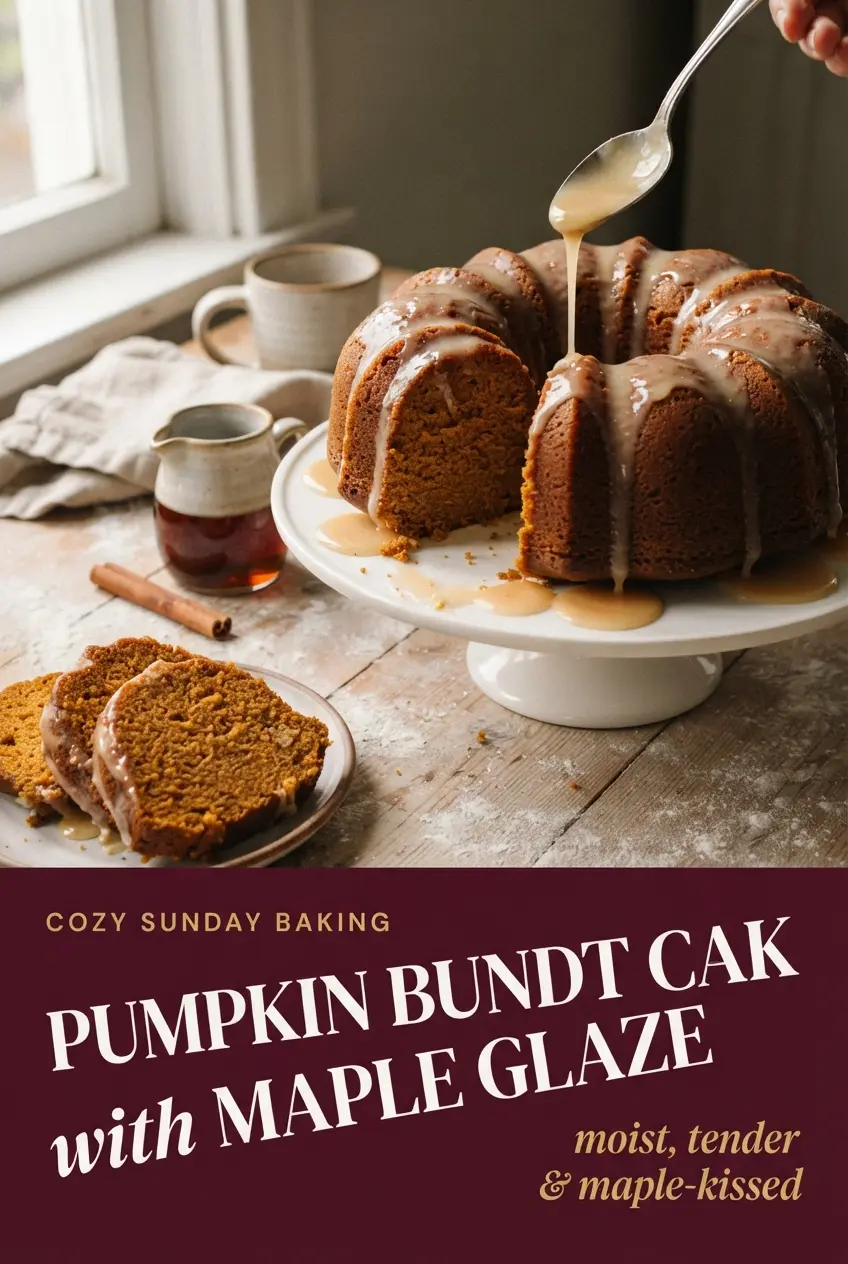
- Place the cake on a serving plate and spoon the maple glaze slowly over the top, letting it drip down the sides.
- Let the glaze set for 20 minutes, then slice and serve.