
Tender shrimp, silky Alfredo sauce, and fettuccine that cooks right in the skillet make this dinner feel a lot more polished than the cleanup suggests. The pasta absorbs the broth and cream as it cooks, which gives the sauce body without needing a separate pot, and the shrimp stay juicy because they go in at the end instead of getting blasted from the start.
The trick here is restraint. Garlic only needs a short minute in the butter before the liquid goes in, and the Parmesan has to be stirred into a gentle simmer, not a hard boil, or the sauce can turn grainy. Freshly grated Parmesan matters here because pre-shredded cheese often brings in anti-caking agents that keep it from melting smoothly.
Below you’ll find the timing that keeps the pasta from going mushy, the easy swap if you need a dairy-free direction, and the little detail that keeps this Alfredo creamy all the way to the last bite.
The sauce thickened right up and the pasta came out perfectly tender without getting mushy. I added the shrimp at the end like you said, and they stayed plump instead of rubbery.
Save this one-pot shrimp fettuccine Alfredo for the nights when you want a creamy pasta dinner with one skillet and no separate sauce pan.
The Part That Keeps the Sauce Creamy Instead of Gluey
One-pot Alfredo sounds simple until the pasta drinks too much liquid and the sauce turns pasty, or the cheese goes in over high heat and clumps instead of melting. The balance here comes from starting with enough broth to cook the fettuccine but not so much that you end up with a thin, soupy pan at the end. As the pasta cooks, it releases starch into the liquid, which helps the sauce thicken naturally.
The other thing that matters is when the shrimp go in. If they simmer for the whole ten minutes, they turn firm and tight. Adding them for the last few minutes keeps them pink, curled, and tender while the pasta finishes at the same time.
What Each Ingredient Is Actually Doing in This Dish
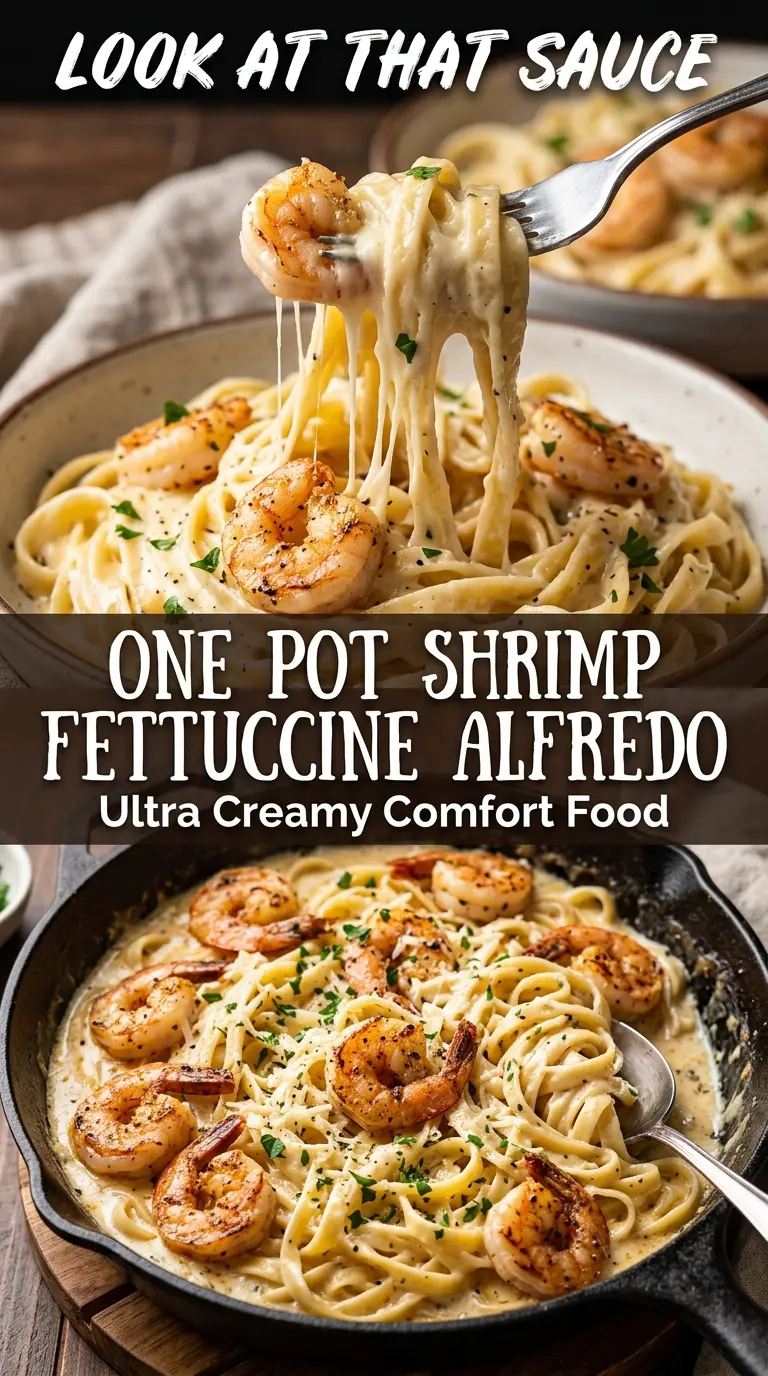
- Fettuccine — The wide noodles hold onto the Alfredo better than thinner pasta. If you swap in linguine, the dish still works, but the sauce clings a little less dramatically.
- Heavy cream — This gives the sauce its body and keeps it stable once the Parmesan goes in. Half-and-half can work in a pinch, but the sauce will be looser and more likely to thin out as it sits.
- Freshly grated Parmesan — This is what gives you that smooth, salty finish. Pre-grated cheese can melt unevenly and leave the sauce sandy.
- Shrimp — Large shrimp hold up best in the short cooking window. Smaller shrimp cook even faster, so watch them closely and pull the pan as soon as they turn opaque.
- Chicken broth — This seasons the pasta from the inside out and gives the sauce enough liquid to develop in one pan. Low-sodium broth gives you more control over the final salt level.
How to Build the Pan So Nothing Overcooks
Blooming the Garlic Briefly
Melt the butter over medium heat and add the garlic for just 30 seconds. You want it fragrant, not browned; burnt garlic turns the whole dish bitter fast. Once the garlic smells sweet and mellow, get the liquid in the pan right away so it stops cooking.
Cooking the Pasta in the Sauce Base
Pour in the broth and cream, then add the fettuccine and bring it to a gentle boil before lowering the heat. The liquid should bubble lazily, not slam against the sides of the skillet. Stir every minute or so so the noodles don’t stick together or glue themselves to the bottom.
Finishing with Shrimp and Parmesan
Add the shrimp during the last five minutes, then stir in the Parmesan only after the shrimp are pink and the pasta is tender. If the pan is boiling hard when the cheese goes in, the sauce can break or turn grainy. Keep it at a quiet simmer and stir until the sauce looks glossy and coats the noodles in a thick layer.
Three Smart Ways to Adjust This Alfredo
Dairy-Free Version
Use a full-fat unsweetened oat or cashew cream and a dairy-free Parmesan-style cheese. The sauce won’t have quite the same richness as heavy cream and real Parmesan, but it still gets creamy if you keep the heat low and add the cheese substitute off the boil.
Gluten-Free Swap
Use your favorite gluten-free fettuccine, but watch the cooking time closely because it can go from firm to soft faster than wheat pasta. Stir even more often, since gluten-free noodles are more likely to break if they sit untouched in a thick sauce.
Chicken Instead of Shrimp
Thinly sliced boneless chicken breast or thigh works well if you cook it first in the butter before the garlic goes in. The result is a little heartier and less delicate than shrimp, but it fits the same creamy sauce beautifully.
Storage and Reheating
- Refrigerator: Store in an airtight container for up to 3 days. The sauce will thicken as it chills.
- Freezer: Freezing isn’t ideal here because cream sauces can turn grainy after thawing and the shrimp can get tough.
- Reheating: Warm gently on the stove over low heat with a splash of broth or cream. High heat is the fastest way to split the sauce and overcook the shrimp.
Answers to the Questions Worth Asking
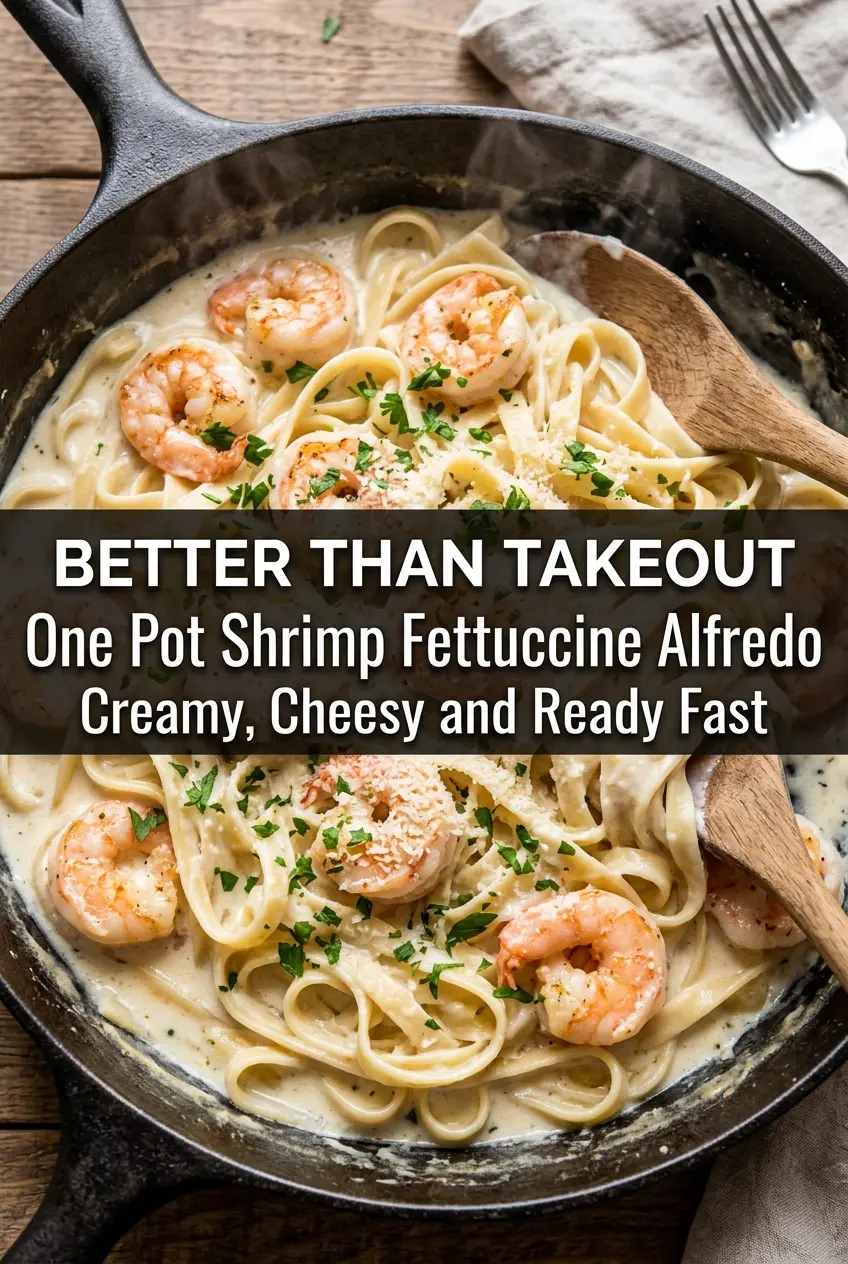
One Pot Shrimp Fettuccine Alfredo
Ingredients
Equipment
Method
- Melt butter in a large deep skillet over medium heat until it turns glossy and foamy.
- Add garlic and cook for 30 seconds, stirring, until fragrant (do not brown).
- Pour in chicken broth and heavy cream and stir to combine.
- Stir in Italian seasoning, salt, and black pepper until evenly distributed.
- Add fettuccine and bring to a gentle boil, then stir so the pasta is submerged.
- Reduce heat and simmer for 10–12 minutes, stirring occasionally to prevent sticking and keep the sauce from clinging to the bottom.
- Add shrimp during the last 5 minutes of cooking, submerging them in the creamy sauce.
- Cook until shrimp turn pink and opaque, stirring gently.
- Stir in Parmesan cheese until smooth and fully melted into the sauce.
- Simmer for 2 minutes until thick and creamy, stirring once or twice for even texture.
- Garnish with chopped parsley and extra Parmesan for serving.
- Serve immediately while the fettuccine is creamy and the sauce is at peak thickness.