
Pesto chicken with tortellini, asparagus, and cherry tomatoes is the kind of skillet dinner that disappears fast because every bite has something different going on: juicy seared chicken, tender pasta pillows, crisp-tender greens, and tomatoes that burst into the sauce. The pesto coats everything without turning heavy, and the Parmesan plus pasta water turn it from a loose toss into a glossy, clingy dinner that tastes like you paid attention the whole time.
What makes this version work is the order. The chicken gets a hard sear first so it brings flavor into the pan, then the garlic, asparagus, and tomatoes cook in those same browned bits. The pesto goes in at the end over low heat, which keeps it bright instead of dull and oily. A little reserved pasta water matters here too — it loosens the pesto just enough to coat the tortellini instead of sitting in clumps on top.
You’ll find the exact timing below, plus the small tweaks that keep the vegetables crisp and the sauce silky. If you’ve ever had pesto pasta turn thick, greasy, or flat, this method fixes that without adding extra work.
The pesto stayed bright and the tortellini held up perfectly. I loved that the asparagus stayed a little crisp, and the chicken sliced cleanly after resting. My husband asked if I could put this in the regular rotation.
Save this pesto chicken tortellini skillet for a fast dinner with glossy sauce, crisp asparagus, and barely any cleanup.
The Reason This Pesto Stays Bright Instead of Turning Heavy
Pesto can go from fresh and vibrant to greasy and muted if it gets blasted with heat. That happens when it sits on a hot burner too long or gets stirred into a pan that’s still screaming hot. Basil loses its punch fast, and the oil in the pesto separates before it has a chance to coat the pasta.
The fix is simple: build the dish first, then add the pesto at the end over low heat. The pasta water helps the sauce emulsify, which means it loosens the pesto just enough to hug the tortellini and chicken instead of pooling underneath. Parmesan does part of that job too, adding body and a little saltiness without making the skillet feel heavy.
What Each Ingredient Is Actually Doing in This Dish
- Chicken breasts — These give the dish its sturdy, savory base. Slicing them after a short rest keeps the juices in the meat instead of letting them run into the pan. If you prefer thighs, they work too and stay a little juicier, but they’ll bring a richer flavor and need a few extra minutes.
- Refrigerated cheese tortellini — This is the shortcut that makes the meal feel abundant without adding much time. Fresh tortellini cooks quickly and holds up well in the skillet, while dried tortellini can work if you boil it fully and drain it carefully so it doesn’t tear when tossed.
- Asparagus — This vegetable gives the dish a crisp bite and keeps the skillet from feeling too soft. Cut the spears into short pieces so they cook quickly and stay bright green. If your asparagus is thick, peel the lower half of the stalks so it doesn’t go stringy.
- Cherry tomatoes — These burst in the pan and loosen the pesto with their juices. That little bit of acid cuts through the richness of the cheese and oil. Grape tomatoes will work, but they’re usually a touch firmer and less juicy.
- Prepared basil pesto — This is the main flavor, so use one you actually like eating on its own. Store-bought is fine here, especially if it tastes fresh and garlicky. Homemade pesto works beautifully too, but if it’s very thick, thin it with a spoonful more pasta water.
- Reserved pasta water — Don’t skip this. Starchy pasta water helps the pesto cling to the tortellini and chicken instead of sliding around the skillet. If you forget to save it, use a splash of warm water, but the sauce won’t have quite the same body.
How to Keep the Chicken Juicy and the Vegetables Crisp at the Same Time
Seared Chicken First
Season the chicken evenly and get it into a hot skillet with olive oil. You want a deep golden crust and a clean release from the pan before you turn it. If it sticks, it’s not ready yet. Pull it off once it reaches 165°F in the thickest part, then let it rest so the juices settle before you slice it.
Cooking the Tortellini Without Turning It Mushy
Boil the tortellini just until it’s tender and floating, then stop there. Overcooked tortellini gets fragile fast and can split when you toss it with the vegetables. Reserve a little pasta water before draining, because that small amount of starch is what turns the pesto into a sauce instead of a paste.
Building the Pan in Layers
Use the same skillet for the garlic, asparagus, and tomatoes. Those browned bits from the chicken are part of the flavor, so don’t wash them away. Cook the asparagus until it turns bright green and barely tender, then add the tomatoes just long enough for some to blister and soften. When the pesto goes in, reduce the heat so it stays fragrant and glossy.
Bringing Everything Together
Add the tortellini and chicken back to the skillet before the pesto, then toss gently once the sauce starts loosening. If the pan looks dry, add a spoonful more pasta water. If it looks loose, let it sit over low heat for a minute and it will tighten up as the cheese melts into the sauce.
Three Practical Ways to Change This Without Losing What Makes It Good
Make It Dairy-Free
Use a dairy-free pesto and swap the cheese tortellini for a plain pasta shape or dairy-free tortellini. Skip the Parmesan garnish or finish with nutritional yeast if you want a cheesy edge. The result will still be herby and bright, but a little less rich and creamy.
Make It Gluten-Free
Use gluten-free tortellini if you can find it, or serve the chicken, vegetables, and pesto over gluten-free pasta. The key is to watch the texture closely, because gluten-free pasta can go from tender to soft faster than standard tortellini. Keep a little extra pasta water on hand since it helps the sauce cling even more.
Make It Meatless
Leave out the chicken and add more tortellini, or fold in white beans or sautéed mushrooms for extra substance. Mushrooms bring a savory, almost meaty note that plays well with pesto, while beans make the dish heartier without changing the cook time much. You’ll lose the seared chicken flavor, but the skillet still eats like a full dinner.
Storage and Reheating
- Refrigerator: Store leftovers in an airtight container for up to 3 days. The tortellini will absorb some sauce as it sits, so the dish gets a little tighter by day two.
- Freezer: I don’t recommend freezing this one. Tortellini and asparagus both suffer in the freezer, and the pesto can turn dull once thawed.
- Reheating: Warm it gently in a skillet over low heat with a splash of water or broth. Microwaving on high tends to make the chicken tough and the tortellini split, so use short bursts if that’s your only option.
Answers to the Questions Worth Asking
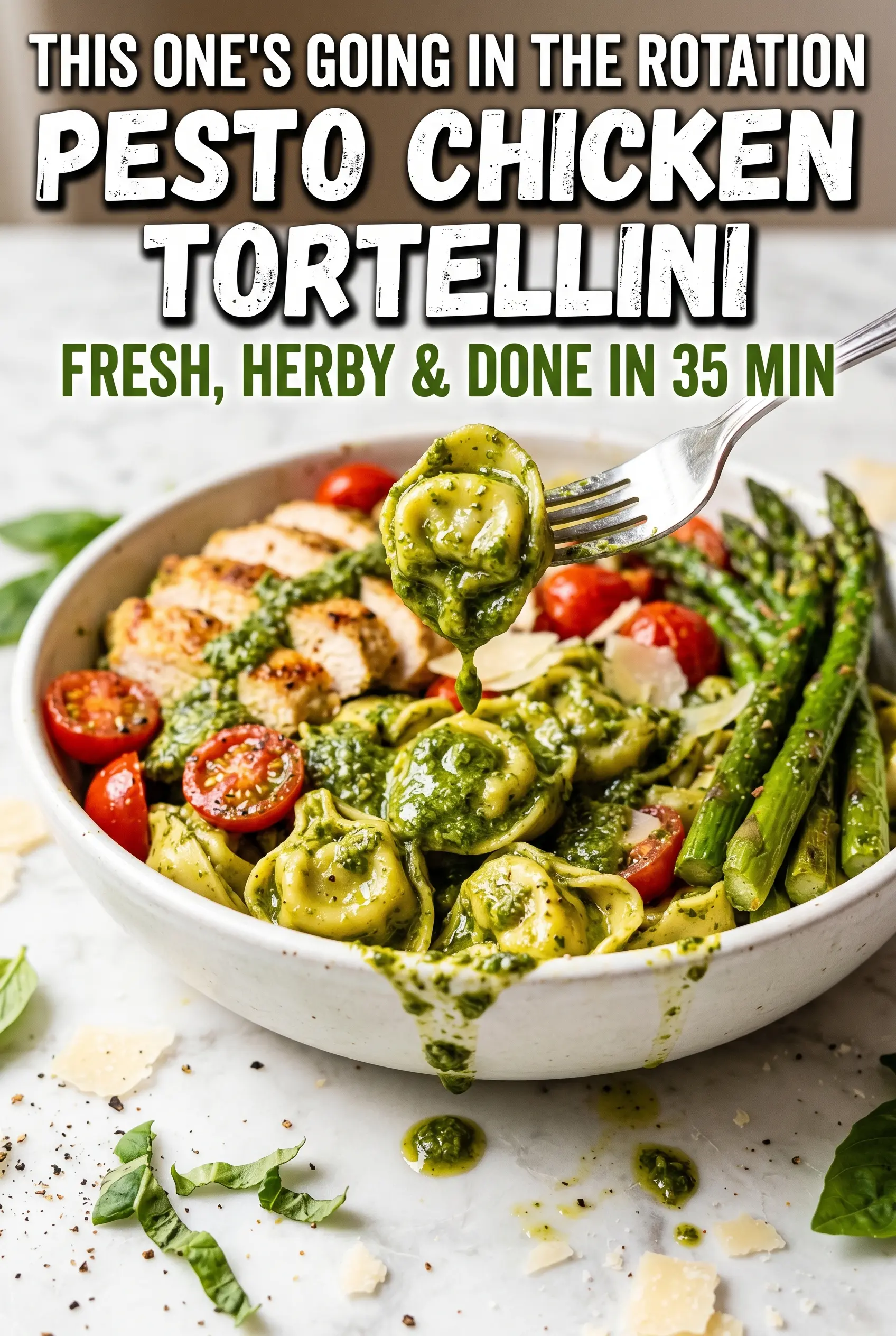
Pesto Chicken with Tortellini and Veggies (Asparagus, Cherry Tomatoes)
Ingredients
Equipment
Method
- Bring a large pot of salted water to a boil, then add the refrigerated cheese tortellini and cook according to package directions (usually 3–5 minutes) until tender and floating. Visual cue: the tortellini should look plump and cooked through without being mushy.
- Before draining, scoop out 2 tablespoons of pasta water and set it aside, then drain the tortellini and transfer it to a bowl. Visual cue: the tortellini stays glossy but not watery.
- Season both sides of the chicken breasts evenly with garlic powder, onion powder, salt, and black pepper. Visual cue: both sides look evenly speckled with seasoning.
- Heat 1 tablespoon of olive oil in a large skillet over medium-high heat, then add the chicken breasts and sear for 6–7 minutes per side until deep golden-brown and cooked through (internal temp 165°F). Visual cue: a dark golden crust forms and juices run clear when you cut into the thickest part.
- Remove the chicken from the pan and let it rest for 5 minutes, then slice or cube it. Visual cue: the chicken stays juicy and firm instead of steaming dry.
- In the same skillet over medium heat, add the remaining 1 tablespoon of olive oil and cook the minced garlic for 30 seconds until fragrant. Visual cue: the garlic becomes aromatic without browning.
- Add the asparagus pieces and cook for 3–4 minutes, stirring occasionally, until just bright green and crisp-tender. Visual cue: asparagus turns vibrant green and still snaps when pierced.
- Add the cherry tomatoes and cook for 2 minutes until they begin to soften and burst slightly. Visual cue: skins split and you see juices pooling in the pan.
- Reduce the heat to low, then add the cooked tortellini and sliced chicken back into the skillet. Visual cue: everything is evenly distributed for tossing.
- Spoon in the basil pesto and splash in the reserved pasta water, then toss gently until the tortellini and chicken look evenly coated. Visual cue: the mixture turns glossy green and clings to the pasta.
- Sprinkle in the grated Parmesan cheese and season with salt and pepper to taste, then toss once more and warm through for 1–2 minutes. Visual cue: the sauce thickens slightly and coats without pooling.
- Serve immediately, garnished with fresh basil leaves and extra Parmesan shavings, with lemon wedges on the side. Visual cue: basil looks fresh and bright and the top has a light scatter of cheese.