
Smoked baby back ribs with a proper dry rub are the kind of cookout food that disappear before the sides even hit the table. The meat turns tender without going mushy, the bark gets dark and peppery, and every bite carries that slow-built barbecue flavor you only get from patient smoking. The best versions don’t taste muddy or overly sweet; they taste balanced, with enough sugar to help the crust form and enough spice to keep the ribs interesting all the way through.
The trick is in the order of operations. Pulling the membrane off the back of the ribs gives the smoke and seasoning a clean path into the meat. A thin coat of mustard helps the rub cling without leaving a mustard flavor behind, and the two-stage smoke-and-wrap method protects the ribs from drying out before the collagen has time to soften. If you’ve ever ended up with ribs that look perfect but chew tough, it usually means they didn’t get enough time at a steady low temperature.
Below, I’ll walk through the one detail that makes the bark set up properly, how to use the spritz without washing off your rub, and the easiest way to tell when the ribs are ready to come off the smoker.
The bark set up beautifully and the ribs were tender without falling apart when I sliced them. The apple juice spritz kept them juicy, and the rub had that perfect sweet-smoky crust my husband kept picking off the bone.
Save these smoked baby back ribs with dry rub for the next time you want a sticky bark and tender, smoky ribs from the smoker.
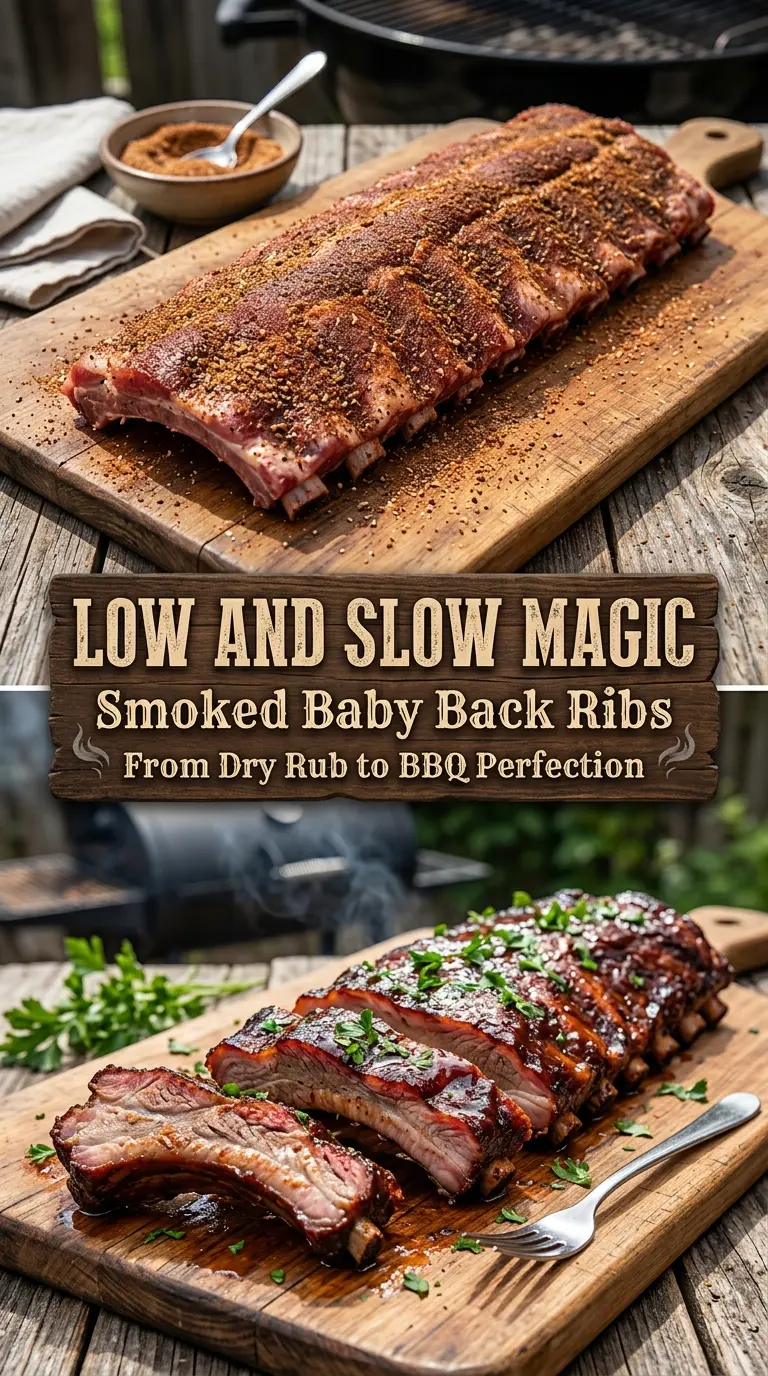
The Bark Starts Before the Smoke Does
The biggest mistake with ribs is rushing straight to the smoker and expecting long cook time alone to save them. It won’t. The surface needs to be dry, the membrane has to come off, and the rub needs time to grab onto the meat before the heat starts working. That’s what builds a bark that looks dark and seasoned instead of patchy and wet.
The mustard here is a binder, not a marinade. You’re using just enough to give the spices something to hold onto. If you put on a heavy layer, the ribs can taste sharp and the rub can turn pasty. A light coat disappears under the smoke and leaves you with a clean crust.
- Baby back ribs — These cook a little faster and leaner than spare ribs, so they benefit from the foil wrap in the middle of the cook. That wrap keeps them from drying out before the connective tissue softens.
- Brown sugar — This helps the bark caramelize and balances the smoke. Dark brown sugar gives a deeper molasses note; light brown sugar works fine if that’s what you have.
- Smoked paprika — This is where a lot of the smoky color and depth comes from, especially if your smoker runs clean but not aggressively smoky. Regular paprika alone won’t give the same finish.
- Apple juice spritz — Optional, but useful if your smoker tends to run dry. It adds a little moisture to the surface, which helps the bark keep building instead of drying into a bitter shell.
The 3-2-1 Rhythm That Keeps Ribs Tender
Prepping the Ribs
Start by pulling off the membrane on the back side of the ribs. If it stays on, the seasoning has a harder time getting into the meat and the finished ribs can eat a little chewy on the underside. Pat the ribs dry before adding mustard and rub; wet meat steams at the surface instead of forming a good bark. Season them evenly, then let them sit while the smoker comes up to temperature so the rub begins to dissolve and cling.
Smoking for Flavor and Color
Set the smoker to 225°F and place the ribs bone-side down on the grate. In the first few hours, you’re building color, smoke flavor, and that peppery crust. Don’t keep opening the lid to check on them; every peek dumps heat and stretches the cook. If you use the spritz, do it fast and lightly so you’re misting the surface, not rinsing it.
Wrapping to Finish the Tenderizing
Once the ribs have a good bark and deep red-brown color, wrap them tightly in foil and keep them smoking. This is the stage that turns good ribs tender because the trapped steam helps break down the remaining connective tissue. If the foil leaks, the ribs dry out and the bark can turn uneven, so seal the packet well. The ribs should feel noticeably more pliable when you lift the packet with tongs.
The Last Stretch Back on the Grate
Unwrap the ribs and return them to the smoker for the final 30 to 60 minutes. This is where the bark sets back up after the foil and the surface tightens into that sticky, slightly crisp finish. Look for meat that has pulled back from the bones and a rack that bends easily when lifted in the middle. Rest them for 15 minutes before slicing so the juices settle instead of flooding the cutting board.
How to Tweak These Ribs Without Losing the Point
Dairy-Free, Gluten-Free, and Naturally Built for Both
These ribs are already gluten-free and dairy-free as written, which makes them a good base recipe for a crowd. Just check your barbecue sauce or sides if you serve them with extras, since the ribs themselves don’t need any swaps.
No Smoker, Same Method in the Oven
Use the same rub and wrapping method, but cook the ribs low and slow in a 275°F oven until tender, then finish under the broiler for a few minutes to darken the crust. You’ll lose the smoke flavor, but the texture and seasoning still work well.
Less Sweet, More Pepper
Cut the brown sugar in half and add an extra teaspoon of black pepper if you want a sharper, more Texas-style profile. The bark will still form, but it won’t be as sticky or candy-like on the surface.
Storage and Reheating
- Refrigerator: Store sliced ribs in an airtight container for up to 4 days. The bark softens a bit in the fridge, but the flavor stays strong.
- Freezer: Wrap tightly and freeze for up to 2 months. Freeze in portions so you can reheat only what you need.
- Reheating: Rewarm covered in a 300°F oven with a splash of apple juice or broth until hot. Don’t blast them on high heat, or the meat tightens and the edges dry out before the center warms through.
Answers to the Questions Worth Asking
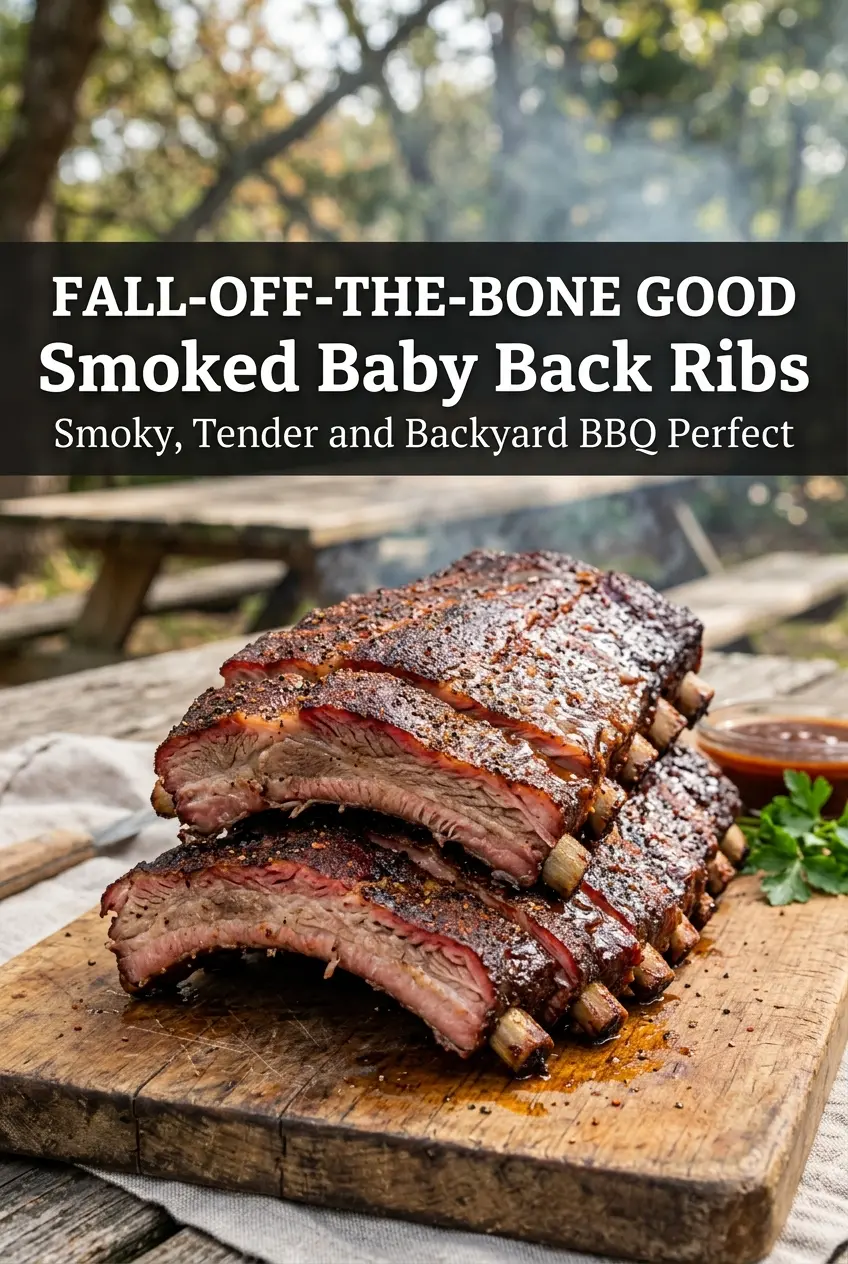
Smoked Baby Back Ribs with Dry Rub
Ingredients
Equipment
Method
- Remove the membrane from the back of the ribs, working with a paper towel for grip if needed.
- Pat the ribs dry with paper towels to help the bark form.
- Coat both sides lightly with yellow mustard so the rub adheres.
- Mix all dry rub ingredients in a bowl until evenly combined.
- Generously season both sides of the ribs with the dry rub, pressing lightly so it sticks.
- Preheat the smoker to 225°F (107°C).
- Place ribs bone-side down on the smoker grates for smoke and steady contact with the heat.
- Smoke for 3 hours at 225°F (107°C) until the surface is deeply set and beginning to form a bark.
- Spritz with apple juice every 45 minutes if desired to keep the exterior from drying out.
- Wrap ribs tightly in foil to hold in moisture and push tenderness.
- Continue smoking for 2 hours at 225°F (107°C).
- Unwrap and return ribs to the smoker to re-crisp the bark.
- Smoke for another 30–60 minutes at 225°F (107°C) until tender.
- Rest the ribs for 15 minutes before slicing so juices redistribute.
- Serve immediately with your favorite barbecue sides.