
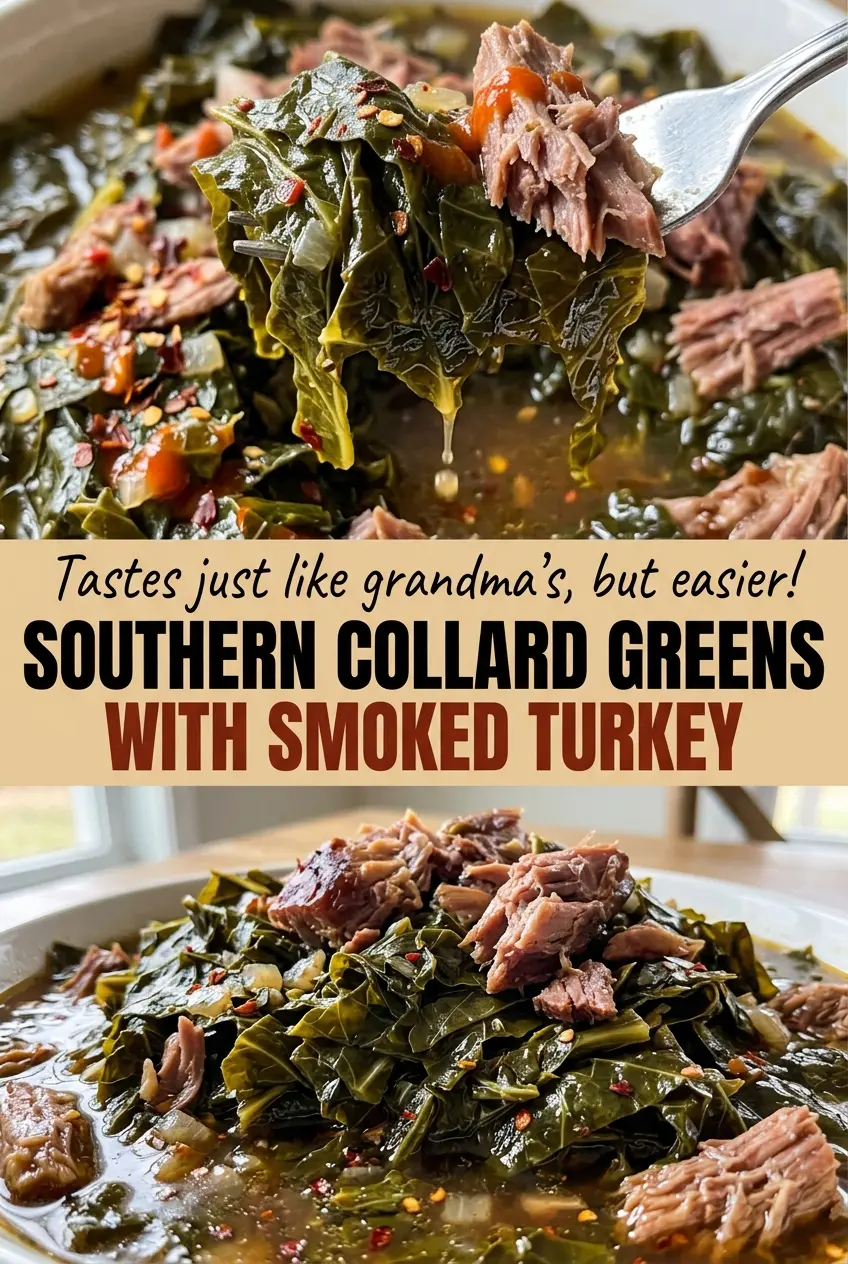
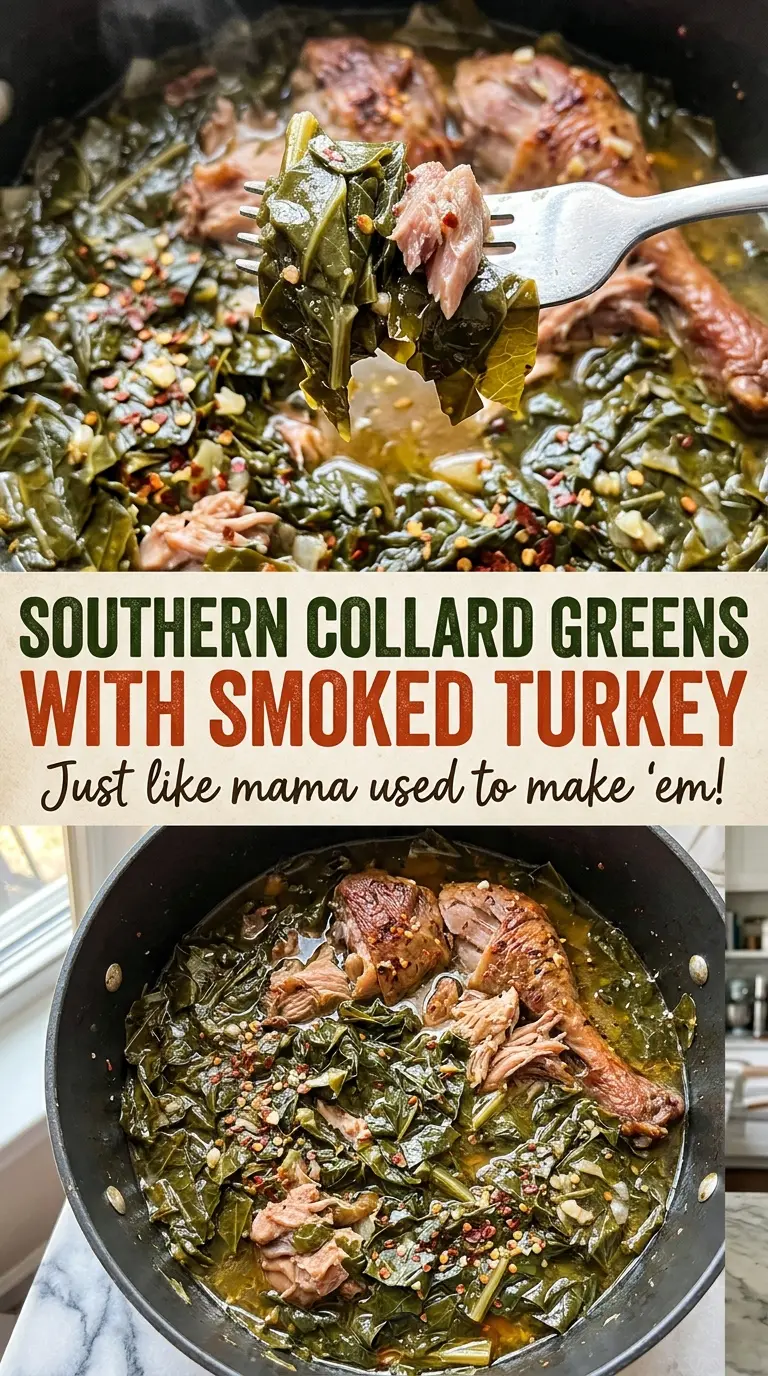
The greens start out as a huge, awkward pile, and then the leaves soften and settle into the pot one handful at a time. That little pause makes room for all of them without crushing the leaves or splashing hot broth over the stove. In these Southern collard greens with smoked turkey, the turkey gets its own long simmer first, so the cooking liquid has time to take on its smoky, savory flavor.
I keep the method simple: tenderize the turkey, shred it, then let the collards simmer in that same potlikker until they’re tender. The greens need their own cooking time, and the apple cider vinegar goes in at the end to brighten the broth. You’ll have tender leaves, shredded smoked turkey, and plenty of potlikker to spoon over each serving.
Kitchen Note
Don’t pour off the potlikker when the greens are ready. Spoon some into each serving; it carries the smoked turkey and onion flavor, and keeps the leaves moist on the plate.
Save these Southern collard greens with smoked turkey for a pot of tender greens and savory potlikker, finished with a bright splash of apple cider vinegar.
Why the Turkey Simmer and the Greens Need Separate Turns
Collards and smoked turkey don’t reach their best texture on the same schedule. The turkey leg needs a long, gentle simmer before it’s tender enough to pull from the bone. Collard leaves also need plenty of time, but adding them at the beginning would leave them cooking through the turkey’s entire first simmer plus their own. Cooking them in two turns gives you control over both textures: first tender turkey, then greens that soften in the flavored broth.
That order also means you don’t have to make a separate broth or discard the liquid. The onion, garlic, pepper, and smoked turkey simmer together in the pot; after the turkey is shredded, the collards go into that same liquid. Their leaves wilt down as you stir them in, and the covered simmer gives them time to become tender without losing the broth they’re meant to be served with. Think of the potlikker as part of the dish, not a cooking liquid to pour away.
The finish matters, too. Apple cider vinegar goes in once the greens are tender, rather than simmering along for the full cook. Its tang lifts the savory broth and gives the greens a cleaner, brighter finish.
What Gives These Collards Their Smoky Broth and Bright Finish
- Collard greens — Choose fresh leaves that look sturdy and deeply green. Removing the tough stems and chopping the leaves into even pieces helps them soften at a similar pace. Rinse them thoroughly; grit caught in the folds can otherwise end up in the finished broth. There isn’t a direct swap that gives the same sturdy leaf texture and cooking time, so I use collards for this version.
- Smoked turkey leg — This is the source of the dish’s smoky flavor and the meat that goes back into the greens. A leg with the bone and skin intact contributes flavor during the simmer, then the skin and bone are discarded before serving. An unsmoked turkey piece won’t give you the same potlikker, so it isn’t a like-for-like replacement.
- Yellow onion and garlic — These build a savory base while the turkey simmers. A firm onion and fresh garlic are useful here because they have time to flavor the broth; there’s no need for a specialty variety or premium brand.
- Black pepper and crushed red pepper — Black pepper brings a steady, warm bite, while the crushed red pepper adds a sharper hint of heat. Keep both dry seasonings fresh and free-flowing so they distribute through the pot instead of clumping in one spot.
- Apple cider vinegar — Its acidity balances the rich, smoky broth. Use apple cider vinegar for the familiar tang; a different vinegar can shift the finish, and leaving it out makes the greens taste heavier.
How to Simmer the Turkey First, Then Tenderize the Collards
Rinse, Stem, and Chop the Leaves
Rinse the collard greens thoroughly, then remove the tough stems and chop the leaves into 1-inch pieces. Pay attention to the creases in the leaves, where grit can cling even when the outside looks clean. Keeping the pieces close in size helps them cook evenly. Set the prepared leaves aside while the turkey simmers.
Build the Smoked-Turkey Potlikker
Put the smoked turkey leg, water, diced onion, minced garlic, kosher salt, black pepper, and crushed red pepper in an 8-quart stockpot. Bring the pot to a boil over medium-high heat, then reduce the heat to low and cover it. Simmer for 60 to 75 minutes, until the turkey is very tender. Keep the heat low enough for a gentle simmer rather than a hard, rolling boil.
Shred the Turkey Without Losing the Broth
Transfer the turkey leg to a plate and let it cool until it’s easy to handle. Remove and discard the skin and bone, then shred the meat into bite-size pieces. If the leg is still difficult to pull apart, give it a little more time to cool and handle it carefully. Leave the cooking liquid in the pot; the collards will cook in it next.
Wilt the Collards Into the Pot
Add the collard greens a handful at a time, stirring as each addition wilts enough to make room for the next. This is easier than trying to push the full pile of leaves into the pot at once. Return the shredded turkey to the pot, cover it, and simmer over low heat for 45 to 60 minutes. Stir occasionally and cook until the greens are tender, not just wilted.
Brighten the Finished Greens
Stir in the apple cider vinegar after the greens have softened. The vinegar should mingle through the broth rather than sit on top, so stir well before serving. Ladle the greens with some potlikker into each bowl. That savory liquid is part of every serving.
Two Small Changes for a Milder Pot of Collards
Leave Out the Crushed Red Pepper
For a gentler pot, omit the crushed red pepper and keep the black pepper. The broth will still get its savory depth from the smoked turkey, onion, and garlic, but it won’t have the same chili warmth.
Hold Back the Apple Cider Vinegar
If you prefer a rounder, less tangy finish, leave the vinegar out of the pot and serve the greens without it. You’ll keep the smoky, savory broth, but lose the bright contrast that vinegar brings at the end.
Storage and Reheating
- Refrigerator: Store the greens and potlikker together in an airtight container for 3 to 4 days. The broth may thicken a little as it chills.
- Freezer: They freeze well. Cool and portion the greens with their broth into airtight freezer-safe containers, leaving a little room for expansion; use within 2 to 3 months for best quality.
- Reheating: Warm gently in a covered saucepan over low heat, stirring now and then, until steaming hot throughout. Avoid a hard boil, which can make the greens overly soft; add a splash of water only if the broth has reduced too much.
Questions That Come Up When Cooking Collard Greens
Southern Collard Greens with Smoked Turkey
Ingredients
Equipment
Method
- Rinse the collard greens thoroughly, remove the tough stems, and chop the leaves into 1-inch pieces.
- Combine the smoked turkey leg, water, onion, garlic, salt, black pepper, and crushed red pepper in an 8-quart stockpot.
- Bring the pot to a boil over medium-high heat, then reduce the heat to low, cover, and simmer for 60 to 75 minutes, until the turkey is very tender.
- Transfer the turkey leg to a plate and let it cool until easy to handle; remove and discard the skin and bone, then shred the meat.
- Add the collard greens to the pot a handful at a time, stirring as they wilt, then return the shredded turkey to the pot.
- Cover and simmer over low heat for 45 to 60 minutes, stirring occasionally, until the greens are tender.
- Stir in the apple cider vinegar and serve the greens with some of the potlikker.