
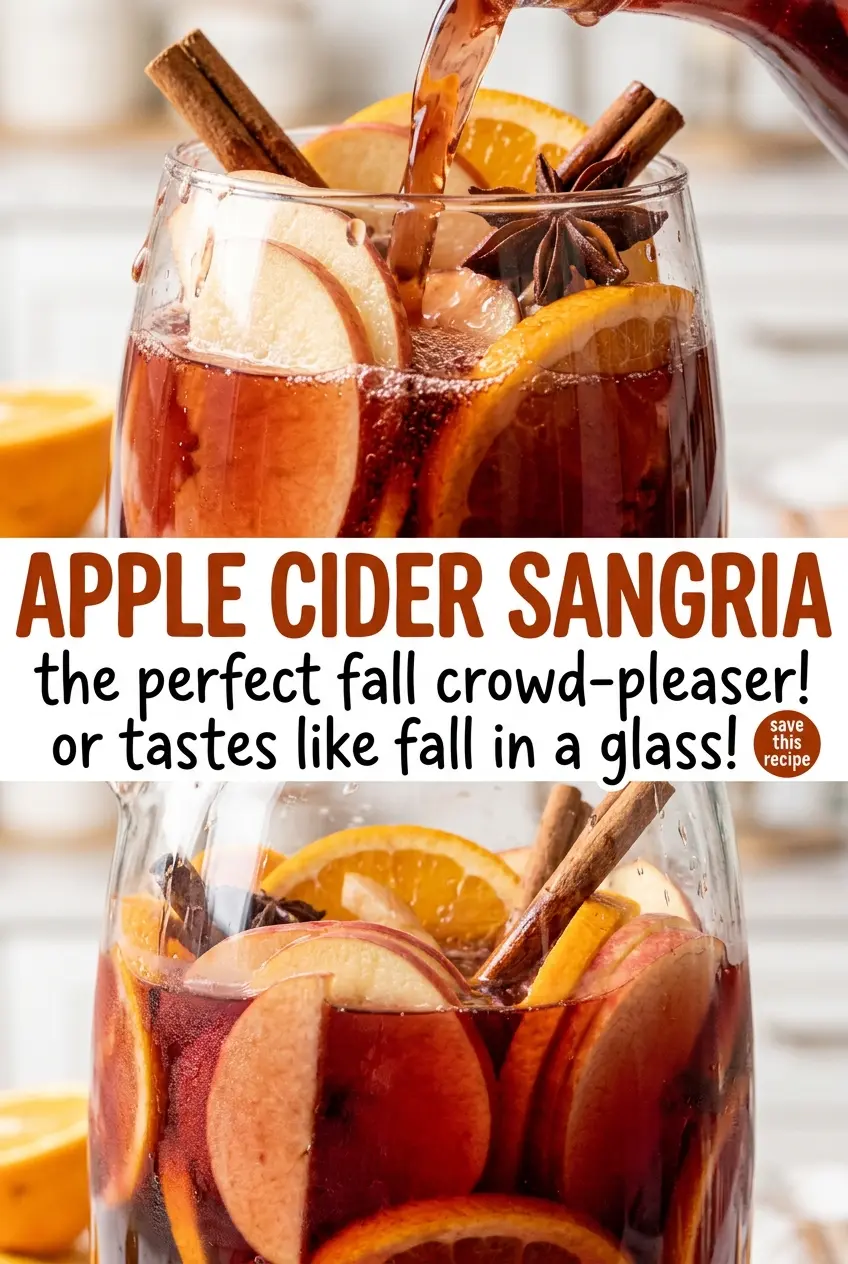
The pitcher changes as soon as the apple and orange hit the pale cider-and-wine mixture: the fruit begins to float, and the cinnamon sticks make it look like something worth setting out before anyone pours a glass. Apple Cider Sangria has the easy rhythm I want from a pitcher drink, but it still needs a little planning. The fruit needs time to infuse, and the bubbles belong at the end.
I use a dry white wine so the apple cider can bring its round, autumn-apple flavor without making the whole pitcher taste sugary. Brandy gives the base a warmer edge, while thin slices of fresh apple and orange bring brightness. After a covered chill, club soda lifts the drink and ice keeps each glass cold. The result is crisp, lightly spiced sangria with fresh fruit in every pour.
Kitchen Note
Use a 3-quart pitcher, not a narrow carafe. The fruit needs room to mingle with the wine and cider, and you’ll want space to stir in the club soda without splashing it over the rim.
Save this Apple Cider Sangria for a pitcher with crisp white wine, fresh fruit, and cinnamon—ready to finish with bubbles when it’s time to pour.
The Ice Belongs in the Glass, Not the Pitcher
It’s easy to reach for the ice while you’re building a pitcher, but adding it to the sangria itself would start diluting the whole batch before it’s poured. Keeping the ice in the glasses means the base stays concentrated in the pitcher, while each serving chills as it’s enjoyed. That’s especially useful when people pour at different times.
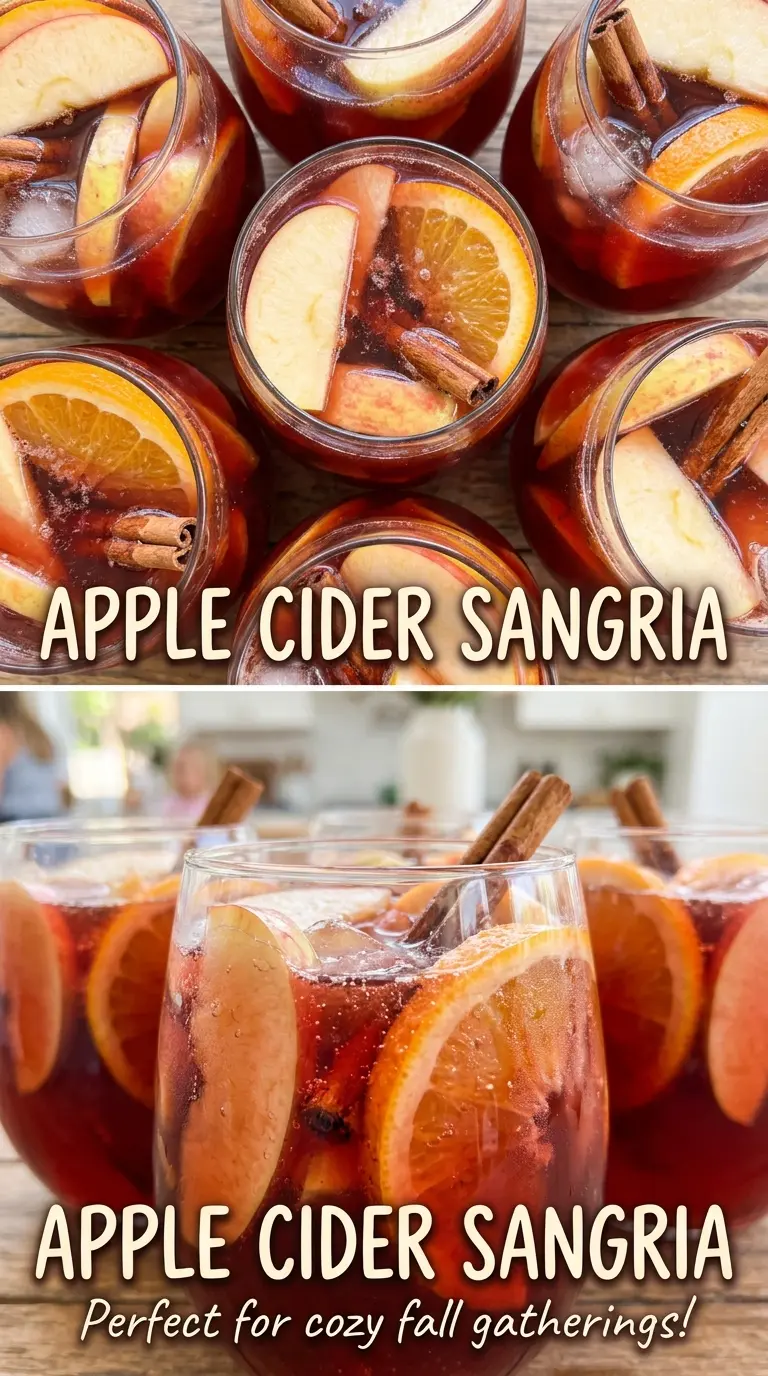
Fill each glass with ice first, then pour the sangria over it. The fruit and cinnamon have already infused the liquid, so there’s no need to pack the pitcher with ice to make it taste complete. If a glass sits for a while, the ice will soften the drink gradually; the pitcher doesn’t have to become watery just because the first serving is taking its time.
How the Wine, Cider, and Fruit Keep Each Other in Balance
- Dry white wine — This is the crisp backbone of the pitcher, keeping the cider from making the drink feel too sweet. Choose a dry bottle you’d enjoy on its own; an off-dry white wine pushes the finished sangria toward a sweeter taste. Sauvignon Blanc and Pinot Grigio are both useful styles to look for.
- Apple cider — Cider brings deeper apple flavor than wine can provide on its own. If you only have apple juice, it can stand in at the same volume, but the flavor will be lighter and often sweeter, without the fuller cider character.
- Brandy — A small pour adds warmth and depth beneath the fruit. Cognac works in its place at the same volume because it’s a style of brandy; skipping the spirit altogether makes a lighter, less rounded drink.
- Apple — A firm apple holds its shape as it chills in the pitcher. A tart variety gives the drink a sharper fruit note, while a milder, sweeter apple keeps the flavor rounder. Thin slices make the fruit easy to pour into glasses.
- Orange — Thin orange slices bring a bright citrus note that keeps the apple flavors from feeling one-dimensional. A fresh orange is the better choice here; dried orange won’t contribute the same fresh fruit character.
- Cinnamon sticks — Whole sticks infuse the pitcher gently and are easy to lift out or leave behind when pouring. Ground cinnamon isn’t a good swap because it can leave fine sediment throughout the drink.
- Club soda — Club soda gives the finished pitcher its bubbles without adding more wine or sweetness. Plain sparkling water can replace it at the same volume, though the final drink may have a softer mineral taste.
The Three Stages of Building a Balanced Sangria
Stir Together the Wine, Cider, and Brandy
Pour the dry white wine, apple cider, and brandy into a 3-quart pitcher and stir them together. The mixture should look uniform, with no layer of cider sitting at the bottom. Don’t add the club soda yet; it’s easier to mix the still base evenly before the bubbles go in.
Give the Fruit and Cinnamon Time to Infuse
Add the thinly sliced apple and orange along with the cinnamon sticks, then cover the pitcher and refrigerate it for at least 2 hours and up to 8 hours. The fruit should be coated in the liquid, and the covered chill gives its flavors time to mingle with the cider and wine. Don’t leave it to steep beyond that window; plan the timing so the pitcher is ready to finish and serve.
Add the Bubbles and Pour Over Ice
When you’re ready to serve, stir in the chilled club soda. Fill glasses with ice, then pour the sangria over it, aiming to get a little fruit into each glass. Stir gently enough to distribute the soda without knocking all the fizz out, and serve while the bubbles are lively.
Small Ingredient Choices That Change the Pitcher
Use a Tart Apple for a Brighter Finish
Choose a firm Granny Smith apple for a sharper edge against the cider’s mellow sweetness. Keep the same thin-slice preparation so it infuses easily and is comfortable to pour; the flavor will lean more tart than it does with a mild, sweet apple.
Let a Blood Orange Color the Sangria
Swap the medium orange for a medium blood orange if you want a more vivid-looking pitcher and a slightly berry-like citrus note. Slice it thinly just like the orange in the original version; the red flesh lends color as it infuses, without changing the drink’s basic balance.
Make-Ahead and Holding
- Before serving: Combine the wine, cider, brandy, fruit, and cinnamon, cover, and refrigerate for 2 to 8 hours. Stir in the club soda only when you’re ready to pour.
- After serving: Cover and refrigerate any remaining sangria. The bubbles fade and the sliced fruit softens, so the pitcher is at its best the same day.
- Freezing and reheating: Neither is a good fit for this drink. Freezing softens the fruit and loses the carbonation; serve the sangria chilled rather than warming it.
Questions That Come Up While the Pitcher Chills
Apple Cider Sangria
Ingredients
Equipment
Method
- In a 3-quart pitcher, stir together the white wine, apple cider, and brandy.
- Add the apple, orange, and cinnamon sticks.
- Cover the pitcher and refrigerate for at least 2 hours and up to 8 hours.
- Stir in the club soda.
- Fill glasses with ice.
- Pour the sangria over the ice.